Sunday, 4 February 2018

Asteroid 2018 BT6 passes the Earth.

Asteroid 2018 BT6 passed by the Earth at a distance of about 7 010 000 km (18.2 times the average distance between the Earth and the Moon, or 4.69% of the distance between the Earth and the Sun), slightly after 9.50 pm GMT on Friday 26 January 2018. There was no danger of the asteroid hitting us, though were it to do so it would have presented a significant threat. 2018 BT6 has an estimated equivalent diameter of 100-330 m (i.e. it is estimated that a spherical object with the same volume would be 100-330 m in diameter), and an object of this size would be predicted to be capable of passing through the Earth's atmosphere relatively intact, impacting the ground directly with an explosion that would be 225 to 8800 times as powerful as the Hiroshima bomb. Such an impact would result in an impact crater 1-5 km in diameter and devastation on a global scale, as well as climatic effects that would last years or even decades.

The calculated orbit of 2018 BT6. Minor Planet Center.

2018 BT6 was discovered on 27 January 2018 (the day after its closest approach to the Earth) by the University of Arizona's Catalina Sky Survey, which is located in the Catalina Mountains north of Tucson. The designation 2018 BT6 implies that it was the 169th asteroid (asteroid T6) discovered in the second half of January 2018 (period 2018 B).
 
2018 BT6 has a 1237 day orbital period and an eccentric orbit tilted at an angle of 3.01° to the plane of the Solar System, which takes it from 0.39 AU from the Sun (i.e. 39% of he average distance at which the Earth orbits the Sun, and inside the orbit of the planet Mercury) to 4.12 AU from the Sun (i.e. 412% of the average distance at which the Earth orbits the Sun, and considerably more than twice as far from the Sun than the planet Mars). It is therefore classed as an Apollo Group Asteroid (an asteroid that is on average further from the Sun than the Earth, but which does get closer). As an asteroid probably larger than 150 m in diameter that occasionally comes within 0.05 AU of the Earth, 2018 BT6 is also classified as a Potentially Hazardous Asteroid.

See also...

http://sciencythoughts.blogspot.co.uk/2018/01/asteroid-2018-bn6-passes-earth.htmlhttp://sciencythoughts.blogspot.co.uk/2018/01/comet-c2016-t3-panstarrs-makes-its.html
http://sciencythoughts.blogspot.co.uk/2018/01/comet-74psmirnova-chernykh-reaches.htmlhttp://sciencythoughts.blogspot.co.uk/2018/01/asteroid-2018-ag4-passes-earth.html
http://sciencythoughts.blogspot.co.uk/2018/01/asteroid-2018-au2-passes-earth.htmlhttp://sciencythoughts.blogspot.co.uk/2018/01/fireball-meteor-over-michigan-causes.html
Follow Sciency Thoughts on Facebook.

Saturday, 3 February 2018

Hygrophorus yadigarii: A new species of Waxy Cap Mushroom from Trabzon Province in northeastern Turkey.

Waxy Cap Mushrooms, Hygrophorus spp., are fleshy, often edible Mushrooms that form mycorrhizal associations (associations between Fungi and Plants in which the Fungus receives sugars produced by the Plant and the Plant receives nutrients obtained from the soil from the Fungus) with a variety of forest trees, including both Broadleaved and Coniferous species; each species of Fungus typically forms associations with a single species of tree. These Fungi are found in woodland around the world, from tropical forests to the boreal forests of the subpolar regions.

In a paper published in the Turkish Journal of Botany on 20 November 2017, Ertuğrul Sesli of the Department of Biology Education at the Karadeniz Technical University, Vladimír Antonín of the Department of Botany at the Moravian Museum, and Marco Contu of Olbia in Italy, describe a new species of Waxy Cap Mushroom from Trabzon Province in northeastern Turkey.

The new species is named Hygrophorus yadigarii, in honour of the late Yadigar Sesli, the father of Ertuğrul Sesli. This Fungus produces Mushrooms up to 60 mm across and 70 mm high, which start out hemispherical and become flat as they grow, and are white-to-cream in colour, sometimes with a bluish sheen. The species was found in a Hornbeam-Spruce dominated forest in the Maçka District of Trabzon Province.

Hygrophorus yadigarii, wild specimen. Scale bar is 30 mm. Ertuğrul Sesli in Selsi et al. (2017).

See also...

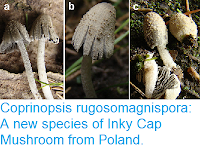
http://sciencythoughts.blogspot.co.uk/2018/01/laccaria-squarrosa-new-species-of.htmlhttp://sciencythoughts.blogspot.co.uk/2017/08/coprinopsis-rugosomagnispora-new.html
http://sciencythoughts.blogspot.co.uk/2017/06/gondwanagaricites-magnificus-new.htmlhttp://sciencythoughts.blogspot.co.uk/2016/07/unravelling-diversity-of-podaxis-fungi.html
http://sciencythoughts.blogspot.co.uk/2016/05/truncospora-wisconsinensis-new-species.htmlhttp://sciencythoughts.blogspot.co.uk/2016/03/helvella-sublactea-new-species-of.html
Follow Sciency Thoughts on Facebook.

Magnitude 4.4 Earthquake in the Dalmatia Region of Croatia.

The United States Geological Survey recorded a Magnitude 4.4 Earthquake at a depth of about 24.9 km, about 5 km to the southwest of the town of Donja Brela in the Dalmatia Region of Croatia slightly after 1.50 pm local time (slightly after 12.50 pm GMT) on Saturday 3 February 2018.There are no reports of any damage of or casualties associated with this event, but it was felt in the Dalmatia Region, and in neighbouring Bosnia and Herzegovina.

The approximate location of the 3 February 2018 Dalmatian Earthquake. USGS.

The states of the western Balkan Peninsula form the eastern margin of the Adriatic Plate, a piece of the African Plate that has broken away and is now wedged into the southern part of the Eurasian Plate. This is being squeezed by the impact of Africa into Europe from the south, which is pushing western Italy, which sits on the Eurasian Plate, to the east, and Greece and Turkey, which sit on the Aegean and Anatolian Plates, to the west. This squeezing leads to uplift around the margins of the Adriatic Plate, in the Apennine Mountains of central Italy and the mountain ranges of the west Balkan Peninsula.
 
 Outline map showing the approximate positions of the Eurasian (EU), Adriatic (AD) and African (AF) Plates. Di Bucci & Mazzuli (2003).
 
Witness accounts of Earthquakes can help geologists to understand these events, and the structures that cause them. The international non-profit organisation Earthquake Report is interested in hearing from people who may have felt this event; if you felt this quake then you can report it to Earthquake Report here.
 
See also...
 
http://sciencythoughts.blogspot.co.uk/2016/09/numerous-injuries-after-macedonian.htmlhttp://sciencythoughts.blogspot.co.uk/2015/03/magnitude-39-earthquake-in-western.html
http://sciencythoughts.blogspot.co.uk/2015/01/at-least-one-dead-following-landslide.htmlhttp://sciencythoughts.blogspot.co.uk/2014/12/magnitude-50-earthquake-off-coast-of.html
http://sciencythoughts.blogspot.co.uk/2014/09/five-dead-in-bosnian-mine-collapse.htmlhttp://sciencythoughts.blogspot.co.uk/2014/08/magnitude-39-earthquake-in-western.html
Follow Sciency Thoughts on Facebook.

Rhacophorus hoabinhensis: A new species of Flying Frog from northern Vietnam.

Flying Frogs of the genus Racophorus are found from Madagascar and Africa across India to Southeast Asia and Japan. They have long, strong toes connected by thick webbing, which they spread out while dropping from trees, allowing them to glide for considerable distances (they are not actually capable of true flight). They lay their eggs in foam nests in the treetops, the tadpoles dropping out when they hatch, and falling into water beneath.

In a paper published in the journal Asian Herpetological Research on 4 April 2017, Tao Thien Nguyen of the Vietnam National Museum of Nature and Graduate University of Science and Technology of the Vietnam Academy of Science and Technology, and the Kyoto University Museum at Kyoto University, Cuong The Pham and Truong Quang Nguyen of the Institute of Ecology and Biological Resources and Graduate University of Science and Technology of the Vietnam Academy of Science and Technology, Hoa Thi Ninh of the Hanoi National University of Education, and Thomas Ziegler of the AG Zoologischer Garten Köln, and Institute of Zoology at the University of Cologne, describe a new species of Flying Frog from Hoa Binh Province in northern Vietnam.

The new species is named Rhacophorus hoabinhensis, meaning 'from Hoa Binh'. The species is described from two specimens, both slightly over 30 mm in length, with greyish dorsal surfaces with dark brown mottling, and yellowish undersides with red on the hind limbs. The species was found in secondary karst forests made up off medium and small hardwoods mixed with shrubs and vines in the Hang Kia-Pa Co Nature Reserve, where they were found singing around a small pool on low branches roughly 1.2-1.5 m above the ground.

Rhacophorus hoabinhensis in its biotope in Hang Kia–Pa Co Nature Reserve, Hoa Binh Province, Vietnam. Nguyen et al. (2017).

See also...
http://sciencythoughts.blogspot.co.uk/2018/01/arthroleptis-troglodytes-cave-squeaker.htmlhttp://sciencythoughts.blogspot.co.uk/2017/10/scinax-onca-new-species-of-treefrog.html
http://sciencythoughts.blogspot.co.uk/2017/09/using-bite-force-of-cranwells-horned.htmlhttp://sciencythoughts.blogspot.co.uk/2017/09/rana-luanchuanensis-new-species-of.html
http://sciencythoughts.blogspot.co.uk/2017/05/hyperolius-ruvuensis-new-species-of.htmlhttp://sciencythoughts.blogspot.co.uk/2017/01/pristimantis-ashaninka-new-species-of.html
Follow Sciency Thoughts on Facebook.

Vulcanops jennyworthyae: A new species of Burrowing Bat from the Miocene of New Zealand.

New Zealand broke away from the Australian and Antarctic sections of the ancient supercontinent of Gondwana roughly 130 million years ago, and has developed a unique flora and fauna made up of the descendants of animals and plants that were present at the time of this split, plus the decedents of a few species that  have managed to reach the landmass since. Prior to the arrival of the first Humans on the islands 800 years ago, there were only three Mammal species present throughout the whole of New Zealand, all of them Bats. Of these, one species, Chalinolobus tuberculatus, has close relatives in Australia, and is thought to have reached New Zealand less than two million years ago. The other two species, Mystacina tuberculata and Mystacina robusta, are placed in their own family, the Mystacinidae, also known as Burrowing Bats, due to the large amounts of time they spend on the ground foraging under leaf litter. These Bats are found nowhere other than New Zealand today, though fossil specimens are known from the Oligocene and Miocene of Australia and the Miocene of New Zealand. Burrowing Bats are considered to be members of the Noctilionoidea, the Bat superfamily that also includes the American groups Phyllostomidae (Leaf Nosed Bats), Noctilionidae (Bulldog Bats), Mormoopidae (Moustached Bats), Furipteridae (Smokey and Thumbless Bats), and Thyropteridae (Disk-winged Bats), and possibly the Madagascan Myzopodidae (Sucker-footed Bats).

In a paper published in the journal Scientific Reports on 10 January 2018, Suzanne Hand of the PANGEA Research Centre at the University of New South Wales, Robin Beck of the School of Environment and Life Sciences at the University of Salford, Michael Archer, also of the PANGEA Research Centre at the University of New South Wales, Nancy Simmons of the Department of Mammalogy at the American Museum of Natural History, Gregg Gunnell of the Division of Fossil Primates at the Duke University Lemur Center, Paul Scofield of the Canterbury Museum, Alan Tennyson of the Museum of New Zealand Te Papa Tongarewa, Vanesa De Pietri, also of the Canterbury Museum, Steven Salisbury of the School of Biological Sciences at The University of Queensland, and Trevor Worthy of Biological Sciences at Flinders University, describe a new species of Burrowing Bat from the Early Miocene St Bathans fossil assemblage of the Otago Region of South Island, New Zealand.

The new species is named Vulcanops jennyworthyae, where 'Vulcanops' means 'Vulcan Bat' in reference to the volcanic nature of much of New Zealand, and the Vulcan Hotel in St Bathans, and 'jennyworthyae' honours Jennifer Worthy of the School of Biological, Earth and Environmental Sciences at the University of New South Wales, for her work on the fauna of the St Bathans fossil assemblage. The species is described from a single fragment of left dentary (jawbone) with two molar teeth, plus a series of detached teeth.

Vulcanops jennyworthyae, Bannockburn Formation, St Bathans, Central Otago, New Zealand. Lower dentition. Left dentary fragment containing m2-3. (a) Buccal view; (b–b’) stereopair, occlusal view; (c) lingual view m2-3. Right molar (d–d’) Stereopair, oblique occlusal view; (e) buccal view; (f) occlusal view. Abbreviations: cld, cingulid; co, cristid obliqua; end, entoconid; ecd, entocristid; hyd, hypoconid; hyl, hypoconulid; med, metaconid; pacd, paracristid; pad, paraconid; pcd, postcristid; prcd, protocristid; prd, protoconid; tal, talonid; trig, trigonid. Scale bars are 2 mm. Hand et al. (2018).

Vulcanops jennyworthyae appears to have been fairly large for a Bat, with an estimated mass of 40 g. The dentition of this species suggests that it was omnivorous, as is the case with modern Burrowing Bats, which eat a range of Arthropods and plant matter, though the larger size of the specimen the presence of a large hypocone on its upper molars, suggests that it might have been capable of taking larger prey than its modern relatives, possibly including small Vertebrates.

A phylogenetic analysis of the Noctilionoidea including Vulcanops jennyworthyae did not support the idea that the Madagascan Myzopodidae are members of this group, or even closely related to it, though it did suggest that some fossil Bats from the Eocene of Egypt may be closely related to the group. This is consistent with a model in which the ancestors of the Noctilionoidea split from their closest ancestors in Africa during the Eocene, and spread across South America, Antarctica and Australia to New Zealand during the Oligocene and Miocene, when Australia, Antarctica and South America were all connected and New Zealand, though already an island, was still much closer to Australia and Antarctica. At this time Antarctica was still largely covered by forest (the preferred habitat of most Bats), with tropical forests covering much of the continent about 50 million years ago, which was replaced by temperate forests by 15 million years ago.

See also...

http://sciencythoughts.blogspot.co.uk/2017/08/nyctimene-wrightae-new-species-of-tube.htmlhttp://sciencythoughts.blogspot.co.uk/2017/08/notonuphar-antarctica-new-species-of.html
http://sciencythoughts.blogspot.co.uk/2016/04/washington-state-reports-its-first-case.htmlhttp://sciencythoughts.blogspot.co.uk/2016/05/araeopsylla-goodmani-araeopsylla-smiti.html
http://sciencythoughts.blogspot.co.uk/2016/01/fossil-bats-from-early-pleistocene-of.htmlhttp://sciencythoughts.blogspot.co.uk/2015/08/lonchophylla-inexpectata-new-species-of.html


Follow Sciency Thoughts on Facebook.

Hundreds of trapped South African miners brought safely to the surface.

A total of 955 South African miners who were trapped below ground by a power cut on Wednesday 31 February 2018 were able to return to the surface safely after power was restored on the morning of Friday 2 February. The incident happened at the Sibanye-Stillwater Mining-owned Beatrix Gold Mine near Welkom, Free State, after an electricity pylon was struck by lightning. Medical examinations of the miners found that several were suffering from dehydration and high blood pressure, but no more serious problems were found.

Workers leaving the Beatrix Mine in Free State, South Africa, on 2 February 2018, after being trapped below ground for two days. AP.

The Beatrix Mine operates on 23 levels, with the deepest being about a kilometre below the ground. Workers at the higher levels were able to evacuate shortly after the power failure, but workers at deeper levels were trapped. Colleagues at the surface were able to lower food and water to the trapped men, but the experience has been described as 'traumatic', particularly as ventilation systems stopped in addition to the lifts. A back-up generator which should have come on when the outside power supply was cut also failed, the reason for this failure is still being investigated.

See also...

http://sciencythoughts.blogspot.co.uk/2017/11/miner-killed-in-accident-at-masimong.htmlhttp://sciencythoughts.blogspot.co.uk/2017/10/regional-mine-manager-assassinated-in.html
http://sciencythoughts.blogspot.co.uk/2014/08/at-least-one-fatality-following.htmlhttp://sciencythoughts.blogspot.co.uk/2014/06/magnitude-49-earthquake-in-northern.html
http://sciencythoughts.blogspot.co.uk/2013/11/fatality-at-south-african-gold-mine.htmlhttp://sciencythoughts.blogspot.co.uk/2013/11/illegal-miner-arrested-in-free-state.html
Follow Sciency Thoughts on Facebook.

Thousands of artifacts stolen after thieves target Canterbury Archaeological Trust.

Thousands of rare Anglo Saxon and Iron Age artifacts are thought to have been stolen after thieves targeted the Canterbury Archaeological Trust in Canterbury, England, twice in the last week. Exact details of what is missing have not been fully compiled due to the extensive damage caused by the thieves, who smashed through a rear wall at the charity's premises, breaking power and water lines and exposing asbestos, which will have to be dealt with by a specialist contractor before other work can proceed. The missing items are thought to include over 850 Anglo Saxon beads recovered from sites in Canterbury and St Albans, a large collection of Iron Age coins, jewelry and tools, a number of replica items from the Trust's educational loans collection and over a thousand pounds worth of tools.

Some of the Anglo Saxon beads thought to have been stolen from the Canterbury Archaeological Trust this week. Canterbury Archaeological Trust.

The thieves broke in on the night of Thursday 22-Friday 23 January 2018, then again on the night of Friday 23-Saturday 24, causing extensive damage to the charity's building and collection. As well as the missing items, many other artifacts have been scattered and mixed, and will take hundreds of hours work by specialist workers to re-identify and properly curate; archaeological artifacts without proper records of their origin are of little value, which also makes it likely that the thieves will be forced to sell the objects for a fraction of their true worth.

Damage at the Canterbury Archaeological Trust following two burglaries this week. Canterbury Archaeological Trust.

Kent Police believe that the best hope of recovering the missing artifacts comes from people who may be approached by the thieves attempting to sell objects. Anyone with any such information can contact Kent Police on 01843 222289 (+44 1843 222289 from outside the UK) and quote incident number ZY/4200/18. Alternatively Kent Crimestoppers can be called anonymously on 0800 555111 from within the UK only, or online here from anywhere in the world.

See also...
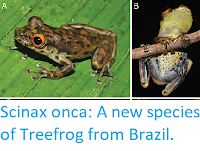
http://sciencythoughts.blogspot.co.uk/2017/09/swedish-viking-warrior-burrial-shown-to.htmlhttp://sciencythoughts.blogspot.co.uk/2017/02/german-archaeologists-kidnapped-in.html
http://sciencythoughts.blogspot.co.uk/2015/06/interpreting-life-history-of-egtved-girl.htmlhttp://sciencythoughts.blogspot.co.uk/2015/05/evidence-of-leprosy-in-from-early-anglo.html
http://sciencythoughts.blogspot.co.uk/2015/05/philistine-and-hellenistic-remains-from.htmlhttp://sciencythoughts.blogspot.co.uk/2014/10/a-preserved-bladder-stone-from-medieval.html
Follow Sciency Thoughts on Facebook.