Showing posts with label Bulgaria. Show all posts

Friday, 8 September 2023

At least fourteen people dead as Storm Daniel sweeps across Greece, Turkey, and Bulgaria.

At least nine people have died, and several more are missing, after Storm Daniel swept across Greece, Turkey, & Bulgaria on Monday 4 and Tuesday 5 April 2023. In Greece a man died when a wall collapsed onto him in Volos on the Pagasetic Gulf, on Monday 4 September, and another man was killed in a vehicle-related incident, while on Wednesday 6 September the body of an elderly woman who was missing was found close to the city, having apparently drowned in the storm. Another four people are still missing in Greece. Considerable damage to infrastructure has occurred, and about a hundred people were evacuated from affected areas.

A collapsed bridge at Kala Nera on the western Pelion Peninsula. Stamos Prousalis/Reuters.

In Turkey at least two people have died in flooding in Istanbul and dozens have had to be rescued as floodwaters covered two neighbourhoods of the city, while in Kirklareli Province, close to the border with Bulgaria, five tourists are known to have died when a flash flood hit a campsite at which they were staying, and another one is still missing. Across the border in Bulgaria, four people are known to have died and three more are still missing after flooding hit the Black Sea coastal region.

Flood damage at Arnavutköy in Istanbul Province, Turkey. Ugur Yildirim/Getty Images.

Most storms form due to heating of air over the sea. As the air is heated the the air pressure drops and the air rises, causing new air to rush in from outside the forming storm zone. If this zone is sufficiently large, then it will be influenced by the Coriolis Effect, which loosely speaking means the winds closer to the equator will be faster than those further away, causing the storm to rotate, clockwise in the northern hemisphere and anticlockwise in the southern hemisphere.

A caravan swept out to sea on Bulgaria's Black Sea coast. Sofia Globe.

Whilst the high winds associated these storms is extremely dangerous, the real danger from such storms is often the flooding. Each millibar drop in air pressure can lead to a 1 cm rise in sea level, and large storms can be accompanied by storm surges several meters high. This tends to be accompanied by high levels of rainfall, caused by water picked up by the storm while still at sea, which can lead to flooding, swollen rivers and landslides; which occur when waterlogged soils on hill slopes lose their cohesion and slump downwards, over whatever happens to be in their path.

Such storms are common in tropical regions, but less so on the more temperate Mediterranean. However, this summer much of the eastern Mediterranean has suffered a prolonged heat wave, with temperatures regularly exceeding 40°C, and heat related deaths recorded across much of southern Europe, as well as a series of wildfires which have swept across Greece and other countries as vegetation has dried out. These events have been caused by a combination of an anticyclone (high pressure system) which formed over the Sahara then migrated northwards, intensified by an El Niño system over the southern Pacific, which tends to drive temperatures upwards in the Northern Hemisphere, both of which are considered to have been intensified by global warming.

See also...

Follow Sciency Thoughts on Facebook.

Follow Sciency Thoughts on Twitter.


Sunday, 7 May 2023

Human DNA extracted from a Palaeolithic pendant.

Understanding the changes in technology and population that went on during the Palaeolithic is the key to understanding much of the history of our species. Unfortunately, Palaeolithic deposits tend to be highly condensed, so that objects and remains found alongside one-another may be separated by hundreds or even thousands and years, making it impossible to connect artefacts to remains unless they were clearly directly buried together. 

Recent advances in the recovery of DNA from ancient sediments provide us with the possibility of establish connections between artefacts and specific Human populations, although this would require the recovery of DNA directly from the objects in question. Potentially, artefacts made from tooth and bone have the best chance of preserving ancient DNA, as they are porous and capable of absorbing body fluids, and because they contain hydroxyapatite, which is known to both absorb and preserve DNA. Thus ancient pieces of tooth or bone may potentially preserve DNA not only from the Animal from which they came, but also DNA from other organisms that came into contact with them after that Animal's death, For the most part, this tends to be the DNA of Microorganisms which colonised the decaying body of the original Animal, but could also potentially include Humans which handled these pieces, or made things from them. 

However, Palaeolithic artefacts made from tooth and bone are extremely rare, and therefore of great value to science, something particularly true of pendants or other objects likely to have been worn close to the skin for long periods of time, and therefore the most likely to have absorbed ancient Human DNA. The conservation of such objects is therefore considered a high priority, and archaeologists are reluctant to expose them to the destructive methods used to extract DNA, or even to soak them in buffers which might absorb DNA passively, as these can alter specimens irreparably. 

In a paper published in the journal Nature on 3 May 2023, a team of scientists led by Elena Essel of the Max Planck Institute for Evolutionary Anthropology, Elena Zavala, also of the Max Planck Institute for Evolutionary Anthropology, and of the Department of Biology at San Francisco State University, and the Department of Molecular and Cell Biology at the University of California, BerkeleyEllen Schulz-Kornas of the Department of Cariology, Endodontology and Periodontology at the University of Leipzig, Marie Soressi of the Faculty of Archaeology at Leiden University, and Matthias Meyer, again of the Max Planck Institute for Evolutionary Anthropology, describe development of a method for non-destructively recovering DNA from ancient bone and tooth artefacts, and the first results obtained using this technique.

In order to test potential reagents for DNA extraction from ancient artefacts, Essel et al. first obtained ten pieces of faunal remains from the  Quinçay and Les Cottés Palaeolithic sites in France, none of which are thought to have been deliberately modified by Human activity, but all of which were similar in size and shape to common bone and tooth artefacts. These were immersed in ten different potential reagents, including a guanidinium thiocyanate-containing reagent previously suggested for non-destructive DNA extraction, an ethylenediaminetetraacetate (EDTA) solution, which is a decalcifier commonly used in ancient DNA extraction,  a sodium hypochlorite (bleach) solution, which is an oxidizing reagent used to remove surface-exposed contaminant DNA, and a sodium phosphate buffer supplemented with detergent, which has been recently shown to enable temperature-controlled DNA release from powdered bone samples.

The microtopography of the surface of these artefacts was mapped  using quantitative 3D surface texture analysis prior to immersion, and then again once the samples were removed, in order to detect any changes caused by the reagents. The guanidinium thiocyanate-containing reagent and ethylenediaminetetraacetate solution were both found to cause significant alteration to the samples, whereas all of the other samples caused much smaller and more sporadic changes (none of the reagents caused zero alterations), possibly due to the removal of small particles of soil and other substances from the sample surfaces. 

Faunal remains used in reagent testing. Photographs of samples taken before and after treatment with various reagents used in ancient DNA extraction (GuSCN, guanidine thiocyanate reagent; EDTA, ethylenediaminetetraacetate solution; Phosphate, sodium phosphate buffer with detergent; Bleach, sodium hypochlorite solution). The black bar represents 1 cm. Note that colours are not directly comparable, as the photographs were taken at slightly different angles, with different light settings and camera adjustments. Essel et al. (2023).

Based upon this, Essel et al. were able to develop a step-wise method for the extraction of DNA from ancient bone and tooth artefacts. using serial incubations in sodium phosphate buffer at 21, 37, 60 and 90 °C, with three incubations per temperature.

Workflow of the gradual, non-destructive DNA extraction method using sodium phosphate buffer at elevated temperatures. Essel et al. (2023).

Next Essel et al. applied this to eleven bone and tooth objects from Châtelperronian layers of Quinçay Cave in France, all of which are believed to have potentially been used as tools between 35 000 and 45 000 years ago. One of these objects (Q10), identified as a piece of Reindeer bone, yielded 1828 fragments of Cervid mitochondrial DNA, which showed elevated frequencies of cytosine-to-thymine substitutions at their ends, which is consistent with the deamination of cytosine seen in other ancient DNA samples, and which has been used to date such DNA. Another object (Q15), identified as a piece of ivory, yielded 2004 fragments of Elephantid mitochondrial DNA, again showing cytosine-to-thymine substitutions. All eleven samples also yielded Hominid and Suid mitochondrial DNA, none of which showed cytosine-to-thymine substitutions, and all of which is therefore is considered to be the result of modern contamination. Since all of these samples were found several decades ago, and were neither collected or stored under sterile conditions, this was not surprising.

Artefacts before and after DNA extraction. Photographs of samples taken before and after phosphate-based, non-destructive DNA extraction. The black bar represents 1 cm. Note that colors are not directly comparable, as the photographs were taken at slightly different angles, with different light settings and camera adjustments. Essel et al. (2023).

Given that contamination by modern DNA appeared to be ubiquitous in ancient bone and tooth objects that had been handled by hand, Essel et al. decided to directly obtain objects from ongoing excavations at two Palaeolithic sites currently still under investigation; Bacho Kiro Cave in Bulgaria, and Denisova Cave in the Altai Republic of southern Siberia. Three tooth pendants (‘BKP1–BKP3) were obtained from Bacho Kiro, and one (DCP1) from Denisova Cave, all by archaeologists wearing gloves and facemasks to prevent contamination.

Photograph of DCP1 as it became exposed during excavation. The photograph was taken shortly before the pendant was removed and placed into a plastic bag using gloves. Essel et al. (2023).

Large and visible chunks of soil were removed from these artifacts by (gloved) hand, and they were washed in water three times before being subjected to the phosphate buffer DNA extraction technique. All four pendants produced ancient Mammalian mitochondrial DNA, with BKP1 producing Bovid DNA, BKP2 and BKP3 producing Ursid DNA, and DCP1 producing Cervid DNA. Human mitochondrial DNA was recovered at much lower levels than from the Quinçay material, and very few pieces of Suid DNA suggesting that the modified excavation method had helped prevent the contamination of these samples. Notably, the DCP1 Human mitochondrial DNA showed signs of significant cytosine deamination, suggesting that this was indeed ancient Human DNA.

Photographs of DCP1 before and after cleaning and non-destructive DNA extraction. Essel et al. (2023).

Very little ancient Human mitochondrial DNA was recovered from the Bacho Kiro Cave material, with the largest sample, 29 deaminated fragments, coming from a soil particle attached to BKP3. In contrast, DCP1 produced significant amounts of ancient Human mitochondrial DNA, enabling the construction of a near-complete consensus sequence, which could be used to place the material within a phylogenetic analysis. This DNA seemed to mostly (but not exclusively) originate from a single individual, assigned to mitochondrial haplogroup U (because mitochondrial DNA is found in the mitochondria, organelles outside the cell nucleus, it is passed directly from mother to child without being sexually recombined each generation, enabling precise estimations of when individuals shared common ancestors, at least through the female line, forming a mitochondrial  haplogroup).

Essel et al. estimate that this Human mitochondrial DNA came from an individual lived about 18 500 years ago, and falls within a group of Ancient North Eurasians who otherwise are known from further east within Siberia, including the 24 000-year-old Mal’ta 1 individual, and the 17 000-year-old Afontova Gora 3 individuals. All of these samples are more closely related to one-another than to modern North Eurasians, and show affinities to other ancient Siberians and Native Americans. As well as the mitochondrial DNA, sufficient chromosomal DNA was recovered to establish that the individual was female.

Essel et al.'s work establishes that it is possible to recover ancient Human DNA from bone and tooth artefacts, providing a previously unexplored source of information about the makers and users of these ancient objects. The amount of ancient DNA recovered from DCP1 was comparable to that obtained from well-preserved Pleistocene Human remains, and the recovery of both Human and Cervid DNA from the same object enabled two separate cytosine deamination dates from the same artefact.

Future work will determine how frequently such ancient Human DNA is preserved within bone and took artefacts. Essel et al. recommend that all archaeologists working with such material adopt the practice of wearing gloves and masks while extracting bone and tooth sample at archaeological sites, and express the hope that in future it might be possible to establish a dataset which can connect specific late Pleistocene technologies to specific ancient Human populations.

See also...

Follow Sciency Thoughts on Facebook.

Follow Sciency Thoughts on Twitter.


Saturday, 4 September 2021

A fossil Jewel Beetle from the Middle Miocene of the Satovcha Basin, Bulgaria.

The Satovcha Basin, located in the southwestern Rhodope Mountains of Bulgaria, records a sequence of sedimentary and volcanic deposits laid down in a deep freshwater palaeolake that formed in an extensive graben (a structure formed when extensional activity draws rock structures apart, causing them to thin and sag, thereby creating a depression in the middle). The deep waters of the lake were eutrophic (lacking in oxygen), leading to excellent preservational conditions. The rocks of the basin are divided into two units, the Satovcha Formation, which comprises Oligocene volcanic and sedimentary deposits, and the Middle Miocene Sivik Formation, which overlies the Satovcha Formation unconformably includes a range of lake sediments, including a diatomite clay layer which has produced numerous Insect fossils, including a number of Dragonflies and March Flies which have previously been described.

In a paper published in the journal Historia naturalis bulgarica on 17 March 2021, Nikolay Simov and Mario Langourov of the Bulgarian National Museum of Natural History, and Vladimir Sakalian and Vladimir Bozukov of the Institute of Biodiversity and Ecosystem Research of the Bulgarian Academy of Sciences, describe a Jewel Beetle from the Middle Miocene Sivik Formation.

The specimen is placed in the Family Dicercini, but nor assigned to genus or species level as in is incomplete, lacking a head, and preserved as a compression fossil in dorsal view with its elytra (wing cases) covering much of its body. The specimen is about 22 mm in length and 10.5 mm in width, and brownish in colour with some darker markings. The pronotum (section of the body behind the head and in front of the elytra is 8.6 mm in length and 10.5 mm in width. The elytra are about 15.5 mm long and 5.5 mm wide, with roughly parallel sides for most of their length, but narrowing at both the front and rear. The wing tips, tip of the abdomen and some legs are also visible.

 
Jewel Beetle from the Middle Miocene Sivik Formation of Bulgaria. Simov et al. (2021).

The Middle Eocene deposits of the Satovcha Basin record a warm broadleafed or mixed evergreen forest in an environment that probably had temperatures permanently above 15°C and no winter frosts, similar to the forests of Southeast Asia today, an environment where Jewel Beetles are particularly successful and diverse.

See also...


Online courses in Palaeontology.  

Follow Sciency Thoughts on Facebook.

Follow Sciency Thoughts on Twitter


Friday, 1 May 2020

Magnitude 4.5 Earthquake in southern Bulgaria.

The United States Geological Survey recorded a Magnitude 4.5 Earthquake at a depth of 10 km, roughly 9 km to the southeast of the town of Rakovski in Plovdiv Province, in southern Bulgaria, slightly after 2.00 pm local time (slightly after 11.00 am GMT) on Friday 1 May 2020. There are no reports of any damage or injuries arising from this event, but it was felt over most of southern Bulgaria and in parts of northern Greece.

The approximate location of the 1 May2020 Bulgaria, Earthquake. USGS.

The geology of the Balkan Peninsula is complex. Bulgaria lies on the Eurasian Plate, but it is surrounded by a number of microplates created by the collision of Africa with Europe from the south. Southern Greece lies on the Aegean Sea Plate, a breakaway part of the Eurasian Plate, which is being pushed to the southwest by the westward movement of the Anatolian Plate, another breakaway part of the Eurasian Plate underlying Turkey. This is in turn being pushed west by the northeasterly motion of the Arabian Plate, a breakaway part of the African Plate. The western part of the Balkan Peninsula, and the eastern part of Italy are underlain by the Adriatic (or Apulian) Plate, a breakaway part of the African Plate which has pushed like a wedge into southern Europe.

 Map showing the movement of the microplates of the eastern Mediterranean. Kotzev et al. (1998).

Thus the rocks of Bulgaria are being pulled to the southwest by the movement of the Aegean Sea Plate and pushed to the northeast by the movement of the Apulian Plate. This has resulted in a number of faults bisecting the country, forming the Pernic Fault Zone, the Vitosha Fault Zone, the Zheleznitsa Fault Zone and the Sophia Graben (a Graben is an area of geological extension).

Map showing the extensive faulting across Bulgaria. Bulgarian Academy of Science/Geological Institute.

Witness accounts of Earthquakes can help geologists to understand these events, and the structures that cause them. The international non-profit organisation Earthquake Report is interested in hearing from people who may have felt this event; if you felt this quake then you can report it to Earthquake Report here.

See also...

https://sciencythoughts.blogspot.com/2020/04/magnitude-49-earthquake-in-galati.htmlhttps://sciencythoughts.blogspot.com/2020/02/magnitude-48-earthquake-in-vrancea.html
https://sciencythoughts.blogspot.com/2019/09/magnitude-58-earthquake-beneath-sea-of.htmlhttps://sciencythoughts.blogspot.com/2018/10/magnitude-55-earthquake-in-covasna.html
https://sciencythoughts.blogspot.com/2018/09/magnitude-50-earthquake-in-thessaly.htmlhttps://sciencythoughts.blogspot.com/2018/01/magnitude-51-earthquake-in-eastern.html
Follow Sciency Thoughts on Facebook.

Thursday, 6 October 2016

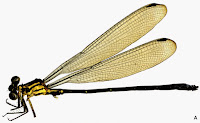
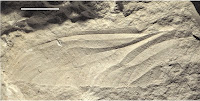
Dragonflies and Damselflies from the Middle Miocene Satovcha Palaeolake of southwest Bulgaria.

The Satovcha Graben (depression formed by extension, as two geological blocks draw apart causing the ground between to thin and slump) forms a basin roughly 7 km in length and 1.5 km in width in the western Rhodopes Mountains of southwest Bulgaria. During the Miocene-Oligocene this depression was filled by a lake, and surrounded by subtropical evergreen forests similar to those found in Southeast Asia today. These deposits have produced a diverse range of Plant fossils preserved in freshwater diatomites (sedimentary rocks made up of the tests, or shells, of tiny planktonic Algae called Diatoms). The site is also known to produce Insect fossils, including Beetles, Coleoptera, Bugs, Hemiptera, Caddisflies, Trichoptera, Earwigs, Dermaptera, Ants and Bees, Hymenoptera, Flies including Mosquitoes, Gnats and Midges, Diptera, Cockroaches and Termites, Dictyoptera, a Grasshopper and Crickets, Orthoptera, and Dragonflies and Damselflies, Odonata; though to date these Insects have never been formally described or studied in any organized way.

In a paper published in the journal Palaeontologica Electronica in September 2016, Andre Nel of thr Institut de Systématique,Évolution, Biodiversité at the Muséum national d’Histoirenaturelle, Nikolay Simov of the National Museum of Natural History in Sofia, Vladimir Bozukov of the Institute of Biodiversity andEcosystem Research at the Bulgarian Academy of Sciences, and Milen Marinov of the Plant Health & Environment Laboratory of the Ministry for Primary Industries in Auckland, New Zealand, describe two new species of Dragonfly and a species of Damselfly from the Middle Miocene Sivik Formation of the Satovcha Graben.

The first Dragonfly species described is placed in the genus Oligaeschna, which has previously been described from other locations of similar age, and given the specific name bulgariensis, meaning 'from Bulgaria'. The species is described from two specimens, though both of these comprise the forewing only, one specimen preserved as part and counterpart on s split block, the second as part only. Insects in most groups can be identified to species level using the venation on the their forewings, so it is not unusual to describe new fossil species using isolated forewings.

Oligaeschna bulgariensis. (1) First specimen (part); (2) Second specimen (counterpart); (3) Second specimen. Scale bars represent 5 mm in all figures. Nel et al. (2016).

The second new Dragonfly species described is placed in the genus Stenolestes, which has previously been described from the Middle Oligocene to Early Miocene of Europe and Siberia, making this potentially the youngest example of the genus, and given the specific name rhodopensis, meaning 'from Rhodopes'; in reference both to the Rhodopes Mountains and the mythical Thracian queen Rhodope. The species is described from an isolated forewing preserved as part and counterpart, plus a largely intact insect compressed in lateral (side) view.

Stenolestes rhodopensis, whole Insect. Scale bar is 1 cm. Nel et al. (2016).

The new Damselfly species is placed in the genus Primorilestes, which has previously been used to describe species from the Early Oligocene of Primorye Territory in Russia and Early Eocene of Denmark, and is given the specific name magnificus, in reference to the quality of preservation on the frst specimen. The species is described from two specimens, a forewing preserved as part and counterpart, and an isolated wing-tip.

Primorilestes magnificus, first specimen (part). Scale bar is 5 mm. Nel et al. (2016).

See also...

http://sciencythoughts.blogspot.co.uk/2015/03/a-new-species-of-clubtail-dragonfly.htmlA new species of Clubtail Dragonfly from Malaysian Borneo.                                                    Clubtail Dragonflies, Gomphidae, are a group of small-to-medium-sized Dragonflies related to Damselflies which get their name from a widening the end...

http://sciencythoughts.blogspot.co.uk/2014/05/a-new-species-of-damselfly-from-la.htmlA new species of Damselfly from the La Montaña de Corazal Cloud Forest of Honduras.                                         Damselflies (Zygoptera) are members of the Dragonfly order (Odonta), though generally smaller...
http://sciencythoughts.blogspot.co.uk/2013/06/a-dragonfly-from-late-jurassic-of.html#comment-formA Dragonfly from the Late Jurassic of Central Poland.                                                 Dragonflies are one of the oldest groups of insects with a fossil record that dates back to the...
Follow Sciency Thoughts on Facebook.

Friday, 2 August 2013

A new species of Hawkweed from Bulgaria.

Hawkweeds (Hieracium spp.) are herbaceous flowering plants in the Aster Family (Asteraceae), closely related to Dandelions. There are numerous species in Europe, Africa, Asia, and North and South America, though the precise number of species is open to dispute, as most Hawkweeds are triploid (have three sets of chromosomes, which means that they cannot reproduce sexually (which requires an even number of chromosomes sets, which can then divide and recombine); the plants instead produce seeds asexually that are genetically identical to the parent plant. These triploid species are thought to have arisen by hybridization of diploid species (i.e. species with two sets of chromosomes that can reproduce sexually). This has led to some dispute over the classification of Hawkweeds, with American botanists tending to regard only the diploid, sexual, species as truly valid taxa with other plats regarded as hybrids of these, while in Europe botanists have tended to recognize the triploid, asexual, varieties as species as well, arguing that they may be of hybrid origin, and incapable of reproducing sexually, but are clearly successful organisms capable of sustaining large stable populations and competing against diploid plants.

In a paper published in the journal Phytotaxa on 20 May 2013, Zbigniew Szeląg of the Institute of Botany at Jagiellonian University, and Vladimir Vladimirov of the Department of Plant and Fungal Diversity and Resources at the Institute of Biodiversity and Ecosystem Research at the Bulgarian Academy of Sciences, describe a new species of Hawkweed from the central Rhodopes Mountains of southern Bulgaria.

Specimen of Hieracium crinitopannosum from by the road from Devin town to Mihalkovo village in the central Rhodopes Mountains of southern Bulgaria. Szeląg & Vladimirov (2013).

The new species is named Hieracium crinitopannosum; it is thought to be a hybrid between Hieracium crinitum and Hieracium petrovae, two diploid species found in the Rhodopes Mountains (Hieracium petrovae) and nearby Vacha River valley (Hieracium crinitum). Hieracium crinitopannosum is a 25-55 cm robust Hawkweed that flowers (pointlessly) in July and August and sets seeds in September. It is found growing in open spaces on eroded and rocky slopes in stands of a several dozen to a few hundred in the central Rhodopes Mountains of southern Bulgaria; Szeląg & Vladimirov suggest that it is likely that it is also found across the border in northern Greece.

The approximate location of the area where Hieracium crinitopannosum was discovered. Google Maps.


Follow Sciency Thoughts on Facebook.

Tuesday, 22 May 2012

Earthquake in western Bulgaria.

On Tuesday 22 May 2012, sightly after 3.00 am local time (slightly after midnight GMT), western Bulgaria was shaken by an Earthquake centered on the village of Meshtitsa, 24 km west of the capitol, Sofia. The quake was recorded as measuring 5.6 on the Richter Scale at a depth of 9.4 km by the United States Geological Survey, and 5.8 on the Richter Scale at a depth of 10 km by the Bulgarian National Seismological Data Center. The quake was felt across western Bulgaria, including in Sophia, as well as in the neighboring states of Serbia, Macedonia, Romania and Greece. There are no reported casualties, but there was localized damage to houses, a widespread panic during the quake has been reported in the press. The area has been hit by a number of aftershocks, though none as large as the original quake.

Map showing the location of the 22 May 2012 quake. USGS.

The geology of the Balkan Peninsula is complex. Bulgaria lies on the Eurasian Plate, but it is surrounded by a number of microplates created by the collision of Africa with Europe from the south. Southern Greece lies on the Aegean Sea Plate, a breakaway part of the Eurasian Plate, which is being pushed to the southwest by the westward movement of the Anatolian Plate, another breakaway part of the Eurasian Plate underlying Turkey. This is in turn being pushed west by the northeasterly motion of the Arabian Plate, a breakaway part of the African Plate. The western part of the Balkan Peninsula, and the eastern part of Italy are underlain by the Adriatic (or Apulian) Plate, a breakaway part of the African Plate which has pushed like a wedge into southern Europe.

Map showing the movement of the microplates of the eastern Mediterranean. Kotzev et al. (1998).

Thus the rocks of Bulgaria are being pulled to the southwest by the movement of the Aegean Sea Plate and pushed to the northeast by the movement of the Apulian Plate. This has resulted in a number of faults bisecting the country, forming the Pernic Fault Zone, the Vitosha Fault Zone, the Zheleznitsa Fault Zone and the Sophia Graben (a Graben is an area of geological extension). The 22 May Earthquake is thought to have been caused by movement along the Pernic Fault.

Map showing the extensive faulting across Bulgaria. Bulgarian Academy of Science

See also Earthquake on the Modena Plane, northern ItalyEarthquake in northern AlgeriaSouthwest Poland hit by Earthquake, Zurich shaken by mild Earthquake and Earthquakes on Sciency Thoughts YouTube.

Follow Sciency Thoughts on Facebook.

Sunday, 15 January 2012

Protests against hydraulic fractionation across Bulgaria.

Protests took place across Bulgaria on Saturday 14 December 2012, against plans by the government to allow US oil and gas company Chevron to extract shale gas by hydraulic fractionation ('fracking') in the country. Protests took place in the capitol, Sophia, as well as in the Dobruzha region in the northeast, in the Black Sea ports of Varna and Burgas, and the provincial capitols of Plodiv and Pleven.

Protestors in Sophia on Saturday 14 January 2012.

Hydraulic fractionation, or fracking, is a process by which pressurized water and chemicals are forced into buried shale deposits in order to shock them into releasing gas and sometimes oil. The process has been linked to earthquakes, accused of polluting freshwater aquifers and using excessive water in dry countries.

Bulgaria is currently regarded as the poorest country in the European Union, and is more-or-less dependent on imported gas from Russia to satisfy its energy needs. The country is estimated to have between 300 billion and one trillion cubic meters of shale gas in two fields, one near Novi Pazar in the northeast of the country, and one offshore on the Black Sea Shelf. The Bulgarian government has recently signed a five-year deal with Chevron, allowing the company to explore the Novi Pazar field, with the potential to break the countries dependence on Russian gas, and bring jobs and investment to the country.

However environmental group Fracking Free Bulgaria has objected to the plans on the grounds that the area is home to freshwater aquifers that supply much of the Balkans, and is already prone to seismic activity (which may heighten the possibility of chemicals used in the process leaking into aquifers, and the pressure blasts triggering larger earthquakes), and that the local population has not been consulted about the deal. In addition to the street protests a Facebook group called We are against a Bulgarian Chernobyl - The extraction of Shale Gas has attracted over 50 000 members.

The protests culminated with the presentation of a petition to the Speaker of the Bulgarian Parliament, Tsetska Tsacheva, calling for a moratorium on the process, something that has happened in a number of states around the world, including France in the EU. Tsacheva is reported to have promised a parliamentary debate on a moratorium, though since Bulgaria has already signed a deal with Chevron, this might be hard to enforce without being forced to pay some form of compensation to the oil company.

Exploration companies Park Place Energy and TransAtlantic Petroleum are also apparently interested in extracting shale gas in Bulgaria. Both companies claim to already have licenses to develop shale gas fields in Bulgaria, though the Bulgarian Government has not confirmed this.