Showing posts with label Senegal. Show all posts

Friday, 7 November 2025

Outbreak of Rift Valley Fever causes 42 Human deaths in Mauritania and Senegal.

An outbreak of Rift Valley Fever has caused the deaths of 42 people between 20 September and 30 October 2025, according to a press release issued by the World Health Organization on 5 November 2025. A total of 404 people have been infected in the two countries, where the disease is considered endemic, as well as a large number of domestic Animals, many of whom have also died. The risk of further spread is considered to be high, due to an exceptional rainy season, which has led to an unusually high level of Mosquito activity (Mosquitos are the main vector for the disease), as well as the widespread movement of Cattle across borders into neighbouring countries, particularly Mali and The Gambia.

In Mauritania, 46 Human cases of Rift Valley Fever were reported between 27 September and 30 October, with 14 deaths (a case fatality ratio of 30%). Infections have been reported in thirteen wilayas (regions), three of which border onto other countries, Assaba, which has a southern border with Mali, and Brakna and Trarza, both of which border Senegal across the Senegal River.

According to the Mauritanian Ministry of Animal Resources, cases in Animals first began to appear in August this year, with the initial cases being in Goats and Dromedary Camels, and cases later appearing in Sheep and Cattle. To date 235 Animals have been confirmed to be infected with the disease, 71 of which have died. The majority of the Animal deaths occurred in Brakna Wilaya, with fatalities also reported in Hodh El Gharbi and Hodh Ech Chargui wilayas, which also border onto Mali.

The last major outbreak of Rift Valley Fever in Mauritania was in 2022, when 47 people are known to have been infected, with 23 fatalities (a case fatality ratio of 49%). Most of those infected were pastoralists, with cases reported in nine of Mauritania's fifteen wilayas.

In Senegal, 358 Human cases of Rift Valley Fever were reported between 20 September and 30 October, with 28 deaths (a case fatality ratio of 7.8%). Cases have been reported in eight of the county's fourteen administrative regions, although 78% of all cases have been in Saint-Louis, the most northerly region, with a long border with Mauritania. Rift Valley Fever has also been reported in Dakar (9 cases), Fatick (12 cases), Kaolack (13 cases), Louga (18 cases), Matam (23 cases), Thiès (2 cases) and Tambacounda (2 cases).

A total of 160 Animals have tested positive for Rift Valley Fever, in nine of the regions of Senegal, with Sheep, Goats and Cattle being affected; seven regions (Dakar, Fatick, Louga, Matam, Saint-Louis, Tambacounda and Thiès) have reported Animal fatalities. However, over the same period, 640 cases of spontaneous abortion in domestic Animals (a common symptom of Rift Valley Fever), which may indicate a larger, undiagnosed, Animal outbreak.

The last recorded outbreak of Rift Valley Fever in Senegal occurred in the Diourbel Region in January 2025, while the last recorded Human infection was in the Saint-Louis Region in 2022.

Geographic distribution of confirmed Human Rift Valley Fever cases (404) and deaths (42) in Mauritania and Senegal, 20 September to 30 October 2025. World Health Organization.

Rift Valley Fever is a Viral zoonotic disease that primarily affects Animals but also has the capacity to infect Humans. Infection can cause severe disease in both Animals and Humans. The disease also results in significant economic losses due to death and abortion among Rift Valley Fever-infected livestock. 

The Rift Valley Fever Virus is a member of the Phlebovirus genus in the order Bunyavirales, of segmented negative-strand RNA Viruses, the group which also includes Hantavirus (Leprosy) and Lassa Virus (Lassa Fever). 

A Phlebovirus Viron. Michèle Bouloy in Tidona et al. (2002).

The Rift Valley Fever Virus was first identified in 1931 during an investigation into an epidemic among sheep on a farm in the Rift Valley of Kenya. Since then, outbreaks have been reported in sub-Saharan Africa. In 1977 an explosive outbreak was reported in Egypt, the Rift Valley Fever virus was introduced to Egypt via infected livestock trade along the Nile irrigation system. In 1997–98, a major outbreak occurred in Kenya, Somalia and Tanzania following El Niño event and extensive flooding. Following infected livestock trade from the horn of Africa, Rift Valley Fever spread in September 2000 to Saudi Arabia and Yemen, marking the first reported occurrence of the disease outside the African continent and raising concerns that it could extend to other parts of Asia and Europe.

The majority of Human infections result from direct or indirect contact with the blood or organs of infected animals. The Virus can be transmitted to humans through the handling of animal tissue during slaughtering or butchering, assisting with animal births, conducting veterinary procedures, or from the disposal of carcasses or fetuses. Certain occupational groups such as herders, farmers, slaughterhouse workers, and veterinarians are therefore at higher risk of infection.  

The Virus infects Humans through inoculation, for example via a wound from an infected knife or through contact with broken skin, or through inhalation of aerosols produced during the slaughter of infected Animals.  

There is some evidence that humans may become infected with Rift Valley Fever by ingesting the unpasteurised or uncooked milk of infected Animals. Human infections have also resulted from the bites of infected Mosquitoes, most commonly the Aedes and Culex Mosquitoes and the transmission of Rift Valley Fever Virus by hematophagous (blood-feeding) Flies is also possible. To date, no human-to-human transmission of Rift Valley Fever has been documented, and no transmission of Rift Valley Fever to health care workers has been reported when standard infection control precautions have been put in place. There has been no evidence of outbreaks of Rift Valley Fever in urban areas.

The ecological cycle for the Rift Valley Fever Virus. Mosquitoes are both a reservoir and vector for Rift Valley Fever Virus, which means that they can maintain Virus for life and transmit it to their offspring via eggs. After periods of heavy rainfall and flooding, an increased number of Rift Valley Fever Virus-infected Mosquitos may hatch and pass virus to People and Animals. Humans become infected through mosquito bites and through direct contact with infected animal blood or tissue. Direct contact can occur during slaughtering of infected Animals and veterinary procedures. No Human-to-Human transmission has been documented. Centers for Disease Control and Prevention.

See also...


Thursday, 19 June 2025

Elephant seen in Niokolo-Koba National Park, Senegal, for the first time since 2020

An Elephant has been observed in the Niokolo-Koba National Park in the east of Senegal for the first time since January 2020. The Elephant, identified as a 35-40-year-old bull called Ousmane, was observed at night by a camera trap earlier this month. Five years ago, Ousmane was one of five-to-ten Elephants living in the park, but no sightings have been made, and it was assumed that Elephants had become locally extinct in Senegal.

A bull Elephant called Ousmane in the Niokolo-Koba National Park in June 2025. Niokolo-Koba National Park/Panthera.

Senegal was once home to hundreds of Elephants, bur they were hunted heavily during the colonial period, and a combination of the value of their tusks and competition for land with Humans has led to their population continuing to fall. Even before their apparent disappearance in 2020, Elephants were thought to be in almost irreversible decline in Senegal, with the population being both very small and very inbred. Ousmane, the last known surviving Elephant in Senegal is known to be a hybrid between two Elephant species, African Forest Elephant, Loxodonta cyclotis, and African Savanna Elephant, Loxodonta africana (both of which are considered to be Critically Endangered), and it is unclear if he would be able to breed if the opportunity arose.

Founded in 1981 the Niokolo-Koba National Park covers 9130 km² of gallery forests, savannah grass floodplains, ponds, and dry forests, cut through by the Gambia, Sereko, Niokolo, Koulountou rivers. As well as Elephants the park is home to one of two (known) remaining populations of Lions in West Africa, and populations of Giant Eland, Taurotragus derbianus, the largest extant Antelope species, Gianr Pangolin, Smutsia gigantea, African Wild Dogs, Lycaon pictus, and West African Chimpanzees, Pan troglodytes versus.

See also...

Tuesday, 11 October 2022

Contaminated medicine linked to the deaths of 66 children in The Gambia.

The deaths of 66 children in The Gambia, West Africa, have been linked to contaminated medicines from India.  The children, who all died of acute kidney failure, had all consumed cough syrups produced by Maiden Pharmaceuticals, a company based in Haryana State, India. Another 81 children are being treated in hospitals for kidney problems linked to the products.

Musa Kayateh, one of 66 children in The Gambia who died after consuming medicine products products produced by Indian company Maiden Pharmaceuticals. Kayateh Family/BBC.

The contamination was not detected immediately as The Gambia does not have a laboratory capable of testing pharmaceuticals, with doctors initially suspecting a range of illnesses, including Malaria and Meningitis. Only after samples were sent to a laboratory in neighbouring Senegal was it discovered that four paracetamol-based cough syrups produced by Maiden Pharmaceuticals, Promethazine Oral Solution, Kofexmalin Baby Cough Syrup, Makoff Baby Cough Syrup, and Magrip N Cold Syrup, all contained diethylene glycol, a sweat-tasting chemical which has been linked to several previous poisoning incidents.

Medicines seized by authorities in The Gambia following the discovery that they were contaminated with diethylene glycol. Milan Berckman/AFP.

Following the discovery Police and Red Cross workers in The Gambia carried out a door-to-door search for these drugs, eventually confiscating over 16 000 products. The World Health Organization has issued a global alert for these drugs, as, while they were only ever officially exported to The Gambia, there is a danger that they may have reached other countries, particularly those in West Africa, by informal routes. 

Opposition politicians and families of the deceased children have questioned the delays in tracing the cause of the deaths, claiming that the government should have reacted more quickly once children began to die. The Gambian government has defended its actions by pointing out that the deaths did not immediately show up against a high child mortality rate in the summer months, already made worse by  extensive flooding this year, with an associated jump in the number of cases of water-borne diseases. The Gambian government has now announced plans to open an laboratory capable of carrying out quality assays on medicines.

Flooding in Banjul, The Gambia, in August 2022, triggered by the heaviest rains in 50 years. The Standard Newspaper.

In India, the Central Drugs Standard Control Organisation (India's national regulatory body for cosmetics, pharmaceuticals and medical devices) and Haryana State Government have began an investigation into the activities of Maiden Pharmaceuticals, with samples of the four cough syrups having been sent to the regional pharmaceuticals testing lab in Chandigarh. Maiden Pharmaceuticals has previously been accused of selling substandard medicines by several Indian states, including Bihar, Gujarat, Jammu and Kashmir, and Kerala, and its products have been banned in Vietnam over similar concerns.

Paracetamol-based cough syrups have been phased out in India, following an incident in 2020 in which 17 children died of diethylene glycol poisoning in Jammu and Kashmir State. They have been replaced with liquid paracetamol suspensions, in which diethylene glycol is easier to detect. 

See also...

Follow Sciency Thoughts on Facebook.

Follow Sciency Thoughts on Twitter.


Friday, 8 April 2022

The Cabeço da Amoreira burial: An Early Modern Era West African buried in a Mesolithic shell midden in Portugal.

The Tagus and Sado valleys of central Portugal contain numerous shell middens, dating back to the Late Mesolithic, roughly 6500 to 5000 years ago. As well as depositories for waste shells, these sites were used as burial grounds by the people who made them. A number of these sites were excavated by archaeologists in the 1930s, producing a series of sets of Human remains, buried within the middens without grave goods. One site, Cabeço da Amoreira at Muge in the Tagus Valley yielded an individual noted at the time as being both notably taller and better preserved than others recovered from such sites. More recently, scientists working on a database of Mesolithic European genomes have begun to sequence individuals from these Mesolithic Portuguese sites, including the Cabeço da Amoreira individual, in the process of which they found that this individual was not closely related to other individuals from Mesolithic burials in Portugal, or elsewhere in Europe, but rather appeared to be of African descent.

In a paper published in the Journal of Archaeological Science: Reports on 21 February 2022, Rita Peyroteo-Stjerna of Human Evolution at Uppsala University and the Centro de Arqueologia da Universidade de Lisboa, Luciana Simões, also of Human Evolution at Uppsala University, Ricardo Fernandes of the Department of Archaeology at the Max Planck Institute for the Science of Human History, the School of Archaeology at the University of Oxford, and the Faculty of Arts at Masaryk University, independent researcher Gonçalo Lopes, and Torsten Günther and Mattias Jakobsson, again of Human Evolution at Uppsala University, present the results of the follow up study which used multiple lines of enquiry to determine the origin of the Cabeço da Amoreira individual.

 
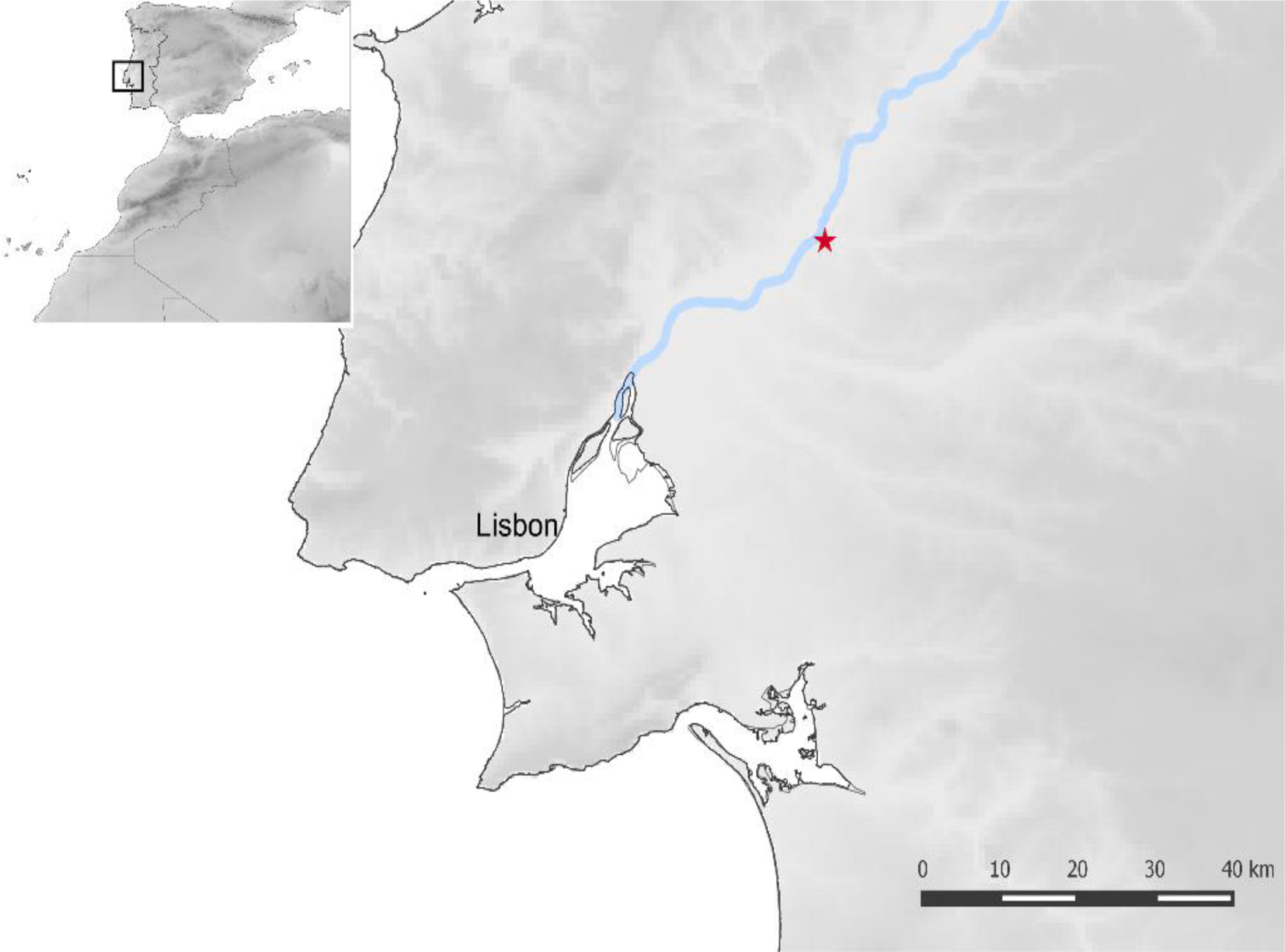
Location of Cabeço da Amoreira shell midden (indicated by the star), Muge, Tagus valley, Portugal. Peyroteo-Stjerna et al. (2022).

Radiocarbon dating of material from the Cabeço da Amoreira site, including bone, charcoal and shells, have produced dates of between 6500 and 5000 BC, consistent with a Mesolithic origin for the site, however, radiocarbon dating of collagen from the individual buried at the site yielded dates between 1529 and 1763 AD, and probably between 1631 and 1793, consistent with an Early Modern origin. 

Relationships between Early Modern Europe and Africa were dominated by the trans-Atlantic slave trade, which saw millions of people taken from Africa and shipped to European colonies in the New World, and to a lesser extent Europe itself. Portugal is estimated to have directly imported 2-3000 African slaves per year between the fifteenth and nineteenth centuries. Most of these remained enslaved their whole lives, though some were freed and able to live relatively independent lives, albeit very much at the bottom of the social scale. 

Because mitochondrial DNA is found in the mitochondria, organelles outside the cell nucleus, it is passed directly from mother to child without being sexually recombined each generation, enabling precise estimations of when individuals shared common ancestors, at least through the female line; this is known as the female haplogroup. It is also possible to trace direct ancestry through the male line, using DNA from the Y chromosome, which is passed directly from father to son without sexual recombination; this is known as the male haplogroup. Since everyone has mitochondria, it is possible to determine the female haplogroup of all Humans, but generally only males have a Y chromosome and can be assigned to a male haplogroup.

Genetic analysis of the Cabeço da Amoreira individual established that he had a Y chromosome, indicating that he was male. It was also possible to determine both his male haplogroup. He was found to belong to the E1b1a male haplogroup, which is the most widespread in sub-Saharan Africa, being commonly found in Nigeria, Congo, Cameroon, Gabon, Guinea-Bissau, and among Bantu-speakers in Southern Africa.

A principle component analysis based upon his entire recoverable genome revealed that Cabeço da Amoreira man showed a greater genomic similarity to West Africans than to other populations, and in particular, to people of Gambian or Mandinka origin. 

 
(A) Principal component analysis. Worldwide modern populations (circles coloured according to continent) and Cabeço da Amoreira man projected as a yellow, red outlined diamond. (B) Geographic distribution of the genetic affinity of the studied individual with modern African populations, measured by outgroup-f₃. The two highest f₃ scores are depicted with diamonds. Peyroteo-Stjerna et al. (2022).

Peyroteo-Stjerna et al. next looked for alleles (gene variants) associated with sub-Saharan populations, finding that Cabeço da Amoreira man had a number of alleles which would further support an African origin, notably the FY*B allele, which is associated with resilience to Malaria, and a number of skin pigmentation alleles, namely MFSD12 rs10424065; DDB1 rs11230664; OCA2 rs1800404; SLC45A2 rs16891982; and HERC2 rs6497271, which are more commonly associated with sub-Saharan African populations than with Europeans (skin pigmentation is complicated, genetically speaking, and it is not possible to directly determine someone's exact skin tone from their genome at the current time, but it is possible to associate allele abundances with specific populations). Cabeço da Amoreira man also lacked the alleles for lactase persistence (i.e. retaining the ability to digest milk into adult life), sugesting that he was lactose intolerant, something more common in Africans than Europeans.

A stable isotope analysis for carbon and oxygen isotopes, based upon bone collagen from Cabeço da Amoreira man, suggested that when he was growing up his diet comprised largely C₄ Plants, supplemented with seafood. A diet of C₄ Plants is not at all typical for Portugal (or elsewhere in Europe) in the Early Modern period, although it would have been common in parts of West Africa, notably the Sahel Region (which reaches the coast in the Senegambia region and southern Mauritania), where the principal crops for the time would have been Sorghum and Millet, both of which are C₄ Plants. Further south, in the West African forest zone, the principal crops were Rice (a C₄ Plant) in the west and a more mixed vegecultural diet (also based around C₄ Plants) in the east. Therefore, the C₄ Plant component of Cabeço da Amoreira man's diet makes it likely that he came from the Sahel region, and the seafood component further ties him to the Senegambia and Mauritania region.

 
Estimated area of origin of Cabeço da Amoreira man (mug019) in West Africa and place of burial in Portugal. Traditional plant food-producing systems in West Africa. Peyroteo-Stjerna et al. (2022).

Around 35 000 slaves were brought to Portugal from Africa between 1514 and 1866. Records of these movements are fairly complete after 1750, but older records are somewhat patchy, making the origin of Cabeço da Amoreira man difficult to reconstruct in this way. However, it is known that slaves were brought to Portugal from predominantly from Guinea-Bissau and The Gambia, with smaller numbers arriving from the Cape Verde islands, Princes Island and São Tomé, Bance Island (Sierra Leone), the Gold Coast (Ghana), Senegal and Whydah (on the coast of modern Benin). 

Most slaves in Portugal during this period would have been baptised as Christians, and buried in Christian burial grounds. However, there are records of slaves being buried in other ways, including by roadsides, in wastelands or in Olive groves. The Church generally kept good records of births, deaths, marriages, and baptisms during this period, for all social classes including slaves, which offered some hope of discovering the identity of Cabeço da Amoreira man. Peyroteo-Stjerna et al. were able to identify two deaths of interest in the Cabeço da Amoreira area in the seventeenth century, the first of an unnamed slave on 5 May 1633, for whom no burial location is listed, and the second of the murder of a man named João at Arneiro da Amoreira on 1 November 1676; João is described as being brown skinned, which may indicate that he was of mixed origins, but he was buried in a churchyard, so presumably was not Cabeço da Amoreira man.

One notable feature of the Cabeço da Amoreira burial is that the body does not appear to have been buried hastily, but rather laying upon a bed of sand which had been used to line the grave, something not seen in Mesolithic shell midden burials (the difference was noted at the time of excavation, but the significance of this, understandably, was not realised).This implies that the burial at this location was planned and carefully executed, rather than being the hurried disposal of the body of a slave or murder victim.

Shell midden burials, both ancient and modern, are known from the Senegambia region, and are still sometimes practiced among Serer fishermen in the Saloum Delta. Here, some families maintain temporary settlements on islands deep within the delta, which are used for four-to-five months each year, when shellfish are harvested. Since these sites are essentially located on shifting sandbanks, the shell middens that build up their form stable hardgrounds, which can be used for purposed such as supporting structures and burying anyone who dies while the temporary villages are in use.

 
Modern cemetery on a shell midden, at Fadiouth in the Saloum Delta, Senegal. Hardy et al. (2015).

This does not unequivocally tie the Cabeço da Amoreira burial to the Senegambia region, but does create a plausible scenario in which members of a community transplanted to Portugal, who had practiced shell midden burials in their homeland, might have chosen to recreate the practice in their new environment.

See also...


Follow Sciency Thoughts on Facebook.

Follow Sciency Thoughts on Twitter.


Friday, 5 March 2021

Thousands of Great White Pelicans die in Avian Influenza outbreak in Senegal and Mauritania.

Nearly 2500 Pelicans died in late January in two National Parks on the border of Senegal and Mauritania as a result of an outbreak of the Highly Pathogenic Avian Influenza, according to a press release issued by BirdLife International on 4 March 2021. In late January 2021, 750 Great white pelicans were found dead in the Djoudj Bird Sanctuary, a remote pocket of wetlands and a UNESCO World Heritage site in northern Senegal, which provide a rest stop for millions of migratory birds every year. This was followed by the death of 1642 pelican chicks and two dozen adult pelicans in Diawling National Park in Mauritania bordering northern Senegal, which hosts over 250 bird species. According to national authorities, these deaths were attributed to the outbreak of the Highly Pathogenic Avian Influenza.

Following the outbreak, the national governments of Senegal and Mauritania are coordinating an emergency response. Nature Mauritania and the collaborating organisation in Senegal Nature Communautés Développement are at the forefront of this response. Nature Mauritania is raising awareness of Highly Pathogenic Avian Influenza in communities in Diawling, and is leading a surveillance committee set up in Banc d’Arguin to monitor any outbreak of the disease. Nature Communautés Développement in Senegal has activated its network of members and volunteers to monitor and report any death of birds across the country. While no further Highly Pathogenic Avian Influenza outbreak has been reported in the two countries, epidemiological surveillance is ongoing in other sites including parks and reserves. Increased collaboration and information sharing between the two countries is ongoing.

 
A pod of Great white pelicans in Djoudj Bird Sanctuary in Senegal. Lewis Kihumba/Geoffroy Citegetse. Birdlife International.

More importantly, a Highly Pathogenic Avian Influenza Action Plan has been developed in Senegal and the focus is now on its implementation. Three sub-committees on Epidemiology, Surveillance and Biosecurity have been established. Currently, meetings are being held with donors and technical partners to finance this action plan. Furthermore, epidemiological monitoring of wild and domestic birds, and active surveillance in marketplaces and ornithological sites, are ongoing. Capacity building to ensure an effective response is also being carried out. The Senegalese coordinating team is currently undergoing training on Incident Management Systems.

'The Great White Pelican is a migratory bird with a large range in Africa. Monitoring the key sites used by the species in West Africa is key to prevent the spread of the Highly Pathogenic Avian Influenza. Transboundary cooperation and involvement of communities is essential in this response' stated Djibril Diallo, Executive Director of Nature Mauritania.

Cross-border meetings between authorities in Senegal and Mauritania are also taking place to ensure coordination between the two countries. BirdLife International and its partners will continue supporting national authorities in Mauritania and Senegal to implement the Highly Pathogenic Avian Influenza Action Plan and enhance monitoring to prevent future outbreaks.

See also...


Follow Sciency Thoughts on Facebook.

Follow Sciency Thoughts on Twitter


Tuesday, 9 February 2021

Illegal Rosewood shipment intercepted in The Gambia.

A shipment of Rosewood has been intercepted as its owners tried to export it from The Gambia, West Africa, according to a statement made by the Gambian Environment Minister,  Lamin Dibba, on Monday 8 February 2021. The shipment comprised 22 containers of wood bound for an undisclosed destination, which has been seized by customs officials. Rosewoods, Pterocarpus and Dalbergia spp., have been heavily over-exploited in many areas of Africa due to the high value of their timber, and their export is now banned from most countries. The Gambia has previously been a major exporter of Rosewood, and is now largely depleted of these trees, with neighbouring Senegal accusing the smaller country of being a conduit for the export of trees felled illegally there.

 
A container filled with Rosewood logs intercepted in The Gambia this week. The Fatu Network,

The term Rosewood, or 'Hongmu' (红木) refers to a group of 29 timber species with distinct features valued in China, including the rich hue, extreme durability and often a pleasant smell. Hongmu species are widely used in antique furniture reproduction in China and Vietnam. Nearly half of the world’s countries (95 in total) across five continents have been exporting Rosewood to China since 2000. At a plant genus level, where studies exist, 90 percent of Pterocarpus and Dalbergia populations show declining or unstable populations. Since 2015, Africa has become the world’s top Hongmu producing region, accounting for the majority of all Hongmu log imports to China by volume between January 2015 and June 2019. Demand for Hongmu has driven boom-and-bust cycles, marked by steep increases in harvest and export volumes from individual countries before a sudden collapse, or 'bust'. Once a species is exhausted in one country, or new control measures are put in place by governments, smuggling networks quickly identify new supplies and move to the next country or region. This phenomenon of 'boom and bust' in the Rosewood trade has been well documented and was confirmed by the CITES Secretariat in 2019.

See also...


Follow Sciency Thoughts on Facebook.

Follow Sciency Thoughts on Twitter