Showing posts with label Amazonas Department. Show all posts

Saturday, 5 February 2022

Magnitude 6.5 Earthquake in Amazonas Department, Peru.

The United States Geological Survey recorded a Magnitude 6.5 Earthquake at a depth of 100.3 km, beneath Department of Amazonas, Peru, slightly before 11.00 am local time (slightly before 4.00 pm GMT) on Thursday 3 February 2022. There are no reports of any damage or casualties associated with this event at this time, although it is reported to have been felt across a wide area of northern Peru and southern Ecuador. This is common with large deep Earthquakes, with the event being felt over a wide area, but relatively little damage, as the energy of the quake is dissipated over a wide area before it reaches the surface.  

 
The approximate location of the 3 February 2022 Department of Amazonas Earthquake. USGS.

Peru is on the west coast of South America and the western margin of the South American Plate, close to where the Nazca Plate, which underlies part of the east Pacific, is being subducted along the Peru-Chile Trench. The Nazca Plate passes under the South American Plate as it sinks into the Earth, this is not a smooth process and the plates repeatedly stick together then break apart as the pressure builds up, causing Earthquakes. As the Nazca Plate sinks further it is partially melted by the friction and the heat of the Earth's interior. Some of this melted material then rises through the overlying South American Plate, fuelling the volcanoes of Peru and neighbouring countries.

 
The subduction of the Nazca Plate beneath the South American Plate, and how it causes Earthquakes and volcanoes. Pacific Earthquake Engineering Research Center.

See also...


Follow Sciency Thoughts on Facebook.

Follow Sciency Thoughts on Twitter.


Monday, 23 March 2020

Temnocephala ivandarioi: A new species of endosymbiotic Flatworm from a Colombian Freshwater Crab.

The Rhabdocoela is an order of Platyhelminth Flatworms with about 1700 species known across the globe. The majority of these are freeliving, often being predators specialising in the hunting of Cladocerans (Water Fleas), while others feed on Algae and sometimes incorporate them into their tissues to form symbiotic relationships. One group of Rhabdocoels, the Temnocephalidae, are not freeliving, but rather ectosymbionts (organisms that live on the surface or within the body cavities of other organisms but do not obtain food from them) or parasites of other animals. The genus Temnocephala includes 37 species of symbiotic freshwater Rhabdocoels from the Neotropics, which are associated with a large variety of hosts including Chelonians (3), Mollusks (6), Insects (7) and Crustaceans (21). At present, only two species have been described from Colombia, Temnocephala colombiensis, an ectosymbiont of the Gastropod Pomacea sp., and Temnocephala icononcensis, hosted by the Pseudothelphusid Crabs Hypolobocera bouvieri, Phallangothelphusa dispar, and Strengeriana cajaensis.

In a paper published in the journal ZooKeys on 12 March 2020, Carolina Lenis, Freddy Ruiz, and Carlos Muskus of the Programa de Estudio y Control de Enfermedades Tropicales at the Universidad de Antioquia, and Antonio Marcilla and Imelda Vélez of the Departamento de Farmacia y Tecnología Farmacéutica y Parasitología, at the Universitat de València, describe a new species of Rhabdocoels from the branchial chambers of the Freshwater Crab Valdivia serrata in Amazonas Department, Colombia.

Eleven specimens of Valdivia serrata were manually collected from the Reserva Natural Tanimboca. The specimens were transported alive to the Programa de Estudio y Control de Enfermedades Tropicales laboratory and identified using a Decapod key. Specimens of Temnocephala were removed
from the branchial chambers of host crabs under a stereomicroscope, rinsed in saline solution, and preserved in cold alcohol-formalin-acetic acid and 70% ethanol for morphological identification by light microscopy; or fixed in 2.5% glutaraldehyde for observation by Scanning Electron Microscopy. The Temnocephalans were identified by focusing on the morphology of the reproductive complex, the shape of the epidermal excretory syncytial plates and the deposit areas of the eggs in the host.

The new species is named Temnocephala ivandarioi, in honour of Iván Darío Vélez Bernal for his outstanding contributions to the study of helminthology and the understanding of tropical diseases in Colombia. The species has a body 1.36–2.26 mm in length (excluding the tentacles), and 1.18–1.56 mm wide, with an adhesive disk on the ventral surface and eyespots with red pigmentation.

Temnocephala ivandarioi and Valdivia serrata (A) specimen of Temnocephala ivandarioi showing an egg, ventral view, (B) adult specimen stained in Meyer´s paracarmine, (C) specimen stained
in Borax carmine (D) male specimen of
Valdivia serrata, (E) abdomen, (F) gonopods, lateral view. Scale bars are 200 μm in (A)–(C), 10 mm in (D)–(F). Lenis et al. (2020).

In Colombia more than 132 species of Decapod Crustaceans have been recorded, while only two associated species of Temnocephalans have been reported to date: Temnocephala icononcensis and Temnocephala ivandarioi. The great diversity of these potential hosts suggests that most temnocephalans remain undescribed.

Temnocephala ivandarioi details of epidermal excretory syncytial plates and eggs. (A) antero-lateral area observed with Scanning Electron Microscope showing leftmost tentacle and left epidermal excretory syncytial plate, arrow showing contour and position of excretory pores (n). (B) Line drawing of entire specimen showing the epidermal excretory syncytial plates. (C) egg observed with Scanning Electron Microscope showing the filament (fi), peduncle (pe), and plane of fracture of the operculum (pf ). (D) Line drawing of a whole egg showing the oblique fracture plane to the longitudinal axis of the egg. (E) Live adult specimen showing red eyespot pigment. (F) Unhatched egg showing the filament (fi). (G), (H) Live eggs deposited on branchial chambers of Valdivia serrata. Scale bars are 100 μm in (A)–(F), and 1mm in (G) and (H). Lenis et al. (2020).

See also...

https://sciencythoughts.blogspot.com/2019/01/difroehlichia-elenae-new-species-of.htmlhttps://sciencythoughts.blogspot.com/2018/01/xenoturbella-japonica-new-species-of.html
https://sciencythoughts.blogspot.com/2016/08/cratera-viridimaculata-new-species-of.htmlhttps://sciencythoughts.blogspot.com/2015/03/a-trematode-flatworm-from-intestines-of.html
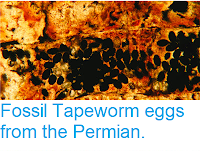
https://sciencythoughts.blogspot.com/2014/07/a-new-species-of-liver-fluke-from.htmlhttps://sciencythoughts.blogspot.com/2013/06/fossil-tapeworm-eggs-from-permian.html
Follow Sciency Thoughts on Facebook.

Tuesday, 1 July 2014

A new species of Tapir from South America.

Tapirs are forest dwelling Perissodactyls (even-toed ungulates, the group of Mammals that also includes Horses and Rhinos) currently found in India, South and Central America. They are thought to have originated in North America, and subsequently dispersed across Eurasia; both areas having large numbers of fossil taxa but no living species. Tapirs reached South America during the Great American Faunal Interchange, which followed the closure of the Panama Seaway, and subsequently survived the end-Pleistocene extinction in South America, where they were the largest terrestrial Mammals to do so. All Tapir species are currently classed as either Vulnerable or Endangered under the Terms of the International Union for the Conservation of Nature’s Red List of Threatened Species.

In a paper published in the Journal of Mammalogy in December 2013, a team of scientists led by Mario Cozzuol of the Universidade Federal de Minas Gerais describe a new species of Tapir from South America. This is the first new species of living Perissodactyl described for over a century, and the first new living Tapir species since 1865.

The new species is named Tapirus kabomani, which derives from ‘Arabo kabomani’ a name for Tapir in the Paumarí language, which is indigenous to the area where the first specimens were collected. Tapirus kabomani is distinct from all other Tapir species both physically and genetically, and is notably smaller and shorter than any other living Tapir or fossil South American Tapir.

Camera-trap photos of 2 specimens of Tapirus kabomani in southern Amazonas State from Brazil. Lateral view of the head and anterior body of a male (right) and female (left) specimens. Cozzuol et al. (2013).

Tapirus kabomani was found in Amazonas, Rondônia, and Mato Grosso states in Brazil and in Amazonas Department in Columbia; it is also thought to live along the Guiana Shield, in southern French Guiana and Amapá State in Brazil. This gives it a range that overlaps that of the previously described Tapirus terrestris, the first time two living species of Tapir have been shown to have overlapping ranges.

The species is described from ten specimens, the oldest of which was collected by Theodore Roosevelt in 1912. Roosevelt was apparently informed by local hunters that his specimen was a different kind of Tapir, and returned it to the United States for analysis, only to have is rejected as a local variation of Tapirus terrestris

See also…


Rhinoceroses are iconic members of the modern Mammalian megafauna, distinguished by their large bulk, thick hides and horns. There are five modern species of Rhinoceros from Africa and Asia...


Tapirs are large tropical, forest dwelling, herbivorous mammals related to Horses and Rhinoceroses. They have an unusual distribution, being found in South and Central America, as well as...


Rhinoceroses are iconic members of the modern Mammalian megafauna, distinguished by their large bulk, thick hides and horns. There are five modern species of Rhinoceros from Africa and Asia, three of which are considered to be Critically Endangered under...


Follow Sciency Thoughts on Facebook.