Showing posts with label Kibale National Park. Show all posts

Tuesday, 14 April 2026

Lethal conflict during the fission of a Chimpanzee group in Kibale National Park, Uganda.

Warfare, and other forms of collective violence, are one of the more distinctive, if less pleasant, forms of Human behaviour. In these acts, Humans are able to sort themselves into groups defined by traits other than kinship, such as ethnicity, religion, language, or other cultural traits, in order to engage in conflict against other groups of Humans. It has been proposed that this is a result of our ability to use cultural traits to define cohesive social groups, giving us a distinct sense of who is 'us' and who is 'them', enabling closer cooperation with members of our group, while at the same time maintaining a hostility to outsiders. 

However, this cannot explain how conflict can erupt within formerly cohesive groups, leading to rebellions and civil wars. This has been explained by suggesting that shifting interpersonal ties and rivalries can sometimes reach a point where internal hostilities overcome the cohesion of the group, regardless of the cultural connections which have been built up. This hypothesis has some evidential support, with observations suggesting that Humans can rapidly come to regard former members of an in-group as members of an out-group for the most arbitrary of reasons. 

Non-Human Animals also engage in territorial aggression, and sometimes lethal conflict with cospecifics, despite not having the religious, cultural, or political ideologies seen in Humans. This has been observed in a variety of Animals, including Banded Mongooses, Lions, Wolves, and Primates. Non-Human Animals living in social groups also have episodes of fission, in which one group splits permanently into two or more, something which is often explained in terms of feeding competition and social pressures, although most Animal groups do not engage in lethal combat during such fission episodes.

Chimpanzees, Pan troglodytes, are among our closest relatives, and in some ways can be seen as a bridge over the gap between Human and non-Human behaviour. Male Chimpanzees stay within the group they were born in, and engage in cooperative defence of the group's territory, as well as raids on the territories of neighbouring groups. Lethal violence between males of different groups is quite common during both of these activities. This can be explained in terms of hostility towards outsiders, while remaining loyal to members of the kin group. Chimpanzee groups are known to occasionally split, a process which is thought to involve lethal violence between males familiar with one-another.

In the 1970s, a group of Chimpanzees living in the Gombe National Park in Tanzania was thought to split in two, with the males of one of the new groups subsequently killing one of the adult females and all six adult males in the other group over a period of about four years. However, this group was not under constant observation, so that much of this activity is inferred rather than having been directly witnessed, and no subsequent observations of similar splits in Chimpanzee groups were recorded in the following decades. Furthermore, a study published in 2014 which looked at the genetic structure of Chimpanzee groups suggested that such ruptures were extremely uncommon, with groups splitting on average once every 500 years.

In a paper published in the journal Science on 9 April 2026, a group of scientists led by Aaron Sandel of the Department of Anthropology at the University of Texas at Austin, present a detailed and extensively documented study of a fission event which split a group of Chimpanzees living in the Kibale National Park in Uganda, and the lethal violence associated with this split.

Sandel et al. analysed 24 years of data on the social interactions of the group, ten years of GPS data, and 30 years of demographic data on the Ngogo Chimpanzee Group, which demonstrated a three step process, in which a formerly cohesive group polarised into two clusters with little social interaction between these clusters, these clusters then actively avoided one-another for two years, before engaging in a series of lethal aggressive actions. Sandel et al. take this as evidence that Chimpanzee groups can fracture and engage in collective violence against members of the same community without any of the cultural markers seen in Humans.

The Ngogo Chimpanzees have been the subject of a continuous research project since 1995. For the first two decades of the study, they remained a single group, although they did go through a regular fission-fusion dynamic in which the larger group split into parties which changed throughout the day, though individuals frequently moved between parties and all remained within the overall territory; this is something commonly seen in Chimpanzee groups. Females typically migrated from (or to) the group at adolescence, while males born into the group remained there for life. The males formed a strict dominance hierarchy, associated in mixed-sex parties, hunted together, and cooperated in territorial patrols.

Each adult male in the group was followed for 2-3 months each year between 1998 and 2024 to see which other individuals they associated with, stayed close to, and engaged in grooming with. Despite being a single group, the Ngogo Chimpanzees typically split into two-to-four clusters over the course of a year, with two persistent and long-lived clusters, the Western and Central clusters. Membership of these clusters was fluid, with 29% of Chimpanzees switching cluster each year, and extensive ties maintained between Chimpanzees in different clusters. 

As well as clusters, Sandel et al. identified a number of 'cliques' of males that consistently stayed together, even when switching clusters. One of these cliques comprised a group of three males that would go on to form the core of the post-fission Western Group. These three males remained together consistently, even when forming clusters with males that would go on to be in the post-fission Central Group. A cluster comprising exclusively males that would go on to form the post-fission Western Group first appeared in 2014.

In 2015, Ngogo Chimpanzees at the edge of their territory hear calls from neighbouring Chimpanzees; adult males embrace each other in an act of reassurance before moving toward the calls and engaging in an intergroup encounter. 'C' and 'W' designations refer to males who would later become members of the Central and Western groups, respectively. Sandal et al. (2026).

Despite the different social clusters, all of the Ngogo Chimpanzees, including all of the males, had overlapping space use patterns, and all males shared the same set of reproductive partners. All Chimpanzees born within the Ngogo Group between 2004 and 2014 that it was possible to genetically sample had both parents from within the group, though 44% had parents from two different clusters. 

The first sign of a split between the clusters was observed on 24 June 2015, when members of the Western and Central clusters were seen to approach one-another near the centre of the territory. Unexpectedly, rather than the two groups merging as usually happened on such occasions, the Chimpanzees of the Western Cluster ran away, with the Chimpanzees of the Central Cluster chasing them. The two clusters then avoided one-another for six weeks, something which had never been observed before.

The events of 2015 precipitated the greatest change of social change seen throughout the decades-long study of the group. What had been a single large group of Chimpanzees split into a number of smaller units, stabilising as two new groups by 2018.

The first patrol by one group against another happened in 2016, when males of the Western Group, accompanied by two of the Central Group males, staged a patrol against the Central Group. All subsequent patrols by the Western males contained only members of that group. In 2017, the Central Group males staged their first patrol against the Western Group, with aggressive interactions between the two groups escalating rapidly from that point. During one encounter in 2017 the males of the Western Cluster attacked the alpha male of the Central Cluster (who had been part of the Western Cluster before 2014), severely injuring him. Both groups subsequently increased the number of patrols against the other group.

By 2017 the two groups were using largely distinct territories, with the overlap between the two groups being similar in size to that seen between unrelated groups. The centre of the shared territory had become a border. This was accompanied by reproductive isolation between the two emerging groups, with the last infant with parents from different groups being conceived in March 2015. All subsequent births had both parents from the same new group.

By 2018, the original group appeared to have split into two new groups, entirely separated from one another. At this time the Western Group included 10 males and 22 females over the age of 12, and the Central Group comprised 30 males and 39 females over the age of 12. Until 2018, a few of the females and infants from the Central Group would occasionally join the Western Group when foraging from Fig trees. After 2018 all such activity ceased.

Following this complete split, the Western Group initiated a series of lethal attacks against members of the Central Group. On all occasions members of the Central Group were attacked by multiple members of the Western Group, during a patrol by members of the Western Group into the territory of the Central Group. Six lethal attacks on males belonging to the Central Group were observed between 2018 and 2024, with a seventh attributed with a high degree of confidence. From 2021 these attacks were also carried out on infants from the Central group, with fourteen infanticides observed, and another three inferred. 

Sandal et al. note that this is a conservative estimate. Between 2021 and 2024 another 14 adult and adolescent males from the Central Group disappeared, and are thought likely to have been killed. None of these individuals showed signs of any illness when they were last observed.

In 2019, the Western Chimpanzees, including W1, W2, and W3, attack and kill the adult male Central Chimpanzee C1, who they had associated with before the fission, marking a notable shift in relationships. Sandal et al. (2026).

By using decades of data gathered on the Ngogo Chimpanzees in Kibale National Park, Sandel et al. have been able to demonstrate the occurrence of a fission event within a wild group of Chimpanzees, something predicted to happen only once every 500 years. This was followed by a series of lethal aggressive interactions, with targeted violence continuing years after the split, something not observed in any other non-Human Primate. The rate at which killings occurred was far higher than that seen in small Human societies. This demonstrates that Chimpanzees can develop new group boundaries and defend them violently, despite not having any concept of ethnicity, religion, or political ideology.

Sandal et al. speculate that a number of factors might have contributed towards the division of the Ngogo Chimpanzee Group. Firstly, the group was unusually large, with almost 200 individuals, and almost 30 males, much larger than other known Chimpanzee groups, which may have strained the males ability to maintain good relations with all other members of the group. Secondly, feeding competition has been shown to play a role in group fission in other Primate species. The area occupied by the Ngogo Group had abundant food, but the large size of the group may have caused strain at some times of the year. Thirdly, the two groups became reproductively isolated before finally separating into two groups, something which may have increased male-male aggression as they had to compete for a smaller number of mates.

Other factors which may have played a role are also observed by Sandal et al.. Firstly, six adult members of the group, five males and a female, died in 2014. The cause of these deaths is unknown, but two showed signs of illness before their deaths, making it possible that the group was hit by a disease. The loss of more than 10% of the male Chimpanzees in the group may have weakened the groups network of social relationships, leading to the group beginning to break up in 2015. 

Next, the dominant male in the group changed in 2015, immediately before the fission of the group. Such changeovers are known to raise tensions among male Chimpanzees, leading to increases in behaviours such as aggression and avoidance. The former dominant male belonged to the Central Group, whereas the new dominant male came from the Western Group, but moved to the Central Group when he ascended to the top of the hierarchy, which Sandal et al. suspect may have increased tensions between the two groups.

Finally, in January 2017, the group was hit by a respiratory epidemic which killed 25 Chimpanzees, including four adult males and ten adult females. Two of the males that died were from the Western Group, including one of the last males in that group to be maintaining relations with the Central Group. Thus, even though this event happened after the groups had started to split, it may have contributed to the final breakdown in relations between the two. 

Chimpanzees are known to have a strong sense of who is in their group, and who is not. Female Chimpanzees leave the group they were born into as adolescents and look for a new group to join, but males remain in the group they were born into their entire lives. Thus any unfamiliar male Chimpanzee is treated as a stranger, with no recorded instances of wild male Chimpanzees forming relationships or cooperating with Chimpanzees in other groups. Under these circumstances, intense hostility towards outside males appears to be an adaptive trait in male Chimpanzees, leading to potential territorial extensions for the group, which in turn leads to more food and other resources, increased female fertility, and a greater survival rate among juveniles. 

This cannot, however, explain the lethal aggression sometimes displayed to members, or former members, of the same group. During the fission of the Ngogo Group, males which had lived, fed, groomed, and patrolled together for years became targets of lethal attacks on the basis of their new group membership. This leads Sandal et al. to conclude that Chimpanzees have a sense of who belongs to their group which is based upon more than simple familiarity, and which can be updated to reflect changes in circumstances.

These results challenge previous assumptions about intergroup conflict in Chimpanzees in a number of ways. All observed attacks were initiated by the numerically smaller Western Group, which contradicts the assumption that larger groups have an advantage in such conflicts. The emergence of greater social cohesion in the smaller group appears to have given them an advantage in conflict which more than made up for the greater numbers of their opponents. These closer bonds appear to have developed before the onset of aggressive activity, suggesting that an external threat is not needed to forge these bonds. Conversely, the original Ngogo Group underwent a territorial expansion in 2009, which appears to have reduced the threat that it faced from rival groups, something which may have contributed to the long-term decline in social cohesion within the group. If this is the case, than an external threat may not be needed to forge close bonds, but it may be needed to maintain them.

Sandal et al.'s findings also have implications for Human behaviour. If Chimpanzee groups can split in this way without any of the cultural markers associated with Human conflict, then these may be less important to Humans than we generally assume, masking the actual roots of aggression, which may have more to do with interpersonal relationships. Humans tend to attribute the conflict to ethnic, religious, or political divisions, but this may be misleading, covering the actual causes of conflict. If this is the case, then  it may be in the small, daily acts of reconciliation and reunion between individuals that we find opportunities for peace.

See also...

Tuesday, 1 October 2019

Evaluating the attitudes of park rangers towards more community based methods of policing conservation in Uganda.

Many nations employ park rangers (or people with similar job titles) to defend endangered flora and fauna against the risks of poaching. In parts of Africa the high value associated with animal products such as Elephant Tusks and Rhinoceros Horns, combined with a lack of other economic prospects in many areas, has led to the increasing militarisation of front-line conservation workers such as Park Rangers, something which can be detrimental to more community based approaches, as heavily armed wildlife guards enforcing conservation laws can easily come into conflict with local communities. This has led conservation groups and academics in the field to consider how alternative methods of policing national parks and other such areas, though to date there has been little effort put into understanding how the rangers themselves see the situation.

In a paper published in the journal Orynx on 22 July 2019, William Moreto and Richard Charlton of the Department of Criminal Justice at the University of Central Florida, present the results of a study in which front-line rangers at national parks in Uganda were surveyed about their attitudes towards traditional enforcement and alternative, non-enforcement strategies to reduce illegal activities in Ugandan protected areas.

Moreto and Charlton interviewed rangers at the Kibale, Lake Mburo and Queen Elizabeth national parks, the Uganda Wildlife Authority headquarters in Kampala and the Uganda Wildlife Education Center in Entebbe.The three national parks were chosen for their variation in physical size and topography, location and organisational size.

Location of the five study sites in Uganda. Moreto & Charlton (2019).

A total of 89 rangers were interviewed, including 73 involved in law enforcement, eight working in intelligence gathering and eight in community relations. Twenty three respondents were from Kibale National Park, twenty three from Lake Mburo National Park, twenty nine from Queen Elizabeth National Park, eight from the Uganda Wildlife Authority headquarters, and eight from Uganda Wildlife Education Center. 84% of the interviewees were male, 16% were female, and the sample represented 32% of the total staff at the sites visited.

Moreto and Charlton note that paramilitary training is the primary education method for wildlife rangers in Uganda, and that as this kind of training focuses primarily on activities within Park boundaries, it was not surprising that law enforcement respondents considered the Park to be their ‘office’. Most of the rangers surveyed viewed traditional law enforcement activities such as foot patrols as the primary strategy to address illegal activities in protected areas. In addition to their role in addressing illegal activities, patrols are also an integral aspect of ranger-based data collection, which results in important ecological and environmental data necessary for the successful management of protected areas.

Members of the Uganda Wildlife Authority with poachers arrested with snare traps. History Ranger of Park/Imgur.

As well as the traditional law enforcement strategies, the rangers interviewed identified three alternative, non-law enforcement approaches they believed were helpful in reducing illegal activities in protected areas, namely providing services and allowing community access to protected areas, educating the community on conservation, sharing information and interacting with community members and local leaders, and establishing tangible and sustainable alternatives to poaching. Many rangers highlighted the integral role that the community played in preventing and reducing illegal activities within and outside protected areas.

One major source of contention between communities and park authorities was negative interactions with wildlife, such as wild animals using crops, killing or transmitting diseases to livestock, or attacking and harming community members. Rangers described proactive measures they could take to prevent such interactions, for example the building of trenches to keep wildlife from entering community land. Such direct engagement with the community helps reinforce the public service element of the ranger profession.

Another strategy employed by the Uganda Wildlife Authority were memorandums of understanding with communities. These formal agreements enable local citizens to access Park resources (e.g. firewood) during specific time periods and at certain locations. Importantly, providing such access to facilitate funerals, weddings and other community events was described as helping to foster positive community relations. The rangers proposed that local community members should be given free access to enter and enjoy the protected areas, and believed that this was important to establish a sense of ownership and stewardship amongst the local community.

Members of a Uganda Wildlife Authority ranger unit with snares discovered in the Murchison Falls National Park. Gov.UK.

The interviewees were aware that although law enforcement rangers were primarily responsible for the management and monitoring of activities within Park boundaries, threats originated from outside the Park, and that protected area management and monitoring effectiveness was largely dependent on community perceptions of conservation. To foster positive attitudes towards conservation, the Uganda Wildlife Authority organised and participated in community sensitisation meetings. These meetings were led by the Community Conservation Department and provided the Authority with a venue to highlight local conservation efforts and the activities of the organisation.

These meetings were also seen as important from a tactical perspective. Most law enforcement rangers believed that traditional law enforcement strategies such as foot patrols, were insufficient to reduce poaching in protected areas and considered community sensitisation meetings beneficial in reducing illegal activities. Specifically community meetings were viewed as a mechanism for developing informal social control and guardianship. Rangers believed that by sensitising community members to the benefits of protected areas, villagers would be willing to intervene in potential illegal activities or provide useful information for ongoing investigations.

Community meetings also enable rangers to educate community members about Park rules and regulations, and the Uganda Wildlife Act. Rangers explained that community members were often not familiar with the laws and regulations governing the Park, which they attributed to high levels of illiteracy, and to the advanced age of some community members. Importantly, the meetings also enabled the Uganda Wildlife Authority and nearby communities to interact and to develop rapport.

A ranger in the Magahinga National Park in Uganda. Sal Roux/Wikimedia Commons.

Although such meetings were not always easy, they were important in bridging the gap between antagonistic parties. An important outcome of these meetings is not only a reduction of illegal activities, but an improvement in community–ranger relations, with community members developing trust in the rangers and perceiving them as legitimate agents.

Through such interactions, rangers may also become better informed about the concerns and issues from the community’s viewpoint, which further facilitates a community-driven, problem-solving policing model. For instance, several rangers described the need to understand the cultural values of communities living close to parks better. By expanding a Park’s value beyond its monetary worth, rangers believed that it would be possible to develop context-specific and culturally-sensitive non-law enforcement strategies. Finally, the rangers reflected on the importance of positively engaging with and obtaining acceptance from local community leaders.

Rangers described the need for tangible alternatives to poaching, which need to be sustainable and require direct input from the local community. They also expressed frustration with external agencies and organisations offering quick fixes with little consideration for long-term impacts. Although external support was welcomed, respondents believed that success ultimately rests in local solutions.

One suggested strategy was to employ community members in park organisations. Although some rangers were hesitant about this approach because of the potential for corruption, others considered it to be a useful strategy because staff originating from nearby communities may be able to develop genuine community trust more easily. In addition to establishing a sense of ownership and stewardship of protected areas, respondents also believed that by providing alternatives, including employment opportunities, poaching could be reduced.

Rangers in the Kibale National Park. Jane Goodall Institute.

Moreto and Charlton asked for rangers’ opinions on the effectiveness of traditional strategies in reducing illegal activities in protected areas, and whether they believed that the criminal justice system is effective in deterring offenders. Although most rangers viewed law enforcement strategies
to be effective in reducing illegal activities, they considered the criminal justice system to be largely ineffective in deterring potential offenders. These findings appear paradoxical, but upon further enquiry we found that most respondents felt that it was other aspects of the criminal justice system, rather than the rangers’ work, that were problematic, including 'weak laws' and 'corrupt courts'.

Despite the perceived deterrent value of traditional law enforcement strategies, respondents pointed to several limiting factors, such as the inability to monitor the protected areas adequately because of their size, access difficulties and restricted availability of resources.

When asked about the effectiveness of alternative, non-law enforcement approaches to safeguard protected areas, participants viewed such activities to be largely effective. Although their operational mandate centred on monitoring within protected areas, law enforcement rangers recognised that illegal activities stemmed from problems outside park boundaries, and understood that traditional law enforcement strategies fail to address underlying problems, such as poverty and population growth, which put increasing pressure on protected areas.

Uganda Wildlife Authority rangers. Morgan Mbabazi/The East African.

Rangers also highlighted several challenges that limit the effectiveness of alternative, non-law enforcement strategies, including the bureaucratic nature of memorandums of understanding and the fact that it is difficult for community members to access park headquarters and request support. Continued negative interactions with wildlife also led to sustained difficulties between rangers and community members. Communities were not compensated for losses, and damage caused by wildlife was viewed as particularly problematic for lower-income and impoverished communities living near protected areas.

The distribution of park revenue was also identified as a potential problem. Specifically, interviewees reported that funds distributed at the district level could be considerably reduced by the time they reached individual villages. Some rangers attributed this to corruption amongst politicians who took money rather than giving it to the community, so that the communities do not directly see tangible benefits from the parks.

It was widely believed that community members still feared rangers or did not trust them. This was exacerbated when local leaders were not involved as mediators between the two parties. Furthermore, where access was difficult or community members were unwilling to participate, conservation meetings were poorly attended and ineffective. 

Uganda Wildlife Authority rangers in the Queen Elizabeth National Park. Amy Pickard/US Air Force.

Rangers who believed that patrols were more effective than community meetings attributed this to the deterrent nature of such patrols, and that regardless of community meetings, there would always be individuals engaged in illegal activities. Study participants further explained that patrols provide vital information for protected area management (i.e. wildlife population counts) and thus are effective beyond their anti-poaching function.

Conversely, rangers who believed that community meetings were more effective than patrols proposed that meetings not only educated citizens on the parks' benefits, but also fostered lines of communication. Rangers also referenced the limitations associated with the reactionary nature of patrol activities and stated that apprehending suspects only after they had poached was still problematic. Although arrests can be viewed as a measure of success from a legal and tactical standpoint, the fact that a poaching incident still occurred was considered a failure from a conservation standpoint.

Taking into account the complexity of issues within and beyond park boundaries, several interviewees considered both patrols and community meetings necessary to address wildlife crime. From this perspective, respondents pointed to the complementary nature of these strategies and highlighted how each approach can be helpful in addressing specific communities and individuals.

A park ranger in the Bwindi Impenetrable National Park in southwest Uganda. Sal Roux/Wikipedia.

Thirty six of the rangers interviewed expressed a need for training programs that were not in military skills, including training in ecology, community-based conservation, human rights, law enforcement and policing, technology, and criminal intelligence. Although rangers recognised the importance of military training for their operations, they also expressed their desire for professional development that broadened their capabilities. Forty four rangers commented on the need for law enforcement rangers to be explicitly trained in community-oriented conservation approaches, and thirty one rangers commented on the potentially detrimental nature of viewing community sensitisation solely
within the purview of the Community Conservation Department and neglecting the role of law enforcement in fostering community relations.

The findings of the study suggest that rangers are more than enforcers of protected area laws and regulations and are willing to engage in activities associated with a community-oriented, problem-solving policing model. This receptivity to alternative, non-enforcement strategies bodes well for ranger capacity-building. The study supports the push towards a more community-focused, problem-solving policing approach in a conservation context and emphasises the view that rangers are vested stakeholders, rather than passive staff.

In addition, their research points to the need for a paradigm shift from wildlife law enforcement to wildlife policing in Uganda, to properly account for the breadth of rangers’ responsibilities. Viewing rangers as a policing body broadens the scope of front-line personnel to account for and entrench non-enforcement activities. Although law enforcement and policing are often viewed as synonymous, they are not the same. Policing encompasses a wide range of activities and is largely viewed as a social service. Wildlife law enforcement should be viewed the same way. A focus on policing rather than anti-poaching facilitates the opportunity to reassess current training procedures, emphasising broad-scope police training rather than relying primarily on paramilitary training. The potential for supplementary policing training based on a community-oriented, problem- solving model, and one that also includes courses on human rights and ecology, appears to be welcomed by the individuals who would receive such capacity building opportunities.

See also...

http://sciencythoughts.blogspot.com/2019/09/suspected-rhinoceros-poacher-arrested.htmlhttp://sciencythoughts.blogspot.com/2019/07/clash-between-villagers-and-park.html
http://sciencythoughts.blogspot.com/2019/06/leopard-kills-two-year-old-boy-in.htmlhttp://sciencythoughts.blogspot.com/2018/11/poacher-sentenced-to-33-years.html
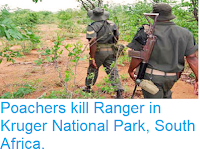
http://sciencythoughts.blogspot.com/2018/09/south-african-directorate-for-priority.htmlhttp://sciencythoughts.blogspot.com/2018/07/poachers-kill-ranger-in-kruger-national.html
Follow Sciency Thoughts on Facebook.

Monday, 10 November 2014

Crop raiding behaviour by Chimpanzees in southwest Uganda.


Chimpanzees, Pan troglodytes, like all the Great Apes, face increasing conflict with Humans throughout their range, driven by logging, poaching, mining, the illicit trade in wild animals and agricultural incursion into their territories, all of which are ultimately driven by sharply rising human populations (the Human population in the tropics is growing twice as fast as elsewhere, but rising populations in other parts of the world also drive Human consumption of tropical products). Chimpanzees can be particularly badly hit by logging, which removes essential fruit-bearing trees from their territories, causing them to seek out alternative food sources, which in turn brings them into conflict with human agriculturalists.

In a paper published in the journal PLoS One on 22 October 2014, a team of scientists led by Sabrina Krief of Eco-anthropologie et d’ethnobiologie, Hommes, Natures, Sociétés at the Museum national d’histoirenaturelle in Paris and the Projet pour la conservation des grands singes at Kibale National Park in Uganda report the results of a camera trap study by the Sebitoli Chimpanzee Project, into crop-raiding by Chimpanzees on the western fringe of Kibale National Park.

The project focused on a maize field on the western edge of the park. This is separated from the park itself by a trench 2 m wide and 2 m deep, dug by the Uganda Wildlife Authority to prevent Elephants crossing from the park into agricultural land, but crossed at one point by a fallen tree, known to be used as a highway by Chimpanzees entering the field. The Sebitoli Chimpanzee Group comprises about 80 individuals, 26 of which show deformities caused by snares associated with poaching activity, with eight individuals missing parts of limbs.

The local population of Batooro and Bakiga farmers do not eat Chimpanzees, but actively defend their crops (the lead male of a neighbouring Chimpanzee group was severely injured by a spear), and are themselves facing pressures due to rising a population and limited land availability (due to logging, tea plantations and designated parkland), causing them to farm right up to the borders of the park, and the field is actively defended by Human farmers, who have guard huts within the field manned day and night and also keep Dogs in the field. However Chimpanzees are highly adaptable, and the Sebitoli Group have long experience of dealing with Humans, with a territory that shares 32 km of border with human communities (out of a total of 39 km of border) and which is crossed by a tarmac road.

A Chimpanzee in the Kibale National Park. Kabarole Tours and Safari.

Krief et al. predicted a number behavioural traits and adaptations that would be observed in the Sebitoli Chimpanzees, based upon prior observations of Chimpanzees foraging on agricultural land. Typically when staging raids into agricultural land or the territory of rival Chimpanzee groups the raiding parties are smaller than typical foraging parties, and led by dominant males from within the group (who are more prone to high risk activities). Chimpanzees taking part in raiding activities are usually more cautious and vigilant than at other times, spending more time scanning for threats and producing less noise; they have also been known to make use of moonlight when moving about near potentially hostile humans, taking advantage of the full moon. Finally Chimpanzees taking part in high-risk activities typically show signs of stress, such as increased scratching or even attacks of diarrhoea.

Uganda-Kibale National Park-Sebitoli area, home-range and maize field monitored (location of the guarding huts, thefallen tree and the video-trap). Krief et al. (2014).

Surprisingly the Chimpanzees of Sebitoli showed few of these behaviours. The raiding parties were slightly larger than typical foraging parties for the group, and were often led by females. Members of the group that would typically be considered vulnerable, such as young infants, disabled adults, and even a juvenile with an unhealed broken limb took part in the raiding parties, and only the loudest vocalizations were avoided; on one occasion two Chimpanzees were observed copulating at the edge of the field. The Chimpanzees did not appear overly concerned about Human or Canine guards in the field, and while they would retreat if threatened or chased, often simply waited out of view before retuning to foraging in the field.

On defensive behaviour they did exhibit, and which was completely unexpected, was switching the time of day at which they were active, often foraging after dark and favouring nights around the new moon, when light levels are lowest, rather than around the full moon, when light levels are high. This is surprising, as while Chimpanzees are highly adaptable, they are not usually considered to be nocturnal animals, and have not previously been shown to alter their foraging times to avoid humans.

Only one previous study has shown Chimpanzees targeting a human crop at a particular time of day, when a group of Chimpanzees were found to be more likely to consume Cassava later in the day. However Cassava is considered to be a low preference food for Chimpanzees, and it is thought that these animals were only seeking it out after attempts to locate other food sources had failed. The Sertoli Chimpanzees were, in contrast, clearly switching to a highly atypical foraging schedule in order to access a high preference food (Maize), which shows a considerable degree of pre-planning.

See also…

Apes (Hominoidea) are large, tailless Primates found in Africa, eastern Asia, and in one case (Homo sapiens) globally. Apes are commonly divided into Lesser and Great Apes, with the 17 species of Gibbon...

 Palaeontologists Martin Pickford of the College de France and Brigitte Senut of the Musee National d'Histoire Naturelle in Paris announced the discovery of an almost complete skull of the extinct ape...


Follow Sciency Thoughts on Facebook.