Showing posts with label Lusaka Province. Show all posts

Sunday, 31 December 2017

Cholera outbreak kills forty one in Lusaka, Zambia.

Forty one people have been confirmed dead and over 1500 people have been infected in an epidemic in the Zambian capital Lusaka this year. The first cases occurred in September 2017, and are though to have been related to unsafe water from shallow wells in poorer parts of the city, with tests showing that 42% of such water sources were infected with the Bacterium. The spread of the disease appeared to abate in October, then returned sharply in November, with about 60 new cases being reported every day by the end of December. This renewed outbreak has been linked to poor hygiene in the cities food markets and street food stalls, with samples of fresh fruits and vegetables, as well as cooked meats and other ready-to-eat foods found to be infected.

Cholera victims being treated in an emergency field hospital in Lusaka. Lusaka Times.

Cholera is caused by the Bacterium Vibrio cholerae, a Gram-negative, comma-shaped Gammaproteobacteria, related to other pathogenic Bacteria such as Yersinia pestis (Bubonic Plague), and Esherchia coli (food poisoning). The Bacteria produce proteins which can cause watery diarrhoea, which helps spread the disease, and can prove fatal in severe cases, as patients are killed by extreme dehydration.

 SEM image of Vibrio cholerae Bacteria. Kim et al. (2000).

See also...

http://sciencythoughts.blogspot.co.uk/2017/12/artisanal-miers-allegedly-shot-after.htmlhttp://sciencythoughts.blogspot.co.uk/2017/09/woman-killed-by-crocodile-in-lusaka.html
http://sciencythoughts.blogspot.co.uk/2017/02/magnitude-59-earthquake-in-northern.htmlhttp://sciencythoughts.blogspot.co.uk/2016/09/chinese-expatriate-killed-in-accident.html
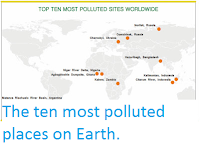
http://sciencythoughts.blogspot.co.uk/2013/11/the-ten-most-polluted-places-on-earth.htmlhttp://sciencythoughts.blogspot.co.uk/2013/10/magnitude-45-earthquake-in-eastern.html
Follow Sciency Thoughts on Facebook.

Wednesday, 27 September 2017

Woman killed by Crocodile in Lusaka Province, Zambia.

A 57-year-old woman has been killed while on a fishing trip on the Zambezi River in Lusaka Province, Zambia. Sophia Njovu of the village of Muchingamire was dragged into the river by the animal on Saturday 23 September 2017, near Chiawa in Kafue District. This was the fifth Crocodile-related death in the country in the last two years. In a separate incident, a man was injured by another Crocodile while swimming in the Zambezi near Kanyachi in Chavuma District of Northwestern Province. Boyd Funga, 33, was attacked on Friday 22 September, and is being treated in the Chavuma Mission Hospital for injuries to his legs and chest.

The approximate location of the 23 September 2017 Chiawa Crocodile attack. Google Maps.

Zambia is home to two Crocodile species, the Nile Crocodile, Crocodylus niloticus, and the Slender Snouted Crocodile, Crocodilus cataphractus, though the later is found only around Lake Bangweulu and the Luapula River, so the Zambezi River attacks were almost certainly carried out by Nile Crocodiles. Nile Crocodiles are large animals, reaching about five meters in length, and are ambush predators capable of taking large prey, including, on occasion, Humans. The animals are thought to be at their most dangerous around September on the Zambezi, when the water is lowest, and females are guarding eggs buried in nests by the river.

A Nile Crocodile, Crocodylus niloticus, in South Luangwa National Park, Zambia. Hana Yariv/Wikimedia Commons.

Nile Crocodiles are considered to be of Least Concern under the terms of the  International Union for the Conservation of Nature’s Red List of  Threatened Species, but are still protected in many countries, including Zambia, due to historic hunting which decimated populations in many areas. However, the rising number of attacks on Humans by the animals has led to calls for regulated hunting to be introduced to control the population.

See also...

http://sciencythoughts.blogspot.co.uk/2017/09/giant-saltwater-crocodile-shot-in.htmlhttp://sciencythoughts.blogspot.co.uk/2017/09/british-tourist-killed-by-crocodile-in.html

http://sciencythoughts.blogspot.co.uk/2016/05/gryposuchus-pachakamue-gavialoid.htmlhttp://sciencythoughts.blogspot.co.uk/2015/02/dwarf-crocodile-remains-from.html
http://sciencythoughts.blogspot.co.uk/2015/01/an-allodaposuchian-crocodylian-from.htmlhttp://sciencythoughts.blogspot.co.uk/2014/03/a-new-species-of-crocodile-from-west.html
Follow Sciency Thoughts on Facebook.