Showing posts with label South Sudan. Show all posts

Tuesday, 28 July 2026

UNESCO adds three new sites to its World Heritage List.

The United Nations Educational, Scientific, and Cultural Organisation (UNESCO) has added seven new sites to its World Heritage List, which is made up of sites deemed to be of natural or cultural significance which gives them outstanding universal significance for mankind, according to a press release issued on 26 July 2026. All three of these sites have additionally been placed on the World Heritage in Danger list of sites which are facing imminent threats due to Human or natural causes. In addition, three sites already on the World Heritage List have also been placed on the World Heritage in Danger list.

The first new site added to the World Heritage List is the Boma-Badingilo Migratory Landscape in South Sudan; this is the first site in South Sudan to be added to the World Heritage List. This area comprises two National Parks, Boma and Badingilo, which are contiguous with one another, currently managed by African Parks on behalf of the South Sudanese government. The parks lie in the White Nile catchment area, and are home to the world's largest Mammal migration, with over six million Antelope trasversing the area each year, as well as being an important part of the migrant Bird route between Southern Africa and Europe. The area is a biodiversity hotspot of global significance, as well as being home to a number of ethnic groups with their own unique cultural and linguistic heritage, who have acted as custodians of this landscape.

An Antelope migration in the Boma-Badingilo Migratory Landscape. African Parks.

The UNESCO World Heritage Committee has identified the Boma-Badingilo Migratory Landscape as facing a number of serious threats, including infrastructure development, commercial poaching, and wildlife trafficking and trade, while at the same time lacks meaningful protection from the South Sudanese government, which is under-financed and has a weak infrastructure, with the country suffering from a poor security situation. For these reasons the Boma-Badingilo Migratory Landscape has been placed on the World Heritage in Danger list.

Traditional herders within the Boma-Badingilo Migratory Landscape. African Parks.

The second new addition to the World Heritage List is the Mount Amel Castles sites in Lebanon. This site compromises a series of five castles across southern Lebanon, built during the Crusader Period on strategic high ground sites, and subsequently used by the Ayyubids, Mamluks, and later powers. These are Qalaat al-Chakif, or Beaufort Castle, dominating the Litani River valley from a strategic ridge, Qalaat Tibnin, or Toron Castle, on a mountain overlooking the road from Tyre to Damascus, Qalaat Chakra, or Dubieh Castle, in the Chakra agricultural region, Qalaat Deir Kifa, or Maron Castle, on an isolated hill overlooking the route from Lebanon towards Galilee and Jerusalem, and Qalaat Chama’, on a hill overlooking the coastal plain near Tyre.

Qalaat Tibnin, or Toron Castle, in 2006. T Dakroub/Wikimedia Commons.

In November 2024 the Mount Amel Castles were given 'enhanced protection status by the UNESCO Committee for the Protection of Cultural Property in the Event of Armed Conflict, a status which grants access to the Fund for the Protection of Cultural Property in the Event of Armed Conflict, as well helping to make applications for other forms of international assistance. However, since that time the sites have suffered heavy damage due to the ongoing conflict in the region, and are now considered to be in jeopardy of complete destruction, prompting the World Heritage Committee to move the sites to both the World Heritage List and the World Heritage in Danger list as a way to highlight the risk of losing these sites.

Qalaat al-Chakif, or Beaufort Castle. UNESCO.

The third new site added to the World Heritage List is the Palestinian village of Sebastia in the Nablus Governate of the State of Palestine. This is a site of significant archaeological heritage, having been inhabited since at least the ninth century BC, when it served as the capital of the northern Kingdom of Israel, and has since been occupied by Assyrians, Babylonians, Persians, Hellenistic Greeks, Romans, Byzantines, Crusaders, Ayyubids, Mamluks, and Ottomans. The village was the site of a fortified town associated with Herod the Great during the Roman period, and  was a Throne Village (administrative centre governed by local leaders) during the Ottoman period. It is considered to be the burial place of St John the Baptist.

A Roman theatre in the Palestinian village of Sebastia. Wikimedia Commons.

The site has been chosen for inclusion on the World Heritage List and the World Heritage in Danger list both because it is threatened by the ongoing conflict in the region, and also because it is threatened with expropriation, with half the site, including many privately owned propertied, earmarked to become part of the proposed Shomron National Park, a development which would allow access to the site only from Israel, excluding many Palestinians who have worked as traditional guides at the site. This project sits alongside plans for the expansion of Jewish settlements in the region, again almost certainly at the detriment of the local Palestinian population.

Roman ruins on the hilltop site near Sebastia. Jason Burke/The Guardian.

The first site already on the World Heritage List which is being additionally added to the World Heritage in Danger list is the Tauric Chersonese, an ancient city on the Crimean Peninsula founded by Ionian Greeks in the sixth century BC, and subsequently occupied by Megarian Greeks, the Pontic Empire, the Roman Empire, and the Byzantine Empire, before being abandoned in the fourteenth century. Although Crimea is part of Ukraine, it has been occupied by Russia since 2014, with no apparent plan for its protection, conservation, or management. The site is currently monitored remotely by UNITAR/UNOSAT, which has revealed significant degradation of the site, due to construction and large-scale excavation at the site. The World Heritage Committee believes there is a significant danger of the illicit trafficking of cultural property from the Crimea.

The ruins of Chersonesos, Crimea, in 2009. Dmitry Mottl/Wikimedia Commons.

The second site from the World Heritage List added to the World Heritage in Danger list is the Historic Inner City of Paramaribo in Suriname, a former Dutch colonial town from the seventeenth and eighteenth centuries planted on the northern coast of tropical South America. At the moment, original and highly characteristic street plan of the historic centre remains intact, with buildings that illustrate the gradual fusion of Dutch architectural influence with traditional local techniques and materials. However, the World Heritage Committee feels that the new National Assembly hall and the Yogh parking garage detract from the property’s historic urban landscape and result in a significant loss of its authenticity and integrity, that constitute a threat to the site's outstanding universal value.

Houses in the Historic Inner City of Paramaribo in Suriname. Ron Van Oers/UNESCO.

The final site to be added to the World Heritage in Danger list is the city of Tyre in Lebanon. This site has been occupied since the Bronze Age, but rose to prominence as a major Phoenician city-state between ninth and sixth centuries BC, and was subsequently occupied by the Assyrians, Babylonians, Persians, Hellenic Greeks, Romans, Byzantines, Early Muslims, Crusaders, Mamluks, Ottomans, Egyptians, and French, prior to Lebanon gaining independence in 1943. As such, the city is home to numerous archaeological sites of great significance, with those of the Roman Period being particularly spectacular. 

Roman ruins at Tyre on the coast of Lebanon. VĂ©ronique Dauge/UNESCO.

Like the Mount Amel Castles, the city of Tyre is threatened by the ongoing conflict in southern Lebanon, and while the World Heritage Committee commends Lebanon for its efforts to protect Tyre, they also feel that the historic sites are now directly threatened by the conflict.

See also...

Sunday, 26 December 2021

Sharp rise in the number of Hepatitis E cases in South Sudan in 2021.

Cases of Hepatitis E have been consistently reported in South Sudan since 2014, with recurrent outbreaks occurring in Bentiu, Rubkona County, Unity State (central-north part of South Sudan), where a camp for internally displaced persons is located. In 2021, the number Hepatitis E cases have risen significantly in the country, increasing from 564 reported during the three years 2018-2020, to 1143 suspected cases with five deaths in 2021 (as of 29 November), according to a press release issued by the World Health Organization on 23 December 2021. In the two years 2020-2021, a total of  1420 suspected cases were reported, of which 47 have been laboratory confirmed by polymerase chain reaction at the Uganda Virus Research Institute.

The outbreak is occurring in Unity State, with cases mainly being reported from Bentiu Internally Displaced People Camp. This led the Ministry of Health to declare a Hepatitis E outbreak in the camp in August 2021. A proportion of cases (323; 28.3%) has been reported from outside the camp, in Bentiu and Rubkona towns, suggesting ongoing transmission in the surrounding community.  Males aged 15-44 years are being reported as the most affected group, followed by male children 1-4 years, and females aged 15-44 years. There are no cases currently hospitalised, with clinical management implemented in outpatient departments.

Bentiu Internally Displaced People Camp hosts over 107 000 people and is divided into five sectors. Hepatitis E cases are reported from all sectors, highlighting widespread transmission. Unity State, is also currently affected by a flood that has caused a massive displacement and the development of new internally displaced persons sites, which has resulted in 30 000 more internally displaced people being moved to the Bentiu camp.

 
The Bentiu Internally Displaced People Camp in Rubkona County, South Sudan. Jacob Zocherman/The Guardian.

Hepatitis E is caused by a single-stranded, nonenveloped, RNA Virus, and is usually a self-limiting infection, causing fever, nausea, loss of appetite, vomiting, jaundice, abdominal and joint pain and discolouration of the urine and stool, which typically passes within 2-6 weeks. However, in some cases the disease can cause acute liver failure (hepatitis) which is often fatal. Pregnant women are considered to be at particular risk from this disease, with a fatality rate of about 30%, compared to about 1% for the general population.


Hepatitis E is spread through faeces and contaminated water, and thrives in unsanitary and crowded conditions. This has become a problem in South Sudan since the country gained independence from Sudan in 2011, as a civil war broke out between different factions of the country's former independence movement, resulting in a conflict that lasted from 2013 till 2020, which resulted in about 400 000 deaths, and the displacement of about four million people from areas affected by the conflict; about 2.5 million of these now reside outside the country, with the remainder displaced internally, most of whom are residing in camps such as Bentiu.

See also...


Follow Sciency Thoughts on Facebook.

Follow Sciency Thoughts on Twitter.


Saturday, 28 December 2019

The first records of pangolin trafficking in South Sudan.

Pangolins, Pholidota, are hunted across their ranges in African and Asian countries. African Pangolins are hunted and consumed in sub‐Saharan Africa, where they are harvested for meat and openly sold on wild meat markets, and their scales used in a variety of traditional medicines, and cultural and spiritual activities. In Asia, high hunting pressure has led to substantial declines in Asian Pangolin, Manis sp.,  species populations, such as the Chinese Pangolin, Manis pentadactyla, and Sunda Pangolin, Manis javanica. As such African Pangolins, Phataginus spp. and Smutsia spp., have been increasingly targeted and trafficked for their scales (and occasionally meat) to supply the markets in Asia over the past two decades. All four species of African Pangolins are listed on Appendix I of the Convention on International Trade in Endangered Species (CITES), banning the international, commercial trade of wild‐caught pangolins. All species of African pangolins are considered to be threatened with extinction on the International Union for the Conservation of Nature's Red List of Threatened Species based on past, current and future population declines largely due to hunting for the international market and local use. African Pangolins are known to have been trafficked through 27 countries in Africa to meet international demands, although the countries from which the Pangolins were originally taken are often difficult to ascertain. Information on Pangolins in South Sudan is scarce, despite three species, the Giant Pangolin, Smutsia gigantea, the White‐bellied Pangolin, Phataginus tricuspis, and Temminck's Ground Pangolin, Smutsia temminckii, being present. Pangolin seizures were reported from all countries bordering South Sudan (Central African Republic, Democratic Republic of Congo, Ethiopia, Kenya and Uganda), apart from Sudan, between 2010 and 2015, but not from South Sudan, although it was unclear if this was due to a lack of trafficking or a lack of reporting.

In a paper published in the African Journal of Ecology on 12 July 2019, Daniel Ingram of the Centre for Biodiversity and Environment Research at University College London, and the Pangolin Specialist Group at the Zoological Society of London, Paul Peter Awol of the Wildlife Conservation Society in South Sudan, Khamis Adieng Ding of the South Sudan National Wildlife Service, and Albert Schenk, also of the Wildlife Conservation Society in South Sudan, make the first formal report of Pangolin trafficking in South Sudan.

Research in South Sudan has been hampered by past and present conflicts and political instability, which have led to an environment ripe for wildlife crime. South Sudan ranks 1st in the world on the Fund For Peace's Fragile States Index 2018 and joint second‐from‐last on Transparency International's Corruption Perceptions Index 2018. The conflict and political instability have resulted in weak governance, and South Sudan has been identified as a hub for the illegal trade in ivory. Previous studies have shown that South Sudan is being used as a route to transport ivory out of adjoining Garamba National Park in neighbouring Democratic Republic of Congo, where organised poaching and trafficking by armed non‐State actors occurs. In 2017 the Wildlife Conservation Society reported that due to the conflict in South Sudan, 'poaching and commercial wildlife trafficking are increasing, as well as illegal mining, timber harvesting and charcoal production'.

Between June 2016 and December 2018, 11 seizures totalling 622 kg ivory were made at Juba International Airport which remains a transit point out of the country. No anti‐trafficking activities were conducted at Juba airport prior to 2016, in which time a Canine (Sniffer Dog) Wildlife Anti‐trafficking Unit was established between the Wildlife Conservation Society and the South Sudan National Wildlife Service. Together as part of broader anti‐trafficking activities, these activities are assumed to have a substantially disruptive influence on trafficking networks. The largest recent seizure was in June 2016 when 512 kg of largely ivory, reportedly from mostly Tanzanian Elephants, was seized at Juba International Airport en route from Uganda to Malaysia. Wildlife is also trafficked illegally across the border with Uganda by road, and into Ethiopia and Sudan. In early 2019, customs officers in Uganda across the border with South Sudan seized thousands of Pangolin scales, along with 750 pieces of ivory hidden in hollowed logs, which led to the arrest of two Vietnamese traffickers. Kenya has also been shown as a transit country for Pangolins and ivory, where ivory has reportedly come from South Sudan.

Ingram et al. report seven seizures of Pangolins and their parts within South Sudan between January 2014 and May 2019. 

On 14 January 2014 rangers of the Lantoto National Park confiscated two live Temminck's Ground Pangolins from a suspected bushmeat trafficker. The two animals later died, and the skins and the scales remained with the South Sudan National Wildlife Service.

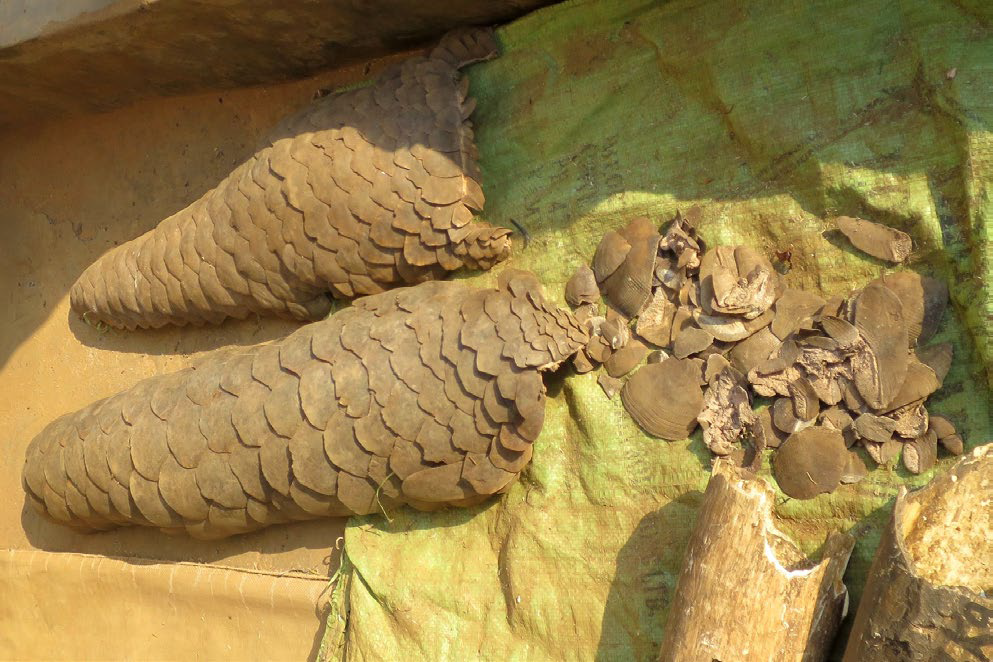
Skins and scales of two Temminck's Ground Pangolins, Smutsia temminckii, seized in the Lantoro National Park in January 2014. South Sudan National Wildlife Service and Wildlife Conservation Society in Ingram et al. (2019).

On the 25 May 2016, a sniffer dog unit detected 10 kg of frozen Pangolin meat in the luggage of a Chinese man at Juba International Airport. The Chinese man was travelling with the meat from Paloich Oil Field in northern South Sudan. where he was working as an oil engineer, to an unknown destination. The engineer only received a short detention period before he was released, highlighting that due to the 2013–2018 conflict in South Sudan, the judicial systems are extremely weak, and effective prosecution of suspects, including wildlife crime suspects, remains a big challenge. The signing of the peace agreement between the Government and warring groups in September 2018 provides a potential new opportunity towards the return of the rule of law and the re‐establishment of legal systems.

Ten kilograms of frozen pangolin meat (from two Pangolins, heads and claws removed) seized at Juba International Airport in May 2016. Species unknown. South Sudan National Wildlife Service and Wildlife Conservation Society in Ingram et al. (2019).

On 15 June 2016, the canine anti‐trafficking sniffer dog unit of the South Sudan Wildlife Service and the Wildlife Conservation Society led a joint operation that resulted in the confiscation of Pangolin meat at a hotel in Juba.

In March 2018, several rings made from Pangolin scales (together with rings made of Tortoise shell and Cow horn) were confiscated at a market in Juba, although it is not known from which species they come from or when the scales were harvested. In addition to widespread appreciation for the specific taste of Pangolin, in certain parts of South Sudan, Pangolin scales are also believed to bring luck and provide protection against poisons and witchcraft.

Rings made from Pangolin scales (dark colour) mixed with rings made from Tortoise scales and Cow horn confiscated at a market in Juba in June 2016. South Sudan National Wildlife Service and Wildlife Conservation Society in Ingram et al. (2019).

Three seizures involving pangolins have been made between January and May 2019. In January, information from community members in a refugee camp was used to successfully identify an individual at the Jebel checkpoint who was carrying a bag of Pangolin scales and was travelling to Juba. The individual ran away before authorities could arrest him and left behind the scales. In May 2019, one dead Pangolin was confiscated in Juba on the 5th, and three live Pangolins (two adults and one juvenile) were confiscated in Juba on the 8th, all are Temminck's Ground Pangolins coming from the Southern National Park area in western South Sudan.

In 2012, a licence was issued by the authorities of Central Equatoria State in South Sudan to a Chinese entity to start operating a Pangolin farm in Juba. Obtaining further details on the circumstances of the issuing of this licence was difficult; however, the licence is not endorsed by the current administration of the South Sudan Ministry of Wildlife Conservation and Tourism, given suspicions that the farm might be(come) a cover for trafficking wild Pangolins. The farm is not operational, and no export permits are given or will be given by the Ministry for the export of Pangolin products.

The 2013-18 conflict in South Sudan made effective monitoring of the enforcement of wildlife trafficking more-or-less impossible. Despite the national and international trade for commercial purposes being banned, illegal trade in Pangolins, and their parts and derivatives, continues to take place. Other than links into Juba, including to Juba International Airport, which show that trafficking of Pangolin parts is being attempted, Ingram et al. do not know the exact trade routes through South Sudan though it is reasonable to assume that Pangolin products are also trafficked, like other wildlife products, by road across the borders with Uganda, Democratic Republic of Congo, Ethiopia and other neighbouring countries due to limited and, at certain locations, nonexistent border control. Furthermore, the link to an Asian industry worker in South Sudan is the cause for concern and follows a similar finding in Gabon. It is likely that volumes of Pangolin trafficking in South Sudan are higher than currently known, which warrants monitoring of both the current state of trafficking and pangolin populations going forward. Ingram et al. that enforcement agencies, technical partners and funding partners work together on concerted efforts to monitor and address wildlife trafficking in South Sudan.

See also...

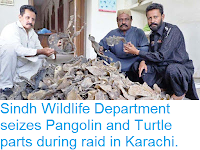
https://sciencythoughts.blogspot.com/2018/10/sindh-wildlife-department-seizes.htmlhttps://sciencythoughts.blogspot.com/2018/04/poaching-in-kakum-conservation-area-of.html
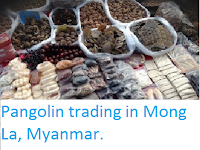
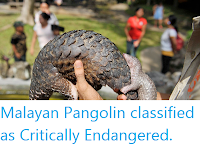
https://sciencythoughts.blogspot.com/2016/01/pangolin-trading-in-mong-la-myanmar.htmlhttps://sciencythoughts.blogspot.com/2014/08/malayan-pangolin-classified-as.html
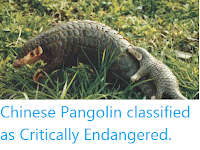
https://sciencythoughts.blogspot.com/2014/08/chinese-pangolin-classified-as.html
Follow Sciency Thoughts on Facebook.

Saturday, 15 June 2013

South Sudan denies involvement in Abyei pipeline explosion.

A pipeline carrying oil from the Diffra Oil Field to the Red Sea was blown up at Abyei, on the border between South Sudan and the Republic of Sudan, on Wednesday 12 June 2013. The Sudanese Government has blamed rebel groups allied to South Sudan for the blast, but the South Sudanese Government, which relies on income from oil shipped via pipelines in Sudan for around 98% of its income, has denied involvement.

Burning pipeline in Abyei. EPI/The Voice of Russia.

South Sudan gained independence from the Republic of Sudan on 9 July 2012, following a decades long civil war. However relations between the countries remain extremely strained. Both countries are extremely poor, and reliant oil revenues for foreign income. South Sudan has about 75% of the oil reserves of the former combined territory, but is entirely dependent on pipelines running through the Republic of Sudan to export this oil. Revenue from South Sudanese oil shipped via the Republic is split 50:50 between the two nations, but South Sudan has been trying to negotiate a better deal since independence. 

In January 2012 South Sudan cut oil production in order to try to pressure the Republic into renegotiating the deal. The dispute proved disastrous to both nations, and oil flows were eventually resumed in April this year, without resolution of the dispute. South Sudan now says that it wishes to maintain oil flows, but the northern government remains suspicious of its motives.

The Republic of Sudan remains extremely politically unstable, with a numerous rebel groups operating within its territories, several provinces trying to claim independence from the central state, and disputed borders with both South Sudan and Egypt. Its government suspects South Sudan of arming several of these groups, and has in turn been accused of arming rebel groups in South Sudan, and other neighbouring nations. The border area around Abyei is particularly disputed, at least in part due to its rich oil reserves, and the South Sudanese Government claims the Sudanese Army is currently involved in an incursion into its territory 10 km south of Abyei. Many outside observers are warning the countries are close to war.

Map of the Republic of Sudan and South Sudan, showing oil fields, pipelines refineries and the disputed territory around Abyei. BBC.


Follow Sciency Thoughts on Facebook.