Showing posts with label Betaproteobacteria. Show all posts

Friday, 20 March 2026

Two dead in Meningitis outbreak in Kent, southern England.

Two people have died in an outbreak of Meningitis in the city of Canterbury, in Kent, southern England, this week, according to the UK Health Security Agency. Both of those who have died have been described as having been teenage students studying at the University of Kent. A further eighteen cases of the disease have been confirmed, sixteen of whom live in or close to Canterbury, with one patient each in London and Paris, both of whom are known to have visited Canterbury immediately before becoming unwell. A further eleven possible cases are under investigation. 

The location of the University of Kent. Google Maps.

Meningitis is a serious infection of the meninges, the membranes covering the brain and spinal cord. Several different Bacteria can cause Meningitis, however, Streptococcus pneumoniae, Haemophilus influenzae, Neisseria meningitidis (sometimes spelled Neisseria meningitis) are the most common, and are transmitted from person to person through droplets of respiratory or throat secretions from infected people.

The average incubation period for Meningococcal Meningitis is 4 days, but can range between 2 and 10 days. The most common symptoms of Meningitis are a stiff neck, high fever, sensitivity to light, confusion, headaches and vomiting. Even with early diagnosis and adequate treatment, 5% to 10% of patients die, typically within 24 to 48 hours after the onset of symptoms. Bacterial Meningitis may result in brain damage, hearing loss or a learning disability in 10% to 20% of survivors. A less common, but even more severe (and often fatal), form of Meningococcal Disease is Meningococcal Septicaemia, which is characterised by a haemorrhagic rash and rapid circulatory collapse.

The Canterbury outbreak has been linked to the B serotype of Neisseria meningitidis, a form of Betaproteobacterium. A serotype is a distinct population within a species of Bacteria or Virus which presents different antigen proteins on the surface of its cells, and therefore requires the body to develop a different antibody response. A total of 12 serotypes of Neisseria meningitides have been identified, six of which (A, B, C, W, X and Y) can cause Meningococcal Meningitis epidemics.

Two serotypes 1a and 1b with antigens 2a and 2b on surface. Corresponding antibodys 3a and 3b with the possibility to bind to the antigens. Anna Bauer/Wikimedia Commons.

In the UK, a vaccine for Neisseria meningitidis serotypes A, C, W, & Y is typically offered to school pupils aged 14-15, while a vaccine for serotype B, which is particularly associated with outbreaks in infants, is offered to babies. However, this latter vaccination was only introduced in 2015, and therefore most people over the age of 15 in the UK are not vaccinated against this strain. The charity Meningitis Now, which campaigns on issues relating to the disease in the UK, as well as offering advise to those affected by or concerned about Meningitis, has been campaigning for a roll-out of the serotype B vaccine to older groups. 

As a response to the current outbreak, the University of Kent has arranged for a vaccination program for students to be set up on its campus, where antibiotics, which can help to fight the disease, are also available. Advice for staff and students at the university can be found here. Other people who are concerned that they may have been exposed should contact their GP (a GP, or General Practitioner, is a family doctor in the UK), or the National Health Service's NHS111 help service.

Students at the University of Kent in Canterbury queuing to get Meningitis B vaccine. PA Media.

See also...


Sunday, 12 February 2023

Meningitis outbreak in the Zinder Region of Niger claims 18 lives.

Between 1 November 2022 and 27 January 2023, a total of 559 cases of Meningitis (of which 111 have been laboratory confirmed), including 18 deaths (an overall fatality rate of 3.2%), have been reported from Zinder Region, southeast of Niger, according to a press release issued by the World Health Organization on 8 February 2023. This compares to 231 cases reported during the period 1 November 2021 to 31 January 2022. The majority of laboratory-confirmed cases are due to infections by the Bacterium Neisseria meningitidis serogroup C. Reactive vaccination campaigns with the trivalent ACW meningococcal polysaccharide vaccine have been implemented.

Niger is located largely in the African Meningitis Belt with seasonal outbreaks recurring every year. However, the ongoing outbreak shows both an increased number of cases and an increased growth rate compared to the previous seasons. 

The Zinder Region shares an international border with Jigawa State in Nigeria where a Neisseria meningitidis serogroup C outbreak is also ongoing, confirming the risk of international spread. Moreover, the simultaneous occurrence of other epidemics, insecurity and population displacement, all in the context of a protracted humanitarian crisis, are likely to contribute to the spread of the outbreak in other countries of the West African subregion.

The World Health Organization assesses the risk posed by the current Meningitis outbreak in Niger as high at the national level, moderate at the regional level, and low at the global level. Being located in the African meningitis belt, Niger has been affected by repeated Meningitis epidemics resulting in 20 789 cases and 1369 deaths reported since 2015.

Epicurve of cases of Meningitis reported in Niger by month, 1 October 2021 - 27 January 2023. World Health Organization.

Two hundred and twenty eight samples collected from patients showing symptoms consistent with Meningitis, 154 (67.5%) of which have subsequently been analyzed bythe Center for Medical and Health Research in Niamy. Neisseria meningitidis serogroup C was identified in 93.7% of confirmed cases (104 individual cases), followed by Streptococcus pneumoniae (five cases, or 4.5% of the total) and Haemophilus influenzae (two cases or 1.8% of the total). The remaining 43 samples tested negative.

Fifty three percent of all the cases were male, with 96.3% of cases (or 538 individual cases) being under 20, with 202 cases (36.2%) reported in the 10-14 years age group, followed by the 5-9 years age group with 153 cases (27.4%), the 15-19 years age group with 107 cases (19.1%), and the 0-4 years age group with 76 cases (13.6%).

The most affected health district in Zinder Region is Dungass (342 cases, 6 deaths), followed by Matamèye (98 cases, 3 deaths), Mirriah (72 cases, 3 deaths), Magaria (38 cases, 5 deaths), Zinder ville (7 cases, 1 death) and Gouré (2 cases, 0 deaths).

Distribution of reported meningitis cases by health district, Zinder region, Niger, 1 November 2022-27 January 2023. World Health Organization.

Meningitis is a serious infection of the meninges, the membranes covering the brain and spinal cord. Several different Bacteria can cause Meningitis, however, Streptococcus pneumoniae, Haemophilus influenzae, Neisseria meningitidis (sometimes spelled Neisseria meningitis) are the most frequent ones, and are transmitted from person to person through droplets of respiratory or throat secretions from infected people.

Neisseria meningitides is a form of Betaproteobacteria. A total of 12 serogroups of Neisseria meningitides have been identified, six of which (A, B, C, W, X and Y) can cause Meningococcal Meningitis epidemics.

The average incubation period is 4 days but can range between 2 and 10 days. The most common symptoms of Meningitis are a stiff neck, high fever, sensitivity to light, confusion, headaches and vomiting. Even with early diagnosis and adequate treatment, 5% to 10% of patients die, typically within 24 to 48 hours after the onset of symptoms. Bacterial Meningitis may result in brain damage, hearing loss or a learning disability in 10% to 20% of survivors. A less common, but even more severe (and often fatal), form of Meningococcal Disease is Meningococcal Septicaemia, which is characterized by a haemorrhagic rash and rapid circulatory collapse.

The highest burden of disease is seen in a region of sub-Saharan Africa, known as the African Meningitis Belt, which is especially recognised to be at high risk of Meningococcal but also Pneumococcal Meningitis epidemics.

iger is located largely in the African Meningitis Belt, where Meningitis epidemics typically follow a seasonal pattern (usually from January to June), with a size that varies from year to year. In 2015, a large Meningitis outbreak attributed to Neisseria meningitidis serogroup C occurred, affecting nearly 10 000 people. In 2009 and 2006, meningitis outbreaks caused by Neisseria meningitidis serogroups A and X, respectively, were also reported. Haemophilus influenzae and Streptococcus pneumoniae are two other important pathogens that contribute significantly to the Bacterial Meningitis burden within Niger.

Licensed vaccines against Meningococcal, Pneumococcal and Haemophilus influenzae diseases have been available for many years. These Bacteria have several different strains (known as serotypes or serogroups) and vaccines are designed to protect against the most harmful strains. Over time, there have been major improvements in strain coverage and vaccine availability, but no universal vaccine against these infections exists.

In the African Meningitis Belt, Meningococcus serogroup A accounted for 80–85% of Meningitis epidemics before the introduction of a meningococcal A conjugate vaccine through mass preventive campaigns (since 2010) and into routine immunization programmes (since 2016). Among vaccinated populations, incidence of serogroup A Meningitis has declined by more than 99%, and no serogroup A case has been confirmed since 2017.

However, cases of Meningitis and outbreaks due to other Meningococcal serogroups, apart from serogroup B, continue to strike.

The ongoing outbreak shows both an increased number of cases and an increased growth rate compared to the previous seasons. Moreover, the Meningitis epidemic season (usually from January to June, marked by high temperatures and dry winds combined with heavy dust, a period known as the harmattan), the mixing of populations, the simultaneous occurrence of other epidemics in the same region (Measles, Diphtheria and COVID-19), insecurity and population displacement, all in the context of a protracted Humanitarian crisis, are likely to contribute to the spread of the outbreak.

The Zinder region borders Jigawa State in Nigeria, where a Neisseria meningitidis serogroup C outbreak is also ongoing, confirming the risk of international spread to other countries of the West African subregion. The World Health Organization assesses the risk posed by the current Meningitis outbreak in Niger as high at the national level, moderate at the regional level, and low at the global level.

Meningococcal Meningitis remains a public health concern with a high case fatality rate and leading to serious long-term complications. 

Preventing Meningitis through vaccination is the most effective way to reduce the burden and impact of the disease by delivering long-lasting protection. The rollout of multivalent meningococcal conjugate vaccines is a public health priority to eliminate Bacterial Meningitis epidemics in the African Meningitis Belt. Introduction into routine immunization programmes and maintaining high coverage will be critical to avoid the resurgence of epidemics. 

Antibiotics for close contacts of Meningococcal cases, when given promptly, decrease the risk of transmission. Outside the African Meningitis Belt, chemoprophylaxis is recommended for close contacts within the household. Within the Meningitis Belt, chemoprophylaxis for close contacts is recommended in non-epidemic situations. Ciprofloxacin is the antibiotic of choice, and ceftriaxone an alternative.

Admission to a hospital or health centre is necessary. Isolation of the patient is not usually advised after 24 hours of treatment. 

Appropriate antibiotic treatment must be started as soon as possible. Ideally, lumbar puncture should be done first as antibiotics can make it more difficult to grow Bacteria from the spinal fluid. However, blood sampling can also help to identify the cause and the priority is to start treatment without delay. A range of antibiotics is used to treat Meningitis, including penicillin, ampicillin, and ceftriaxone. During epidemics of Meningococcal and Pneumococcal Meningitis, ceftriaxone is the drug of choice. 

The response to epidemics consists of appropriate case management, active community-based case-finding and reactive mass vaccination of affected populations. Surveillance, from case detection to investigation and laboratory confirmation is essential to the control of Meningitis. 

Reactive vaccination campaigns have been implemented in Zinder region, and monitoring the spread to new areas is crucial to guide further response activities, including considering further vaccine requests if appropriate. Timeliness of the reactive campaign is critical, ideally within four weeks of crossing the epidemic threshold. 

The World Health Organization does not recommend any restriction on travel and trade to Niger on the basis of the information available on the current event.

See also...

Follow Sciency Thoughts on Facebook.

Follow Sciency Thoughts on Twitter. 


Tuesday, 28 April 2020

Utilising undergraduate research to hunt for gold-precipitating Bacterial lineages.

The potential benefits from the study of the unique abilities of Bacteria to everyday Human life is ever more obvious. Bacteria are used industrially in food preparation, drug production, waste treatment and many other roles. Advances in biotechnology techniques have facilitated the use of known Bacterial species and their enzymes, proteins and pathways. For example, it is now possible, and indeed not very difficult, to identify genes of interest in a bacterial species, clip those genes out of that species and insert them into another work horse species of Bacteria to allow the products of those genes to be produced industrially. Ironically, as our ability to harness the power of Bacteria becomes ever more sophisticated, one of the key challenges is still finding the useful Bacteria in the first place. In a world with as many as a trillion Bacterial species, how does one speed the discovery of Bacterial species with a particular use or even simply strains of a particular bacterial taxon with sequences of interest? One approach is to engage citizen scientists. In as much as the first step in the discovery of novel, useful microbes is often collection from nature, collections made by the public have the potential to speed up this key and often rate-limiting first step. What is more, in a rapidly interconnected digital era, the potential for truly global projects that rely on hundreds, thousands, or even hundreds of thousands of individuals is ever greater.

In a paper published in the journal PeerJ on 14 April 2020, Noah Riley of the Department of Biological Sciences at North Carolina State University, Carlos Goller, also of the Department of Biological Sciences and of the Biotechnology Program at North Carolina State University, Zakiya Leggett of the Department of Forestry and Environmental Resources at North Carolina State University, Danica Lewis and Karen Ciccone of North Carolina State University Libraries, and Robert Dunn of the Department of Applied Ecology at North Carolina State University, the Natural History Museum of Denmark at the University of Copenhagen, and the German Centre for Integrative Biodiversity Research, describe the results of a study using a citizen science approach to to detect new species of the gold-precipitating Bacterium Delftia, on a university campus.

Citizen scientists contribute data to many publicly-accessible projects, from birdwatchers helping conservation efforts with the e-Bird project, game enthusiasts folding proteins for the FoldIt project, to homeowners exploring the microbial diversity in their houses through the Wild Life of Our Homes project. Additionally, projects like the Science Education Alliance - Phage Hunters Advancing Genomics and Evolutionary Science and Tiny Earth engage students in large research projects as part of course-based undergraduate research experiences. Citizen scientists, Riley et al. argue, can also help discover bacteria with novel, useful traits.

Delftia is a genus of Betaproteobacteria first discovered in the city Delft, where bacteria themselves were discovered by Leeuwenhoek. Delftia has genes capable of precipitating gold by excreting a metabolite called delftibactin. Gold in solution as gold chloride is toxic to bacteria, so Delftia has evolved this novel mechanism for precipitating aqueous gold out of solution to nontoxic solid gold nanoparticles. This mechanism has obvious potential uses in gold recycling in used electronics, gold mining, and urban waste, but to date, the existing genetic diversity of Delftia in strain collections is modest. There are only six known species of Delftia. Full genome assemblies exist for four of these species within the National Center for Biotechnology Information database. Discovery of novel Delftia species and their relatives has the potential to better elucidate variations in Delftia genetic sequences, especially within the gold precipitation gene cluster and other industrially and human health related sequences. The more information about these gold precipitation genes, for example, the greater potential for using Delftia or its genetic potential to recycle our electronics and make mining more sustainable.

A colony of Delftia acidovorans. Khalifa et al. (2019).

The Wolfpack Citizen Science Challenge for Spring 2018 was a collaborative project to document the presence and genetic diversity of Delftia spp. across the North Carolina State University campus and create a scalable and interdisciplinary model to continue learning about this and other organisms. In addition to involving students in two introductory courses in the initial data collection, we also involved students in two upper-level courses in the downstream study of the microbes detected during
the Challenge.

Participants were primarily recruited from two courses, ES 100: Introduction to Environmental Sciences (176 students) and LSC 170: First Year Seminar in the Life Sciences: Meet Your Microbes (20 students). However, anyone interested was able to obtain a sampling kit and participate. A post-event survey indicated that 96% of the participants were required to participate as part of a course and that 48% were currently enrolled as Science, Technology, Engineering and Mathematics majors.

Three events were held to create excitement and share results from the challenge. In January, the Challenge was launched with a public event attended by 19 people, in which Goller and Riley shared information about Delftia acidovorans found in sinks, drains and soil and encouraged members of the campus to think critically about the microbial communities around us. In March, the sequencing data were shared with the campus community at an event at which participants used the National Center for Biotechnology Information Basic Local Alignment Search Tool to find regions of similarity between the discovered sequences and those deposited in the National Center for Biotechnology Information database. This Basic Local Alignment Search Tool workshop was attended by 55 people. In April, results of the project were shared at a closing event open to the campus and general public, attended by 30 people. 

Participants registered as teams of up to five members and were provided kits with instructions and materials to collect samples: three swabs and two 50 millilitre conical tubes for soil samples along with gloves, plastic spoons for scooping soil, alcohol swabs to sanitise the soil collection spoons and labels for samples. Approximately 40 kits were distributed and over 150 swab and soil samples were received between 30 January and 14 February 2018. Samples were delivered in person to either the Biotechnology Program teaching laboratories or the North Carolina State University Libraries front desk. Samples were stored in −20°C freezer until ready for metagenomic DNA extraction. Along with physical samples, metadata including location descriptors and latitude–longitude data were submitted online through a customized SciStarter citizen science website. Students’identifying information was removed from samples and a numerical identity was assigned.

Participants were provided with detailed instructions on how to sample environments around the campus and use the sampling kit. Participants were instructed to use the swab to sample a safe location and immediately place the swab in the transport container. Students collected soil samples with the provided tube and spoon while wearing disposable gloves. For processing of samples, students in molecular biology courses were trained in lab safety procedures and given a document detailing the potential hazards and safety procedures used in the teaching laboratory. For all extractions and qPCR reactions, students wore provided disposable lab coats, safety glasses and gloves, and disinfected all surfaces before and after use.

Metagenomic DNA was extracted from samples using the Invitrogen PureLink Microbiome DNA Purification Kit according to the corresponding protocol for swab and soil samples.Soil was transferred from collection tubes to bead tubes with alcohol-sterilised metal scoops. Swab tips were cut off into bead tubes with alcohol-sterilised metal scissors. Samples were lysed and homogenized by heat, bead beating and lysis buffer. After purification, samples were eluted in 50 μl of elution buffer. DNA concentration was determined spectrophotometrically using a ThermoFisher NanoDrop 2000c instrument and normalized to five ng/μl. Samples were matched with descriptive location data in an online spreadsheet using information submitted on the SciStarter website. Isolations were performed by Noah Riley in batches of 12–24 samples.

An Eppendorf epMotion 5075 TC liquid handler was used to set up quantitative real-time polymerase chain reaction DNA amplification reactions with New England BioLabs Luna Universal Probe qPCR reagents, primers and double-quenched probes. Quantitative  polymerase chain reactions were run on a Bio-Rad CFX Connect instrument and data were exported as spreadsheets with cycle threshold values for each reaction. Samples were screened for the quantity of Delftia present using double-quenched, Delftia-specific primers and probe for a portion of the unique gold biomineralisation metabolite production system (the 'gold gene'). Presence and abundance of Delftia were then confirmed with a second set of primers and probe for a putative Delftia-specific toxin–antitoxin sequence unique to Delftia spp.. Reactions were set up in duplicate along with an 8-point, ten-fold dilution standard curve with 'gold gene' standard beginning at 40 pg/μl and toxin–antitoxin sequence standard at 30 pg/μl.

Undergraduate juniors and seniors and first- and second-year graduate students enrolled in an upper-level High-throughput Discovery 8-week lab module programed an epMotion 5075 TC liquid handler with the quantitative polymerase chain reaction script, prepared metagenomic samples for quantitative  polymerase chain reaction and calculated Delftia copy numbers using the quantitative  polymerase chain reaction cycle threshold data. Students were provided a spreadsheet template with detailed explanations and information on the use of a standard curve for calculation of absolute copy numbers of target sequences. Data were shared with students and groups of three to four were tasked with determining copy numbers for one 96-well polymerase chain reaction plate containing: 23 genomic DNA samples tested in duplicate along with an 8-point standard curve and negative buffer only controls. Multiple groups analysed the same samples to confirm the results and copy number trends were further supported by analysing quantitative  polymerase chain reaction data for the same samples with a primer set for the single-copy Delftia-specific toxin–antitoxin sequence. Data were then analysed as a class and shared with Danica Lewis for visualisation and dissemination of the results to participants and the public. Samples with the highest Delftia copy number using both primer sets were selected for further analysis of the unique gold gene sequence.

For 20 samples with high Delftia counts, a portion of the gold gene sequence was amplified using primers Seq7 and Seq8 and the New England Biolabs Q5(R) High-Fidelity 2X Master Mix. The amplified portion of the gold gene was selected because it is highly specific to Delftia and based on current sequence database information, varies slightly between known species and strains, allowing for identification from metagenomic samples. The target Delftia sequence is 1045 base pairs in length. Of the 20 tested samples, 17 produced sufficient PCR product for sequencing and were sent to the North Carolina State University Genomic Sciences Laboratory for Sanger DNA sequencing using primers Seq7 and Seq8. Amplicons (pieces of DNA or RNA that are the source and/or product of amplification or replication events) were sequenced from both directions and sequences were trimmed based on stringent quality settings to match existing sequences in the National Center for Biotechnology Information database. The sequencing data were shared with the campus community at an event at which participants used the National Center for Biotechnology Information Basic Local Alignment Search Tool to find regions of local similarity between the discovered sequences and those deposited in the National Center for Biotechnology Information database. This allowed participants to identify which Delftia species and strains best matched the samples that were sequenced.

The Google Maps Fusion Tables extension was used to create a heatmap of Delftia presence and abundance across campus and Tableau Public software was used to create an interactive map. Participants were invited to explore the data and evaluate which samples had the highest amount of Delftia. Students in the courses involved in sampling and analysis were shown the results and asked to discuss future research questions.

Map showing the sites at which Delftia spp. was sampled on the North Carolina State University Campus. Danica Lewis/Tableau Public.

Over 150 samples were received from participants. Of these, 135 were labeled correctly and matched with the online SciStarter database containing sampling location descriptions and latitude–longitude coordinates. Through quantitative  polymerase chain reaction analysis using primers and probe Seq1, Seq2, and Seq3, 125 samples (92.6%) had detectable quantities of the target Delftia 'gold gene' DNA sequence. Quantities of Delftia within samples were confirmed using the toxin–antitoxin sequence quantitative  polymerase chain reaction primers and probe Seq4, Seq5 and Seq6. The 20 samples with highest Delftia counts were primarily swabs from sinks and drains. In contrast, the samples with the least Delftia DNA tended to be those from soil samples and outdoor locations. However, it is worth reiterating that nearly all of the samples contained some Delftia, a relatively understudied genus of Bacteria.

Riley et al. next compared the Delftia gold gene sequences in the samples to those of sequenced strains. Collectively, the sequences from their samples were most similar to those of Delftia tsuruhatensis strain CM13, Delftia acidovorans strains ANG1 and SPH-1, or Delftia acidovorans strain RAY209. Differentiation between Delftia acidovorans strains ANG1 and SPH-1 was not possible as each matched query had the same identity, query coverage and E value results for both strains. However, for strains of Delftia tsuruhatensis CM13 and Delftia acidovorans RAY209, the sequences matched with highest probability to each, respectively. None of the samples were close matches for the other sequenced Delftia species of Delftia deserti, D. lacustris, Delftia litopenaei, Delftia rhizosphaerae, or other strains of Delftia acidovorans and Delftia tsuruhatensis. A total of 14 out of the 17 sequences had less than 97% sequence identity with the Delftia strains they most closely matched.

Riley et al. sought to simultaneously test whether they could engage students campus-wide in a citizen science style microbial research project and in doing so, understand the distribution and diversity of strains of one particular Bacterial genus, Delftia. They were indeed able to engage students from diverse majors across campus. In doing so, they discovered that some sampling sites had many more Delftia counts than did others, that Delftia was relatively ubiquitous and that some of the strains we identified had gold genes that appeared relatively divergent from those known from the literature. Although they were unable to accurately determine the diversity of Delftia strains present, this unanswered question presents a new challenge and opportunity for our citizen science and Delftia research efforts.

Collectively, the quantitative  polymerase chain reaction, Sanger DNA sequencing and Basic Local Alignment Search Tool comparison results showed that strains of Delftia are diverse, abundant and frequent (found at many sites) in environments in and around the college campus. Based on available genomic sequences deposited in the National Center for Biotechnology Information database and partial sequencing of the highly conserved gold gene, the strains students discovered best matched the reference strains Delftia tsuruhatensis CM13 and Delftia acidovorans ANG1 and SPH-1. However, 14 of 17 samples contained strains that were a 97% or lower match to strains in the National Center for Biotechnology Information database. Riley et al.'s suspicion is that these strains represent uncharacterised genetic diversity among strains in Delftia’s gold gene. However, because Riley et al. sequenced from complex environmental samples they can’t preclude the possibility that some of this variation is due to cases in which the forward and reverse sequences obtained were from different Delftia species or strains in the sample.

The sequenced Delftia gold gene from many of the participant samples matched well to known Delftia species, but some samples matched two different existing strains equally well. For example, samples from 7-1 to 24-1 were equally similar to the strains Delftia acidovorans ANG1 and SPH-1. Clearly further work can be done to sequence additional portions or the entire genomes of these samples to identify what known strain is present or discover a new lineage of Delftia. More extensive community analyses of the samples using both targeted (16S rRNA gene) and whole genome shotgun sequencing would aid in the identification of which microbes associate with the presence of Delftia and the identity of the gold sequences in the environment, respectively. Additionally, high-throughput sequencing approaches such as Hi-C from Phase Genomics or Nanopore single-molecule long-read sequencing can be employed to attempt to sequence and assemble the entire Delftia genome in metagenomic samples positive for Delftia by quantitative  polymerase chain reaction. Ultimately, selective media capable of isolating and identifying Delftia would allow us to increase our collection of Delftia strains for basic functional studies and genome sequencing.

Riley et al.'s sequencing results best matched the species Delftia acidovorans and Delftia tsuruhatensis, both of which have been found in environments similar to those they studied. Delftia acidovorans was originally discovered in soil and has been found in drains, waterspouts and showerheads in the built environment. Delftia tsuruhatensis was first discovered in a wastewater treatment plant and has been found in similar locations along with Delftia acidovorans. The Delftia species Riley et al. did not encounter in their study are species that have so far been associated with more restricted habitats. Delftia deserti has been found to inhabit desert environments, Delftia lacustris in lake water, Delftia litopenaei in pond water, and Delftia rhizosphaerae in the rhizosphere of the Gum Rockrose, Cistus ladanifer, a Plant native to the Mediterranean region. The apparent ubiquity of the genus Delftia hides the reality that individual species appear to show considerable habitat restriction. In the future, it would be interesting to understand which traits and genes of individual Delftia species confer the ability to survive in particular habitats.

It is unclear the extent to which the life history of Delftia in the above habitats is the same as that of Delftia in the built environment of a college campus. Nor is it well understood whether the presence of Delftia in water systems is problematic or potentially beneficial. Like many Bacterial taxa, Delftia species are recorded as opportunistic pathogens that can infect hospitalised or immunocompromised patients. However, there is no indication that Human bodies are a common habitat for this genus. Instead, in buildings such as those we sampled it appears to be much more common in water systems; in drains, showerheads and downspouts. In as much as the ecological conditions of water systems differ greatly, it is possible that a comparative study of water systems, such as those that are or are not chlorinated, might reveal more about the built environment natural history of this organism.

Riley et al.'s approach kindled campus-wide student interest in microbial diversity and molecular biology techniques through the excitement of discovering this unique microbe in places that students frequent on campus. Groups of students from various academic disciplines and courses produced and analyzed samples that contributed to a large public dataset. The findings helped teach the student community about Delftia and also reinforced the importance of the collaborative nature of scientific discovery. The success of this project, in terms of the documentation of Delftia’s distribution helps to validate Riley et al.'s general approach. In addition, this approach has the potential to encourage future students to participate. Riley et al. aim to continue the challenge of accurately identifying new Delftia lineages and engage others by expanding the sampling opportunity to a multi-section first-year English class that is required for all undergraduate students on the campus. Using a similar approach and incorporating the expertise of faculty in the English department, they will engage students in writing tasks related to the project. Additionally, an upper-level metagenomics course will tie into this endeavor by processing, sequencing and analysing the microbial communities in samples with high numbers of Delftia sequences. With relatively minor changes to the course schedules and curricula, 100 more students per semester can participate, learn and contribute to the project. Riley et al. are creating resources that are accessible for other faculty and campuses to implement this project and share findings. For this, students participating in the project are writing The Delftia Book, and Riley et al. have created a group for instructor resources on the QUBES web portal. Liquid handlers can be cost-prohibitive, but less expensive models such as the Opentrons OT-2 are available, and Riley et al. are developing scripts for this instrument. Student groups in lab-based courses can always set up quantitative polymerase chain reactions manually to participate in this project.

As the future plans for integrating this project into courses indicate, enthusiasm for the project was high among Riley et al.'s colleagues and grew as the project proceeded. However, if they are to continue the project it is key that it continues to yield new scientific insights. Fortunately, this seems very likely to be the case. For example, although Delftia abundance was very patchy on campus, Riley et al. have yet to explain what factors account for such patchiness. Additional samples will help to have sufficient coverage across sample types to allow spatial models of Delftia diversity and abundance. In addition, Riley et al.'s results suggest that new variants of the Delftia gold gene and even new Delftia strains remain to be discovered. Conversely, there is a lack of genomic diversity represented in the National Center for Biotechnology Information database. By leveraging the enthusiasm of university students and staff, interconnecting courses and researchers, and using Riley et al.'s model pipeline, new lineages of Delftia can be rapidly identified and studied (e.g., groups of students cloning novel gold gene cluster into a host such as Escherichia coli or Yeast for functional characterisation). This will yield a better understanding of the ecological and environmental significance of these organisms and simultaneously help to connect students and faculty across campus in a common scientific project. Finally, it is of note that Delftia species, while little known, are of potentially great applied importance. In addition, they contain genes that allow many strains to precipitate gold. Given the many waste streams in which gold is present but hard to concentrate, this ability has the potential to be very useful moving forward.

See also...

https://sciencythoughts.blogspot.com/2020/03/latimeria-chalumnae-live-coelocanth.htmlhttps://sciencythoughts.blogspot.com/2020/02/craspedotropis-gretathunbergae-new.html
https://sciencythoughts.blogspot.com/2017/03/five-confirmed-deaths-as-nigerian.htmlhttps://sciencythoughts.blogspot.com/2016/12/understanding-worlds-highest-vascular.html
https://sciencythoughts.blogspot.com/2016/09/faint-companions-discovered-to-two.htmlhttps://sciencythoughts.blogspot.com/2016/03/microhyla-laterite-new-species-of.html
Follow Sciency Thoughts on Facebook.

Thursday, 30 March 2017

Five confirmed deaths as Nigerian Meningitis outbreak reaches the Federal Capital Territory.

Five people have been confirmed dead in an outbreak of Cerebrospinal Meningitis in the Federal Capital Territory of Nigeria this week. Four deaths were recorded in the Durami area of Abuja on Tuesday 28 March 2017, and a fifth death in Dakwa (about 30 km to the northwest) the following day. The victims range in ages from 1 to 29 years, and all developed signs of the disease shortly before dying, though only two, one from Durami and one from Dakwa, have been fully autopsied. The disease has already killed about 270 people in an epidemic centred on Zamfara, Sokoto and Niger states this year, leading to concerns that a vaccination scheme, credited with saving many lives in the country and greatly reducing the annual impact of the disease, may be starting to fail as the disease adapts to the program.

A member of a medical team adminisering vaccinations in Borno State, in northeastern Nigeria. A Clemments-Hunt/World Health Organization.

Meningitis, an infection of the covering of the brain and spinal column can be caused by a number of micro-organisms, though in West Africa it is usually caused by the Bacterium Neisseria meningitides, which causes annual outbreaks in during the Dry Season the African Meningitis Belt, which runs from the Senegambia region on the west to Kenya and Ethiopia in the east. Between five and ten percent of those infected with the disease die within 48 hours of the first onset of symptoms, with the very young most at risk.

The countries of the Africa Meningitis Belt. David Simpson/PATH/Gavi.
Neisseria meningitides is a form of  Betaproteobacteria spread by salivary and respiratory fluids (i.e. by coughing and sneezing, sharing eating utensils etc.). About 10% of the population are thought to be carriers of the disease, without apparent ill effect, but causes disease in others, particularly in children and young adults, occurring as an annual epidemic in parts of Asia and Africa. Symptoms of the disease include fever, headaches, confusion, stiffness and septicaemia, this later being extremely dangerous; patient with  meningacoccal septicaemia develop a vivid purple rash, and about 50% of patients with this symptom typically die.
Nigeria suffered a particularly sever outbreak of Meningitis in 2009, when over a thousand people lost their lives, though since then an extensive vaccination program has been carried out, with an emphasis on targeting young children, which was thought to have brought the disease largely under control, with only 33 fatalities were recorded in 2016. This is likely to indicate the presence of a new strain of the Bacteria, which the current vaccine does not provide protection  against.

See also...

http://sciencythoughts.blogspot.co.uk/2017/03/listeria-outbreak-kills-two-in-us.htmlhttp://sciencythoughts.blogspot.co.uk/2017/03/salmonella-enterica-enteric-fever.html
http://sciencythoughts.blogspot.co.uk/2017/02/reducing-levels-of-pathogenic-bacteria.htmlhttp://sciencythoughts.blogspot.co.uk/2016/05/paenibacillus-dakarensis-new-species-of.html
http://sciencythoughts.blogspot.co.uk/2015/05/evidence-of-leprosy-in-from-early-anglo.htmlhttp://sciencythoughts.blogspot.co.uk/2015/01/bacteria-from-biofilms-in-water-supply.html
Follow Sciency Thoughts on Facebook.

Saturday, 10 December 2016

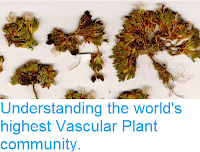
Understanding the world's highest Vascular Plant community.

Rising global temperatures have led to Plant communities migrating upwards in mountain ranges across the globe, colonising areas formerly covered by snow and glaciers. However this process is not simply dependent on temperature, as Plants usually grow in some form of soil layer, with root structures that form complex relationships with Fungi and other micro-organisms in this soil and soil is typically absent or very limited on the snow and ice covered upper slopes of mountains, with microbial communities, if present at all, quite different to those found in Plant-supporting soils at lower altitudes.

In a paper published in the journal Microbial Ecology on 31 May 2016, Roey Angel of the Max Planck Institute for Terrestrial Microbiology and the Department of Microbiology and Ecosystem Science at the University of Vienna, Ralf Conrad, also of the Max Planck Institute for Terrestrial Microbiology, Miroslav Dvorsky and Martin Kopecky of the Institute of Botany of the The Czech Academy of Sciences, Milan Kotilínek of the Department of Botany at the University of South Bohemia, Inga Hiiesalu, also of the Institute of Botany of the The Czech Academy of Sciences, Fritz Schweingruber of the Swiss Federal Research Institute and Jiří Doležal, also of the Institute of Botany of the The Czech Academy of Sciences and of the Department of Botany at the University of South Bohemia describe the highest known Vascular Plant community yet discovered, discovered at an altitude of 6150 m above sea level on Mount Shukule II in the Ladakh Region of Jammu and Kashmie State, India, part of the southwestern spur of the Tibetan Plateau in the  Northwestern Himalayas.

Angel et al. found six species of plants growing on a sparse patch of undeveloped calcareous soil on a southwest-facing small boulder field, close to the summit of Mount Shukule II. The area has an arid climate, with the summer monsoon which brings rain to much of the region blocked by the main Himalaya Range to the south and the westerly winds which bring winter rain to the Himalayas blocked by the Hindu Kush range to the west.

The first of these was Draba alshehbazii, a perenial herbaceous Brasica (the group of plants that also includes Cabbages and Rape) that forms dense cusions up to 2 cm in height and 5 cm in diameter, with a single main taproot and numerous lateral roots. This plant has previously been described in the Ladakh Region and western Xizang (Tibet) in China, at altitudes of between 5700 and 6000 m.

Draba alshehbazii, samples collected at 6150 m above sea level on Mount Shukule II in the Ladakh Region of Jammu and Kashmir. Angel et al. (2016).

The second plant found was Draba altaica, another cushion-forming perennial herbaceous Brasica, forming cushions up to 8 cm in height and 5 cm in diameter, with a similar main tap root and numerous lateral root system, which has previously been recorded widely in Central Asia, from southern Siberia and Kazakhstan to Mongolia. This species has been recorded as low as 3420 m, but appears to have an optimum altitude of about 5500 m.

Draba altaica, growing on Mount Shukule II in the Ladakh Region of Jammu and Kashmir at an altitude of 6150 m. Angel et al. (2016).

The third plant found was Ladakiella klimesii, another perennial herbaceous Brasica, which forms cushions up to 3 cm in height and 10 cm in diameter, again with a single long taproot and numerous lateral roots. This plant has previously been found in eastern Ladakh and western Xizang at altitudes of 5350 to 6150 m, with an optimum altitude of 5800 m.

Ladakiella klimesii, growing on Mount Shukule II in the Ladakh Region of Jammu and Kashmir at an altitude of 6150 m. Angel et al. (2016).

The fourth plant found was Poa attenuata, a perennial Grass forming tussocks up to 30 cm in height, with an adventitious root system (root system in which numerous roots arise from a system of underground stems). This is a widely distributed plant in Central Asia, found from southern Siberia and continental Central Asia to the humid East Himalayas, at altitudes from 3250 m to 6150 m, though it has optimum altitude of between 5000 and 5500 m.

Poa attenuata, growing on Mount Shukule II in the Ladakh Region of Jammu and Kashmir at an altitude of 6150 m. Angel et al. (2016).

The fifth plant found was Saussurea gnaphalodes, a perennial herbaceous Aster (the group of Plants that also includes Daisies, Sunflowers and Thistles), which reaches 6 cm in height and forms low density stands, with rosettes connected by a system of underground stems connected to a single deep tap root. This Plant is found across Central Asia from East Kazakhstan to Tibet, at altitudes of 4650 to 6150 m, with an optimum altitude of between 5200 and 5600 m.

Saussurea gnaphalodes, growing on Mount Shukule II in the Ladakh Region of Jammu and Kashmir at an altitude of 6150 m. Angel et al. (2016).

The final plant found was Waldheimia tridactylites, another herbaceous perennial Aster, reaching 5 cm in height, which grows from a thick woody rhizome (underground stem), which puts out many prostrate branches and few adventitious roots. This Plant is found across Central Asia from Kazakhstan to Mongolia at altitudes of 3600 to 6150 m, with an optimum altitude of 4500 to 5000 m.

Waldheimia tridactylites, growing on Mount Shukule II in the Ladakh Region of Jammu and Kashmir at an altitude of 6150 m. Angel et al. (2016).

A TMS data logger was used to record the soil (10 cm bellow ground level) and air temperature (10 cm above ground level), as well as soil moisture and air humidity at 6150 m on Mount Shukule II from August 2011 to September 2012. In addition the air temperature (3 cm above ground) and humidity were recorded at 5900 m on the mountain from August 2008 to June 2013 using a HOBO U23 Pro v2 logger.

The average soil temperature at 6150 m on Mount Shukule II between August 2011 and September 2012 was −8.7 °C. The lowest air temperature recorded was on 10 January 2016, when it fell to −36 °C, the highest air temperature was recorded on 15 June 2012, when the air reached 28.2 °C; this was also the day with the greatest range of air temperatures recorded (42.4 °C), with the lowest temperature that day being −14.1 °C. The vegation season (when the soil, surface and air temperature was above 0 °C, and vegetative growth therefore theoretically possible) lasted from mid May to mid September, with an average soil temperature of 2.71 °C, an average surface temperature of 3.62 °C and an average air temperature of 2.97 °C. However it is likely that growth was restricted to a far shorter season when temperatures rose above 5 °C; this lasted 12 days in the soil and 17 days above ground level. Throughout the vegetation season the nighttime air temperature regularly fell to -7 °C, with a minimum vegetation season air temperature of -16.2 °C recorded on 17 June 2012. However the soil retained more heat during this period, seldom falling below 0 °C and often staying as warm as 3 °C. 

Above 5800 m all precipitation typically falls as snow, with soil  moisture derived from melting snow. Based upon soil moisture measurements at 5800 m, the study area is thought to have had snowfall or snow-cover for 273 days in 2009, 228 days in 2010, 132 days in 2011 and 141 days in 2012.

All of the Plants were growing under stressful, sub-optimal conditions, but appeared to be stable and, in a way thriving. All of these Plants produce woody tissues, with four (Ladakiella klimesii, Draba altaica, Waldheimia tridactylites and Saussurea gnaphalodes) producing anular growth rings on their tap roots that can be used to estimate their age. Of the plants examined the Ladakiella klimesii Plants had an average age of 15 years, while all the others were under 10 years old. This suggests that the colonies were of fairly recent origin, having migrated upslope in response to rising temperatures.

The soil in which the Plants were growing was poorly developed and had only a rather limited Bacterial community dominated by by members of the order Sphingomonadales (Alphaproteobacteria). However the soil around the roots of the Plants hosted a much more diverse Bacterial community, comparable in diversity to that found around plants at much lower altitudes, still dominated by the Sphingomonadales, but joined by significant levels of Sphingobacteriales (Bacteroidetes), Rhizobiales (Alphaproteobacteria) and Burkholderiales (Betaproteobacteria). This Bacterial community is similar to that seen in desert communities found in deserts (hot and cold) at lower altitudes, but is quite different to that seen in the temperate soils found in lower high-altitude soils in the Himalayas. Since the Plants lacked any mycorrhizal (Fungal) root associations, they were presumed to be dependent on associations with these soil Bacteria to recover nutrients from the sparse soil.

See also...

http://sciencythoughts.blogspot.co.uk/2016/09/psora-altotibetica-new-species-of-high.htmlhttp://sciencythoughts.blogspot.co.uk/2016/09/didymodon-hengduanensis-new-species-of.html
http://sciencythoughts.blogspot.co.uk/2016/04/understanding-role-of-bears-in-enabling.htmlhttp://sciencythoughts.blogspot.co.uk/2015/05/groundwater-systems-beneath-mcmurdo-dry.html

http://sciencythoughts.blogspot.co.uk/2015/01/the-fate-of-soil-microbes-during-end.htmlhttp://sciencythoughts.blogspot.co.uk/2012/11/how-bar-headed-geese-cross-himalayas.html
Follow Sciency Thoughts on Facebook.