Showing posts with label Niger. Show all posts

Tuesday, 2 December 2025

Ongoing Diphtheria Crisis affects eight African countries.

Between 1 January and 2 November 2025, 20 412 cases of suspected Diphtheria were recorded across the African continent, with 1252 people believed to have died from the disease (a case fatality ratio of 6%) according to a press release issued by the World Health Organization on 21 November 2025. Eight countries have recorded ongoing epidemics of Diphtheria, Algeria, Chad, Guinea, Mali, Mauritania, Niger, Nigeria, and South Africa. Epidemics in some places have been ongoing since 2023, with the disease continuing to spread to new areas. 

In many areas, laboratory confirmation of cases remain the exception rather than the rule, due to a shortage of suitable testing facilities, as well as a shortage of diagnostic equipment. There is also currently a global shortage of Diphtheria Antitoxin, the most effective treatment for the disease, as well as a shortage of suitable facilities for administering the treatment in many areas. Many of the countries affected have extremely fragile healthcare systems, combined with large numbers of displaced persons and in many cases ongoing civil conflicts, leading to a strong possibility of the disease spreading further within the region. This has led the World Health Orgnization to categorise the crisis as a Grade 2 Emergency under the terms of the Emergency Response Framework.

Diphtheria is a highly contagious vaccine-preventable disease caused mainly by the Actinomycete Bacterium Corynebacterium diphtheria but also by the related Corynebacterium ulcerans. It spreads between people mainly by direct contact or through the air via respiratory droplets. The disease can affect all age groups; however, unimmunized children are most at risk.

Symptoms often come on gradually, beginning with a sore throat and fever. In severe cases, the Bacteria produce a poison (toxin) that causes a thick grey or white patch at the back of throat. This can block the airways, making it hard to breathe or swallow, and also creates a barking cough. The neck may swell in part due to enlarged lymph nodes.

Treatment involves administering Diphtheria antitoxin as well as antibiotics. Vaccination against Diphtheria has been effective in reducing the mortality and morbidity from Diphtheria dramatically. Diphtheria is fatal in 5-10% of cases, with a higher mortality rate in young children. However, in settings with poor access to Diphtheria antitoxin, the case fatality ratio can be as high as 40%.

Niger is suffering an ongoing Diphtheria epidemic which began in the Zinder Region in November 2022, and which has subsequently spread to the Adadez and Diffa regions, with 34 of the country's 72 districts reporting cases. In 2025, there have been 1926 suspected cases, with 122 deaths (a case fatality ratio of 6.3%), with 765 cases confirmed by laboratory testing. Attempts to combat the outbreak have been hampered by a severe humanitarian crisis, driven by civil conflict, climatic effects, economic breakdown, and a large number of displaced persons, with around 2.6 million people currently reliant upon humanitarian assistance. A vaccination program was initiated in September 2025, with uptake reported to be good, and a second round is being planned.

A woman receives a dose of Diphtheria vaccine in Niger. World Health Organization.

Nigeria has been suffering an ongoing Diphtheria epidemic since December 2022, and has the highest number of cases in Africa. In 2025 till November 2, a total of 12 150 cases were reported (8587 of which have been confirmed by laboratory testing), with 884 deaths (a case fatality ratio of 7.2%). Diphtheria has been reported this year from 240 local government areas in 30 of Nigeria's 36 states. This outbreak is disproportionately affecting children and adolescents, and is being exasperated by a low vaccine take-up rate, with around 71% of the population having received a first dose of vaccine and about 67% having received all three recommended doses. Nigeria is suffering from a shortage of vaccines, a limited ability to carry out laboratory testing, a poor public understanding of Diphtheria, and weak infection control practices.  

A Diphtheria outbreak has been ongoing in Chad since mid 2024, with 4462 cases and 47 deaths reported in 2025 to 2 November, a case fatality ratio of 1.1%. Most of the cases have been among children aged 3-13 years. Chad is currently at the centre of a humanitarian crisis triggered by conflicts in multiple neighbouring countries, as well as political instability within its own borders. It is currently home to 1.4 million refugees, including 870 000 from Sudan, as well as about 300 000 internally displaced people. This makes it hard to assess the vaccination status of much of the population in areas where the outbreak is ongoing.

A patient receiving treatment for Diphtheria at a hospital in Chad. Seigneur Yves Wilikoesse/Medecins Sans Frontieres.

Mali is suffering an ongoing Diphtheria epidemic, which began in the northern part of the country in September 2024, with 430 suspected cases and 29 deaths (a case fatality ratio of 6.7%) in 2025 till 2 November. The epidemic spread significantly during 2025, reaching seven of the country's eleven regions and 30 of 75 districts, including the capital city, Bamako. Mali is currently suffering a complex humanitarian crisis, driven by civil conflict and climate-related disruptions, with 6.4 million people currently reliant on humanitarian assistance. Vaccine uptake is low, with 91% of the population having received a first dose, and only 82% all three recommended doses. The country also has a shortage of Diphtheria Antitoxin, as well as a healthcare system which has been severely overstretched by the multiple crises in the country.

Mauritania is suffering a Diphtheria outbreak which began in September 2024, and has spread to 11 of the country's 53 departments, with 849 suspected cases and 33 deaths (a case fatality ratio of 4%). Mauritania has a fairly high vaccination rate for Diphtheria, with 95% of the population having received a first dose of the vaccine, and 86% having received all three doses, but it is also currently home to a population of 118 000 Malian refugees, with vaccine records only available for about 10% of this population. The epidemic also coincides with an outbreak of Rift Valley Fever in the same areas. Efforts to combat these outbreaks has been hampered by poor funding, logistical problems, and a shortage of skilled healthcare workers.

A child receiving treatment for Diphtheria at the Mbaerra Refugee Camp in Mauritania. World Health Organization.

A Diphtheria outbreak began in Guinea in June 2025, with 476 suspected cases and 123 deaths (a case fatality ratio of 25.8%, currently the highest of any affected country). Four of the country's 38 prefectures have been affected, although the outbreak is centred on the gold mining areas of Kankan, particularly in Siguiri District. Only 70 cases have been laboratory confirmed, largely due to a lack of facilities. Guinea also has a low vaccine uptake, with only 77% of the country having had a first vaccine dose, and 63% having received all three recommended doses. The country also has a chronic shortage of Diphtheria Antitoxin, as well as few facilities for treating patients.

Algeria is generally considered to be Diphtheria-free, with a high vaccination rate (98% of the population having received at least one vaccine dose, and 92% having received the recommended three doses). However, in recent years the southern part of the country has become host to a large number of displaced people, fleeing conflict zones in the Sahel Region. In 2024 this area suffered a Diphtheria outbreak in which over 900 people were infected and 119 people died (a case fatality ratio of 13%). A new outbreak was reported in southern Algeria in October 2025, with 13 people infected and two deaths. 

Uniquely among affected countries, the Diphtheria epidemic in South Africa is unrelated to the ongoing crisis in the Sahel Region. The country has a long history of sporadic outbreaks, although these are usually small and quickly contained. The current outbreak, however, first appeared in Western Cape in October 2023, and quickly spread to KwaZulu-Natal, since when it has proven hard to contain. In 2025 till November 2, a total of 106 cases of Diphtheria have been reported in South Africa, all of them laboratory confirmed - a total which includes 37 asymptomatic carriers. The epidemic is still centred on Western Cape, but cases have also been reported in Limpopo, Gauteng, KwaZulu-Natal, and Mpumalanga. Vaccination cover remains low in South Africa, with 76% of the population having received a first dose and 74% all three doses, and this is believed to be worsening. South Africa is also affected by the global shortage of Diphtheria Antitoxin, as well as a health service stretched by multiple other issues.

Geographical distribution of Diphtheria outbreaks in Africa, January 2025 until 2 November 2025. World Health Organization.

Diphtheria is a recurrent problem in many areas of Africa, with 18 789 cases reported between 2020 and 2022. However, this has become much worse since 2023, with 57 000 cases and about 2000 fatalities reported in 2023 and 2024, across  Algeria, Chad, Gabon, Guinea, Mali, Mauritania, Niger, Nigeria and South Africa, with Guinea, Niger, and Nigeria being the worst affected. The disease particularly infects children under 15, and females more than males. About 50% of those infected in 2020-24 are thought to have been unvaccinated. 

See also...

Monday, 11 August 2025

Meteorite NWA 16788 sold at auction in New York, despite protests from Government of Niger.

The planet Mars has been of great interest to planetary scientists for as long as the discipline has existed. The planet has been extensively studied by telescope for centuries, and in recent decades by a series of robotic probes. These probes have taught us a great deal more about the planet than could be determined by remote sensing alone, but are only able to carry a limited amount of instrumentation, which cannot be changed, updated, or repaired once the probe has left Earth. To this end the planned Mars Sample Return program aims to bring samples from the red planet back to Earth, where they can be studied with a full range of laboratory techniques. However, this program is still in its very early stages, with no fixed target on Mars or spaceship design settled upon, and it is by no means settled that the mission will go ahead at all.

Until such time as samples are returned from Mars to Earth, the only way in which terrestrial scientists can gain direct access to material from Mars is by the examination of Martian meteorites, pieces of rock from the surface of the planet Mars which have been ejected into space, usually as a consequence of other large bodies impacting the planet. These can be confirmed as having come from Mars by a distinct mineralogy and the presence of isotope ratios detected on the planet by remote probes and not found elsewhere in the Solar System (this is not peculiar to Mars, each large body in the Solar System has its own unique isotope signature). To date, the Meteoritical Society has confirmed 402 meteorites as being of Martian origin.

The majority of Martian Meteorites have been discovered in desert environments, with 343 (85.3%) coming from the Saharan region (61 from Algeria, 1 from 'Algeria or Mali', 1 from 'Algeria or Mauritania', 4 from 'Algeria or Morocco', 1 from 'Algeria or Western Sahara', 1 from Egypt, 15 from Libya, 13 from Mali, 1 from 'Mali or Mauritania', 1 from 'Mali or Niger', 19 from Mauritania, 184 from Morocco, 1 from Niger, 1 from Nigeria, 1 from Tunisia, 15 from Western Sahara, and 23 from unknown 'Northwest African' countries).

Of the 343 known Martian Meteorites from the Sahara, 184 (53.4%) come from Morocco, with a further 15 (4.4%) from the Western Sahara, a disputed territory occupied by Morocco since 1976. This is not because Morocco is more prone to Martian Meteorite falls than other countries, but rather to a difference in the law. While most countries in the region ban the trade in, and export of, meteorites, Morocco allows a trade by licensed dealers, as long as all meteorites are registered with the Moroccan Geological Survey, and a sample of the material is deposited with them. 

This has led to the development of a successful meteorite market in Morocco (which also has a similar trade in fossils). However, there is also a suspicion that many of the meteorites traded through Morocco might originate in other countries (although, given the willingness of the international meteorite community to trade in meteorites either with no known point of origin, or known to have been smuggled out of countries where their trade is forbidden, this scarcely seems worth the effort).

The unregulated way in which meteorites (including Martian Meteorites) are traded also means that many are held in private collections, rather than by public bodies where they can be accessed by scientists (some private collectors do allow scientists to examine their material, but this is of limited value unless it can be guaranteed that all scientists in the field have, and will continue to have, access).

The largest Martian Meteorite discovered to date is NWA 16788 (North West Africa 16788), with a mass of 24.665 kg. This is not just important because bigger meteorites are more impressive; the body from which this was derived is likely to have been significantly larger, which means that the event which caused it to be ejected from Mars must also have been particularly large, giving scientists a reasonable hope of connecting this meteorite to a specific geographic location on Mars.

NWA 16788, the largest individual Martian meteorite recovered thus far. Franza et al. (2024).

NWA 16778 was (allegedly) discovered on 16 July 2023 near Kefkaf in Niger. It was confirmed as being a Martian Meteorite on the basis of samples sent to the Shanghai Astronomy Museum, with the Meteoritical Society being informed that the meteorite was being held in the collection of the Purple Mountain Observatory in China. However, in 2024 the meteorite appeared in a private collection in Arezzo, Italy. Two small samples of the meteorite were donated to the University of Firenze, and it was loaned to the Italian Space Agency during the 2024 European Researchers’ Night, on 27 September, an event intended to boost public engagement with science.

On 8 July 2025 NWA 16788 was placed on display at the auction house Sotherby's in New York, ahead of a planned auction on 16 July, at which it was predicted to fetch US$2-4 million; it was eventually sold to an anonymous buyer for US$4.3, which is likely to amount to a final cost to the buyer of about US$5.3 million once fees and taxes are taken into account.

This sale has prompted a protest by the Government of Niger, which pointed out that since 1997 Nigerien law has prohibited the unlicensed export of a range of heritage items including 'mineralogical specimens', and that the meteorite appeared to have been illegally trafficked out of the country. Sotherby's has denied any wrong-doing, noting that the legislation in question does not specifically mention meteorites.

Since the meteorite was placed on sale, a number of prominent international scientists have come forward to support the Nigerian Government's position, including palaeontologist's Steve Brusatte of the University of Edinburgh, who has raised concerns about the loss of valuable scientific specimens into the private vaults of oligarchs, and Paul Sereno of the University of Chicago, who believes that the term 'mineralogical specimens' clearly covers meteorites, and that the sale represents a clear breach of international law. Sereno, who has led expeditions to fossil sites in Niger for many years, and who founded the organisation Niger Heritage with the intention of building a museum in the country's capital, Niamey, further went on to point out that the removal of heritage items, cultural or natural, from a country without that country's consent is reflective of a colonial attitude which the world should have moved on from.

See also...

Sunday, 12 February 2023

Meningitis outbreak in the Zinder Region of Niger claims 18 lives.

Between 1 November 2022 and 27 January 2023, a total of 559 cases of Meningitis (of which 111 have been laboratory confirmed), including 18 deaths (an overall fatality rate of 3.2%), have been reported from Zinder Region, southeast of Niger, according to a press release issued by the World Health Organization on 8 February 2023. This compares to 231 cases reported during the period 1 November 2021 to 31 January 2022. The majority of laboratory-confirmed cases are due to infections by the Bacterium Neisseria meningitidis serogroup C. Reactive vaccination campaigns with the trivalent ACW meningococcal polysaccharide vaccine have been implemented.

Niger is located largely in the African Meningitis Belt with seasonal outbreaks recurring every year. However, the ongoing outbreak shows both an increased number of cases and an increased growth rate compared to the previous seasons. 

The Zinder Region shares an international border with Jigawa State in Nigeria where a Neisseria meningitidis serogroup C outbreak is also ongoing, confirming the risk of international spread. Moreover, the simultaneous occurrence of other epidemics, insecurity and population displacement, all in the context of a protracted humanitarian crisis, are likely to contribute to the spread of the outbreak in other countries of the West African subregion.

The World Health Organization assesses the risk posed by the current Meningitis outbreak in Niger as high at the national level, moderate at the regional level, and low at the global level. Being located in the African meningitis belt, Niger has been affected by repeated Meningitis epidemics resulting in 20 789 cases and 1369 deaths reported since 2015.

Epicurve of cases of Meningitis reported in Niger by month, 1 October 2021 - 27 January 2023. World Health Organization.

Two hundred and twenty eight samples collected from patients showing symptoms consistent with Meningitis, 154 (67.5%) of which have subsequently been analyzed bythe Center for Medical and Health Research in Niamy. Neisseria meningitidis serogroup C was identified in 93.7% of confirmed cases (104 individual cases), followed by Streptococcus pneumoniae (five cases, or 4.5% of the total) and Haemophilus influenzae (two cases or 1.8% of the total). The remaining 43 samples tested negative.

Fifty three percent of all the cases were male, with 96.3% of cases (or 538 individual cases) being under 20, with 202 cases (36.2%) reported in the 10-14 years age group, followed by the 5-9 years age group with 153 cases (27.4%), the 15-19 years age group with 107 cases (19.1%), and the 0-4 years age group with 76 cases (13.6%).

The most affected health district in Zinder Region is Dungass (342 cases, 6 deaths), followed by Matamèye (98 cases, 3 deaths), Mirriah (72 cases, 3 deaths), Magaria (38 cases, 5 deaths), Zinder ville (7 cases, 1 death) and Gouré (2 cases, 0 deaths).

Distribution of reported meningitis cases by health district, Zinder region, Niger, 1 November 2022-27 January 2023. World Health Organization.

Meningitis is a serious infection of the meninges, the membranes covering the brain and spinal cord. Several different Bacteria can cause Meningitis, however, Streptococcus pneumoniae, Haemophilus influenzae, Neisseria meningitidis (sometimes spelled Neisseria meningitis) are the most frequent ones, and are transmitted from person to person through droplets of respiratory or throat secretions from infected people.

Neisseria meningitides is a form of Betaproteobacteria. A total of 12 serogroups of Neisseria meningitides have been identified, six of which (A, B, C, W, X and Y) can cause Meningococcal Meningitis epidemics.

The average incubation period is 4 days but can range between 2 and 10 days. The most common symptoms of Meningitis are a stiff neck, high fever, sensitivity to light, confusion, headaches and vomiting. Even with early diagnosis and adequate treatment, 5% to 10% of patients die, typically within 24 to 48 hours after the onset of symptoms. Bacterial Meningitis may result in brain damage, hearing loss or a learning disability in 10% to 20% of survivors. A less common, but even more severe (and often fatal), form of Meningococcal Disease is Meningococcal Septicaemia, which is characterized by a haemorrhagic rash and rapid circulatory collapse.

The highest burden of disease is seen in a region of sub-Saharan Africa, known as the African Meningitis Belt, which is especially recognised to be at high risk of Meningococcal but also Pneumococcal Meningitis epidemics.

iger is located largely in the African Meningitis Belt, where Meningitis epidemics typically follow a seasonal pattern (usually from January to June), with a size that varies from year to year. In 2015, a large Meningitis outbreak attributed to Neisseria meningitidis serogroup C occurred, affecting nearly 10 000 people. In 2009 and 2006, meningitis outbreaks caused by Neisseria meningitidis serogroups A and X, respectively, were also reported. Haemophilus influenzae and Streptococcus pneumoniae are two other important pathogens that contribute significantly to the Bacterial Meningitis burden within Niger.

Licensed vaccines against Meningococcal, Pneumococcal and Haemophilus influenzae diseases have been available for many years. These Bacteria have several different strains (known as serotypes or serogroups) and vaccines are designed to protect against the most harmful strains. Over time, there have been major improvements in strain coverage and vaccine availability, but no universal vaccine against these infections exists.

In the African Meningitis Belt, Meningococcus serogroup A accounted for 80–85% of Meningitis epidemics before the introduction of a meningococcal A conjugate vaccine through mass preventive campaigns (since 2010) and into routine immunization programmes (since 2016). Among vaccinated populations, incidence of serogroup A Meningitis has declined by more than 99%, and no serogroup A case has been confirmed since 2017.

However, cases of Meningitis and outbreaks due to other Meningococcal serogroups, apart from serogroup B, continue to strike.

The ongoing outbreak shows both an increased number of cases and an increased growth rate compared to the previous seasons. Moreover, the Meningitis epidemic season (usually from January to June, marked by high temperatures and dry winds combined with heavy dust, a period known as the harmattan), the mixing of populations, the simultaneous occurrence of other epidemics in the same region (Measles, Diphtheria and COVID-19), insecurity and population displacement, all in the context of a protracted Humanitarian crisis, are likely to contribute to the spread of the outbreak.

The Zinder region borders Jigawa State in Nigeria, where a Neisseria meningitidis serogroup C outbreak is also ongoing, confirming the risk of international spread to other countries of the West African subregion. The World Health Organization assesses the risk posed by the current Meningitis outbreak in Niger as high at the national level, moderate at the regional level, and low at the global level.

Meningococcal Meningitis remains a public health concern with a high case fatality rate and leading to serious long-term complications. 

Preventing Meningitis through vaccination is the most effective way to reduce the burden and impact of the disease by delivering long-lasting protection. The rollout of multivalent meningococcal conjugate vaccines is a public health priority to eliminate Bacterial Meningitis epidemics in the African Meningitis Belt. Introduction into routine immunization programmes and maintaining high coverage will be critical to avoid the resurgence of epidemics. 

Antibiotics for close contacts of Meningococcal cases, when given promptly, decrease the risk of transmission. Outside the African Meningitis Belt, chemoprophylaxis is recommended for close contacts within the household. Within the Meningitis Belt, chemoprophylaxis for close contacts is recommended in non-epidemic situations. Ciprofloxacin is the antibiotic of choice, and ceftriaxone an alternative.

Admission to a hospital or health centre is necessary. Isolation of the patient is not usually advised after 24 hours of treatment. 

Appropriate antibiotic treatment must be started as soon as possible. Ideally, lumbar puncture should be done first as antibiotics can make it more difficult to grow Bacteria from the spinal fluid. However, blood sampling can also help to identify the cause and the priority is to start treatment without delay. A range of antibiotics is used to treat Meningitis, including penicillin, ampicillin, and ceftriaxone. During epidemics of Meningococcal and Pneumococcal Meningitis, ceftriaxone is the drug of choice. 

The response to epidemics consists of appropriate case management, active community-based case-finding and reactive mass vaccination of affected populations. Surveillance, from case detection to investigation and laboratory confirmation is essential to the control of Meningitis. 

Reactive vaccination campaigns have been implemented in Zinder region, and monitoring the spread to new areas is crucial to guide further response activities, including considering further vaccine requests if appropriate. Timeliness of the reactive campaign is critical, ideally within four weeks of crossing the epidemic threshold. 

The World Health Organization does not recommend any restriction on travel and trade to Niger on the basis of the information available on the current event.

See also...

Follow Sciency Thoughts on Facebook.

Follow Sciency Thoughts on Twitter. 


Monday, 30 September 2019

How a changing climate is changing rainfall patterns and vegetation cover in the dry Sahel Region of Africa.

The Sahel Drylands spread across Africa to the south of the Sahara from Senegal in the west to Sudan in the east. The area suffered a series of severe draughts in the 1970s and 80s, but since then rainfall increased in both frequency and intensity, resulting in a steady greening of the area observed in satellite images. This increase in rainfall can be directly linked to rising global temperatures, with warmer air over the Atlantic Ocean leading to higher levels of evaporation there, and subsequently higher rainfall over Africa. However, the Sahel region is not a completely homogeneous environment, but rather is made up of a patchwork of dry grassland and woodland environments, which are likely to react to changing rainfall regimes in different ways, differences which may be beyond the capacity of satellites to detect without long-term terrestrial observation data for comparison, something which is absent in much of the region.

In a paper published in the journal Communications Biology on 23 April 2019, Martin Brandt of the Department of Geosciences and Natural Resource Management at the University of Copenhagen, Pierre Hiernaux of the Pastoralisme Conseil, Kjeld Rasmussen, also of the Department of Geosciences and Natural Resource Management at the University of Copenhagen, Compton Tucker of NASA's Goddard Space Flight Center, Jean-Pierre Wigneron of Interactions Sol Plante Atmosphère at the INRA Nouvelle-Aquitaine-Bordeaux Centre, Abdoul Aziz Diouf of the Centre de Suivi Ecologique, Stefanie Herrmann of Agricultural and Biosystems Engineering, at the University of Arizona, Wenmin Zhang, again of the Department of Geosciences and Natural Resource Management at the University of Copenhagen, Laurent Kergoat of Geosciences Environnement Toulouse at the Observatoire Midi-Pyrénées, Cheikh Mbow of START International Inc., Christin Abel, again of the Department of Geosciences and Natural Resource Management at the University of Copenhagen, Yves Auda also of Geosciences Environnement Toulouse at the Observatoire Midi-Pyrénées, and Rasmus Fensholt, once again of the Department of Geosciences and Natural Resource Management at the University of Copenhagen, present the results of a study of vegetation in the Sahel which used ground obsevation data from the fields sites run by the Centre de Suivi Ecologique in the Ferlo Region of north-central Senegal for comparison with satellite data.

The Ferlo Region covers much of northern Senegal, and has an extremely arid climate with a nine-month dry season when the climate is driven by dry winds from the Sahara and a rainy season that lasts from July to September, when moister air from the Gulf of Guinea brings irregular rainfall. The the Centre de Suivi Ecologique has routinely collected ecological data in the region since 1987, using a consistent methodology over more than three decades and measuring both woody and herbaceous vegetation properties over a series of 1 km transects.

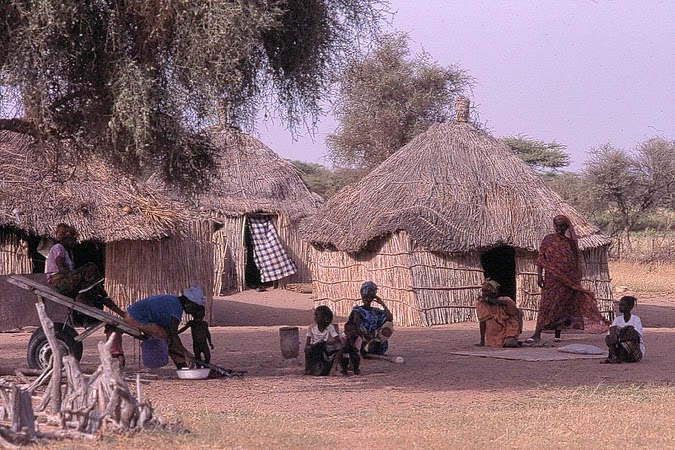
A village in the Ferlo Region of Senegal. Hôtel Cap Saint-Louis.

Brandt et al. used field data from the Ferlo to derive simple and reproducible metrics of vegetation composition, which was divided into above-ground herbaceous mass and woody plant foliage mass, across the Sahel, which was then compared to rainfall data. Rainfall was divided into core rainfall, which fell during the usual rainy season, and early/late rainfall, which fell outside of it.

The largest increases in rainfall measured across most of the Sahel were in early/late rainfall (i.e. rainfall that fell outside the typical rainy season), and this corresponded in most places to an expansion in woody plant foliage mass. Brandt et al.theorise that perennial woody plants were better able to utilise this out-of-season rain as most of the herbaceous plants have a very short growing season, starting their life cycle with the onset of the rains and finishing it as the rains end, with little potential to increase the length of their growing season.

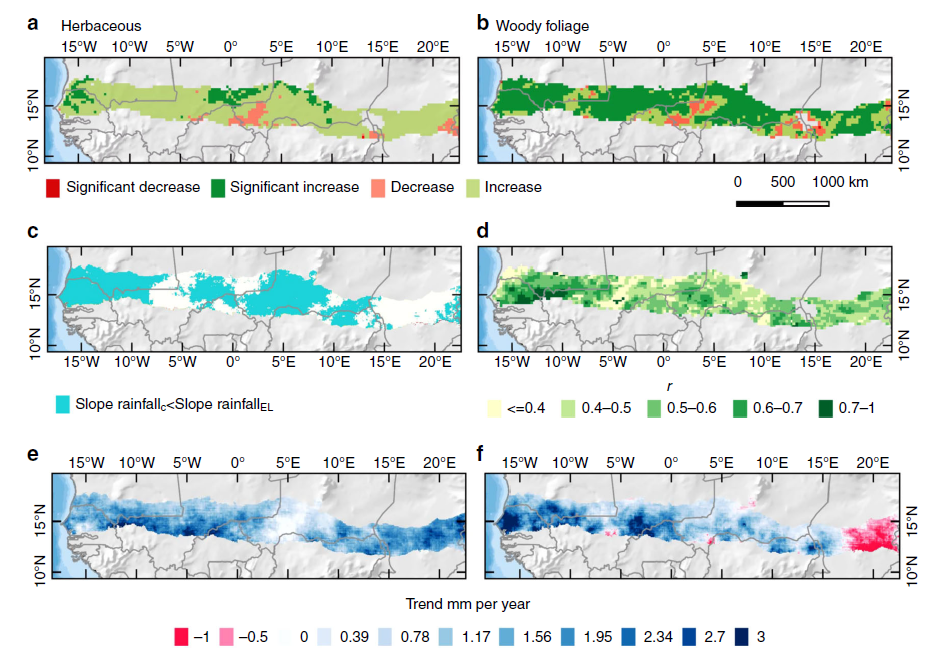
Trends for the Sahel (1992–2012). (a) Vegetation optical depth estimated herbaceous mass trends. (b) Vegetation optical depth estimated woody foliage (trends. Significant (p less than
0.05) trends are shown in dark green and red, insignificant trends (p greater than 0.05) are shown in light red and green. (c) Areas where the slope in rainfall (early and late rains) is larger than the slope in rainfall (core wet-season rains) are shown in blue colour. d Pearson correlation between annual
Vegetation optical depth 90% and pixel-wise fitted sinusoidal term (1st harmonic). (e) Core wet-season rainfall  trend. (f) Early and late rainfall trend. Brandt et al. (2019).

Significant increases in above-ground herbaceous mass were mostly located in the Ferlo and the northern Sahel of Mali. Areas with a significant increase in woody plant foliage mass are observed across the entire Sahel; notably in Senegal, Chad, eastern Niger and large parts of Mali. Decreases in both above-ground herbaceous mass and woody plant foliage mass were observed in western Niger and around Lake Chad, with no obvious relationship with rainfall, pointing towards other, rainfall independent causes (for example land management). 

See also...

https://sciencythoughts.blogspot.com/2019/09/around-thirty-feared-to-have-died-in.htmlhttps://sciencythoughts.blogspot.com/2019/09/seven-cofirmed-deaths-from-yellow-fever.html
https://sciencythoughts.blogspot.com/2019/08/rioting-closes-burkino-fasso-mine-after.htmlhttps://sciencythoughts.blogspot.com/2019/07/sinomonas-gamaensis-new-species-of.html
https://sciencythoughts.blogspot.com/2019/02/plagues-of-locusts-from-sudan-and.htmlhttps://sciencythoughts.blogspot.com/2018/12/investigating-ancient-iron-works-of.html
Follow Sciency Thoughts on Facebook.

Saturday, 29 September 2018

Almost 200 dead in Nigerian floods.

A total of 199 people have been reported dead in Nigeria after the Niger and Benue rivers burst their banks due to rains associated with an exceptionally severe rainy season, according to the National Emergency Management Agency. Ninety seven deaths have been reported in the states of Borno and Yobe in the northeast of the country, where a Cholera outbreak has infected over 3000 people. This outbreak has also hit the neighbouring nations of Niger, where 67 people have died and another 180 cases reported, as well as Cameroon and Chad. The flooding has made about 286 000 people homeless, mostly in southern Nigeria, as well as destroying large areas of crops and killing large amounts of livestock, raising the risk of future famine.

Flooding in Kara-Isheri, Ogun State, southwest Nigeria, on 20 Septmber 2018. Pius Utomi Ekpei/AFP.

West Africa has a distinct two season climatic cycle, with a cool dry season during the northern winter when prevalent winds blow from the Sahara to the northeast, and a warm rainy season during the northern summer when prevalent winds blow from the Atlantic Ocean to the southwest. These warm winds from the Atlantic are laden with moisture, which can be lost rapidly when the air encounters cooler conditions, such as when it is pushed up to higher altitudes by the Jos Plateau of central Nigeria and Shebshi Mountains on the border with Cameroon.

 Rainfall and prevalent winds during the West African dry and rainy seasons. Encyclopedia Britanica.

Cholera is caused by the Bacterium Vibrio cholerae, a Gram-negative, comma-shaped Gammaproteobacteria, related to other pathogenic Bacteria such as Yersinia pestis (Bubonic Plague), and Esherchia coli (food poisoning). The Bacteria produce proteins which can cause watery diarrhoea, which helps spread the disease, and can prove fatal in severe cases, as patients are killed by extreme dehydration.

 SEM image of Vibrio cholerae Bacteria. Kim et al. (2000).

See also...
https://sciencythoughts.blogspot.com/2018/07/clostridium-niameyense-new-species-of.htmlhttps://sciencythoughts.blogspot.com/2018/03/homes-threatened-by-landslide-in-delta.html
https://sciencythoughts.blogspot.com/2018/02/lassa-fever-kills-fifty-seven-in-nigeria.htmlhttps://sciencythoughts.blogspot.com/2018/03/homes-threatened-by-landslide-in-delta.html
https://sciencythoughts.blogspot.com/2017/09/over-thousand-people-displaced-by.htmlhttps://sciencythoughts.blogspot.com/2017/09/cholera-kills-44-in-borno-state-nigeria.html
Follow Sciency Thoughts on Facebook.

Saturday, 30 December 2017

Evidence for a Carboniferous glaciation in the Ennedi-Bourkou Mountains of northern Chad.

During the Late Palaeozoic the supercontinent of Gondwana covered the Southern Polar Region, with the Pole itself moving across Africa and Australia. Evidence for an extensive Southern Polar Glaciation has been found in South Australia, Oman, Ethiopia, Brazil, Egypt, Niger, and Libya. The glaciation seen in Niger and Libya seems extremely likely to continue across the northern part of Chad, which separates the the two regions, however, the remote nature and political instability of this region has prevented exploration by geologists to date.

In a paper published in the journal Geology on 29 November 2017, Daniel Le Heron of the Department of Earth Sciences at Royal Holloway, University of London, describes the results of a study of the topography of the Ennedi-Bourkou Mountains of northern Chad, made using satellite data from Google Earth, which shows the presence of an extensive Carboniferous ice-stream system.

The Ennedi-Bourkou Mountains form the southern margin of the Al Kufrah Basin, which has striated surfaces interpreted as glacial in origin around Jabal Azbah on its eastern margin, in southern Libya. However no such structures have previously been described from the less well explored Chaddian portion of the basin. Le Heron found that the Ennedi-Bourkou Mountains show a series of sinuous belts cutting across a sandstone platform dated to the Carboniferous in the early 1960s (when nobody was looking for evidence of glaciation in the Central Sahara).

Lineament analysis of Google Earth imagery, Ennedi-Bourkou region, northern Chad, illustrating suite of curvilinear features interpreted as mega-scale glacial lineations traversing outcrop belts mapped as Devonian and Carboniferous. Sinuous belts of mega-scale glacial lineations are interpreted as paleo–ice stream pathways; neighbouring regions devoid of these are interpreted as inter-stream areas. The “Mousso” structure is a possible impact crater. Le Heron (2017).

Le Heron was able to detect five main sinuous belts, each 5-12 km in width, which, combined with the interstream areas, cover an area of about 6000 km². These belts can be traced for tens of kilometres, and run approximately north to south.


High-resolution view and interpretation of a paleo–ice stream track shown in Figure 2. Note deflection of mega-scale glacial lineations (MSGLs) around hill interpreted as a nunatak. Elevation of nunatak (1100 m) and of paleo–ice stream track to the west (850 m) allows maximum thickness of ice to be estimated (i.e. less than 250 m). La Heron (2017).<250 br="" m="">

The belts are cross-cut by more recent features, such as wadis and faults, supporting the interpretation of them as ancient structures, though it is impossible to tell whether they represent a single extended glacial event or a series of glacial cycles.

Series of snapshots from Google Earth imagery of the Ennedi-Bourkou plateaux (Chad) with accompanying interpretations. (A) Interaction of mega-scale glacial lineations (yellow lines) with dipping strata of presumed pre-glacial origin (orange lines), with interpreted glacial erosion surface indicated. Scale bar applies to immediate foreground only. (B) Low-angle perspective of interpreted palaeo–ice stream pathway shown in (A). Note interpreted inter-stream area which is devoid of mega-scale glacial lineations. (C) Mega-scale glacial lineations with evidence of fault offsets (faults in red), underscoring their antiquity (d—drumlins). (D) Development of mega-scale glacial lineations on two plateau levels. La Heron (2017).

The Chadian linear structures appear to cross cut layers of rock similar to those cross-cut by similar structures in Niger, which have been used to date the Niger structures to the Visean Stage, roughly 346.7 to 330.9 million years ago. This suggests an extensive Carboniferous ice sheet in the Sahara, draining to the north. This appears to correlate with an ancient palaeo-shoreline recorded in parts of northern Chad, and dated to about 350 million years ago. The absence of any known fluvial (river-generated) systems associated with this coastline suggests a significant ice-sheet covering the land and calving at the shore margin. 

Tentative paleogeographic reconstruction of Visean ice sheet in north-central Africa, incorporating ice flow directions in Aïr Massif of northern Niger with newly documented set of paleo–ice stream pathways in northern Chad. Speculated paleo–ice stream tracks are also shown. Coastline position for Tournasian at 350 Ma. Note close association of paleo–ice stream termini and palaeo-shoreline. La Heron (2017).

See also...
http://sciencythoughts.blogspot.co.uk/2017/10/greenhouse-warming-on-early-wet-mars.htmlhttp://sciencythoughts.blogspot.co.uk/2016/12/ontogeny-in-siphonodellid-conodonts.html
http://sciencythoughts.blogspot.co.uk/2016/10/ancient-fluvial-systems-on-arabia-terra.htmlhttp://sciencythoughts.blogspot.co.uk/2016/10/selenium-arsenic-and-molybdenum-in.html
http://sciencythoughts.blogspot.co.uk/2016/10/antennipatus-montceauensis-velvet-worm.htmlhttp://sciencythoughts.blogspot.co.uk/2016/08/saccoglossus-testa-new-species-of-acorn.html
Follow Sciency Thoughts on Facebook.