Showing posts with label Boreal Ocean. Show all posts

Friday, 27 December 2024

An Early Cretaceous Plesiosaur from Ellesmere Island, Canada.

The Plesiosaurs were a group of Marine Reptiles which appeared in the Triassic and persisted till the End of the Cretaceous. The group obtained a global distribution during the Jurassic, when the supercontinent of Pangea broke up and high global temperatures led to large areas of the world's continents being submerged. However, towards the end of this period the situation had changed, when falling sealevels led to many ocean basins becoming isolated, many groups of large Marine Reptiles becoming extinct, and faunal communities becoming provincialized in different ocean basins. Plesiosaurs are not thought to have been strongly affected by the End Jurassic Extinction Event, but their fossil record is poor during the Early Cretaceous, limiting our understanding of the group during this interval.

In a paper published in the journal Acta Palaeontologica Polonica on 2 December 2024, Lene Delsett of the Natural History Museum at the University of Oslo, adam Smith of Nottingham Natural History Museum, Stephen Ingrams of Llandudno, and Simon Schneider of the Cambridge Arctic Shelf Programme, describe a Plesiosaur from the Early Cretaceous Deer Bay Formation of Ellesmere Island in the Canadian Arctic.

The specimen was excavated in 1952 by the Danish geologist Johannes Christian Troelsen, however, while he mentioned it in a report of his expedition to the area, it was never formally described. It was sent to the University of Copenhagen, where it appears to have undergone some preparation work by a student working under the supervision of curator Eigil Nielsen, and possibly subsequent curator Niels Bonde. The remains were subsequently packed into a series of wooden crates, one of which was opened and examined by Adam Smith in 2005. This box were subsequently misplaced, possibly during the flooding which affected the museum in 2011, but was subsequently relocated by curators Bent Lindow and Arden Bashfortht, and its contents transferred to a draw s in the main fossil Vertebrate collection. Two further crates, labelled '“Reptile Creek, Troelsen’s office' were discovered in 2019, and found to contain several girdle elements of the Plesiosaur specimen. Another box was discovered in the collections of the Zoological Museum in 2020, containing what was labelled as part of a 'Scoresbysund Plesiosaur', but which clearly belong to the Elis Island specimen. Another box, labelled 'NHMD 189689' contained some fragmentary ribs which also appeared to belong to the Elis Island specimen, but in the absence of any documentation were not included in the study.

The surviving specimen comprises 22 non-consecutive vertebrae from the cervical, dorsal, and caudal regions, hundreds of rib fragments, partial girdle elements, all four propodials, and several distal limb elements. All these elements are worn, and the larger elements mostly fragmentary. Delsett et al. were able to assign the specimen to the Cryptoclidid genus Colymbosaurus, but, due to the fragmentary nature of the specimen and a limited amount of overlapping material with other specimens, were not able to determine whether it belonged to either of the two previously described species in the genus, or from a different, as yet undescribed species. 

Selected vertebrae of Plesiosaur Colymbosaurus sp. NHMD 189834 from Ellesmere Island, Nunavut, Canada, upper Berriasian–lower Valanginian. (A) Cervical vertebra (centrum C), in articular (A₁), dorsal (A₂), ventral (A₃), and lateral (A₄) views. (B), (C) Pectoral vertebrae. (B) Centrum E in articular view. (C) Centrum D, in articular (C₁) and lateral (C₂) views. (D) Sacral? rib. (E)–(G) Dorsal vertebrae. (E) Centrum H, in articular (E₁) and lateral (E₂) views. (F) Centrum M (dorsal?) in articular view. (G) Centrum I in articular view. (H), (I) Caudal vertebrae. (H) Centrum O in articular view. (I) Centrum P in articular (I₁) and lateral (I₂) views. The letters used in the element names are written on the individual elements. Delsett et al. (2024).

Previous known specimens of Colymbosaurus spp. have been described from Spitsbergen, southern England and western Russia, so the Elis Island specimen represents a significant range expansion for the genus. The genus was therefore present in two separate ocean basins, the Boreal Arctic and Boreal Atlantic, which were connected by two seaways, one running between Norway and Greenland beneath the modern North Atlantic, and one in present day western Russia.

Map with Cryptoclidid occurrences in the Northern hemisphere. (1) Ellesmere Island; (2) Spitsbergen; (3) Great Britain; (4), (5) Russia. Delsett et al. (2024).

The Boreal Ocean during the Late Jurassic and Early Creraceous has been considered to have been an ecologically depleted environment, with most of the described fossils being Bivalves, Ammonites, and Belemnites. However, Cryptoclidid Pleisiosaurs were large, predatory Animals, reliant on Fish for at least part of their protein intake, which implies that these must also have been present. Delsett et al. suggest that, few deposits from this interval are noted for their fossil content, at least part of the apparent absence of many Animal groups may be because most studies of these deposits have concentrated on their stratigraphy rather than their faunal diversity, and therefore useful index fossils, such as shelled Molluscs tend to have been described, whereas less stratigraphically useful fossils, such as Plesiosaurs or Fish, may have been overlooked.

See also...

Wednesday, 16 December 2015

Evidence for a Middle Permian extinction event from Spitzbergen Island.

In recent years considerable evidence has been exposed in South China for a major extinction event in the Middle Permian. This event, known as the Capitanian Extinction, could potentially have been on a scale similar to the 'Big Five' events of geological history, wiping out much of the Earth's marine life and leaving an impoverished fauna ahead of the more famous End Permian Extinction, which could help to explain the severity of that event. On the other hand it could have been a strictly local event, triggered by volcanism in southwest China and affecting only tropical fauna in a portion of the Tethyan Ocean, with no wider implications.

In a paper published in the Geological Society of America Bulletin on 14 April 2015, David Bond of the Department of Geography, Environment and Earth Sciences at the University of Hull, Paul Wignall of the School of Earth and Environment at the University of Leeds, Michael. Joachimski of the GeoZentrum Nordbayen at the Universität Erlangen-Nürnberg, Yadong Sun, also of the Geozentrum Nordbayen at the Universität Erlangen-Nürnberg, and of the State Key Laboratory of Biogeology and Environmental Geology at the China University of Geosciences, Ivan Savov, also of the School of Earth and Environment at the University of Leeds, Stephen Grasby of the Geological Survey of Canada and the Department of Geoscience at the University of Calgary, Benoit Beauchamp, also of the Department of Geoscience at the University of Calgary and Dierk Blomeier of the Norwegian Polar Institute, describe evidence from the Kapp Starostin Formation of Spitsbergen Island that suggests the Capitanian Extinction also affected the Middle Permain Boreal Ocean.

The majority of the Kapp Starostin Formation comprises Brachiopod and Bryozoan dominated limestone beds, however this breaks down in the upper third of the formation, with a series of events removing much o the fauna. The initial event causes the loss of 32 of the 40 Brachiopod species present, along with 8 of 15 Bivalves. This is followed by a period of recovery, with the replacement of the Brachiopod-dominated fauna with one dominated by Molluscs, reminiscent of the faunas that came to dominate Mesozoic seas as they recovered from the End Palaeozoic Extinction. This fauna persists for much of the remainder of the Kapp Starostin Formation, but then disappears abruptly and does not reappear. In a final stage all siliceous Sponges disappear, along with a soft-bodied fauna which left numerous trace fossils.

Brachiopods from the Kapp Starostin Formation at Kapp Starostin. (A) Brachythyrina sp.; (B) Cancrinella spitsbergiana; (C, D) indet. Echinochoncids; (E, F) Haydenella sp.; (G) Lissochonetes superba; (H) Lissochonetes superba showing papillose areas either side of the centrum; (I, J) Stenocisma sp. 2; (K, L, M) Waagenoconcha sp. Scale bar is 1 cm. Bond et al. (2015).

Dating in the Kapp Starostin Formation is imprecise, however the final extinction phase, in which Sponges and soft-bodied tracemakers are lost, coincides with a major carbon isotope excursion and is thought to represent the End Permian Extinction. Bond et al. examined oxygen and strontium isotope ratios and magnitostratigaphy across the Kapp Starostin Formation in order to try to match events to those in South China. 

Oxygen and strontium isotopes ratios reflect conditions such as temperature other environmental conditions, and generally reflect local rather than global conditions, however while ratios vary from area to area overall trends are more likely to be global, i.e. a sharp increase in the proportion of oxygen-18 in South China is also likely to be seen in Spitzbergen, and by looking at ratios of two elements enough similarities should be seen to make a comparison. 

Magnitostratgraphy uses traces of ancient magnetic fields preserved in iron minerals in rocks to trace ancient pole reversals; the poles only have two possible orientations (north pole in the north/south pole in the south or south pole in the north/north pole in the south) and these occasionally flip, with the poles exchanging positions. Pole reversals happen more-or-less at random, with periods between reversals occurring at intervals ranching from tens of thousands to millions of years, and reflected across the globe. This creates a pattern of magnetic reversals in sedimentary rocks that can be matched in different rocks across the globe.

Using these methods Bond et al. were able to establish a close match between the Spitzbergen and South China deposits, strongly suggesting that the Brachiopod extinction event seen in the Kapp Starostin Formation is the Capitanian Extinction seen in South China. They further note that a similar extinction event can be seen in the Wegener Halvø Formation of Greenland and Sverdrup Basin of Arctic Canada, suggesting that the Capitanian Extinction can be traced across the Boreal Ocean.

Bivalves from the Kapp Starostin Formation at Kapp Starostin. (A) Indet. Buchid; (B) Etheripecten keyslingiformis; (C) Grammatodon (Cosmetodon)? suzuki; (D) Palaeolima sp.; (E) Palaeoneilo sp.; (F) Retroceramus sp.; (G) Streblopteria winsnesi; (H) Streblopteria winsnesi overlain by a fragment of Cassianoides; (I, J) Vorkutopecten svalbardensis; (K) Vorkutopecten sp. Scale bar is 1 cm. Bond et al. (2015).

The cause of this extinction is harder to determine. The loss of tropical fauna in South China during the Capitanian Extinction has led to the suggestion that this could be a cooling event, preferentially affecting warm water organisms unable to cope with an abrupt drop in temperature. Such an event would be expected to affect cold-water Boreal Ocean species far less severely, as such organisms would presumably be pre-adapted to deal with cooler conditions, indeed they might be expected to expand into new areas as the cooling waters create new opportunities by wiping out warm water species. However the event appears to have affected cold water species in the Boreal Ocean just as much as warm water species in the Tethys, suggesting another cause may be responsible.

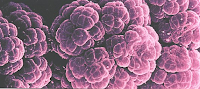
Bond et al. were able to find pyrite framboids (raspberry-shaped iron pyrite crystals) in parts of the Kapp Starostin Formation thought to have been laid down in deeper water. Such framboids only form in the absence of oxygen, raising the possibility that the Capitanian Extinction may have been linked to an anoxic ocean event. Such events have been seen elsewhere in the fossil record and are thought to be linked to break-downs in ocean circulation, which inhibit the ability of oxygen to reach deeper water. However the extinction appears to have affected shallow water species as severely as deep water species. There is no evidence of framboids in shallower water, and anoxia is a much less likely explanation for shallow water extinctions, as even when ocean circulation breaks down oxygen can be replaced in shallow water by free exchange with the atmosphere, suggesting that the cause(s) of the Capitanian Extinction are likely to be more complex.

See also...

http://sciencythoughts.blogspot.co.uk/2015/02/five-new-species-of-proetoid-trilobites.htmlFive new species of Proetoid Trilobites from northeastern Oman.                                                 Trilobites dominated the seas of the early Palaeozoic, but suffered a major loss of diversity in the Devonian extinction and became extinct...
http://sciencythoughts.blogspot.co.uk/2015/01/the-fate-of-soil-microbes-during-end.htmlThe fate of soil microbes during the End Permian Extinction.                                                    The End Permian Extinction is the most severe extinction event recorded in the fossil record, with the loss of around 96% of all known species, and many dominant Palaeozoic groups of organisms. The event led to the effective resetting of the Earth’s biosphere, enabling the emergence of a radically different Mesozoic Biota...
http://sciencythoughts.blogspot.co.uk/2014/04/the-cause-of-end-permian-extinction.htmlThe cause of the end-Permian extinction.    The Earth has been dominated by multi-cellular life forms (animals, plants etc.) for a little over half a billion years, but life has not had it easy throughout all of...
 
Follow Sciency Thoughts on Facebook.

Sunday, 13 December 2015

Evidence of an Ice Age at the start of the Middle Jurassic.

The Jurassic lasted approximately 65.3 million years, from about 201.3 million years ago till about 145 million years ago, and is generally considered to have been a period of exceptional greenhouse warming. It is divided into the Early, Middle and Late Jurassic, each with its own distinctive climates and faunas (as well as shorter subdivisions). The Early Jurassic ended 174.1 million years ago with the Toarcian Extinction Event, a period of exceptional warming triggered by volcanic activity in South Africa that sharply increased the amount of carbon dioxide in the atmosphere, which in turn triggered an anoxic ocean event (warmer water is less able to hold dissolved oxygen), causing many groups of marine organisms to die out. Recent evidence has suggested that this may have been followed by a period of severe cooling at the beginning of the Middle Jurassic; this has included signs of ice rafted debris in Jurassic Arctic basins and the formation of the mineral glendonite, a form of calcite which only forms in cold water, though it has not been suggested that there was significant glaciation on land (neither pole was covered by a continental land-mass in the Jurassic).

In a paper published in the journal Nature Communications on 11 December 2015, Christoph Korte of the Department of Geosciences and Natural Resource Management at the University of Copenhagen, Stephen Hesselbo of the Camborne School of Mines and Environment and Sustainability Institute at the University of Exeter, Clemens Ullmann of the Department of Geosciences and Natural Resource Management at the University of Copenhagen and the Camborne School of Mines and Environment and Sustainability Institute at the University of Exeter, Gerd Dietl of the Staatliches Museum für Naturkunde Stuttgart, Micha Ruhl of the Department of Earth Sciences at the University of Oxford, Günter Schweigert, also of the Staatliches Museum für Naturkunde Stuttgart and Nicolas Thibault, again of the Department of Geosciences and Natural Resource Management at the University of Copenhagen examine evidence for a cooling event at the start of the Middle Jurassic from oxygen isotope levels from Belemnite, Bivalves and Brachiopod shells from the Laurasian Seaway.

Oxygen has three stable isotopes, Oxygen-16, Oxygen-17 and Oxygen-18, with the heaviest, Oxygen-18 being the most abundant. As Oxygen-18 is slightly heavier at than the other isotopes water molecules containing this isotope require slightly more energy  to evaporate at the water surface, so under cooler conditions the proportion of Oxygen-18 in the water rises and under warmer conditions it falls. Many marine organisms with calcite shells store oxygen in their shells in a proportion that matches the surrounding water, enabling palaeontologists and geochemists to use this proportionality as a reliable proxy for the temperature in ancient marine deposits.

During the Jurassic the continents were joined together into a single supercontinent, Pangea. This was roughly 'C' shaped, with the interior part of the 'C' forming an equatorial ocean, the Tethys. However the Jurassic had a very warm climate, with subsequent high sea levels, and many areas of the continents were flooded. In particular an epicontinental sea (sea which lies on submerged continental crust), the Laurasian Seaway covered much of what is now Europe, connecting the tropical Tethys Ocean to the Boreal Sea around the North Pole, and allowing water to circulate between the two (in the modern world the Bering Straight is another such epicontinrntal seaway, connecting the Pacific to the Arctic across an area that is part of the North American Continental Plate, an area which was exposed during the Pleistocene glaciations).

By examining shells from the early Middle Jurassic of the Laurasian Seaway that showed little sign of alteration (recrystalization of replacement of the original calcite crystals), Korte et al. were able to detect a rise in Oxygen-18 of 2.5 parts in a thousand, equivalent to a drop in temperature of 10 degrees centigrade, over a period of about half a million years.

During this period the area that is now the North Sea, and which was then part of the Laurasian Seaway, is known to have undergone considerable uplift, driven by a rising volcanic plume from deep within the Earth, similar to the Yellowstone Plume beneath modern Wyoming (such a plume would not need to erupt as the surface to cause significant uplift, emplacing new material on the underside of the overlying tectonic plate would have the same effect), while at the same time Ammonite distributions across the Laurasian Seaway became fragmented by latitude (i.e. instead of having the same group of species across the seaway as in the Early Jurassic, different populations began to appear in the north and south). Korte et al  suggest that the rising North Sea Dome may have blocked the Laurasian Seaway, preventing currents running between the Tethys Ocean and Boreal Sea, thereby causing cooling in the Boreal Sea and possibly the formation of pack ice.

Late Early Jurassic palaeogeography. (a) Map shows the connection between the equatorial Tethys Ocean and the Boreal Sea via the Laurasian Seaway; the latter including the Viking Corridor which was several hundred kilometres wide. Red arrows mark generalized palaeocurrents. (b) Detail of Laurasian Seaway palaeogeography with the region affected by North Sea Dome as determined by the generalized outer limit of the Toarcian subcrop. Brown arrows represent the siliciclastic sediment supply/transport in relation to domal uplift. Sample locations are numbered and identified by stars (Hebrides Basin (I; Scotland), Cleveland Basin (II; England), Swabo-Franconian Basin (III; Germany) and Lusitanian (IV; Portugal)/Basque Cantabrian basins (V; Spain)). SNS, Southern North Sea Basin, W, Wessex Basin. Korte et al. (2015).

See also...

http://sciencythoughts.blogspot.co.uk/2015/03/the-reaction-of-marine-invertebrates-to.htmlThe reaction of marine invertebrates to global warming during the Early Jurassic Toarcian Extinction Event.                                                   About 183 million years ago a major eruptive episode in the Karoo-Ferrar Large Igneous Province of South Africa lead to an abrupt rise in global atmospheric...
http://sciencythoughts.blogspot.co.uk/2013/11/a-late-jurassic-lagerstatte-from.htmlA Late Jurassic lagerstätte from central Poland                                                          The term lagerstätte is used by Palaeontologists to describe a particularly rich fossil source; a site where fossils are either exceptionally numerous...
http://sciencythoughts.blogspot.co.uk/2013/09/opportunistic-bivalves-during-early.htmlOpportunistic Bivalves during the Early Jurassic Toarcian Oceanic Anoxic Event. The Toarcian Oceanic Anoxic Event is an extinction event that took place in the Early Jurassic, about 183 million years ago. It took place in four phases, thought to have been related to Milankovitch Cycles. During each phase the temperature of the global ocean is thought...
 Follow Sciency Thoughts on Facebook.