Showing posts with label Ebola. Show all posts

Saturday, 20 September 2025

Thirty one known deaths in an Ebola Virus outbreak in Kasai Province, Democratic Republic of Congo.

Thirty one people are now known to have died and a further seventeen people have received hospital treatment in an outbreak of Ebola Virus in Kasai Province, Democratic Republic of Congo. The first reported case was a woman in the 34th week of a pregnancy, who was admitted to Bulape General Reference Hospital on 20 August 2025 suffering from high fever, bloody diarrhoea, haemorrhaging and extreme weakness, according to a press release issued by the World Health Organization. This first patient died from multiple organ failure on 25 August, and was subsequently confirmed to have been infected with Ebola Virus through analysis of samples sent to the Institut National de Recherche Biomédicale in Kinshasa. Two healthcare workers who had come into contact with the patient also subsequently died of the Virus.

By the 4 September 28 cases of the Virus had been reported, with fifteen fatalities including four healthcare workers (a 54% case fatality ratio), all within the Bulape and Mweka health zones, with 80% of cases in persons above the age of fifteen. By 18 September 48 cases had been reported, with 31 known fatalities (a 64% case fatality ratio), and the Virus had spread to four healthcare districts. 

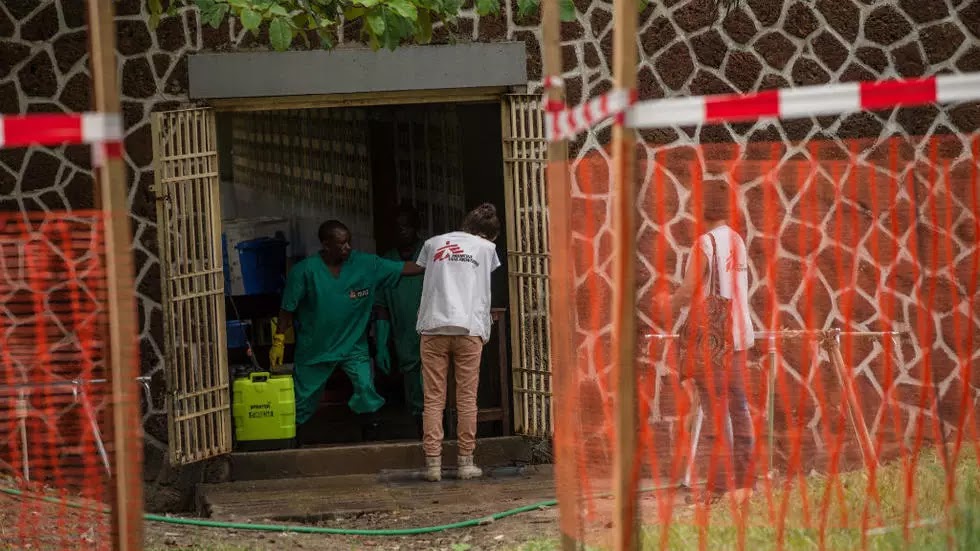
A team of medics from Medecins Sans Frontiers helping to set up an Ebola treatment centre in Bulape in September 2025. Medecins Sans Frontiers.

Ebola Virus Disease is caused by RNA Viruses of the genus Ebolavirus (sometimes referred to as Orthoebolavirus because it belongs to the Kingdom Orthornavirae). It has a reputation for being the world's deadliest viral disease, at least in part due to the 1995 film Outbreak, though this is probably slightly inaccurate as about 50% of victims survive, making it less deadly than diseases such as Rabies. However, it is extremely contagious, with know known cure, and has a tendency to rapidly overwhelm local health systems as health workers themselves are infected.

Electron micrograph of an Ebola Virus particle. Frederick Murphy/Centers for Disease Control and Prevention/Wikimedia Commons.

Ebola begins with a fever similar to that caused by Influenza or Malaria, which tends to come on rapidly two-to-three weeks after infection (during at least part of which time the patient is already infectious). This tends to be followed by extreme respiratory tract infection, headaches, confusion, rashes and tissue necrosis and heavy bleeding. Death is generally caused by multiple organ failure.

The only known treatment for Ebola is intensive rehydration, which can improve the survival prospects of patients greatly, accompanied by anticoagulants and procoagulants to mange the diseases attacks on the circulatory system, analgesia to cope with the pain of the disease and antibiotics and antimycotics to prevent secondary infection. Due to the highly contagious nature of the disease it is recommended that healthcare workers wear full-body protection to maintain a barrier between them and their patients; a daunting prospect in the tropical regions of Africa where the disease is endemic. A vaccine is now available for the disease.

Ebolavirus is thought to have a non-human animal vector, since its rapid onset and high mortality rate appears to preclude a permanent residence within Human hosts. Surveys of wild animals have found Ebola infections in Rodents and Great Apes, however these were affected by the disease in a similar way to Humans, and are therefore unlikely permanent hosts. The most likely vectors are thought to be Fruit Bats or small Primates, which are endemic to the areas where the disease occurs and which are widely eaten; cooking meat probably kills the virus, but there is a distinct danger of infection while preparing carcasses. 

Following the conformation that the outbreak in Kasai Province was caused by the Ebola Virus, the World Health Organization delivered 14 tonnes of emergency supplies to Bulape, including personal protective equipment, mobile laboratory equipment and medical supplies. Additional medical personnel, experienced in dealing with Ebola outbreaks, have also been sent to the area by the Congolese Ministry of Health, the World Health Organization, and Medecins Sans Frontiers. 

A specialist 34-bed Ebola treatment centre has been set up in Bulape, There are reported to be 2000 doses of Ebolavirus vaccine available in the Democratic Republic of Congo, which have been dispatched to Kasai Province, with the 523 front line healthcare workers having been the first recipients of the vaccines; a further 45 000 doses of vaccine are being sent to the area by international agencies. A testing lab has also been set up in Bulape, allowing for results to be obtained within 4-6 hours of samples being taken, as opposed to the 4-5 days needed to get a result from samples shipped to Kinshasa. 

See also...

Friday, 26 January 2024

The epidemiology of the 2020 Ebola outbreak in Équateur Province, Democratic Republic of the Congo.

On 1 June 2020 medical authorities in Équateur Province, Democratic Republic of the Congo, reported an outbreak of Ebolavirus Disease in Mbandaka, the capital of Équateur Province. This was the eleventh reported outbreak of an Ebola-type disease in the Democratic Republic of the Congo, and was close to the location of a previous outbreak in the Bikoro health zone of Équateur Province, which occurred in 2018. The Democratic Republic of the Congo suffered fifteen outbreaks of Ebola-type diseases between 1 September 1976 and 22 August 2022, with the 2020 Équateur Province outbreak being the eleventh of these. The majority of these were caused by the Ebolavirus, and occurred in the north of the country, although one, in Haut-Uélé Province in 2012, was caused by the Bundibugyo Virus.

Ebolavirus has not been found in Bats in the Democratic Republic of the Congo, but the closely related Marburg Virus has, and Bats with antibodies to Ebolavirus have been found in Nord Kivu Province and Équateur provinces, as well as in the neighbouring Republic of Congo. Outbreaks of Ebola have been associated with the handling of Chimpanzees and Gorillas in the Republic of Congo and Gabon, and Ape populations have been known suffer dramatic declines at the same time as local Human populations have suffered outbreaks of Ebola-type diseases. Furthermore, as with other Filoviruses, Ebolavirus can persist in the system of survivors after they have apparently recovered, and cause new infections via sexual transmission or other exchange of bodily fluids. Before it became possible to identify Ebolaviruses by rapid genetic sequencing, it was impossible to tell whether outbreaks of the disease were caused by new infections from zoonotic sources (i.e. Animals) or transmission from apparently heathy survivors.

In a paper published in the journal The Lancet Microbe on 23 January 2024, a team of scientists led by Eddy Kinganda-Lusamaki of the Pathogen Genomics Laboratory at the Institut National de Recherche Biomédicale in Kinshasa, the Faculté de Médecine at the Université de Kinshasa, and the Institut de Recherche pour le Développement at the University of Montpellier, present the results of an assessment of the epidemiological and genetic properties of the 2020 Équateur Province Ebola outbreak.

The 2020 Équateur Province outbreak was the Democratic Republic of the Congo's eleventh Ebola outbreak, and started while the tenth outbreak, in North Kivu Province, was still ongoing. This led to suspicions that the two events were related, with the Équateur Province potentially being caused by an infected person travelling from North Kivu. Kinganda-Lusamaki et al. were able to demonstrate that this was not the case, with the two outbreaks being caused by different strains of Ebolavirus, and the Équateur Province outbreak having a zoonotic origin.

Ebolavirus outbreaks in the Democratic Republic of the Congo, 1976–2022. (A) The distribution of Ebolavirus disease outbreaks in the Democratic Republic of the Congo. Coloured circles identify locations of previous outbreaks and the size of circles represents the number of positive Human cases. The map shows the affected 2020 health zones (orange and purple shading) and sites of the 2018 Équateur outbreak (orange shading). The red star indicates the location of the Kinshasa diagnostic laboratory during the Équateur Province 2020 outbreak. (B) The locations and prevalence of Ebolavirus disease cases during the 2020 Ebola virus disease outbreak in the Équateur Province. The red stars indicate the location of the diagnostic and field laboratories during the Équateur Province 2020 outbreak (Mbandaka, Ingende, Itipo, Bikoro, and Bolomba). Kinganda-Lusamaki et al. (2024).

Blood samples from live patients with suspected Ebola and oral swabs from deceased patients thought to have died of Ebola were tested for signs of the Virus. Unlike in previous outbreaks, the presence of a fever was not required for patients to be included in the suspected group, since it has been demonstrated that not all people infected with Ebolavirus develop a fever.

Between 19 May and 16 September 2020, 130 probable cases of Ebola were reported in., 119 of which were confirmed by laboratory analysis. Of the 130 suspected cases, 55 died, a case fatality rate of 42%. Cases were reported in thirteen health zones, Bikoro, Bolenge, Bolomba, Bomongo, Iboko, Ingende, Lilanga Bobangi, Lolanga Mampoko, Lotumbe, Mkanza, Mbandaka, Monieka, and Wangata. The epidemic declined rapidly after August, with the last case being reported on 12 September. Thhe highest number of infections was among men in the 45 or older age bracket, while the least affected group were children aged 5-14. This is surprising, as Équateur Province has a young population, with many more children than older men. This was particularly true in the early stages of the epidemic, with no individuals of 15 or younger affected in May or June, while several children were infected between July and September. The date of the first onset of symptoms was identified for all cases. Forty seven infected persons visited more one health clinic after the onset of symptoms, with three individuals visiting four separate health clinics. The earliest identified case was a 37-year-old woman identified as a housewife, residing in the Mbandaka health zone, who had no contact with any known earlier case, but who was known to have consumed wild Bat meat, strongly suggesting a zoonitic origin for the epidemic.

Demographics of Ebolavirus Disease cases during the 2020 Équateur Province outbreak (A) Epidemiological curve of confirmed and probable Ebolavirus Disease cases over time. (B) Age distribution of confirmed and probable Ebolavirus Disease cases by gender (the black horizontal bars represent the 2020 Democratic Republic of the Congo known age and gender population distribution from the World Health Organization). (C) Temporal age distribution of individuals with Ebolavirus Disease. (D) Distribution of patients with Ebolavirus Disease who visited multiple health-care facilities after symptoms onset. Kinganda-Lusamaki et al. (2024).

Three of the people infected during the epidemic were healthcare workers, and one a traditional healer. Two of these died. Thirty seven of the infected were described as farmers, fishers, or hunters, 25 as housewives, and seven as businesspeople. Ninety four of the infected people are known to have had contact with another known case before becoming infected. Nine reported having contact with an unidentified person who they thought might be infected, 23 had no known link to another case, and four reported contact with Animals which may have passed on the infection.

Nineteen of the infected are believed to have contracted the Virus from a member of their household, twenty from another member of their community, twelve people are thought to have contracted the Virus at a funeral. Twenty seven patients reported multiple potential contact sources, in 44 cases the route of exposure was unknown.

While it was not possible to obtain specimens from all patients, Kinganda-Lusamaki et al. were able to obtain 188 specimens from 122 of the patients, from which they were able to sequence 87 viral genomes. This led to the discovery that there were in fact two separate variants of the Virus circulating during the epidemic, with 83 of the genomes belonging to the Mbandaka variant of the Virus and three belonging to the Tumba variant; a partial sequence (defined as a sequence where less than 70% of the Viruses DNA was recovered) obtained from another patient was also identified as belonging to the Tumba variant. All of the Mbandaka variant cases were calculated to have descended from a last common ancestor which probably existed in a non-Human host in January 2020, with two separate instances of the Virus jumping to Human hosts and then spreading within the community. The first known example of the Tumba variant in the 2020 outbreak was a nineteen-year-old man who visited two separate healthcare clinics before being diagnosed. This patient had no-known contact with any earlier patient, nor had he consumed bushmeat or had contact with any wild or domestic Animals. All three subsequent cases had had contact with this initial case. The previous outbreak of Ebola in Équateur Province in 2018 was also the Tumba variant of the Virus, although it was impossible to determine whether the new outbreak was due to a persistent infection from the earlier epidemic.

By using patient-generated data, Kinganda-Lusamaki et al. were able to generate a history of the 2020 Ebolavirus outbreak in Équateur Province, Democratic Republic of the Congo, which included genetic data, records of health centre visits, dates of infection, identification of the Virus, isolation of patients, and deaths. This enabled them to plot chains of infection, with nineteen chains of infection being determined before generic data was incorporated into the study, and eighteen of these subsequently being stitched together with genetic data to form the Mbandaka variant tree. Twenty of the patients had no determined route of infection, with eleven of these also subsequently added to the Mbandaka variant tree from genetic data; genetic data was not available from the remaining nine patients. Three individuals reported that believing they had contracted the Virus from contact with Animals, but were demonstrated to be part  of the Human-to-Human chain of Mbandaka variant infection. Two individuals were identified from samples taken when they visited healthcare clinics for reasons unrelated to Ebolavirus; both went on to develop symptoms of the disease.

Kinganda-Lusamaki et al. were able to develop an extensive overview of the 2020 Ebolavirus outbreak in Équateur Province, but caution that this data is still probably incomplete, with cases for which the infection routes were unknown or only probable, making it likely that there were other, unidentified cases within the community. A similar pattern was observed in the concurrent epidemic in North Kivu Province. The outbreak appeared to start with an individual who consumed Bat meat, and was of a newly identified strain of the Ebolavirus, identified as the Mbandaka variant. A minority of the cases belonged to a second strain, the Tumba variant, which caused an epidemic of the disease in 2018, and appeared to re-emerge from a survivor in 2020. The Équateur Province outbreak was found to be unrelated to the concurrent North Kivu Province epidemic, contrary to expectations. Their hope is that by utilising both social and genetic data to understand the transmission of the Virus their study will enable healthcare workers to be able to better manage future outbreaks of Ebolavirus.

Kinganda-Lusamaki et al. identified several different routes of Ebolavirus infection during the 2020 outbreak, including zoonotic transmission from Animals, person-to-person infection due to close contact with infected individuals, and the re-emergence of the Virus from a persistent infection. The ability of the Virus to re-emerge as a persistent infection from apparently healthy individuals after quite long intervals has proven to be a problem in other Ebolavirus outbreaks elsewhere in the Democratic Republic of the Congo, as well as in Guinea. This can be differentiated from fresh zoonotic infections by genetic testing (the persistent infection will be genetically close to the previous outbreak, whereas a fresh zoonotic infection is likely to have a novel genome, forming their own distinct clade of infections.

Research around the 2014 Ebolavirus outbreak in Guinea, Sierra Leone, and Liberia demonstrated the importance of educating survivors of the disease of the potential dangers of transmitting the disease after all symptoms have passed, something which Kinganda-Lusamaki et al.'s emphasise.

In the 2020 Équateur Province it took an average of six days between the onset of symptoms and patients being isolated within medical facilities (which was quite often longer than the patient lived), as a consequence, many patients visited multiple healthcare facilities, increasing the number of other people they came into contact with. Based upon this, Kinganda-Lusamaki et al. strongly recommend that in future outbreaks a system of rapid testing is introduced as quickly as possible. They note that an enhanced viral haemorrhagic fever surveillance programme has helped the country to respond rapidly to several outbreaks of different haemorrhagic diseases (including Marburg Virus Disease, Crimean-Congo haemorrhagic fever, and Rift Valley fever), resulting in the severity and duration of the outbreaks being reduced. A similar system would enable the Democratic Republic of the Congo to respond in the same way.

During the last three weeks of the 2020 Équateur Province outbreak, cases were limted to six healthcare districts, falling to two in the last two weeks. Eight of the thirteen new cases reported in the last three weeks were children under fourteen years of age, possibly suggesting that the majority of older people in the area by this time were producing antibodies to the disease, either as a result of prior exposure or vaccination. During the outbreak the rVSVΔG-ZEBOV-GP vaccine was administered to all known contacts of patients who were more than six months old, as part of a  ring vaccination strategy. Unfortunately, record keeping was imperfect, and it is unclear if the reported cases in the last few weeks had been vaccinated, or whether they had been in contact with unvaccinated people. During the North Kivu outbreak the same vaccine was found not to offer absolute protection from infection, but infected people were found to suffer fewer symptoms, recovered more quickly, and were less likely to die. Vaccinated people were found to be producing antibodies to the Virus six months after they were vaccinated. It is unclear whether natural immunity, or the immunity offered by vaccination, wanes over time for Ebolavirus. 

See also...

Saturday, 26 June 2021

Outbreak of Ebola Fever in Guinea declared to have ended.

On 19 June 2021, the Ministry of Health of Guinea declared the end of the Ebola outbreak that affected Nzérékoré Prefecture, Nzérékoré Region, Guinea, according to a press release from the World Health Organization. This was the first Ebola outbreak in Guinea since the large outbreak that affected West Africa in 2014-2016. 

This recent outbreak was announced on 14 February 2021 following the identification of a cluster of seven suspected Ebola cases in Gouécké and Nzérékoré City sub-prefectures in N’zérékoré prefecture. Between 14 February and 19 June 2021, a total of 23 cases (16 confirmed, 7 probable) were identified in four sub-prefectures of N’zérékoré Prefecture. Of these confirmed and probable cases 11 survived and 12 died. Five of the cases were health workers and one was a traditional health practitioner.  

The index case of this recent outbreak was a health worker.  She had onset of symptoms on 15 January 2021 and after seeking care at two health facilities and a traditional practitioner, died on 28 January 2021. She was buried on 1 February 2021 in Gouécké sub-prefecture without using safe and dignified burial practices. 

Seventeen secondary cases were reported with epidemiological links to the initial probable case between 5 February and 4 March 2021. After more than three weeks with no new cases reported, on 27 March 2021, a cluster of three community deaths was identified in Soulouta sub-prefecture, and were later classified as probable cases. Two individuals who had cared for and/ or attended these burials, were confirmed with Ebola infection in early April 2021. One of these last two confirmed cases was lost to follow up soon after he was confirmed on 1 April 2021 and until 18 June 2021 where he was found in apparent good health. Since 2 April 2021, no new confirmed or probable cases have been reported.  

The Ministry of Health, together with the World Health Organization and other partners, initiated measures to control the outbreak and prevent further spread of the disease. The Ministry of Health activated national and district emergency management committees to coordinate the response. Multidisciplinary teams were deployed to the field to actively search for cases and provide care for patients; identify and follow-up contacts; and to engage with communities about outbreak prevention and control  measures.  

Ebola Virus Disease is caused by RNA Viruses of the genus Ebolavirus. It has a reputation for being the world's deadliest viral disease, at least in part due to the 1995 film Outbreak, though this is probably slightly inaccurate as about 50% of victims survive, making it less deadly than diseases such as Rabies. However, it is extremely contagious, with know known cure, and has a tendency to rapidly overwhelm local health systems as health workers themselves are infected.

 
Electron micrograph of an Ebola Virus particle. Frederick Murphy/Centers for Disease Control and Prevention/Wikimedia Commons.

Ebola begins with a fever similar to that caused by Influenza or Malaria, which tends to come on rapidly two-to-three weeks after infection (during at least part of which time the patient is already infectious). This tends to be followed by extreme respiratory tract infection, headaches, confusion, rashes and tissue necrosis and heavy bleeding. Death is generally caused by multiple organ failure.

The only known treatment for Ebola is intensive rehydration, which can improve the survival prospects of patients greatly, accompanied by anticoagulants and procoagulants to mange the diseases attacks on the circulatory system, analgesia to cope with the pain of the disease and antibiotics and antimycotics to prevent secondary infection. Due to the highly contagious nature of the disease it is recommended that healthcare workers wear full-body protection to maintain a barrier between them and their patients; a daunting prospect in the tropical regions of Africa where the disease is endemic. 

Ebolavirus is thought to have a non-human animal vector, since its rapid onset and high mortality rate appears to preclude a permanent residence within Human hosts. Surveys of wild animals have found Ebola infections in Rodents and Great Apes, however these were affected by the disease in a similar way to Humans, and are therefore unlikely permanent hosts. The most likely vectors are thought to be Fruit Bats or small Primates, which are endemic to the areas where the disease occurs and which are widely eaten; cooking meat probably kills the virus, but there is a distinct danger of infection while preparing carcasses.  

See also...


Follow Sciency Thoughts on Facebook.

Follow Sciency Thoughts on Twitter.


Friday, 26 February 2021

Ebola Virus Disease outbreak reported in Guinea.

A new outreak of Ebola Fever has been reported in Guinea, according to the World Health Organization. On 14 February 2021, the Ministry of Health of Guinea informed the World Health Organization of a cluster of Ebola Virus Disease cases in the sub-prefecture of Gouécké in the Nzérékoré Region of Guinea between 18 January and 13 February 2021. The cases showed symptoms of diarrhea, vomiting and bleeding after attending the burial of another relative (a 51 year-old nurse) on 1 February 2021.

The index case of the cluster was a nurse who had originally presented at a health centre in Gouécké on 18 January 2021 with headache, physical weakness, nausea, vomiting, loss of appetite, abdominal pain, and fever. She was diagnosed with Typhoid. She sought a second consultation at a health facility in Nzérékoré on 23 January 2021 for fever, vomiting, liquid stools, and physical weakness, and she was diagnosed with Malaria. On 24 January she consulted a traditional practitioner in Nzérékoré, and she died on 28 January 2021. She was buried unsafely on 1 February in Gouécké. The other six cases are the five family members and the traditional practitioner she visited. 

Among the seven cases, five have died (4 probable and 1 confirmed). The other two confirmed cases are currently in isolation in dedicated health care facilities in Conakry and Gouécké, Nzérékoré region.  

The Ebolavirus species has not yet been determined. Additional laboratory analyses are on-going to ascertain Virus species.  

As of 15 February, one hundred and ninety-two contacts have been identified, including 164 contacts in N’Zérékoré Health District and 28 in Ratoma Health District, Conakry. To date, no contacts have been reported to have travelled in neighboring countries. However, Nzérékoré is the second-largest city in Guinea and lies at the intersection of roads from Ganta (in Liberia), Danané (Côte d’Ivoire), and roads to other major hubs in Guinea like Kankan and Macenta in (Guinea). Therefore, there is concern about the exportation of Ebola Virus Disease cases into the neighbouring countries. 

On 14 February 2021, following the declaration of the Ebola Virus Disease outbreak, the Ministry of Health of Guinea convened a crisis meeting.

The Ministry of Health of Guinea, World Health Organization, and Global Outbreak Alert and Response Network partners, have initiated measures to control the outbreak and prevent further spread. To coordinate the response, the Ministry of Health activated the national and district emergency management committees. They also advised the public to take measures to avert the spread of the disease, and to report any persons with symptoms to seek care. Multidisciplinary teams have been deployed to the field to; actively search and provide care for cases, trace and follow-up contacts, and sensitize communities on infection prevention and control.

Ebola Virus Disease is caused by RNA Viruses of the genus Ebolavirus. It has a reputation for being the world's deadliest viral disease, at least in part due to the 1995 film Outbreak, though this is probably slightly inaccurate as about 50% of victims survive, making it less deadly than diseases such as Rabies. However, it is extremely contagious, with know known cure, and has a tendency to rapidly overwhelm local health systems as health workers themselves are infected.

 
Electron micrograph of an Ebola Virus particle. Frederick Murphy/Centers for Disease Control and Prevention/Wikimedia Commons.

Ebola begins with a fever similar to that caused by Influenza or Malaria, which tends to come on rapidly two-to-three weeks after infection (during at least part of which time the patient is already infectious). This tends to be followed by extreme respiratory tract infection, headaches, confusion, rashes and tissue necrosis and heavy bleeding. Death is generally caused by multiple organ failure.

The only known treatment for Ebola is intensive rehydration, which can improve the survival prospects of patients greatly, accompanied by anticoagulants and procoagulants to mange the diseases attacks on the circulatory system, analgesia to cope with the pain of the disease and antibiotics and antimycotics to prevent secondary infection. Due to the highly contagious nature of the disease it is recommended that healthcare workers wear full-body protection to maintain a barrier between them and their patients; a daunting prospect in the tropical regions of Africa where the disease is endemic. 

Ebolavirus is thought to have a non-human animal vector, since its rapid onset and high mortality rate appears to preclude a permanent residence within Human hosts. Surveys of wild animals have found Ebola infections in Rodents and Great Apes, however these were affected by the disease in a similar way to Humans, and are therefore unlikely permanent hosts. The most likely vectors are thought to be Fruit Bats or small Primates, which are endemic to the areas where the disease occurs and which are widely eaten; cooking meat probably kills the virus, but there is a distinct danger of infection while preparing carcasses.  

See also...


Follow Sciency Thoughts on Facebook.

Follow Sciency Thoughts on Twitter.


Sunday, 14 February 2021

New case of Ebola Fever reported in North Kivu Province, Democratic Republic of Congo.

A new case of Ebola Fever has been reported in the Democratic Republic of Congo, according to the World Health Organization. The patient, described as an adult female, presented at a health clinic in the Biena Health Zone with bleeding from the nose on 25 January 2021, where she was treated as an outpatient. However, on 4 February she was admitted to a second health clinic suffering from physical weakness, dizziness, joint pain, epigastric pain, liquid stools, headache and difficulty breathing, and subsequently died the following day in an intensive care unit in Butembo city. Tests carried out at the hospital provided a positive result for Ebola Fever Virus. Local health authorities are now trying to contact 117 people identified as having been in contact with the patient.

Ebola Haemorrhagic Fever is caused by RNA Viruses of the genus Ebolavirus. It has a reputation for being the world's deadliest viral disease, at least in part due to the 1995 film Outbreak, though this is probably slightly inaccurate as about 50% of victims survive, making it less deadly than diseases such as Rabies. However, it is extremely contagious, with know known cure, and has a tendency to rapidly overwhelm local health systems as health workers themselves are infected.

 
Electron micrograph of an Ebola Virus particle. Frederick Murphy/Centers for Disease Control and Prevention/Wikimedia Commons.

Ebola begins with a fever similar to that caused by Influenza or Malaria, which tends to come on rapidly two-to-three weeks after infection (during at least part of which time the patient is already infectious). This tends to be followed by extreme respiratory tract infection, headaches, confusion, rashes and tissue necrosis and heavy bleeding. Death is generally caused by multiple organ failure.

The only known treatment for Ebola is intensive rehydration, which can improve the survival prospects of patients greatly, accompanied by anticoagulants and procoagulants to mange the diseases attacks on the circulatory system, analgesia to cope with the pain of the disease and antibiotics and antimycotics to prevent secondary infection. Due to the highly contagious nature of the disease it is recommended that healthcare workers wear full-body protection to maintain a barrier between them and their patients; a daunting prospect in the tropical regions of Africa where the disease is endemic.

Ebolavirus is thought to have a non-human animal vector, since its rapid onset and high mortality rate appears to preclude a permanent residence within Human hosts. Surveys of wild animals have found Ebola infections in Rodents and Great Apes, however these were affected by the disease in a similar way to Humans, and are therefore unlikely permanent hosts. The most likely vectors are thought to be Fruit Bats or small Primates, which are endemic to the areas where the disease occurs and which are widely eaten; cooking meat probably kills the virus, but there is a distinct danger of infection while preparing carcasses. 

See also...


Follow Sciency Thoughts on Facebook.

Follow Sciency Thoughts on Twitter.
 

Tuesday, 2 June 2020

Democratic Republic of Congo reports a new outbreak of Ebola.

Authorities in the Democratic Republic of Congo have reported a new outbreak of Ebola Haemorrhagic Fever in the city of Mbandaka in Équateur Province in the north-western part of the country. A total of five people, including a fifteen-year-old girl are reported to have died between 18 and 30 May 2020, with laboratory tests having now confirmed that the infective agent was Ebolavirus. Another four people, including a child of one of the deceased, are reported to have fallen ill with the disease, and are receiving treatment at a specialist unit at Wangata Hospital in Mbandaka. Several more people who are known to have come into contact with infected persons are being held in isolation until they can be confirmed to be clear of the Virus. 

The entrance to the specialist isolation unit at Wangata Hospital in Mbandaka. Junior Kannah/AFP.

The Democratic Republic of Congo is still officially suffering from another outbreak of Ebola in North Kivu Province in the east of the country, which has seen 3317 infections and 2134 deaths since August 2018. It is hoped that this outbreak may have been defeated, with no new cases reported since 15 May, although the World Health Organisation recomends that an area is not declared clear of the Virus until there have been no new cases for 42 days, a threashold that was nearly reached in North Kivu at the begining of April, when the disease flared up again.

Ebola Haemorrhagic Fever is caused by RNA Viruses of the genus Ebolavirus. It has a reputation for being the world's deadliest viral disease, at least in part due to the 1995 film Outbreak, though this is probably slightly inaccurate as about 50% of victims survive, making it less deadly than diseases such as Rabies. However, it is extremely contagious, with know known cure, and has a tendency to rapidly overwhelm local health systems as health workers themselves are infected. 

Electron micrograph of an Ebola Virus particle. Frederick Murphy/Centers for Disease Control and Prevention/Wikimedia Commons.

Ebola begins with a fever similar to that caused by Influenza or Malaria, which tends to come on rapidly two-to-three weeks after infection (during at least part of which time the patient is already infectious). This tends to be followed by extreme respiratory tract infection, headaches, confusion, rashes and tissue necrosis and heavy bleeding. Death is generally caused by multiple organ failure.

The only known treatment for Ebola is intensive rehydration, which can improve the survival prospects of patients greatly, accompanied by anticoagulants and procoagulants to mange the diseases attacks on the circulatory system, analgesia to cope with the pain of the disease and antibiotics and antimycotics to prevent secondary infection. Due to the highly contagious nature of the disease it is recommended that healthcare workers wear full-body protection to maintain a barrier between them and their patients; a daunting prospect in the tropical regions of Africa where the disease is endemic.

Ebolavirus is thought to have a non-human animal vector, since its rapid onset and high mortality rate appears to preclude a permanent residence within Human hosts. Surveys of wild animals have found Ebola infections in Rodents and Great Apes, however these were affected by the disease in a similar way to Humans, and are therefore unlikely permanent hosts. The most likely vectors are thought to be Fruit Bats or small Primates, which are endemic to the areas where the disease occurs and which are widely eaten; cooking meat probably kills the virus, but there is a distinct danger of infection while preparing carcasses.

See also...

https://sciencythoughts.blogspot.com/2020/04/hospital-in-democratic-republic-of.htmlhttps://sciencythoughts.blogspot.com/2019/11/outbreak-of-measles-in-samoa-has-now.html
https://sciencythoughts.blogspot.com/2019/10/outbreak-of-eastern-equine-encephalitis.htmlhttps://sciencythoughts.blogspot.com/2019/10/measles-outbreak-kills-over-4000-in.html
https://sciencythoughts.blogspot.com/2019/09/seven-cofirmed-deaths-from-yellow-fever.htmlhttps://sciencythoughts.blogspot.com/2019/09/understanding-wild-ecology-of-ebola.html
Follow Sciency Thoughts on Facebook.

Saturday, 11 April 2020

Hospital in the Democratic Republic of Congo reports a new case of Ebola.

A hospital in the Democratic Republic of Congo has reported a new case of Ebola, only days before the epidemic there was due to be be declared over. A 26-year-old man arrived at a hospital in Beni in North Kivu Pronvice with symptoms of the disease earlier this week, and died on the evening of Thursday 9 April 2020. Prior to this the country had been without reported cases for 52 days. It is thought likely that the man was part of a previously undetected chain of infection, and that there are, therefore, other undetected cases in the country.

Healthcare workers at an Ebola treatment centre in Beni, Democratic Republic of Congo. Hugh Kinsella Cunningham/EPA.

The current Ebola outbreak in the Democratic Republic of Congo began in August 2018, with 3454 known infections since that time, 2274 of whom have died. This is the second deadliest outbreak of the disease ever recorded, surpassed only by the West African outbreak of 2014-16, which infected more than 28 000 people, with over 11 000 deaths. The disease has been held in check with a mixture of widespread testing and vaccinations, though this has been hampered by the widespread political unrest and violence in the Democratic Republic of Congo, with healthcare workers having been attacked on several occasions, often with lethal results.

Ebola Haemorrhagic Fever is caused by RNA Viruses of the genus Ebolavirus. It has a reputation for being the world's deadliest viral disease, at least in part due to the 1995 film Outbreak, though this is probably slightly inaccurate as about 50% of victims survive, making it less deadly than diseases such as Rabies. However, it is extremely contagious, with know known cure, and has a tendency to rapidly overwhelm local health systems as health workers themselves are infected. 

Ebola begins with a fever similar to that caused by Influenza or Malaria, which tends to come on rapidly two-to-three weeks after infection (during at least part of which time the patient is already infectious). This tends to be followed by extreme respiratory tract infection, headaches, confusion, rashes and tissue necrosis and heavy bleeding. Death is generally caused by multiple organ failure.

The only known treatment for Ebola is intensive rehydration, which can improve the survival prospects of patients greatly, accompanied by anticoagulants and procoagulants to mange the diseases attacks on the circulatory system, analgesia to cope with the pain of the disease and antibiotics and antimycotics to prevent secondary infection. Due to the highly contagious nature of the disease it is recommended that healthcare workers wear full-body protection to maintain a barrier between them and their patients; a daunting prospect in the tropical regions of Africa where the disease is endemic.

Ebolavirus is thought to have a non-human animal vector, since its rapid onset and high mortality rate appears to preclude a permanent residence within Human hosts. Surveys of wild animals have found Ebola infections in Rodents and Great Apes, however these were affected by the disease in a similar way to Humans, and are therefore unlikely permanent hosts. The most likely vectors are thought to be Fruit Bats or small Primates, which are endemic to the areas where the disease occurs and which are widely eaten; cooking meat probably kills the virus, but there is a distinct danger of infection while preparing carcasses. 

Electron micrograph of an Ebola Virus particle. Frederick Murphy/Centers for Disease Control and Prevention/Wikimedia Commons.

See also...

https://sciencythoughts.blogspot.com/2019/09/understanding-wild-ecology-of-ebola.htmlhttps://sciencythoughts.blogspot.com/2018/11/ebola-outbreak-kills-198-in-democratic.html
https://sciencythoughts.blogspot.com/2018/05/democratic-republic-of-congo-hit-by.htmlhttps://sciencythoughts.blogspot.com/2016/01/sierra-leone-reports-new-case-of-ebola.html
https://sciencythoughts.blogspot.com/2015/11/evidence-for-sexual-transmission-of.htmlhttps://sciencythoughts.blogspot.com/2015/01/the-source-of-december-2013-guinean.html
Follow Sciency Thoughts on Facebook.