Showing posts with label Scleractinian Coral. Show all posts

Friday, 22 July 2022

Swiftia phaeton: A new species of deepwater Octocoral from the coast of Mauritania.

Despite being relatively close to the numerous oceanological research institutes of western Europe, the deep waters off northwest coast of Africa have been relatively underexplored compared to those of many other regions of the world. The coast of Mauritania is known to be home to home to the world's largest Coral mound barrier, and their are extensive Coral colonies occupying the marine canyons off the Mauritanian coast, both fuelled by nutrient-rich upwellings from the deep Atlantic ocean along this section of coast.

In a paper published in the journal ZooKeys on 17 June 2022, Íris Sampaio of the Marine Research Department at Senckenberg am Meer, and the University of the Azores, and Lydia Beuck and André Freiwald, also of the Marine Research Department at Senckenberg am Meer, describe a new species of deepwater Octocoral from the coast of Mauritania.

The new species is placed in the genus Swiftia, and given the specific name phaeton, in reference to the PHAETON mission of the Research Vessel Maria S. Merian, which visited the coast of Mauritania, and recovered the first specimens of the species. The Greek Demigod Phaeton (or Phaëthon), is also linked to the region. A son of the Sun-god Apollo, he is supposed to have crashed his father's chariot into the Sahara Desert, burning the Earth and making the area uninhabitable. 

Swiftia phaeton forms simple colonies, either unbranching or with one or two divisions. The colonies are bright red in colour, with polyps densely packed on the branches. Tentacles are yellowish white.

Swiftia phaeton from Mauritania. (A) In situ colony with expanded polyps on coral framework. (B) Colony after ethanol preservation with expanded polyps (holotype SMF 13112). (C) In situ colony with retracted polyps on coral framework. (D) Part of a branch (paratype SMF 13113). (E) Fragment of specimen with anthocodiae slightly expanded (paratype SaM-ID 1566). (F) Polyp and coenenchyme details (paratype SaM-ID 1352). Scale bars are 1 cm (A)–(C) or 300 µm (D)–(F). (A) & (C) Tomas Lundälv/Sven Lovén Center for Marine Infrastructure in Sampaio et al. (2022), (B), (D)-(F) Sampaio et al. (2022).

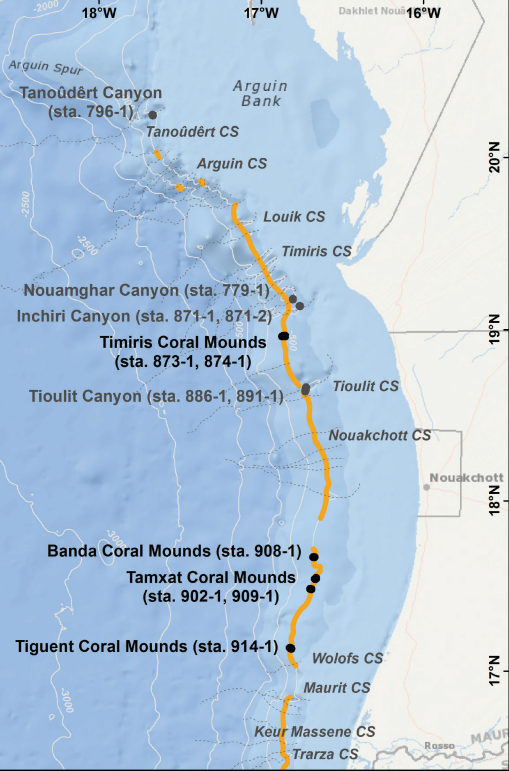
Swiftia phaeton was found living in Tanoûdêrt Canyon at a depth of 595 m, on the Timiris Mounds at depths of 446-602 m, in the Tioulit Canyon at a depth of 618 m, in the Southern Tamxat Mound Complex at a depth of 450 m, and on the Central Tamxat Mound Complex at a depth of 486 m.

Map showing MSM 16/3 ‘PHAETON’ ROV dive locations along the Mauritanian slope. Location names and GeoB 14 stations (sta.): grey, canyons; black, Coral mounds; orange, Scleractinian distributions. Sampaio et al. (2022).

See also...

Follow Sciency Thoughts on Facebook.

Follow Sciency Thoughts on Twitter.


Monday, 29 June 2020

Phestilla fuscostriata: A new species of Nudibranch Sea Slug from the South China Sea.

The Nudibranch superfamily Fionoidea is a highly diverse group of marine Sea Slugs, containing 20 families, 52 genera and 324 species. ike many other nudibranchs, however, there has been some controversy with the systematics and phylogeny of Fionidea. In the family Trinchesiidae, the majority of species are free-living, though some form obligate association with their prey species on which they settle, feed and lay eggs. Among the most well-known examples of such obligate relationship are those between the genus Phestilla, and certain Acroporid, Agariciid, Poritid and Dendrophylliid Coral species: the Nudibranchs live on these Corals, feed on them, and their larvae show host specificity in settlement. Different from other genera of Trinchesiidae, Phestilla does not possess a cnidosac (an anatomical feature in which the Sea Slug stores cnidocytes, Cnidarian stinging cells harvested from its prey and used for its own defence) at the tip of its cerata, but has a glandular region in this location. The genus Phestilla currently has nine recognized species, among which, eight are obligate corallivores. Field observation and laboratory studies have revealed the specificity between Corals and their Nudibranch predators, with a particular species of Phestilla feeding on only one species or genus of Coral, which implies host shifts are associated with speciation.

In a paper published in the journal Zoological Studies on  June 2020, Juntong Hu of the Department of Biology at Hong Kong Baptist University, Yanjie Zhang, also of the Department of Biology at Hong Kong Baptist University, and of the Southern Marine Science and Engineering Guangdong Laboratory, James Yang Xie, again of the Department of Biology at Hong Kong Baptist University, and Jian-Wen Qiu, once again of the Department of Biology at Hong Kong Baptist University, and of the Southern Marine Science and Engineering Guangdong Laboratory, describe a new species of Phestilla from the Coral Pavona decussata, a structure forming Agariciid species in the South China Sea.

Colonies of the Scleractinian Coral Pavona decussata were collected from Sharp Island, Hong Kong, at depths of about 2 m, in August 2018 by SCUBA diving and then cultured in the laboratory in an aquarium system. Nudibranchs and their egg masses, found on the surface of the Pavona decussata in October 2018, were collected from the Coral surface. The specimens were preserved either in 95% ethanol for molecular study or in 4% formaldehyde in seawater for morphological analysis. All specimens examined werer deposited in the collection of the Swire Institute of Marine Science, at the University of Hong Kong.

The new species is named Phestilla fuscostriata, from the Latin 'fuscus' meaning 'brown' and 'striatus' meaning 'streaky', refers to the brown stripes on the body, which is a morphological character of the new species.

A colony of the Coral Pavona decussata showing three adults of the Nudibranch Phestilla fuscostriata  (indicated by red arrows) and many crescent-shaped egg masses of the Nudibranch on the Coral surface. Scale bar is 1.0 cm. Hu et al. (2020).

Living specimens of Phestilla fuscostriata are 2 mm to 8 mm in length. The body excluding the cerata is elongate and dorsal-ventrally flattened. The general body colour is white with dense brown pigmentation on dorsal side of head, tentacles, body and cerata. Ethanol preserved specimens are white due to loss of brown pigmentation.

The oral tentacles and rhinophores are digitiform; in adults the former are approximately twice as long and twice the diameter of the latter. A very small eye is present behind the rhinophore. The cerata are digitiform, swollen distally, and arranged in seven transverse rows in the holotype, each row consisting of 1 to 6 cerata attached laterally on a distinctly raised ridge on each side of the body, with the number of cerata decreasing from anterior to posterior. Fewer rows of cerata and fewer cerata per row are present in juveniles. Within a row, one single pair of dorsal cerata and zero to several pairs of ventral cerata are present. In the holotype, there are seven pairs of dorsal cerata, and six rows of ventral cerata with 5, 5, 4, 3, 2 and 1 pair from first row to the sixth row, respectively. The longest cerata on the second row is approximately 1.5 times as long as the body width. A translucent glandular region present at the tip of each ceras. Comparing adult and juvenile specimens indicates that the dorsal cerata develop earlier than the ventral cerata.

The anus is acleioproctic, located dorsally on right side of body between the third and fourth rows of cerata. The reproductive opening is located anterior to the first row of cerata, on right side of body.

Living specimens of Phestilla fuscostriata. (A) Holotype, SWIMS-Mol-19-001, dorsal view. (B) Holotype, SWIMS-Mol-19-001, ventral view; (C) Paratype, SWIMS-Mol-19-002, dorsal view. (D) Paratype SWIMS-Mol-19-002, ventral view. (E) Paratype, SWIMS-Mol-19-005, dorsal view. (F) Paratype, SWIMS-Mol-19-005, ventral view. Scale bars are 1.0 mm. Hu et al. (2020).

Eggs of Phestilla fuscostriata are white, 0.2 mm in diameter, and clearly observable through translucent body wall on the ventral side. Egg masses are crescent-shaped, about 0.25 cm in diameter, and have a translucent membrane enclosing around 20–50 eggs. At about 24°C, eggs develop into veliger larvae and break through membrane in 2–3 weeks. Veligers have a pair of black eyes and a well-developed swimming velum. Newly settled juveniles are more elongate, the velum is lost, but the oral tentacles or cerata have not yet developed. After roughly one week, juveniles resemble adults, with black eyes, but with tentacle and cerata, although at this stage cerata few and small.

Early developmental stages of Phestilla fuscostriata. (A) Embryos inside egg membrane. (B) Rudimentary veligers without well-formed shells inside egg membrane. (C) Veligers with well-formed shells. (D) Hatched veliger with well-developed velum for swimming. (E) Postlarva, dorsal view. (F) Early juvenile, with the head turned to the left when the photograph was taken. Scale bars: (A)–(C), (F) 500 μm; (D)–(E) = 40 μm. Hu et al. (2020).

Phestilla fuscostriata resembles its host coral P. decussata in the coloration pattern, therefore exhibiting excellent camouflage. Hu et al. were unaware of its presence in our aquarium system until this nudibranch built up a dense population on Pavona decussata, which eventually killed some of the colonies. The only known food source for Phestilla fuscostriata is Pavona decussata. When other species of Scleractinian Coral such as Platygyra carnosa and Acropora digitifera were also present in the same aquarium, the Nudibranch was found only on Pavona decussata, which indicates its host specificity. During reproduction, this Nudibranch deposits egg masses and glues them tightly on the surface of the Coral colonies.

See also...

https://sciencythoughts.blogspot.com/2020/06/pereionotus-tinggiensis-new-species-of.htmlhttps://sciencythoughts.blogspot.com/2020/05/zhangiella-condensum-hydractinia.html
https://sciencythoughts.blogspot.com/2020/05/oulastrea-crispata-understanding.htmlhttps://sciencythoughts.blogspot.com/2020/05/deciphering-changes-in-symbiotic.html
https://sciencythoughts.blogspot.com/2020/03/crambione-cf-mastigophora-bloom-of.htmlhttps://sciencythoughts.blogspot.com/2020/03/haliaeetus-leucogaster-observation-of.html
Follow Sciency Thoughts on Facebook.

Saturday, 6 June 2020

Spirobranchus spp.: Christmas Tree Worms associated with new hosts found in Puerto Rico and the Netherlands Antilles.

Caribbean Christmas Tree Worms, Spirobranchus spp., are considered host generalists in their associations with Anthozoan (Scleractinia) and Hydrozoan (Millepora) Stony Corals. As planktonic larvae, they settle on Coral surfaces and start secreting a calcareous tube to be used as a dwelling. This tube usually becomes overgrown by the host Coral (except for its opening) and may get encapsulated deep inside the Coral skeleton. In this manner, the well-protected Worms grow and survive predation and other hazards, allowing them to live for over four decades. When the host Corals are overgrown by other organisms, such as Octocorals and Sponges, these may act as secondary hosts.

In a paper published in the journal Diversity on 21 March 2020, Bert Hoeksema of the Taxonomy and Systematics Group at the Naturalis Biodiversity Center, the Groningen Institute for Evolutionary Life Sciences at the University of Groningen, and the Institute of Biology Leiden at Leiden University, Jaaziel García-Hernández of the Marine Genomic Biodiversity Laboratory at the University of Puerto Rico - Mayagüez, Godfried van Moorsel of Ecosub and the ANEMOON Foundation, Gabriël Olthof also of the Taxonomy and Systematics Group at the Naturalis Biodiversity Center, and the Institute of Biology Leiden at Leiden University, and Harry ten Hove, again of the Taxonomy and Systematics Group at the Naturalis Biodiversity Center, report two new primary hosts (Scleractinians) and two new secondary hosts (a Zoantharian Soft Coral and an Ascidian colonial Sea Squirt), discovered during recent surveys (2015–2019) in the southern and eastern Caribbean, as well as in the Greater Antilles.

The Coral–Worm associations occurred in shallow subtidal water (less than 4 m depth), with the Knobby Brain Coral, Pseudodiploria clivosa, hosting Spirobranchus giganteus at St. Eustatius in the northern Leeward Islands, and the Golfball Coral, Favia fragum, hosting both Spirobranchus giganteus and Spirobranchus polycerus at Bonaire in the southern Leeward Islands. The secondary host observations, both for Spirobranchus giganteus, involved the Zoantharian Palythoa caribaeorum at Puerto Rico and the Ascidian Trididemnum solidum at Bonaire and Curaçao. Palythoa caribaeorum represents a first record as a secondary host for a species of the order Zoantharia. Until now, the only other Anthozoan secondary hosts were species in the order Alcyonacea (subclass Octorallia), whereas Trididemnum solidum represents an entirely new host phylum, the Chordata. The only other non-Anthozoan secondary hosts known to date are Sponges (Porifera).

A Coral of Pseudodiploria clivosa at 2 m depth, Scubaqua House Reef, St. Eustatius, Eastern Caribbean (2015) hosting Spirobranchus giganteus: (a) overall view and (b) close-up. Hoeksema et al. (2020).

The two new Scleractinian hosts are both typical for shallow subtidal water near the shoreline (less than 4 m depth), where a lack of previous surveys may explain why they have not previously been reported. The new records of secondary hosts are remarkable because these encrusting Animals are known to be aggressive in competition for space with Scleractinians by allelopathy (the production of harmful biochemicals) and can be abundant on shallow reef flats and slopes, where they usually outcompete and kill Scleractinian Corals by overgrowing them. In both cases, the Christmas Tree Worms survive by withstanding this overgrowth and maintain an open space near the tube opening.

Favia fragum hosting Spirobranchus spp. at 3–4 m depth, dive site 'Front Porch', Bonaire, Southern Caribbean (2019). (a)–(c) Spirobranchus giganteus: overall view (a), overgrown tube section indicated by red arrow (b); antler-shaped opercular spines showing dark pink colouration indicated by yellow arrow (c). (d) Spirobranchus polycerus: two individuals, one showing white spines on its operculum (blue arrow). Hoeksema et al. (2020).

Hoeksema et al.'s new host records confirm two Caribbean Christmas tree worms as generalist symbionts capable of infesting a large spectrum of host Corals. They are also strong survivors when their primary hosts become overgrown by more aggressive competitors for space. Previous host records mostly concern  Spirobranchus giganteus, but Hoeksema et al. also report a new host Coral for Spirobranchus polycerus. This worm species occurs in shallow water (less than 4 m depth), whereas Spirobranchus giganteus is commonly found down to 40 m depth. Both Spirobranchus species can easily be distinguished, as Spirobranchus giganteus shows long dark pink opercular spines, whereas those of Spirobranchus polycerus are short and white. Furthermore, Spirobranchus giganteus may be larger than Spirobranchus polycerus and usually shows six to seven (maximum eight) whorls in its branchial spires, whereas Spirobranchus polycerus has two to three (maximum five).

Palythoa caribaeorum acting as a secondary host for Spirobranchus giganteus at 5 m depth, Cayo Media Luna (La Parguera Natural Reserve), Puerto Rico, Greater Antilles (2017): (a) Worm extended and (b) retracted, showing the tube opening surrounded by dead Coral; damage to the Zoantharian host caused by the operculum of the extended Worm indicated by a black arrow. Hoeksema et al. (2020).

Hoeksema et al.'s observations suggest that future surveys may discover other hosts for both Spirobranchus species with the possibility of more host overlap. Whether such host sharing is related to their phylogenetic affinities or to ecological similarities (e.g., overlapping bathymetric distributions) is an open question that merits assessment.

Trididemnum solidum acting as a secondary host for Spirobranchus giganteus in the Southern Caribbean: (a), (b) dive site 'Thousand Steps', Bonaire (2019); (c) Marie Pampoen, Curaçao, 12 m depth (2017); (d), (e) Daaibooi Bay, Curaçao (2017). Extended Worms (a), (d) and the same individuals retracted, showing an open space in front of the Worm tube mouth (b), (e). Hoeksema et al. (2020).

See Also...


Follow Sciency Thoughts on Facebook.

Tuesday, 19 May 2020

Lophelia pertusa: Cold-water Corals found living in strongly anoxic conditions off the coast of Angola.

Being ecosystem engineers, framework-forming Scleractinian Cold-water Corals provide habitat for thousands of deep-sea species, revealing equally remarkable levels of biodiversity as found in tropical Coral Reefs. Lophelia pertusa is the dominant reef-forming Cold-water Coral in the Atlantic, and based on its distribution correlated with ocean conditions, upper and lower tolerable limits for basic oceanographic parameters were proposed for this species. Among them, dissolved oxygen concentrations can exert control on its biogeographic distribution. However, lowest dissolved oxygen concentrations inhabited by this species apparently differs between the northeast Atlanatic, where it can tollerate levels as low as about 2 millilitres of oxygen per litre of seawater, and the northwest Atlanatic, where it can tollerate levels as low as about 3.7 millilitres of oxygen per litre of seawater. These observations are corroborated by laboratory experiments, revealing that Lophelia pertusa individuals collected from waters on the the Scottish margin in the northeast Atlantic, where there is a dissolved oxygen concentration of about 6 milligrams per litre of seawater, Atlantic, were unable to maintain normal aerobic functions at dissolved oxygen concentrations of less than 3.2 millilitres per litre of seawater. Moreover, for Lophelia pertusa specimens collected from areas of the Gulf of Mexico with dissolved oxygen concentrations of about 2.8 millilitres per litre of seawater, a 7-day exposure to a dissolved oxygen concentration of 1.5 millilitres per litre of seawater proved fatal. However, discoveries of Lophelia pertusa in the oxygen minimum zones of the subtropical eastern Atlantic have hinted at an even wider tolerance of Lophelia pertusa to low dissolved oxygen concentrations. Nevertheless, the limited capability of Lophelia pertusa to thrive under dissolved oxygen concentrations (artificially) reduced below those of their natural environment questions its ability to cope with the global change-induced ocean deoxygenation expected for the coming century.

In a paper published in the journal Coral Reefs on 6 April 2020, Dierk Hebbeln and Claudia Wienberg of the MARUM Center for Marine Environmental Sciences at the University of Bremen, Wolf-Christian Dullo of the GEOMAR Helmholtz Centre for Ocean Research, André Freiwald of the Marine Research Department at Senckenberg am Meer, Furu Mienis of the NIOZ Royal Netherlands Institute for Sea Research and Utrecht University, Covadonga Orejas of the Centro Oceanogra´fico de Baleares of the Instituto Español de Oceanografía, and Jürgen Titschack, also of the MARUM Center for Marine Environmental Sciences at the University of Bremen, and the Marine Research Department at Senckenberg am Meer, present the discovery of Lophelia pertusa-dominated Cold-water Coral reefs thriving in the hypoxic oxygen minimum zone off Angola in the southeast Atlantic. The regional adaptation of the Angolan Cold-water Corals to such extreme conditions sheds new light on their potential capability to cope with expected future environmental changes in the ocean.

During RV Meteor expedition M122 in January 2016, in situ oceanographic parameters such as dissolved oxygen concentrations and temperature were recorded off Angola. Data were collected during eight dives with the Remotely Operated Vehicle Marum Squid, carried out three benthic lander deployments, and 17 conventional conductivity, temperature, and depth instrument casts. The conductivity, temperature, and depth instrument was additionally equipped with a non-calibrated fluorescence sensor only providing relative values shown as means per water depth averaged from all conductivity, temperature, and depth instrument casts.

Multibeam bathymetry map showing the distribution of coldwater Coral reefs off Angola. Locations of conductivity, temperature, and depth (CTD) casts, benthic lander deployments, and remotely operated vehicle (ROV) dives are indicated. Hebbeln et al. (2020).

Remotely operated vehicle video observations revealed the presence of Cold-water Coral Reefs dominated by Lophelia pertusa, which colonise the slopes and summits of up to 100 m high Coral mounds. While dispersed Cold-water Coral colonies were found in a depth range of 250–500 m, large aggregates of healthy colonies were restricted to 330-470 m water depth. The observation of over 50 cm high colonies clearly evidenced the continuous proliferation of Cold-water Coral off Angola for many years.

Thriving Cold-water Corals observed in the oxygen minimum zone off Angola. (a), (b) Lophelia pertusa reefs in the center of the  oxygen minimum zone (350 m water depth). (c) Transported but alive Lophelia pertusa colony in the lower oxygen minimum zone (500 m depth). (d) Lophelia pertusa colony with many living polyps (439 m depth) (ROV images). Hebbeln et al. (2020).

The available oceanographic data revealed water temperatures of 6.8–14.2°C around the Cold-water Corals at depths of 250–500 m. The corresponding dissolved oxygen concentrations of 0.6-1.5 millilitres per litre of seawater are the lowest ever obtained from waters bathing flourishing Lophelia pertusa colonies.

To gain insight into the seasonal variability of  dissolved oxygen concentrationsoff Angola, as the M122 data only represent an 8.5-day snapshot from January 2016, Hebbeln et al. included further 21  conductivity, temperature, and depth instrumentcasts obtained within the mapped area off Angola between 1995 and 2013. These data, spanning from March to September, almost completely correspond to the M122 data or reveal even lower  dissolved oxygen concentrations. Interestingly, even in this hypoxic environment, most prolific Cold-water Coral Reefs are bound to the center of the Angolan oxygen minimum zone where lowest dissolved oxygen concentrations prevail, which coincide with enhanced water-column fluorescence pointing to an increased availability of relatively fresh organic matter.

Based on field observations in the northwest and northeast Atlantic, the assumed lower limit of Lophelia pertusa’s oxygen tolerance ranges around 2-3.7 millilitres per litre of seawater. This has recently been challenged by very low dissolved oxygen concentrations of 1.1-1.4 millilitres per litre of seawater reported from Cold-water Coral sites off Mauritania, which, however, are associated with only sporadic occurrences of small Lophelia pertusa colonies. The new Angolan data documented for the first time Lophelia pertusa’s ability to develop thriving reefs even under dissolved oxygen concentrations of under 1 milligram per litre of seawater.

In addition, off Angola Lophelia pertusa lives at temperatures of up to 14.2° C, which are among the highest temperatures ever observed for this species. Thus, off Angola, the partly high temperatures could act as a second stressor since respiration rates of Lophelia pertusa increase with increasing temperature. 

Stress induced by low dissolved oxygen concentrations and relatively high temperatures is energetically a challenge for the metabolism of most marine species, but can be compensated by the availability of large quantities of high-quality organic matter. The Angolan and Mauritanian margins belong to highly productive upwelling systems triggering extensive oxygen minimum zones. Also at many other Atlantic reef sites, Lophelia pertusa is most abundant at depth intervals with highest oxygen depletion, most likely linked to highest concentrations of suspended food particles in this layer, which also applies to Angola. Comparing ambient dissolved oxygen concentrations and temperature with site-specific net primary productivity, used as a food supply indicator, for several Atlantic Cold-water Coral sites, it appears plausible that the negative effects of hypoxia and high temperatures on Lophelia pertusa seemingly could be compensated by significantly enhanced food supply.

With respect to Lophelia pertusa preferring regional oxygen minima, ambient dissolved oxygen concentrations cannot provide any information about its capability to also cope with lower dissolved oxygen concentrations. However, some information is provided by the aforementioned laboratory experiments. Lophelia pertusa collected in the northeast Atlantic and the Gulf of Mexico could not withstand dissolved oxygen concentrations of less than 40–50% of the ambient values. Consequently, the range of low dissolved oxygen concentrations tolerable by Lophelia pertusa, also beyond its natural environment, might depend on the conditions the corals are acclimated to, thus pointing to a possible genotypic adaptive capacity of Lophelia pertusa. Thus, although on a global scale the tolerable dissolved oxygen concentration limits for Lophelia pertusa range from less than 1 to more than 6 millilitres per litre of seawater, smaller ranges define these limits on regional scales.

Cold-water Coral Reefs are vulnerable marine ecosystems that are partly protected within marine protected areas. These can safeguard Cold-water Corals from destructive Human impacts (e.g., bottom trawling, hydrocarbon exploration), but offer no sustainable protection against global change-induced threats. In concert with ocean acidification and warming of intermediate waters, eoxygenation is expected to become a major stressor for  Cold-water Corals. However, Lophelia pertusa’s general capacity to thrive under well-oxygenated as well as hypoxic bottom waters reveals a rather high oxygen tolerance, although individual Lophelia pertusa populations appear to have limited adaptive capabilities to cope with reductions of 40–50% of ambient dissolved oxygen values. Consequently, the expected decrease in oxygenation of about 2% along the Atlantic continental margins by 2100 by itself might not exert a serious threat to Lophelia pertusa, except for already hypoxic settings like the Angolan margin. However, palaeotological studies revealed that during the last approximately 20 000 years regional changes in water column structure caused the collapse of Lophelia pertusa dominated ecosystems due to decreasing  dissolved oxygen concentrations. Thus, unlike a small overall decrease in dissolved oxygen concentrations, major regional reductions in dissolved oxygen concentration driven by global change-induced changes in ocean circulation have the potential to eradicate regional Lophelia pertusa populations.

Even if smaller decreases in dissolved oxygen concentration alone might not pose a serious threat to Lophelia pertusa reefs, these have to be considered in concert with other changing environmental parameters that might form additional stressors (e.g. temperature and pH) with largely unknown consequences for the Coral’s biological functions. Moreover, the flux of particulate organic carbon from the surface ocean might decline by about 30% by 2100 along the Atlantic margins, resulting in a lower food supply to the Cold-water Corals and deep-sea organisms in general, thus reducing their capacity to cope with increasing stress.

See also...

https://sciencythoughts.blogspot.com/2020/05/tracing-decline-of-acroporid-corals-in.htmlhttps://sciencythoughts.blogspot.com/2020/05/oulastrea-crispata-understanding.html
https://sciencythoughts.blogspot.com/2019/06/calliostoma-bullatum-extinct.htmlhttps://sciencythoughts.blogspot.com/2020/05/acropora-cervicornis-assessing-success.html
https://sciencythoughts.blogspot.com/2020/05/deciphering-changes-in-symbiotic.htmlhttps://sciencythoughts.blogspot.com/2019/03/lophelia-pertusa-cold-water-coral.html
Follow Sciency Thoughts on Facebook.

Monday, 18 May 2020

Tracing the decline of Acroporid Corals in the Caribbean, from the Pleistocene to the twenty-first century.

The living cover of Caribbean reef-building Corals has declined by 50% since systematic reef monitoring began in the late 1970s. During this time, the majority of Caribbean reefs have been transformed from habitats dominated by reef-building Corals into habitats dominated by Macroalgae, Sponges, and/or non–reef-building Invertebrates. The decline in Corals has been attributed to fishing, land-based pollution, anthropogenic ocean warming, and outbreaks of Coral and Sea Urchin diseases. Modern ecological studies of Caribbean reefs began in the late 1960s, less than a decade before a series of acute events acted in synergy to rapidly transform Coral communities. Outbreaks of White Band Disease appeared on many reefs in the late 1970s and early 1980s, eventually killing over 80% of the populations of the Elkhorn Coral, Acropora palmata, which previously dominated reef crest zones, and the Staghorn Coral, Acropora cervicornis, which previously dominated midslope zones. Mass mortality of the Black Sea Urchin, Diadema antillarum, in 1983–1984 due to an unidentified pathogen removed this keystone herbivore from reefs that were already largely devoid of large herbivorous Fish because of overfishing. Diadema mortality exceeded 90%, precipitating an explosion of Macroalgae on reefs across the Caribbean. These events were followed by local outbreaks of Coral bleaching beginning in the late 1980s followed by regional outbreaks in the 1990s, leading to further increases in Coral disease and, in some instances, a further replacement of Corals by Macroalgae.

In a paper published in the journal Science Advances on 22 April 2020, Katie Cramer of the Julie Ann Wrigley Global Institute of Sustainability at Arizona State University, and the Center for Oceans at Conservation International, Jeremy Jackson of the Center for Marine Biodiversity and Conservation at the Scripps Institution of Oceanography, the Center for Biodiversity and Conservation at the American Museum of Natural History, the Smithsonian Tropical Research Institute, and the Department of Paleobiology at the National Museum of Natural History, Mary Donovan of the Hawai‘i Institute of Marine Biology at the University of Hawai‘i at Mānoa, and the Marine Science Institute at the University of California, Santa Barbara, Benjamin Greenstein of the School of Social and Natural Sciences at Roger Williams University, Chelsea Korpanty of the MARUM Center for Marine Environmental Sciences at the University of Bremen, Geoffrey Cook of the Department of Biology and Health Science at New England College, and John Pandolfi of the Centre for Marine Science, School of Biological Sciences, and ARC Centre of Excellence for Coral Reef Studies at the University of Queensland, present the results of a study in which they used palaeoecological, historical, and survey data to track Acropora presence and dominance throughout the Caribbean from the prehuman period to present.

Despite decades of research, the origin and transmission of White Band Disease in Caribbean Acropora are still poorly understood. However, multiple anthropogenic stressors appear to have played a role. Recent observations (1997–2004) of the presence of White Band Disease on Acropora Corals across the Caribbean show a link between contemporary white-band disease and elevated sea surface temperature from anthropogenic climate change. Although the coverage of early survey data is insufficient to investigate causes of the initial white-band disease epidemics of the late 1970s and early 1980s, they may also have been related to temperature stress: Anthropogenic warming of sea surface waters in the Caribbean first became pronounced in the 1970s. Initial and subsequent White Band Disease outbreaks may also have been caused by increased Macroalgal abundance related to overfishing of reef herbivores and/or reef eutrophication, as numerous experiments have found increased disease prevalence in other Caribbean Scleractinian Coral species associated with Macroalgal contact. Nutrient enrichment from land-based runoff has also likely exacerbated White Band Disease outbreaks by suppressing Coral immunity and encouraging growth of pathogenic microbes and allelopathic Algae (Algae which produce chemicals that influence the growth, survival, and reproduction of Corals).. Another hypothesis is that declines in Acroporid and other Corals in the Caribbean are related to an increase in hurricane frequency and intensity due to climate change, which could limit Acropora recovery on reefs already degraded by overfishing and nutrification. Although hurricanes have been a natural occurrence on low-latitude Caribbean Coral Reefs for millions of years, Corals in this region have increasingly failed to recover following major storms.

A Staghorn Coral, Acropora cervicornis, suffering from White Band Disease. Reefs.

The loss of Acroporids has profoundly altered the structure and functioning of Caribbean reef ecosystems, as this genus grows up to 5 to 10 times faster and taller than other Caribbean Coral species and disproportionately contributes to reef architectural complexity and carbonate production. The virtual absence of these species at the shallow zones of most reefs today represents an unnatural state for modern Caribbean reef ecosystems. Studies of uplifted Pleistocene and Holocene reefs revealed that Acropora dominance has persisted for at least the past 250 000 years despite marked fluctuations in temperature and sea level. Isolated surveys of altered reefs have tracked an increase in the relative abundance of disturbance-tolerant and low-relief 'weedy' species such as Porites and Agaricia over the past few decades following the loss of Acropora, indicating an unprecedented shift from dominance of superior competitors to that of stress-tolerant and weedy species.

'Weedy' Coral species, such as this Porites sp. colony in the Florida Keys, are becoming more predominant on Caribbean reeds following the loss of Acropora  spp. Louis Wray/Wikimedia Commons.

The scarcity of quantitative ecological surveys before the 1970s leaves open the question of when the declines in Acroporids may have initially begun. Two isolated studies based on historical and palaeontological data suggest that Acroporids began to decline well before the 1970s, most likely due to increases in coastal runoff from land clearing for agriculture, but the geographic extent of these declines is unknown. In contrast, another isolated palaeocological study found that Acropora cervicornis dominance was continuous over the past thousands of years until its abrupt decline beginning in the 1980s. To resolve the initial timing of the widespread decline in Caribbean Acroporids, Cramer et al. compiled an extensive dataset of qualitative and quantitative observations of the presence and dominance of both Staghorn, Acropora cervicornis, and Elkhorn, Acropora palmata, Corals within reef crest and forereef zones at a number of reef sites throughout the Caribbean Sea, spanning the pre-Human Late Pleistocene epoch (roughly 125 000 years before present) to present (2011 AD). To explore the possible causes of declines in these corals, Cramer et al related Acropora dominance since the 1950s to available proxies of potential regional and local disturbances.


Occurrence data of Acropora Corals from the Pleistocene to 2011 were obtained in a variety of ways. Semiquantitative (number of colonies, species abundance rankings, and percent weight of Coral skeletons in reef matrix cores) and qualitative (observations of dominance/commonness/rarity or species’ presence/absence) data were compiled from the primary peer-reviewed scientific literature, government reports, and (less commonly) historical literature, including field notes from early explorers. Quantitative data (percent fossil abundance, percent living cover) were compiled from surveys of uplifted fossil reefs or underwater survey data of modern reefs that were received directly from contributors or gleaned from peer-reviewed literature to construct the Global Coral Reef Monitoring Network database that assessed trends in Caribbean reef benthic communities from 1970 to 2011. For data from the historical and modern periods (1500–2011 AD), presence and dominance values were reported from a single survey encompassing a single day or from a series of multiyear surveys spanning up to 6 years. For palaeoecological data from the Pleistocene and Holocene epochs, presence and dominance values were reported from samples of fossil Coral assemblages that represent one or more centuries of reef growth to entire geologic units that represent up to 60 000 years of reef growth. Fossil data were gathered from reef matrix cores collected below current sea level for the Holocene and from transect surveys of uplifted reefs for the Pleistocene, while modern data were primarily derived from underwater field surveys, although a small number were from boat-based observations and high-resolution aerial photographs.

A colony of the Staghorn Coral, Acropora cervicornis, with other Corals in the background. International Union for the Conservation of Nature's Red List of Threatened Species.

To strike a balance between providing sufficient temporal resolution and ensuring adequate sample sizes and geographic coverage when assessing the original timing of declines in both Acropora species, data were grouped into 12 time bins: Pleistocene (roughly 125 000 to 12 000 years ago), Holocene (roughly 9100 years ago to 1500 AD), 1500 to 1949, 1950 to 1959, 1960 to 1969, 1970 to 1979, 1980 to 1984, 1985 to 1989, 1990 to 1994, 1995 to 1999, 2000 to 2004, and 2005 to 2011. Bins were reduced to 5-year increments after 1980 (except for a 6-year increment for the most recent bin) due to the large increase in reef survey effort following the mass die-off of the Black Sea Urchin Diadema antillarum.

A Black Sea Urchin Diadema antillarum, in the  Flower Garden Banks National Marine SanctuaryNational Oceanic and Atmospheric Administration/Wikimedia Commons.

Data from the literature were extracted from text, tables, figures, and maps. Qualitative data were included in the database if, in addition to presence/absence and/or dominance information for at least one Acropora species, the following set of associated information was also available: (i) age of fossil assemblage or year of observation of modern data, (ii) original source of data, (iii) country and island, coastline, or reef site, and (iv) water depth or reef zone. Data were recorded at survey level, with a survey constituting a unique combination of reef site, depth zone, and year/time period. Surveys constituted individual reef 'sites' in some cases and encompassed more extensive areas such as entire reef tracts, bays, or banks in other cases.

Data were compiled from 'reef crest' and 'midslope' reef zones, the zones where Acropora were noted to occur in early Caribbean reef surveys. Generally, reef crest data spanned 0 to 6 m water depth, and midslope data spanned between 6 and 20 m, as 6 m was the depth at which dominance typically transitioned from Acropora palmata to Acropora cervicornis in the semiquantitative and quantitative data. However, the reef crest/midslope zone delineation was made on a location-by-location basis by first considering water depth, and when available, considering additional environmental characteristics such as wave exposure and reef morphology. For some offshore reef locations with presumably higher water clarity, the boundary between reef zones was closer to 10 m. When a precise water depth was not available, Cramer et al. used Acropora species presence and/or dominance in addition to environmental characteristics to delineate between zones. When not reported in the papers from which data were extracted, palaeo-water depths were determined by (i) defining sea surface as the top of the Pleistocene fossil reef terrace sampled and (ii) constructing a composite Caribbean-wide sea level curve for the Holocene. Surveys from backreef habitats, reef flats, and reef pavements were excluded, as these reef zones are not the preferred environments for Acropora in the Caribbean.

Changes in Acropora presence and dominance were assessed from analysis of percent living Coral cover, abundance rankings, and presence/absence data. Species were ranked by percent Coral cover values, species rankings, and qualitative descriptions of relative abundance (e.g. 'principal reef-building Coral', 1; 'second most commonly found Coral', 2). Presence and ranking values were assigned for subordinate (nondominant) species only if a source contained abundance or relative abundance data for at least two species. For data sources that only listed the presence or dominance of one species, the remaining species were assumed to be nondominant (i.e., ranking 0), but their presence or absence could not be determined.

Temporal changes in the presence and dominance of Acropora across the Caribbean were tracked by computing the proportion of sites with each species present and dominant in each time bin. To account for the uneven geographic distribution of samples across time bins, Cramer et al. assigned each reef site to an island group, large reef tract, or country, and used binomial generalised linear mixed-effects models that included time bin as fixed effect and country as random effect. Cramer et al. chose the country level to represent spatial structure in the data because (i) the imprecision of the geographic locations noted in some of the historical records and sparser sample sizes in the historical and early survey periods did not permit a finer geographic partitioning, and (ii) the only reliable, multidecadal proxy for coastal pollution available, fertiliser consumption compiled by the United Nations Food and Agriculture Organization, is reported at this same spatial resolution. It was not possible to analyse temporal trends within individual countries, as data were too sparse for most countries. Separate models were run for both species in the reef crest and midslope zones. Cramer et al. determined the earliest timing of significant change in the presence and dominance of each Acropora Coral species compared with the prehuman baseline state (the Pleistocene epoch) from Wald’s Z tests (a statistical method intended to assess constraints on statistical parameters) of differences between Pleistocene values with those from other time bins. To account for the possibility that high Acropora presence and dominance values in Pleistocene and Holocene periods may be related to the relatively longer time spans these periods encompass, Cramer et al. excluded these periods and ran additional generalised linear mixed-effects models of the same form for Acropora palmata presence and dominance at the reef crest and Acropora cervicornis presence and dominance at the midslope zone. Estimates of uncertainty for percent presence and dominance were computed from binomial confidence intervals.

Distribution of dominance and presence/absence data for Acroporid Corals. Data from reef crest zones in magenta; data from midslope zones in blue. Size of dot proportional to total number of surveys across both reef zones and all bins combined (range, 1 to 541). Cramer et al. (2020).

To explore the possible causes of initial declines in Acropora, we assessed the influence of a suite of local and regional stressors on Acropora dominance from 1950 to 2011 using binomial generalised linear mixed-effects models. Cramer et al. compiled data for four potential drivers for which reliable data were available from at least the 1960s to the present: temperature stress represented by degree heating months, hurricane activity represented by average number of hurricanes per year, coastal agricultural pollution represented by total fertilizer consumption, and a general proxy of anthropogenic disturbance (including fishing) represented by human population density. Cramer et al. were not able to include an independent measure of fishing effort in their analysis due to the lack of reliable data over the broad geographic and temporal scale investigated in the study.

Temperature data were compiled from the Hadley Centre Global Sea Ice and Sea Surface Temperature dataset, a product that blends historical shipboard temperature records with satellite records. Monthly sea surface temperature averaged over 1 × 1 degree cells was extracted for each year from 1950 to 2011, and degree heating months were computed from latitude and longitude coordinates for each year and reef site by summing the positive monthly temperature anomalies relative to the maximum monthly temperature from the climatological base period from 1900 to 2011. Average and maximum degree heating months were then computed for each reef site and time bin. Geographic coordinates were obtained from Google Earth for reef sites with a specific identifiable location indicated, while coordinates for the center of a more general region or island were used for entries without a specific reef site name recorded. Although Cramer et al. calculated average and maximum degree heating months for each reef site, they chose to include the latter in their analyses because it often included values of over 2°C and, thus, was a more appropriate proxy of acute temperature stress. 

Hurricane data were compiled by tallying the number of unique hurricanes (from categories 1 to 5) that were reported to cross within approximately 20 km of each reef site or island (an area that typically encompasses maximum wind speeds) during a time bin and then dividing by the number of years included in that bin. Cramer et al. chose to include hurricanes from all categories because Caribbean Acroporids are susceptible to fragmentation from lower-intensity storms and chose to focus on hurricane frequency because this variable greatly affects Acropora recovery potential. Data were obtained from the Caribbean Hurricane Network, whose analyses were based on 'best track' data taken from the National Oceanic and Atmospheric Administration’s National Hurricane Center’s North Atlantic hurricane database reanalysis project.

Fertiliser consumption data were computed from the quantity of fertiliser (in metric tons) of plant nutrient consumed in agriculture by a country annually from 1961 to 2002 (from the Food and Agriculture Organization of the United Nations’ Fertilizers archive). Annual estimates were averaged across each time bin. For island nations, the value reported for the entire country was used, while for large continental countries and islands (Colombia, Costa Rica, Cuba, Mexico, Panama, and Venezuela), the total country value was multiplied by the fraction of total country area comprised by the provinces, states, or departments in which the reef sites included in Cramer et al.'s database were located. Because the composition of reef sites varied across time bins, these calculations were performed separately for each bin. Reef sites claimed by a continental country but located on small islands well (over 70 km) offshore (San Andrés, Providencia, and Santa Catalina archipelago of Colombia, Corn Islands of Honduras, and Los Roques archipelago of Nicaragua) were assigned a fertiliser consumption value of zero. Because of the exceptionally high rate of agricultural fertiliser usage and geographic extent of the United States and their inability to locate state-level fertiliser consumption data for the United States that were reported in a comparable manner to the country-level Food and Agriculture Organization data, Cramer et al. excluded Florida reefs from the drivers analyses.

Human population density data (people/km²) were obtained by country for 5-year increments from 1950 to 2010 (e.g., 1950, 1955, 1960, 1965, 1970, 1975, 1980, 1985, 1990, 1995, 2000, 2005, and 2010) from the United Nations Population Division. Quinquennial or annual values were averaged to compute density values for each of the time bins considered in Cramer et al.'s analyses.

To ensure adequate sample size and comparable spatial extent of data on Acropora dominance through time and to separate the pre- and post-White Band Disease periods (late 1970s to early 1980s) and pre- and post-Diadema die-off periods (circa 1984), Cramer et al. computed coral dominance and driver values within four time bins: 1950–1969, 1970–1984, 1985–1994, and 1995–2011. (Acropora presence and dominance data were too sparse to conduct separate analyses for each of these countries or time bins or to partition data into finer-resolution time bins. Separate binomial generalised linear mixed-effects models were formulated to predict Acropora palmata dominance at the reef crest zone and  Acropora cervicornis at the midslope zone as a function of (i) all four of the potential drivers, (ii) time bin, and (iii) country. While individual potential drivers were included as fixed effects, time bin and country were included as random effects to account for temporal autocorrelation and the uneven geographic distribution of samples across time bins, respectively.

To determine the models that best described patterns of change in Acropora palmata dominance at the reef crest zone and  Acropora cervicornis dominance at the midslope zones since 1950, Cramer et al. (i) ran an initial 'full' model that included all four potential fixed effects and both random effects, (ii) inspected the significance of each fixed effect, and (iii) ran a 'final' model that included significant fixed effects and both random effects. In the case that a fixed effect was found to be 'nearly significant', R² values (in statistics  the proportion of the variance in the dependent variable that is predictable from an independent variable) were compared across models that included and excluded this effect to determine the best-fit model. Cramer et al. inspected both the marginal R² (variance explained by fixed effects) and conditional (variance explained by the entire model, including fixed and random effects). Before running the generalised linear mixed-effects models analyses, the distributions of all four continuous predictor variables were log transformed to reduce the influence of extreme large values and improve model convergence. Linear correlations between potential drivers were assessed by conducting Spearman rank correlation tests. Because of the lack of discernable mechanistic causes for any correlative relationships between potential drivers and our interest in assessing the effects of each of these stressors, all four drivers were included as predictor variables in the initial models.

For the time series and drivers analyses, model performance was assessed via diagnostic plots of model residuals (quantile-quantile plots, pooled residuals versus predicted values, and residuals of random and all significant fixed effects versus predicted values) and via goodness-of-fit tests on pooled residuals (uniformity, outliers, and dispersion). Diagnostic plots and goodness-of-fit tests were produced for each mode, Tests were carried out via a simulation-based approach that transformed model residuals to a standardized scale. All statistical analyses were performed using the program R version 3.4.

Presence and dominance data for Acropora cervicornis and Acropora palmata were compiled from 2459 reef sites from 27 countries for the reef crest zone and 5185 reef sites from 30 countries for the midslope zone. Each of the 12 time bins contained data from a broad geographic area that spanned the greater Caribbean, including sites from the Lesser Antilles, Greater Antilles, Gulf of Mexico, Florida, and mainland coast of Central or South America. The number of reef sites exceeded 100 in both reef zones within each time bin except for the Pleistocene, 1500–1949, and 1950–1959 periods. Two time bins, 1500–1949 and 1950–1959, contained the fewest number of reef sites at both reef zones and accordingly contained the largest uncertainty values.

At the reef crest zone, the model-estimated percent of reef sites dominated by the Elkhorn Coral Acropora palmata declined from the Pleistocene to the present, from 78 to 6% of sites. Wald’s Z tests (a way to find out if explanatory variables in a model are significant) indicated that the first significant decline from baseline dominance values in the Pleistocene occurred in the 1950s, by which point, Acropora palmata was dominant at only 49% of reef sites. Dominance levels for Acropora palmata remained significantly lower than Pleistocene values from the 1950s to the present, although dominance increased to 60% in the 1970s. During the 1980–1984 time period, the percent of sites with Acropora palmata dominance shrunk to only 52% of the number of sites it dominated in the Pleistocene. The impact of initial White Band Disease outbreaks in the late 1970s/ early 1980s and the Diadema die-off in the early 1980s was reflected in the continued decline in dominance of Acropora palmata from 41 to 23% of sites between the 1980–1984 and 1985–1989 time periods. The Staghorn Coral Acropora cervicornis experienced a coincident but less marked decline in dominance at the reef crest zone. The percentage of sites with Acropora cervicornis dominance declined significantly from Pleistocene values beginning in the 1960s (from 18 to 7% of sites) and remained significantly lower than Pleistocene levels from that point on. By the time of the Diadema die-off, the percent of reef sites with Acropora cervicornis dominating the reef crest zone had already declined to only 3%.

Acropora cervicornis was the most abundant species at the midslope zone across the Caribbean during the prehuman and historical periods, dominating 63% of sites in the Pleistocene. Wald’s Z tests indicated that presence and dominance of Acropora cervicornis at the midslope zone declined significantly between the Pleistocene and Holocene periods. The second significant decline from the baseline dominance values in the Pleistocene occurred in the 1960s, by which time the species was dominant at only 12% of sites. By the time of the Diadema die-off in the early 1980s, Acropora cervicornis dominated only 4% of reefs at the midslope zone and did not significantly decline post-Diadema die-off. This species dominated the midslope zone at less than 1% of the 3293 reef sites included in the most recent time bin. Acropora palmata dominance at the midslope zone significantly declined from 4 to under 1% of sites from the Pleistocene to the early 1990s and has since remained significantly lower (less than 1% of sites) than Pleistocene values.

When Acropora presence and dominance values from the historical period (1500–1949 AD) were considered the baseline, results were similar to analyses that considered the Pleistocene period as the baseline. The first significant declines in Acropora palmata presence and dominance in the reef crest zone from the baseline period 1500–1949 occurred in the 1960s and 1950s, respectively (compared with the 1950s when the Pleistocene period was considered the baseline), and the first significant declines in Acropora cervicornis presence and dominance in the midslope zone from the baseline period 1500–1949 occurred in the 1950s (compared with the 1950s for Acropora cervicornis presence and the 1960s for Acropora cervicornis dominance when the Pleistocene period was considered the baseline).

Because of insufficient or incompatible data for one or more potential drivers, the analysis of potential drivers of change in Acropora dominance since 1950 included a subset of the countries and reef sites that were included in the time series. Relating declines in Acropora dominance since 1950 to a suite of potential disturbances suggested that local human stressors played a significant role in pre-White Band Disease declines of Acropora palmata. At the reef crest, Human population density had a significant negative effect on Acropora palmata dominance, and fertiliser consumption had a nearly significant positive effect on Acropora palmata dominance. While the generalised linear mixed-effects models (including country and time bin as random effects and population density and fertiliser consumption as fixed effects) explained 30% of the variance in Acropora palmata dominance, the fixed effects alone only explained 7% of the variance in Acropora palmata dominance. At the midslope zone, none of the fixed effects were found to have a significant effect on Acropora cervicornis dominance.

Comparisons of country-level temporal trends in potential drivers since 1950 revealed differing patterns across variables. In the datasets for Acropora palmata dominance at the reef crest and Acropora cervicornis dominance at the midslope zone, population density increased across all four time periods in each country, while values of the other three potential drivers fluctuated over time. Degree heating months wer highest within the 1970–1984 and 1995–2011 time periods for most countries, reflecting major El Niño–Southern Oscillation events in 1982–1983 and 1997–1998, respectively. Fertiliser consumption increased in most countries until the 1985–1994 or 1995–2011 time periods. Hurricanes per year fluctuated across the earliest three time periods, from 1950 to 1994, and reached peak values in most countries during the 1995–2011 period. The analysis of relationships among potential drivers revealed that reef locations are exposed to varying combinations of stressors and that reefs with high exposure to one or more stressors have a low degree of exposure to others. In both the reef crest and midslope zone datasets, all drivers were significantly correlated with one another although many of these correlations have no obvious ecological explanation.

The timeline of change in Acropora presence and dominance across the Caribbean from the prehuman period to the present revealed that the dominance of Acropora (Acropora palmata at reef crest and Acropora cervicornis at midslope) began to decline significantly by the 1950s and 1960s, predating the first recorded instance of White Band Disease by 10 to 30 years, the Diadema die-off by about 25 to 35 years, and large-scale Coral bleaching epidemics by 20 to 40 years. This pattern holds whether the Pleistocene period, Pleistocene/Holocene periods combined, or historical period (1500–1949 AD) are treated as the baseline time bin. Our long-term dataset shows that by the time the earliest widespread Coral bleaching occurred in the Caribbean in the late 1980s, Acropora corals were relatively rare in the Caribbean: The proportion of sites dominated by Acropora palmata at the reef crest had already declined from 78 to 22%, and the proportion of sites dominated by Acropora cervicornis at the midslope had already declined from 63 to 4% since the Pleistocene. Acropora presence and dominance values briefly increased in the 1970s and were particularly notable for Acropora palmata. This period also encompasses the first reported instances of White Band Disease and initial pronounced anthropogenic ocean warming in the Caribbean, precluding any obvious ecological explanation for Acropora recovery.

The analysis of potential drivers of Acropora loss for which reliable long-term data exist, temperature stress, fertiliser consumption for agriculture (as a proxy for eutrophication), hurricanes, and population density, suggests that local Human impacts may have played a role in the high levels of Acropora mortality that occurred decades before White Band Disease and widespread Coral bleaching. The strong negative effect of Human population density on Acropora palmata dominance at the reef crest zone since 1950 could implicate either land-based pollution or fishing effects, the importance of now-depleted herbivorous reef Fish to Coral health is well established, but there are no reliable proxies of fishing effort or reef Fish abundance at the broad temporal and spatial scales explored by Cramer et al. The weak positive effect of fertiliser consumption on Acropora palmata dominance at the reef crest was likely related to lower Human presence in agricultural areas, as values of fertiliser consumption were greatest at low levels of Human population density in the dataset. In contrast, neither population density nor fertiliser consumption was a significant predictor of Acropora cervicornis dominance in the midslope zone, suggesting that other factors played a role in the historical decline of this Coral.

Cramer et al. did not find evidence that hurricanes and ocean warming were responsible for the initial decline in Acropora dominance that occurred across the Caribbean in the mid-20th century. Earlier work has linked anthropogenic ocean warming to outbreaks of White Band Disease that caused massive die-offs of Acropora beginning in the late 1980s/early 1990s; however, the analyses upon which these conclusions were based could not identify earlier causes of initial decline, because they did not include pre-White Band Disease abundance or dominance data. Cramer et al.'s long record of Acropora dominance since the pre-Human period reveals that early Acropora declines predate region-wide Coral disease outbreaks, indicating that Coral populations across the Caribbean were substantially altered before catastrophic climate change impacts. The lack of association between declines in Acropora over the past half-century and hurricane exposure may be because storm events assist in the primary mode of Acropora reproduction, asexual propagation via colony fragmentation. It is possible that the recent lack of Acropora recovery following hurricanes is related to loss of herbivory on reefs rather than the hurricanes themselves, an analysis of total living Coral cover on reefs across the Caribbean since 1970 found that Coral cover was not related to hurricane exposure until after the die-off of the keystone herbivore Diadema Urchin.

Coral declines in the Caribbean have commonly been attributed, in part, to declining water quality due to inputs of land-based sediments and pollutants. Water turbidity has almost certainly increased across the Caribbean as agricultural and industrial activities have increased over the past century, but this trend has gone undetected due to the lack of established water quality monitoring programs for reef environments. The only long-term water clarity surveys reported for the Caribbean, from Belize and Puerto Rico, revealed a significant increase in turbidity from 1993 to 2012 attributed to land-based runoff. The earlier decline to close to 0% dominance of Acropora cervicornis at the midslope (early 1980s) compared with Acropora palmata at the reef crest (early 2000s) and the failure of Acropora cervicornis populations to experience the isolated recoveries that have been recorded for Acropora palmata over the past one to two decades may be related to declining water quality, as increased turbidity would most likely have a greater effect on the midslope compared with the reef crest zone due to increasing light attenuation with depth. Prolonged shading resulting from increased water turbidity negatively affects Zooxanthellate Coral survival and growth, particularly in Acropora cervicornis, Beyond shading effects, contaminants in land-based pollution have also been linked to Coral declines, microbial pathogens from Human sewage have been identified as a cause of a White Pox Disease epidemic that has infected many of the remaining Acropora palmata colonies over the past decade, and nitrate and phosphate enrichment has been shown to increase the severity of disease epidemics that affect other Scleractinian Corals.

Unfortunately, the only proxy for land-based pollution available at the broad temporal and spatial scales explored in Cramer et al.'s study, fertiliser consumption used in agriculture, was reported at the country level rather than the more hydrographically appropriate watershed level. Therefore, this proxy may not have adequately captured large variations in agrochemical runoff on reefs within a country. In addition, the fertiliser consumption dataset begins in 1961, a decade after initial declines in dominance of Acropora palmata at the reef crest zone and declines in the presence of Acropora cervicornis at the midslope zone. These discrepancies may explain why fertiliser consumption had a weak positive effect on Acropora palmata dominance at the reef crest zone and no effect on Acroporacervicornis dominance at the midslope zone, rather than having a substantial negative effect. Although it would be desirable to use fertiliser data reported at a finer spatial scale, Cramer et al. are not aware of any such long-term datasets available for the wider Caribbean region.

Although not directly analyzed in Cramer et al.'s study, the early Acropora declines documented may be related to other types of agrochemical pollution. The timing of initial significant Acropora declines in the 1950s coincides with the widespread application of synthetic pesticides on agricultural crops in the Caribbean. Chronic exposure to common herbicides used in industrial agricultural operations has been shown to interfere with a variety of Scleractinian Coral biological processes. These include (i) reduction in reproductive output via photoinhibition of Symbiodinium, (ii) mortality of Coral polyps and planulae, and (iii) inhibition of settlement and metamorphosis of Acropora planulae. Both fertiliser use and pesticide imports increased noticeably between the 1960s and 1970s, the earliest times for which data are available. It is estimated that 90% of the pesticides used today in the wider Caribbean do not meet their intended target, and a high percentage enters the marine environment through surface and drainage runoff, erosion, misapplication, and atmospheric transport. High levels of heavy metals associated with synthetic agrochemicals, mining, sewage, and oil spills have been found within Scleractinian skeletons in both degraded nearshore and more intact offshore reefs along the Central American coast. Resolving the role of pesticide/ agrochemical usage in Acropora and other Coral declines in the Caribbean will require the analysis of chemical signatures of agrochemicals and other contaminants from Coral skeletal material.

To track long-term change in Acropora Corals, Cramer et al. used data from multiple sources, including uplifted fossil reefs, reef matrix cores, qualitative historical data, and underwater survey data. However, the timing and nature of trends they observed in Acropora presence and dominance suggest that results were not artifacts of comparing differing data types. One possible exception is the significant decline in the presence and dominance of Acroporacervicornis at the midslope zone between the Pleistocene (data obtained mainly from transect surveys of uplifted reefs) and Holocene (data obtained mainly from reef matrix cores). Although this trend could conceivably be a response to declining rates of sea level rise during the late Holocene, which would favor increased dominance of more slowly growing Coral species such as massive colony forms, Cramer et al. did not observe a significant increase in massive Coral dominance during this time in their dataset. Low Acropora cervicornis dominance in the Holocene could also be because of inaccurate palaeodepth estimates and/or underestimation of Acropora cervicornis abundance from narrow-diameter core tubes (i.e. comparison of Acropora cervicornis abundance estimates from narrow cores versus large pits). In contrast, Acropora palmata dominance increased slightly at the reef crest between the Pleistocene and Holocene, demonstrating that there was no bias against sampling this Coral in the Holocene reef cores. A second bias could have arisen from comparison of fossil and survey data because of the longer time span represented by the former. While Cramer et al. acknowledge the greater likelihood of recording the presence of Acropora within highly time-averaged samples, this bias would not be expected to affect dominance values. Cramer et al's analysis of change using the historical period (1500–1949 AD) as the baseline also showed initial declines in Acropora presence and dominance in the 1950s and 1960s. Other studies from the Caribbean Sea that compared Coral community composition between Pleistocene and modern reefs showed remarkable comparability despite variation in growth rates among Coral species, the higher degree of time-averaging in fossil assemblages, and possible transport and mixing of fossil material. A third bias could have arisen from the comparison of qualitative historical data (from the 1500–1949 and 1950–1959 time periods) and quantitative survey data (from 1960 to 2011). However, dominance values for the historical periods for Acropora palmata at reef crest and Acropora  cervicornis at midslope generally fell within the range of values for the fossil and underwater survey periods.

The ecological consequences of the loss of Acropora Corals on Caribbean Coral reefs are difficult to overstate. Since the disappearance of these once ubiquitous species, reefs are but a shadow of their former selves. Reductions in architectural complexity, carbonate production, and biodiversity have been profound and essentially unidirectional since the loss of these Corals. The early timing of Acropora declines revealed from Cramer et al.'s study indicates that ongoing efforts to repopulate reefs with these Corals must include mitigation of local anthropogenic stressors in addition to immediate reductions in carbon emissions.

See also...

https://sciencythoughts.blogspot.com/2020/05/understanding-distribution-of-corals-on.htmlhttps://sciencythoughts.blogspot.com/2020/05/oulastrea-crispata-understanding.html
https://sciencythoughts.blogspot.com/2020/05/acropora-cervicornis-assessing-success.htmlhttps://sciencythoughts.blogspot.com/2020/05/deciphering-changes-in-symbiotic.html
https://sciencythoughts.blogspot.com/2019/03/lophelia-pertusa-cold-water-coral.htmlhttps://sciencythoughts.blogspot.com/2019/01/hana-hanagasa-and-hana-hanataba-two-new.html
Follow Sciency Thoughts on Facebook.