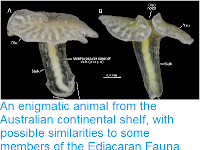
The appearance of the first macroscopic, morphologically complex organisms in the late Ediacaran (roughly 571–541 million years ago) was the onset of one of the most important biological transitions in Earth’s history. However, it remains unclear which environmental, ecological and evolutionary factors accompanied the emergence of large Animal-like organisms, and how these various factors interacted. The most popular models connect the appearance and ecological success of animals with rising atmospheric oxygen concentrations in the Neoproterozoic. Yet, molecular oxygen as a limiting resource faces several challenges. While increasing oxygenation of deep marine waters in the Neoproterozoic broadly coincides with the appearance of macro-organisms in such environments, suitably oxic conditions were probably established in well aerated surface environments hundreds of millions of years earlier. Moreover, Cyanobacterial mats are ubiquitous in shallow-marine environments in the Proterozoic and would have provided stable ecospace with elevated oxygen concentrations for organisms with mat-related lifestyles far back in Earth history.
An alternative environmental factor that may have constrained the timing of eumetazoan emergence and radiation is nutrient availability, including bio-limiting elements and efficient carbon sources supplied by primary producers. The abundance of different classes of primary producers in Precambrian oceans can be tracked using molecular fossils, or biomarkers. The most common biomarkers are alteration products of membrane lipids such as hopanols found in numerous aerobic Bacteria, including Cyanobacteria, and sterols produced by Algae and other Eukaryotes. During sedimentary diagenesis, hopanols are transformed into hydrocarbon hopanes, while sterols yield fossil steranes. Hopanes and steranes are extracted from ancient sedimentary rocks using organic solvents and quantified using gas chromatograph-mass spectroscopy. The proportion of hopanes over steranes, the hopane/sterane ratio, can be used as an estimate for the relative flux of Bacterial versus Eukaryotic organic matter to bottom sediments, and thus as a first-order approximation for the relative importance of Algal versus Cyanobacterial biomass, among both benthos and plankton. The transition from Bacteria- to Eukaryote-dominated primary production in the oceans, recorded by biomarkers, occurred about 650-635 million years ago and may have been crucial for the success of most macroscopic heterotrophs.
In a paper published in the journal Nature Communications on 9 March 2020, Ilya Bobrovskiy of the Research School of Earth Sciences at the Australian National University, and the Division of Geological and Planetary Sciences at the California Institute of Technology, Janet Hope, also of the Research School of Earth Sciences at the Australian National University, Elena Golubkova of the Institute of Precambrian Geology and Geochronology of the Russian Academy of Sciences, and Jochen Brocks, again of the Research School of Earth Sciences at the Australian National University, examine the hopane and sterane contents of the Ediacara Fauna-bearing strata of the White Sea area of the East European Platform in Russia, in order to try to assess the nutrient sources utilised by these early macro-organisms.
The Ediacara biota represents the first global appearance of large heterotrophic organisms, including Animals, in the fossil record, and thus reflects aspects of the ecology and evolution of early Animals. Recent studies have reported biomarkers from Ediacaran sediments of the East European Platform with hopane/sterane ratios that are high relative to typical Phanerozoic marine conditions. Consequently, it has been suggested that Ediacaran macroorganisms preferentially inhabited oligotrophic environments and used Bacteria as their main energy source, as either food or symbionts. It is notable, however, that none of the biomarker data came from localities that preserve Ediacaran macrofossils, and it remains to be seen whether they usefully reflect ecological circumstances across the whole of the East European Platform. In order to resolve the particular circumstances under which Ediacaran macroorganisms lived, Bobrovskiy et al. analyse biomarkers from sediments with Ediacaran macrofossils from the White Sea area of the East European Platform, and show that Eukaryotic algae were abundant among the food sources available for the Ediacara biota.

Map contrasting the fossil and biomarker localities of this (green) and previous (orange) biomarker studies at the East European Platform. The grey symbols indicate known localities of the Ediacara biota where sediments are too thermally mature to preserve biomarkers. Bobrovskiy et al. (2020).
The distribution of Ediacaran macrofossils within the White Sea area sections is largely controlled by taphonomy, the fossils are best preserved at the soles of sandstone layers, but less abundant fossils of poorer quality are scattered throughout the entire sedimentary succession. To get a full picture about the distribution of primary producers in depositional environments associated with the Ediacara biota, samples collected from the entire section exposed in the studied localities were analysed for biomarkers (including 52 samples from fossiliferous intervals and six samples from adjacent stratigraphic levels devoid of fossils). Most organic geochemical studies analyse centimetre-scale sedimentary rock samples, thus averaging ecological signals across substantial periods of time, and potentially missing ecologically distinct endmembers. To ensure that they indeed capture the exact ecological environment of organisms of the Ediacara Biota, Bobrovskiy et al. analysed sediments immediately beneath and above surfaces with Ediacara biota fossils at millimetre resolution. As organisms of the Ediacara Biota are preserved in situ, biomarkers extracted from clay underneath the fossils represent the substrate they were living on. Sandstones above fossils normally represent storm deposited material; biomarkers extracted from these sandstones presumably average the biomass of the local environment, but may also contain material transported from adjacent settings. Specifically, Bobrovskiy et al. analysed two surfaces in the Lyamtsa locality that contain abundant Dickinsonia, Parvancorina and Palaeopascichnus fossils, and well-studied surfaces in the Zimnie Gory, known as Z1(I) and Z11(XXII), which contain Andiva, Archaeaspinus, Armilifera, Aspidella, Brachina, Charniodiscus, Cyanorus, Cyclomedusa, Dickinsonia, Inaria, Ivovicia, Kimberella, Onega, Ovatoscutum, Paleophragmodictya, Paravendia, Parvancorina, Tamga, Temnoxa, Tribrachidium and Yorgia.
Samples were collected during fieldworks
in the White Sea region (Russia) in 2015–2017 specifically for
biomarker analysis. Samples came from a 40 m thick stratigraphic
interval of Lyamtsa and Arkhangelsk Beds (Ust-Pinega Formation, Redkino
Regional Stage) in the Lyamtsa Ediacara Biota locality, and from a 120 m
thick interval of Vaysitsa, Zimnie Gory (Ust-Pinega Formation, Redkino
Regional Stage) and Erga beds (Mezen Formation, Kotlin Regional Stage)
in the Zimnie Gory locality. Samples were collected avoiding weathered
zones and cracks and were immediately wrapped in pre-baked aluminium
foil (300 °C, 9 hours) and packed in calico bags to avoid contamination.
Deposits
in the Lyamtsa and Zimnie Gory localities of the Ediacara biota are
mainly represented by clay and mm-scale heterolithic interlamination of
clay, siltstone and sandstone, with occasional 0.5–10 cm, sometimes up
to 60 cm thick sandstone lenses and layers. In the Zimnie Gory locality,
nearly every siltstone and sandstone, including millimetre-thick lenses
in the interlamination, has a microbial mat impression at the base; in
Lyamtsa, these impressions are relatively rarer, and some surfaces are
erosional. Fossils are typically preserved at the base of sandstone
layers with microbial mat impressions, however some specimens are also
sometimes found within clay. Samples include sediments immediately
(within the first millimetres) underlying (clay) and overlying
(typically sandstone) surfaces with Ediacara Biota fossils, as well as
59 samples from sedimentary layers throughout the exposed sections that
are not known to contain fossils. Ediacaran macro-organisms are found in
situ, therefore biomarker composition of clays they were living on was
taken as the closest approximation of environments the Ediacara biota
inhabited. Sandstones overlying the fossils are mostly of storm origin
and would contain reworked organic matter deposited in the environments
with the Ediacara Biota, but might also contain material transported
from other environments.
Samples
were prepared in an ultra-clean facility dedicated to trace biomarker
analysis at the Australian National University. To identify and
eliminate any surficial trace contaminants, the clay was analysed using
the exterior–interior protocol. The outer 3–4 mm of the sample were
removed using a micro drill with a combusted (290 °C, 9 hour) and
solvent cleaned saw nozzle and represented the exterior (‘E’) portion.
Analysis of the last saw-blade solvent rinse confirmed that it was free
of detectable contaminants. The exterior and the interior portions of
the clay sample were ground to powder using a steel puck mill. The mill
was cleaned using dichloromethane and methanol, and by grinding
combusted (600 °C, 9 h) quartz sand. As the samples were collected from
outcrops into aluminium foil and cotton bags, which has been proven to
prevent contamination, for ten samples both interior and exterior
portions were analysed as control; for the rest, we analysed only
interior portions, but exterior portions were kept in case there is any
contamination in the analysed exterior portions or increased maturity
parameters in these samples.
Bitumen
was extracted from rock powder using an accelerated solvent extractor
with dichloromethane and methanol (9:1), reduced to 100 μl under a
stream of nitrogen gas. All solvents used in the study were 99.9% grade;
all glassware was cleaned by combustion at 300 °C for 9 hours. An
extract was then fractionated into saturated, aromatic and polar
fractions using micro-column chromatography over annealed (300 °C; 12
hours) and dry packed silica gel. Saturated hydrocarbons were eluted with
1 dead volume of n-hexane, aromatic hydrocarbons with 4.5 dead volumes
of n-hexane and dichloromethane (1:1) and the polar fraction with 3 ml
dichloromethane and methanol (1:1). An internal standard,
18-methyleicosanoic acid methylester, was added to the saturated and
aromatic fractions for quantification. The samples were analysed and
quantified by gas chromatography–mass spectrometry.
Due
to the mild thermal history of Ediacaran deposits in the White Sea area
(i.e. the fact that they have never been deeply buried and heated by
geothermal energy), Ediacaran macrofossils co-occur there with extremely
well preserved biomarkers, offering a unique opportunity to assess the
habitat and ecological preferences of these problematic organisms. The
White Sea area offers localities with the most diverse and abundant
Ediacara biota in the world, including various members of the White Sea,
Avalon and Nama assemblages. All sediments from the Lyamtsa and Zimnie
Gory localities were originally deposited in shallowmarine environments
and preserve evidence for persistent and pervasive microbial mats.
Thus, Bobrovskiy et al.'s study looks at biomarkers representative of environments for a broad range of species of the Ediacara Biota with variable feeding strategies, including burrowers (e.g. Sabellidita, Calyptrina), mat-scrapers (e.g. Andiva, Dickinsonia, Kimberella) and potentially filter- or osmotroph-feeding mat stickers (Arborea, e.g. Charniodiscus). It was impossible to obtain biomarker data from particular sections and time intervals that only contain a single assemblage of the Ediacara Biota due to their high thermal maturity (e.g. Newfoundland, United Kingdom, or Namibian sections). However, allowing for some extrapolation, the data collected in the current study provide information about the local ecological environment of representative organisms of all three existing Ediacara Biota assemblages, which otherwise occur in a wider temporal and palaeogeographic context.
To place the Ediacaran biomarkers from the White Sea area into a broad temporal context, Bobrovskiy et al. summarised data for Bacterial hopanes and Algal steranes from the Tonian to the present. Based on biomarkers, Bacteria were the only notable primary producers in Paleo- and Mesoproterozoic oceans. Primitive Eukaryotic sterane signatures emerged around 900–800 million years ago, although the overall hopane/sterane ratio remained high (70% of values are hopane/sterane ratios above 29.5, and steranes are below detection limits in 43% of samples that contain hopanes). Moreover, it is unclear whether steranes in Tonian sediments are derived from Algae or other organisms. The first signs of unambiguous Algal productivity occurred in a single sample assigned to the Cryogenian, around 650 million years ago, and started to be a dominating signal from the very beginning of the Ediacaran, close to 635 million years ago. This ‘Rise of Algae’ was marked by an order-ofmagnitude drop in hopane/sterane ratios and the emergence of a near-modern sterane diversity. Phanerozoic sediments, in contrast to the Tonian, mainly demonstrate continuously low hopane/sterane values, (hopane/sterane ratios in the 0.5–5 range accounts for 70% of samples with the mode at 1.3), indicating that Algae have been key primary producers for the past 541 million years.

Timeline through the Neoproterozoic and Phanerozoic and abundance information for hopanes and steranes. (a) The relative abundance of the sterane homologues cholestane (C₂₇, green), ergostane (C₂₈, blue) and stigmastane (C₂₉, green). Size of the coloured areas reflects relative sterane abundances. (b) Evolution of the relative abundance of Bacterial hopanes over Eukaryotic steranes (hopane/sterane) through time (orange, Tonian and Cryogenian; yellow, Ediacaran (data from Oman and Siberia); blue, Phanerozoic); the scale goes from hopane/sterane roughly infinite (with no steranes detected) to hopane/sterane values equal 0.25. Histograms showing the abundance distribution of hopane/sterane values for different periods and locations: (c) Phanerozoic biomarker data reported in the literature; (d) Ediacaran of the South Oman Salt Basin and the Siberian platform; (e) Ediacaran of the White Sea area; (f) previous biomarker analyses on the Ediacaran of the East European Platform (localities are marked as orange circles on the top figure); (g) Tonian and Cryogenian biomarker data reported in the literature. Bobrovskiy et al. (2020).
The Ediacaran, however, yields bitumens with hopane/sterane signatures resembling both the Tonian and Phanerozoic. Sediments from the Oman Salt Basin and the Siberian platform demonstrate hopane/sterane values similar to the Phanerozoic (hopane/sterane values equal 0.75–1.4 range accounts for 70% percentile with the mode value 1.3). By contrast, bitumens from the Ediacaran interior seaway of the East European Platform include numerous elevated hopane/sterane values up to 119 (hopane/sterane values equal 1.5–12.5 range accounts for 70% percentile with several modes, and median value 7.7), values otherwise typical for the Tonian. It has been suggested that the elevated hopane/sterane values in the interior seaway of the East European Platform, just as those from the Tonian might reflect a strong predominance of Bacteria among primary producers, potentially due to regionally oligotrophic conditions, thus highlighting a high spatial heterogeneity in primary producer communities in Ediacaran marine environments.
Based on the hopane/sterane data from global Ediacaran sediments, the Ediacara Biota might have either inhabited newly established Algae-rich environments or, conversely, thrived in nutrient-depleted ecosystems dominated by Bacterial primary productivity akin to the Tonian or Mesoproterozoic. If latter hypothesis is correct, then the diet and ecology of organisms of the Ediacara Biota must have been very distinct from most Phanerozoic Animals, and it would invalidate the premise that the emergence of abundant Algal food sources was crucial for the ecological success of Eumetazoan Animals. Biomarker data from sediments directly associated with Ediacara Biota fossils can shed light on this dispute.
The clay and sandstone material directly surrounding Ediacara Biota fossils in the White Sea sections demonstrate low hopane/sterane ratios (hopane/sterane values equal 2.5–5). The overall hopane/sterane values from the whole set of White Sea area sediments vary slightly more broadly (hopane/sterane values in the 1–7 range account for 70% of the samples with the mode value 3.3, in 59 samples). The hopane/sterane value for the only sample that has been reported from the Ediacara Biota localities in Arctic Siberia (hopane/sterane value equals 2.7) falls near the mode value for the White Sea area, although it is impossible to judge whether this sample is representative of the whole section. These hopane/sterane values suggest that the Ediacara Biota inhabited environments with near-modern fluxes of Bacterial versus Eukaryotic biomass. Moreover, steranes of the White Sea area are strongly dominated by stigmastanes (C₂₉ makes up 75% of C₂₇–C₂₉ 59 sterane homologues, where C₂₉ represents steranes with 29 carbon atoms and C₂₇ represents steranes with 27 carbon atoms). The C₂₉ predominance among steranes in the White Sea area is characteristic of Ediacaran biomarker signatures and likely reflects predominance of green Algae among Eukaryotes. The mode of hopane/sterane ratio values in the White Sea area is somewhat elevated in comparison to the Phanerozoic. This elevation may reflect a stronger relative contribution of planktonic Cyanobacterial biomass than the average for the Phanerozoic, but is more likely associated with benthic Cyanobacterial mats that are widespread in White Sea sediments and generally abundant in Ediacaran shallow-water environments. Regardless, Ediacaran macroorganisms of the White Sea area inhabited environments that were orders of magnitude enriched in Algal relative to Bacterial food sources when compared with the Tonian, and in this respect similar to Phanerozoic marine habitats.

The Rise of Algae 650-635 million years ago has changed the ecosystems on our planet forever, although the trigger for this phenomenon is unclear. It has been proposed that a potential increase in nutrient levels in the oceans at that time could have made Algae more competitive relative to photosynthetic Bacteria, or alternatively that Protistan Eukaryotes or Bacteriovorous Sponge-grade Animals effectively reduced Bacterial biomass, thus providing ecospace for Algae. Whatever the causes for the proliferation of planktonic Algae, their biomass may have fuelled the radiation of Eumetazoan Animals by increasing the efficiency of nutrient and energy transfer to higher trophic levels based on larger cells sizes compared with Bacterial phytoplankton, and by supplying fast sinking food particles to benthic Animal communities at the sea floor. However, this is to ignore that microbial mats were present in the oceans long before Algal food became available. With the discovery of a motile lifestyle among the earliest branching Eumetazoa (Placozoa and Ctenophora), pervasive Cyanobacterial mat coverage in well-oxygenated shallow-water environments would have provided ample resources for Metazoan proliferation. Yet, the vast majority of extant Eumetazoan Animals prefers a Eukaryote-dominated diet; with rare exceptions, Eumetazoans are not sustained by purely Bacterial food sources. A preference for a Eukaryotic diet may thus be the ancestral state of Eumetazoa, possibly due to the high nutritional quality of Algal biomass.
Based on sedimentological evidence and biomarker data presented by Bobrovskiy et al., the Ediacara biota of the East European Platform inhabited well-mixed oxygenated shallow-water environments with levels of potential Algal food supply comparable to the Phanerozoic. This observation in the White Sea area is consistent with a recent spatial analyses of the roughly 570-million-year-old Ediacaran ecosystems on the Avalon Peninsula, overlapping with the White Sea area taxonomically, that showed that competition for resources was not the driving factor for local Ediacaran communities. Unlike previously predicted, Bacteria-dominated ecosystems in Ediacaran marine basins were generally not a cause of the unusual appearance and ecology of the Ediacara Biota. Rather, the ecological and evolutionary bridge leading from a mid-Proterozoic Bacteria-dominated world to the appearance of Phanerozoic Animal-dominated ecosystems was paved with Algae-rich environments akin to those preferred by modern Eumetazoan Animals. Although morphologically and possibly phylogenetically distinct from Phanerozoic Animals, the large organisms of the Ediacaran Biota were a part of newly established nutrient and energy-rich environments that later hosted the Cambrian diversification of Animal life.
See also...
The clay and sandstone material directly surrounding Ediacara Biota fossils in the White Sea sections demonstrate low hopane/sterane ratios (hopane/sterane values equal 2.5–5). The overall hopane/sterane values from the whole set of White Sea area sediments vary slightly more broadly (hopane/sterane values in the 1–7 range account for 70% of the samples with the mode value 3.3, in 59 samples). The hopane/sterane value for the only sample that has been reported from the Ediacara Biota localities in Arctic Siberia (hopane/sterane value equals 2.7) falls near the mode value for the White Sea area, although it is impossible to judge whether this sample is representative of the whole section. These hopane/sterane values suggest that the Ediacara Biota inhabited environments with near-modern fluxes of Bacterial versus Eukaryotic biomass. Moreover, steranes of the White Sea area are strongly dominated by stigmastanes (C₂₉ makes up 75% of C₂₇–C₂₉ 59 sterane homologues, where C₂₉ represents steranes with 29 carbon atoms and C₂₇ represents steranes with 27 carbon atoms). The C₂₉ predominance among steranes in the White Sea area is characteristic of Ediacaran biomarker signatures and likely reflects predominance of green Algae among Eukaryotes. The mode of hopane/sterane ratio values in the White Sea area is somewhat elevated in comparison to the Phanerozoic. This elevation may reflect a stronger relative contribution of planktonic Cyanobacterial biomass than the average for the Phanerozoic, but is more likely associated with benthic Cyanobacterial mats that are widespread in White Sea sediments and generally abundant in Ediacaran shallow-water environments. Regardless, Ediacaran macroorganisms of the White Sea area inhabited environments that were orders of magnitude enriched in Algal relative to Bacterial food sources when compared with the Tonian, and in this respect similar to Phanerozoic marine habitats.

Examples of Ediacaran macrofossils from the White Sea Area and associated hopane/sterane ratios from sediments immediately over- and underlying the fossils. (a) Aspidella and Kimberella from the Z11(XXII) surface (Zimnie Gory, photo by E Uryvaeva); (b) Andiva from the Z1(1) surface (Zimnie Gory), the surface also contains Archaeaspinus, Armilifera, Brachina, Charniodiscus, Cyanorus, Cyclomedusa, Dickinsonia, Inaria, Ivovicia, Kimberella, Onega, Paravendia, Parvancorina, Temnoxa, Tribrachidium, Yorgia; (c) Dickinsonia (Lyamtsa); (d) Palaeopascichnus (Lyamtsa). n.m., not measurable. Bobrovskiy et al. (2020).
The Rise of Algae 650-635 million years ago has changed the ecosystems on our planet forever, although the trigger for this phenomenon is unclear. It has been proposed that a potential increase in nutrient levels in the oceans at that time could have made Algae more competitive relative to photosynthetic Bacteria, or alternatively that Protistan Eukaryotes or Bacteriovorous Sponge-grade Animals effectively reduced Bacterial biomass, thus providing ecospace for Algae. Whatever the causes for the proliferation of planktonic Algae, their biomass may have fuelled the radiation of Eumetazoan Animals by increasing the efficiency of nutrient and energy transfer to higher trophic levels based on larger cells sizes compared with Bacterial phytoplankton, and by supplying fast sinking food particles to benthic Animal communities at the sea floor. However, this is to ignore that microbial mats were present in the oceans long before Algal food became available. With the discovery of a motile lifestyle among the earliest branching Eumetazoa (Placozoa and Ctenophora), pervasive Cyanobacterial mat coverage in well-oxygenated shallow-water environments would have provided ample resources for Metazoan proliferation. Yet, the vast majority of extant Eumetazoan Animals prefers a Eukaryote-dominated diet; with rare exceptions, Eumetazoans are not sustained by purely Bacterial food sources. A preference for a Eukaryotic diet may thus be the ancestral state of Eumetazoa, possibly due to the high nutritional quality of Algal biomass.
Based on sedimentological evidence and biomarker data presented by Bobrovskiy et al., the Ediacara biota of the East European Platform inhabited well-mixed oxygenated shallow-water environments with levels of potential Algal food supply comparable to the Phanerozoic. This observation in the White Sea area is consistent with a recent spatial analyses of the roughly 570-million-year-old Ediacaran ecosystems on the Avalon Peninsula, overlapping with the White Sea area taxonomically, that showed that competition for resources was not the driving factor for local Ediacaran communities. Unlike previously predicted, Bacteria-dominated ecosystems in Ediacaran marine basins were generally not a cause of the unusual appearance and ecology of the Ediacara Biota. Rather, the ecological and evolutionary bridge leading from a mid-Proterozoic Bacteria-dominated world to the appearance of Phanerozoic Animal-dominated ecosystems was paved with Algae-rich environments akin to those preferred by modern Eumetazoan Animals. Although morphologically and possibly phylogenetically distinct from Phanerozoic Animals, the large organisms of the Ediacaran Biota were a part of newly established nutrient and energy-rich environments that later hosted the Cambrian diversification of Animal life.
See also...


Follow Sciency Thoughts on Facebook.