Showing posts with label Bahia State. Show all posts

Sunday, 17 July 2022

Notalina (Neonotalina) ralphi: A new species of Long-horned Caddisfly from Brazil

Caddisflies, Trichoptera, are a widespread and numerous (over 12 000 described species) group of Insects closely related to the Lepidoptera (Butterflies and Moths). Like Butterflies and Moths, Caddisflies undergo a complete metamorphosis upon reaching maturity, with a long-lived caterpillar-like larvae, and a shorter-lived flying adult stages (which typically lives one-to-two weeks). However, unlike the larvae of Butterflies and Moths, Caddisfly larvae are entirely aquatic, with only the winged adults emerging above the water surface. Most larval Caddisfly inhabit cases which they make out of silk, which some species are noted for covering with small stones, pieces of plant matter, shells or other matter they find in their environment. The larvae may be herbivorous or carnivorous, adult Caddisfly generally do not eat at all. Long-horned Caddisflies, Leptoceridae, are the second most numerous group of Caddisflies, with about 2200 described species grouped into four subfamilies the Grumichellinae, the Leptocerinae, the Leptorussinae, and the Triplectidinae. The tropical Southern Hemisphere genus Notalina is placed within the Subfamily Triplectidinae, and is itself divided into two subgenera, Notalina (Notalina), which is found in Austalasia and Notalina (Neonotalina) from South America.

In a paper published in the journal ZooKeys on 11 July 2022, Erica Silva Pereira of the Programa de Iniciação Científica and the Divisão do Curso em Entomologia at the Instituto Nacional de Pesquisas da Amazônia, Ian Oliveira of the Laboratório de Entomologia Aquática at the UniversidadeFederal da Bahia, Gleison Robson Desidério, also of the Divisão do Curso em Entomologia at the Instituto Nacional de Pesquisas da Amazônia, Adolfo Calor, also of the Laboratório de Entomologia Aquática at the Universidade Federal da Bahia, and Neusa Hamada, once again of the Divisão do Curso em Entomologia at the Instituto Nacional de Pesquisas da Amazônia, describe a new species of Notalina (Neonotalina) from Brazil.

The new species is described from specimens collected using Malaise traps close to rivers in the Cerrado (Brazilian savanna) biome in Brazil's Federal District, and Tocatins and Bahia states. It is named Notalina (Neonotalina) ralphi, in honour of Ralph Holzenthal of the University of Minnesota, for his work on Neotropical Caddisflies and support for new entomologists.

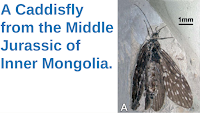
Notalina (Neonotalina) ralphi, lateral view. Silva Pereira et al. (2022).

See also...

Follow Sciency Thoughts on Facebook.

Follow Sciency Thoughts on Twitter. 


Thursday, 13 December 2018

Cellaria oraneae: A new species of Bryozoan from Bahia State, Brazil.

Bryozoans, or Moss Animals, are colonial filter-feeding invertebrates that form encrusting or weed-like colonies. The individual 'animals' are on average about 0.5 mm in length, and live inside a protective covering from which they extend a crown of cilia-covered tentacles called a lophophore. These are not true individuals though as they develop as buds on the colony and share nutrients; for this reason they are referred to as 'zooids'. The colonies produce sexually by means of reproductive zooids that have gonads, but lack feeding apparatus. Bryozoans are widespread globally, but are often overlooked because they are small and the colonies resemble plants.

The genus Cellaria currently contains about 50 species of erect, branching Bryozoans found from just bellow the low tide line to depths of about 1000 m. Like other erect Bryozoans, this genus is most diverse in polar and temperate regions, with most known species having been described from the Indo-Pacific, Antarctic and North Atlantic regions. However, in the last decade five new species have been described from the western Atlantic, three from Brazil, one from the United States and one from Barbados, suggesting that the full diversity of the genus in this area has not yet fully been explored.

In a paper published in the journal Zoologia on 9 March 2018, Ana Almeida of the Laboratório de Estudos de Bryozoa at the Universidade Federal de Pernambuco, and the Museu de Zoologia at the Universidade Federal da Bahia, Facelúcia Souza, also of the Museu de Zoologia at the Universidade Federal da Bahia, and Leandro Vieira, also of the Laboratório de Estudos de Bryozoa at the Universidade Federal de Pernambuco, describe a new species of Cellaria from the coast of Bahia State, Brazil.

The new species is named Cellaria oraneae, in honour of Orane Alves of the Universidade Federal da Bahia, in honour of her work on Brazilian marine biodiversity. The species forms erect branching colonies of distinctly hexagonal zooids. Fertile zooids are grouped together, in separate regions to infertile zooids, which can be distinguished by thickening of the stems. The species was found at depths of 15-50 m on the Atlantic coast of Bahia.

Cellaria oraneae, Bahia, Brazil: (2) General aspect of the branches; (3) close-up of subhexagonal autozooids; (4) close-up of opesia showing tuberculate distal rim and proximal condyles; (5) close-up of hexagonal interzooidal avicularia with longitudinal ridges forming a spear-shaped area and sagittate foramen; (6) close-up of fertile rhombic zooids; (7) close-up of immersed ovicells showing oval aperture with proximal rectangular lip. Scale bars: (2) is 500 μm; (3) and (6) are 200 μm; (4), (5) and (7) are 100 μm. Almeida et al. (2018).

See also...

https://sciencythoughts.blogspot.com/2018/11/beania-serrata-beania-mediterranea-two.htmlhttps://sciencythoughts.blogspot.com/2017/11/bryozoas-from-seamounts-islands-and.html
https://sciencythoughts.blogspot.com/2013/11/two-new-species-of-bryozoans-from-late.htmlhttps://sciencythoughts.blogspot.com/2013/08/four-new-species-of-bryozoans-from-new.html
https://sciencythoughts.blogspot.com/2013/04/a-new-species-of-bryozoan-from-atlantic.htmlhttps://sciencythoughts.blogspot.com/2012/07/new-species-of-bryozoans-from-brazil.html
Follow Sciency Thoughts on Facebook.

Sunday, 17 April 2016

Tropidurus sertanejo: A new species of Ground Lizard from Bahia State, Brazil.

Ground Lizards of the genus Tropidurus are found across tropical and subtropical South America. They are ground dwelling Iguanas, favouring open habitats, closely related to the Marine Iguanas of the Galapagos Islands. The group are quite variable, with Lizards with a wide range of sized placed within the genus, and many species showing a wide range of colours. These Lizards tend to be sexually dimorphic (males and females are not the same), with the sexes having different markings in most species and males usually larger than the females.

In a paper published in the American Museum Novitates on 20 February, André Carvalho of the Richard Gilder Graduate School and Division of Vertebrate Zoology (Herpetology) at the American Museum of Natural History, Marco Sena of the Departamento de Zoologia at the Universidade de São Paulo, Pedro Peloso, also of the Division of Vertebrate Zoology (Herpetology) at the American Museum of Natural History and of the Museu Paraense Emílio Goeldi, Fabio Machado of the Departamento de Genética e Biologia Evolutiva at the Universidade de São Paulo, Rachel Montesinos, also of the Departamento de Zoologia at the Universidade de São Paulo, Hélio Silva of the Departamento de Biologia Animal at the Universidade Federal Rural do Rio de Janeiro, Gwyneth Campbell, again of the Division of Vertebrate Zoology (Herpetology) at the American Museum of Natural History and Miguel Rodrigues, again of the Departamento de Zoologia at the Universidade de São Paulo, describe a new species of Tropidurus  from the caatinga drylands of Bahia State in Brazil.

The new species is named Tropidurus sertanejo, 'sertanejo' being a Portuguese word meaning 'rural' which is applied in particular to people from the sertão, the dry caatinga areas of northeastern Brazil. The species is described from 25 specimens (five adult males, five adult females and fifteen juveniles) collected from two sites, one in the Reserva Particular do Patrimônio Natural Fazenda Pé da Serra in the Municipality of Ibotirama and the second within the Municipality of Caetité. The Lizards are light brown in colour with pale salmon spots, a lighter underside and a bronze sheen on the head. The species is small compared to most other members of the genus, with adult males ranging from 166.4-197.9 mm in length and adult females from 138.9-147.9 mm in length.

Female specimen of Tropidurus sertanejo from the Reserva Particular do Patrimônio Natural Fazenda Pé da Serra, Serra do Arame. Carvalho et al. (2016).

See also...

http://sciencythoughts.blogspot.co.uk/2015/07/babibasiliscus-alxi-casquehead-lizard.htmlBabibasiliscus alxi: A Casquehead Lizard from the Early Eocene of Wyoming.   Casquehead Lizards, Corytophanidae, are a group of Iguanid Lizards found from the tropical forests of southern Mexico, through Central America to the northwest of South America. They belong to a group of Iguanians, the Pleurodonta, found today...

http://sciencythoughts.blogspot.co.uk/2015/01/a-new-species-of-twig-anole-from-panama.htmlA new species of Twig Anole from Panama. Anoles are small Iguanid Lizards found in the Southern United States, Mexico, Central America and the Caribbean. Twig Anoles, Norops spp., form a distinct cluster of medium sized Anole Lizard species within the genus Norops. There are currently eight...


http://sciencythoughts.blogspot.co.uk/2014/11/four-new-species-of-treerunner-from.htmlFour new species of Treerunner from northern South America.                               Treerunners of the genus Plicaare Iguanid Lizards found in South America east of the Andes. They are medium sized, conspicuous Lizards that are active in the daytime, living in small colonies on rock outcrops or trees, and therefore are well represented in museum collections, as they tend to attract the attention of...
Follow Sciency Thoughts on Facebook.
 

Saturday, 29 August 2015

Lonchophylla inexpectata: A new species of Nectar-feeding Bat from the Caatinga of Brazil.


Nectar-feeding Bats of the genus Lonchophylla are found tropical South and Central America, where they are important pollinators of some plant groups. There are currently twelve recognized species, with a cluster of smaller species having recently been transferred to another genus, Hsunycteris.

In a paper published in the journal ZooKeys on 22 July 2015, Ricardo Moratelli of the Fiocruz Mata Atlântica of the Fundação Oswaldo Cruz and the Division of Mammals at the National Museum of Natural History and Daniela Dias of the Laboratório de Biologia e Parasitologia de Mamíferos Silvestres Reservatórios at the Instituto Oswaldo Cruz, describe a new species of Nectar-feeding Bats of the genus Lonchophylla, from museum specimens collected in the arid Caatinga habitat (dry shrubland and thorn forest) of northeastern Brazil between 1908 and 1976.

The new species is named Lonchophylla inexpectata, where ‘inexpectata’ means ‘unexpected’. It is based entirely on museum specimens previously ascribed to the species Lonchophylla mordax, a species first described in 1903 from Brazil, and which formerly included populations from as far west as Colombia and Ecuador and as far north as Costa Rica, but which is now regarded as exclusively east-Brazilian in distribution. However, while previous taxonomists have removed distant populations from the species, it is currently considered to inhabit both the wet Atlantic Rainforests and arid Caatinga environment within this region, an improbable juxtaposition of habitats.

Moratelli and Dias examined museum specimens of ‘Lonchophylla mordax’ from both Atlantic Rainforest and Caatinga environments, and found that the Caatinga specimens were persistently paler than the Atlantic Forest specimens, many being described in museum records as ‘faded’. Further investigation revealed that these specimens also had smaller skulls, with narrower, more slender snouts, and slightly different dentition, with a well-developed lingual cusp (cusp on the inner, tongue, side of the tooth) on the fourth premolar, which was absent from the Atlantic Forest specimens.

Dorsal (A) and ventral (B) pelage of Lonchophylla inexpectata. Scale bar is 10 mm. Moratelli & Dias (2015).

Lonchophylla inexpectata has not yet been studied as a separate species in the wild, and its exact distribution is unclear, though museum specimens have been identified that were collected in both Pernambuco and Bahia States. However Moratelli and Dias note that expansion of agriculture in eastern Brazil has led to clearing of many areas of Atlantic Rainforest and its replacement with an artificial environment closer to the arid Caatinga, which may have led to Lonchophylla inexpectata expanding its range.

See also…

The diets of most Bats in the UK (and most other temperate countries) have been well studied in summer, but less so in winter. It was assumed for a long time that since such bats hibernate in winter, then they did not eat in winter months. However it is now known that most bat species cannot survive a whole winter...


Bats (Chiroptera) have long been considered to comprise about 25% of all Mammal species, but in recent years they have been shown to be considerably more diverse than previously thought, with a number of small, widespread Bat species being shown by genetic analysis to be made up of complexes of related but distinct cryptic species. Bats are morphologically...


Disk-winged Bats (Thyroptera) are small insectivorous foliage nesting Bats found in lowland moist forests from Mexico to southeastern Brazil. They are distinguished by small adhesive disks on their feet, an...


Follow Sciency Thoughts on Facebook.

Thursday, 30 April 2015

Landslides kill fourteen in Salvador, Brazil.

Fourteen people have been confirmed dead after two landslides in the city of Salvador in Bahia State, Brazil, on Monday 27 April 2015. The incidents happened in the Barro Branco and Marotinho neighbourhoods, each claiming seven lives. The landslides occurred after over 200 mm of rain fell in the city in 24 hours, over two thirds of the typical rainfall for the entire month of April, and has reportedly caused 147 landslides and several building collapses, as well as widespread flooding, which has led to evacuations in some areas, including the Santo Antonio Hospital. Landslides are a common problem after severe weather events, as excess pore water pressure can overcome cohesion in soil and sediments, allowing them to flow like liquids. Approximately 90% of all landslides are caused by heavy rainfall. 

Local residents searching for survivors after the 27 April 2015 Salvador landslides. Felipe Oliveira/AFP.

Salvador has a wet tropical climate with high levels of rainfall all year round, though the wettest months are usually April and May with averages of 309.7 mm and 359.9 mm respectively. Landslides are a common event in the cities favelas (poor neighbourhoods) where building standards tend to be lower and population densities higher. The exceptionally high rainfall has continued through the week, with 142 mm of rain falling on 27-28 April, and local authorities are warning of the danger of more events.

The approximate location of the fatal 27 April 2015 Salvador landslides. Google Maps.

See also...

At least 44 people have died and over 65 000 have been driven from their homes as southeastern Brazil suffered the highest rainfall for 90 years this month. In...


Six members of the same family, including four children have been killed in a landslide in the town of Sardoá in eastern Minas Gerais State in southeastern Brazil on Tuesday 17 December 2013. The incident happened following several days of heavy rain, when part of...


Follow Sciency Thoughts on Facebook.

Thursday, 31 July 2014

A new species of Anthazoan Coral from the Abrolhos Archipelago and Royal Charlotte Bank, Brazil.

The Abrolhos Bank is an area of the Brazilian continental shelf to the south of Bahia State, noted for its large and rich coral reef fauna and unique geochemical nature, with high levels of siliclastic material (sand, quartz gravel etc.) being deposited in the area by the Brazil Current, which flows southward from the coast. The area includes the Abrolhos Archipelago, which is Brazil’s oldest marine reserve.

In a paper published in the journal Zootaxa on 4 July 2014, Sérgio Stampar of the Departamento de Ciências Biológicas at the Universidade Estadual Paulista and the Departamento de Zoologia at the Universidade de São Paulo, and André Morandini and Fábio Lang da Silveira, also of the Departamento de Zoologia at the Universidade de São Paulo, describe a new species of Anthazoan Coral from Abrolhos Archipelago and Royal Charlotte Bank on the Abrolhos Bank.

The new species is placed in the genus Pachycerianthus, and given the specific name schlenzae, in honour of Erika Schlenz formerly of the Departamento de Zoologia at the Universidade de São Paulo, and a well-known expert on Corals. Pachycerianthus schlenzae is a solitary Coral reaching about 15 cm in height, with 60-85 marginal tentacles reaching about 12 cm in length plus 60-80 labial tentacles, reaching about 4 cm. The tentacles are brown or purple with white spots.

Pachycerianthus schlenzae, live specimens. (A) From Guarapari in Espirito Santos State. (B) From Camamu Bay in Bahia State. Stampar et al. (2014).

See also…


Zoanthids are unusual Corals with similarities to both the reef-forming calcareous skeleton excreting Scleractinian Corals and the larger, free living Sea Anemones. Most species are colonial, with...


Scleractinian Corals first appeared in the fossil record in the Middle Triassic; they are distinct from, but  believed to be related to the Rugose and Tabulate Corals of the Palaeozoic. All modern Corals...


Corals on Australia's Great Barrier Reef, as in other parts of the world, are known to be in trouble, with declining Coral coverage, diebacks, bleaching events and replacement of Corals by Macroalgae (Seaweed) on much of the reef. Unfortunately, recording of Coral...


Follow Sciency Thoughts on Facebook.

Tuesday, 8 January 2013

New species of Mantis from Brazil.

Mantises are large predatory insects noted for their grasping spiked forelegs, which are used to grab and hold prey while it is eaten. They are related to Cockroaches and Termites, and do not undergo a full metamorphosis as with most insects, instead developing from a nymph which is essentially a smaller version of the adult, but unable to fly. Most species are stealth predators, though some will actively chase prey down and others have been shown to consume some plant matter. Many species practice sexual cannibalism, with the female consuming the male, head-first, during copulation. This does not appear to put the males off their ardor; they will continue copulating whilst being eaten. Mantises are usually camouflaged, but will put on an aggressive display if threatened. The group is thought to have originated in the Cretaceous and diversified in the early Tertiary. They are found in tropical and warm temperate regions throughout the world.

In a paper published in the journal ZooKeys on 2 November 2012, Eliomar da Cruz Menezes and Freddy Bravo of the Laboratório de Sistemática de Insetos at the Departamento de Ciências Biológicas at the Universidade Estadual de Feira de Santana, describe a new species of Mantis from the Chapada Diamantina Mountain Range in Bahia State, northeastern Brazil.

The new species placed in the Neotropical genus Decimiana, which has five previously described species, three of them from Brazil, and given the specific name elliptica, a reference to the shape of part of the male genitalia. Decimiana elliptica is a 38-43 mm brown Mantis with a striped abdomen, opaque wings and an apical tubercle on the eyes. Only the male of the species is described.

Decimiana elliptica, male specimen. Sa Cruz Menezes & Freddy Bravo (2012).


Follow Sciency Thoughts on Facebook.

Sunday, 24 June 2012

New species of Pipewort from Brazil.

Pipeworts (Eriocaulaceae) are herbaceous plants related to Grasses, Sedges and Rushes. They are found throughout the world, but are most abundant in the American tropics. They favor moist or wet soils and occasionally grow in shallow water.

In a paper published in the journal Phytotaxa on 4 January 2012, Nancy Hensold of the Department of Botany at the The Field Museum of Natural History in Chicago, Adriana Luiza Oliveira of Pós Graduação em Ciências Biológicas (Botânica) at Museu Nacional/UFRJ and Ana Maria Giulietti of Pós Graduação em Botânica at the Departamento de Ciências Biológicas at the Universidade Estadual de Feira de Santana describe a new species of Pipewort from coastal broadleaf forests (restingas) in Bahia and Rio de Janeiro States, Brazil.

Map of coastal southern Brazil, showing the locations where the new plant was discovered. Hensold et al. (2012).

The new species is placed in the genus Syngonanthus, and given the specific name restingensis, referring to the environment in which it was found. It is a 10-20 cm grassy plant growing in clumps, with erect inflorescences bering rosettes of cream coloured flowers. Synogonanthus restingensis is also capable of reproducing viviparously, with new plants forming on the tips of the inflorescences, which then bend over to touch the ground; this is a habit seen in other members of the Eriocaulaceae, but not otherwise in the genus Syngonanthus. 

Syngonanthus restingensis (drawn Renato Moraes). (A) Habit. (B) Detail of leaf apex with hydathode. (C) Mature capitulum showing vivipary. (D) Young capitulum. (E) Involucral bract. (F) Floral bract. (G) Staminate flower. (H) Pistillate flower, with one sepal removed. (I) Gynoecium. Hensold et al. (2012).

Syngonanthus restingensis was found growing in rivulets seasonally flooded sand-dunes and sphagnum mats (sphagnum is type of moss which forms floating mats) in herbaceous or open shrubby restinga at three sites in southern Bahia and Rio de Janeiro States. Two of these sites have subsequently been developed, making it likely that S. restingensis has gone locally extinct, but the third is in the Parque Nacional da Restinga de Jurubatiba in Rio de Janeiro, where the plant can still be observed growing. Because it is found in a limited number of sites in coastal forests highly prone to development, S. restingensis is considered to be Endangered according to IUCN Red List Criteria.

Syngonanthus restingensis. (A) Population at flowering. (B) Detail of habitat showing population on Sphagnum turf. (C) Inflorescences showing early vegetative proliferation (D) Senescent scapes bearing pseudoviviparous rosettes. (E) SEM image of seed. (F) Detail of (E) showing appressed pseudotrichomes. (Photos A–C by Marcelo Fraga Castilhori. Photo D by Adriana Oliveira. Photos E–F by Amanda Veiga). Hensold et al. (2012).


Follow Sciency Thoughts on Facebook.

Tuesday, 12 June 2012

A new species of Orchid from Bahia State, Brazil.


Orchids of the genus Encyclia are widespread in the American tropics, living as epiphytes (plants that live on other plants, typically on the branches of rainforest trees), terrestrial herbs and on exposed rocks. They are found from Florida to northern Argentina, and live in a wide variety of habitats, including dry forests, seasonally dry forests, seasonally flooded, semi-deciduous and deciduous forests. They are herbaceous plants with fleshy leaves and large, showy, fragrant flowers.

In a paper published in the journal Phytotaxa on 4 January 2012, Cláudia Bastos and Cássio van den Berg of the Programa de Pós-graduação em Botânica at the Universidade Estadual de Feira de Santana and Thiago Meneguzzo of the Instituto de Pesquisas Jardim Botânico do Rio de Janeiro describe a new species of Orchid in the genus Encyclia from the montane wet forest of southern Bahia State.

The new species is named as Encyclia fimbriata, referring to the structure of the flower. It is described from a specimen found growing in the herbarium of the Comissão Executiva do Plano da Lavoura Cacaueira, but which matched the description of an unidentified orchid in an earlier paper listing wild flowers in the mountains of southern Bahia (Amorim et al. 2009).

Encyclia fimbriata is a herbaceous epiphytic plant, with 20-27 cm sword-shaped leaves growing in clusters of three per-pseudobulb (bulbs are underground structures that are used by plants to survive dormant periods when the rest of the plant dies; orchids have structures referred to as pseudobulbs, which resemble bulbs but are not in the ground and are part of plants which tend not to have dormant periods). It produces a raceme of flowers over 50 cm in length, the flowers being trilobate, cream to tan with purple streaks.

Encyclia fimbriata. (A) Habit. (B) Dorsal Sepal. (C) Lateral sepal. (D) Petal. (E) Labellum. (F) Callus of the labellum. (G) Detail of the fringed area on the labellum midlobe. (H) Column in ventral view. (I) Column in dorsal view. (J) Column in lateral view. (K) Anther cap in dorsal view. (L) Anther cap in ventral view. (M) Pollinarium. Bastos et al. (2012).


Follow Sciency Thoughts on Facebook.