Showing posts with label Chondrichthys. Show all posts

Saturday, 21 June 2025

Neotrygon romeoi: A new species of Blue-spotted Maskray from Fiji.

Maskrays, Neotrygon spp., are a group of Stingrays, Dasyatidae, found in the Indian Ocean and west Pacific. They get their name from a distinctive coloured marking around the eyes, which resembles a mask, but have a number of other distinctive features, including short tails with well developed dorsal fins, small mouths with enlarged cuspid teeth, and large pectoral fins with a single row of thorns along their dorsal midline. All Maskrays were formerly thought to belong to a single widespread and somewhat variable species, Neotrygon kuhlii, but genetic studies have shown that there are in fact a range of species, with sixteen species described to date, nine of them since 2016, and thirteen of these belonging to a species-complex known as the Blue-spotted group.

In a paper published in the Journal of Fish Biology on 9 June 2025, Kerstin Glaus of the Institute of Marine Resources of The University of the South PacificWilliam White and Helen O'Neill of the Australian National Fish CollectionSarah Thurnheer of the Ecosystems and Landscape Evolution at Eidgenössische Technische Hochschule Zurich, and Sharon Appleyard, also of the Australian National Fish Collection, describe a new species of Maskray from Fiji.

Fiji has long been known to be home to a population of Blue-spotted Maskrays, which are the most widely traded Ray in local fish-markets, but which have never been the subject of a taxonomic study. Glaus et al.'s study was carried out using specimens purchased in Suva Fish Market on Viti Levu Island or obtained from local fishermen. No Rays were killed specifically for the study. A genetic analysis found that these specimens all belonged to a single species, and that this species was previously unidentified, and was a sister species to the previously described Neotrygon kuhlii from the Solomon Islands.

Glaus et al. name this new species Neotrygon romeo, in honour of the late Romeo Glaus, father of Kerstin Glaus, in recognition of his lasting inspiration, enduring support and deep respect for nature. Specimens of Neotrygon romeo have quadrangular disks, weakly convex at the front, and broader than they are long. They range from 310 to 397 mm in width and from 80.6 to 84.2 mm in length, or from 176.9 to 213.1 mm in length including the tail. A single row of thorns is present on the midline. There are two tail stings. Living specimens are beige-to-medium brown, with a slight greenish tinge. The disk has a sparse scaterring of spots, these having a white centre and a diffuse-edged dark-grey to blackishouter ring. There is also a scaterring of smaller, all black, spots. A dark 'mask' is present across the eyesm, and a pair of larger circular or irregular dark brown blotches behind the spiracules. The underside is white. The tail has a bluish tinge, and has irregular black and white bands towards the tip.

Dorsal (a) and lateral (b) view of preserved Neotrygon romeoi holotype (CSIRO H 9640–06, female 379 mm disc width) from Tailevu Province, east Viti Levu Island, Fiji. Scale bar is 50 mm. Glaus et al. (2025).

Neotrygon romeo appears to be common around the islands of Fiji, and is found on various substrates, including sandy-bottom areas, seagrass beds, muddy-sandy areas with and without sea-grass, and coral reefs, from the tidal zone to depths of about 23 m. Individuals are generally solitary, but have been spotted in groups of up to five. Glaus et al. recommend that due to the species restricted range, high catch rate, and unknown life-history, it should be considered for legal protection by Fiji's Endangered and Protected Species Act, which con-serves biodiversity by regulating trade, protection and management of species at risk or endemic to Fiji.

Live colouration of Neotrygon romeoi from around Fiji: (a) Lautoka, mixed rocky and sand habitat. (b) Near South Sea Island, rocky reef. Drawaqa Island, Yasawas on sand flat with some seagrass in about 18 m of water. (d) Suva foreshore, on seagrass in about 20 cm of water. (e) Mana Island, over seagrass. Leon PerrieJack Crosbie, Robert Macfarlane, Tom Vierus, and Floyd Hayes in Glaus et al. (2025).

See also...

Sunday, 26 January 2025

Apolithabatis seioma: A new species of stem-group Ray from the Late Jurassic Solnhofen Limestone.

Chondrichthyans, or Cartilaginous Fish, are among the most numerous Vertebrate fossils in the geological record, but almost all these fossils are of isolated teeth. Whole-body fossils of Chondrichthyans, in contrast are extremely rare, limiting our understanding of the morphology and biology of ancient members of this group. 

The oldest known body fossils of Batomorphs, or Rays, date back to the Jurassic Period, considered to be an important interval in Shark and Ray evolution, and come from a series of  'Konservat-Lagerstätten',  the most notable of which is the Solnhofen Limestone, of southern Germany, which records a series of deposits laid down in the Kimmeridgian-Tithonian (i.e. between 154.8 and 143.1 million years ago) in a series of islands, known as the Solnhofen Archipelago, on the edge of the Tethys Sea with many enclosed, placid, lagoons that had limited access to the open sea and where salinity rose high enough that the resulting brine could not support life. The Solnhofen Limestone records a range of Vertebrate fossils in exquisite detail, including Holocephalians (Chimeras), Hybodont Sharks, Selachimorph Sharks, and at least two genera of Batomorphs.

Until fairly recently, all Batomorphs from the Solnhofen Limestone were refered to the genera Asterodermus and Spathobatis, but recent studies have suggested that none of the Solnhoffen specimens can be assigned to Spathobatis, a genus originally described from French specimens, with the German specimens assigned to Spathobatis reassigned to a new genus, Aellopobatis. All known specimens of Asterodermus and Aellopobatis from the Solnhoffen Limestone are thought to be of Tithonian age, although many specimens were collected decades ago from working quarries, and may not be dated accurately.

In a paper published in the journal PLoS One on 23 January 2025, Julia Türtscher and Patrick Jambura of the Department of Palaeontology and the Vienna Doctoral School of Ecology and Evolution at the University of ViennaFrederik Spindler of PALAEONAVIX, and Jürgen Kriwet, also of the Department of Palaeontology and the Vienna Doctoral School of Ecology and Evolution at the University of Vienna, deescribe a new species of Batomorph from the Kimmeridgian Painten site within the Franconian Alb of central Bavaria.

Geographical setting and stratigraphy of Painten. (A) Geographical map of the ’Solnhofen Archipelago’ and Nusplingen. (B) Stratigraphic section of the Upper Jurassic (upper Kimmeridgian to lower Tithonian) sediments of the ’Solnhofen Archipelago’ (southern Germany), the sequence exposed at Painten is indicated by a bracket. Note that the new Batomorph fossil is from the Ulmense rebouletianum-horizon within the Lithacoceras ulmense Subzone of the Kimmeridgian (highlighted). Türtscher et al. (2025).

The new species is described from a single specimen, DMA-JP-2010/007, and is named Apolithabatis seioma, where 'Apolithabatis' means 'Fossil Ray' in Greek, while 'seioma' derives from the Greek 'seismós', meaning 'shake', in reference to the way in which the fossil was extracted from the rock. The single known specimen of Apolithabatis seioma is at least 120 cm in length, with a heart-shaped disc and a long narrow tail. It has two dorsal fins, both behind the pectoral girdle (i.e. on the tail).

Overview of DMA-JP-2010/007, the holotype of Apolithabatis seioma. (A) Photograph of the specimen. (B) Illustration of the specimen showing the skeletal morphology. Abbreviations: ac, antorbital cartilage; bp, basipterygium; br, branchial arches; c, vertebral centra; cf, caudal fin; d1, first dorsal fin; d2, second dorsal fin; hs, haemal spine; mk, Meckel’s cartilage, ms, mesopterygium; mt, metapterygium; nc, nasal capsule; ns, neural spine; pb, puboischiadic bar; pp, propterygium; pq, palatoquadrate; r, ribs; ra, pectoral fin radials; rap, pelvic fin radials; ro, rostrum; sc, scapulocoracoid; syn, synarcual. The scale bar equals 10 cm. Türtscher et al. (2025).

Previous phylogenetic studies have recovered Jurassic Batomorphs as a part of the crown group (i.e. descended from the last common ancestor of all living members of the group), with the Torpediniformes (Electric Rays) forming the sister group to all other members of the group. However, Türtscher et al. recovered Apolithabatis seiomai, along with the other Jurassic genera AellopobatisAsterodermusBelemnobatisKimmerobatis, and Spathobatis, in a distinct clade which has a sister group relationship to all extant Batomoph groups (including the Torpediniformes). Since this implies that this group is not descended from the last common ancestor of all living Batomorphs, Türtscher et al. regard this group, which they name the Order Apolithabatiformes, to stem group Batomorphs.

Majority-rule consensus tree with bootstrap and jackknife frequencies (jackknife values in parentheses). Daggers before taxon names indicate extinct taxa. Türtscher et al. (2025).

See also...

Friday, 9 February 2024

Ten fatal Shark attacks recorded globally in 2023.

The International Shark Attack File, which is maintained by the Florida Museum of Natural History, recorded ten fatalities caused by unprovoked Shark attacks around the globe in 2023, double the number recorded in 2022. A total of 69 unprovoked attacks were recorded, which is in line with the five year average of 63. Four of the ten fatalities occurred in Australia, with two in the United States, and one each in the Bahamas, Egypt, Mexico and New Caledonia. Non-fatal attacks were recorded in the United States, Australia, New Caledonia, Brazil, Egypt, South Africa, Costa Rica, Colombia, New Zealand, the Seychelles, the Galapagos, and the Turks and Caicos islands.

There were a total of 69 confirmed unprovoked shark bites (green dots) and ten fatalities (blue dots) in 2023. Florida Museum.

The International Shark Attack File also recorded 22 provoked Shark attacks, defined as attacks caused by a Human provoking a Shark in some way, although these statistics are considered less useful for scientific purposes, as they do not relate to the Sharks' natural behaviour. While these were the result of multiple forms of Human behaviour, the most common targets of provoked attacks were spear fishers.

Three of the four fatalities in Australia happened off the Eyre Peninsula, a remote location in South Australia, noted for its wild beaches and spectacular surf. This area is also home to several Seal colonies, and a large number of Great White Sharks. Seals are extremely fast and agile swimmers, and Sharks have little hope of chasing them down in active pursuit, but they can sometimes be caught splashing around on the surface, by a Shark attacking directly from below. Unfortunately, a surfer paddling a board on the surface can look very like a Seal to a Great White Shark, leading to occasional attacks on surfers. The Sharks typically break of after a single exploratory bite, enough to determine that the surfer is not a Seal, but they are large Animals and can cause considerable damage with a single bite. 

The Eyre Peninsula is home to several beaches with substantial surf breaks, such as this one at Sleaford Bay. Mackfish/Wirestock/Adobe Stock/Florida Museum

Surfers are the most commonly attacked group globally, accounting for 42% of all bites. Many beaches in Australia have excellent beach safety programs, including rapid responders for Shark attacks. The Eyrie Peninsula, however, lacks any such support, and its remote location mean that help, if summoned, is unlikely to arrive quickly, and it is hard to evacuate Shark attack victims to medical facilities quickly.

Seven unprovoked bites, of which three were fatal, came from Great White Sharks, Carcharodon carcharias, in 2023. John Sears/Florida Museum.

The fourth Australian fatality was caused by a Bull Shark attack in a brackish river close to the coast ow Western Australia, the second of three species of Sharks known to have caused fatalities in 2023. An attack on the Red Sea coast of Egypt was carried out by a Tiger Shark, which was observed to return and attack its victim several times. This is typical of Tiger Sharks, which are an open water species, spending most of their lives in waters where prey is rare, and which are therefore more willing to take unfamiliar prey. The geography of the Red Sea, with a deep ocean trench close to shore, brings large pelagic Sharks (and other Fish) close to beaches with tourists, sometimes with fatal consequences.

While Shark attacks are alarming, they are extremely rare, with less than a hundred happening each year globally. Where rises in the number of attacks are observed, this is invariably as a consequence of more people entering the water, rather than Sharks becoming more dangerous. Some combinations of events can place Humans at greater risk of being attacked by Sharks, such as hot weather on holiday weekends. 

See also...

Friday, 28 April 2023

Sphyrna mokarran: Critically Endangered Great Hammerhead Shark found dead in Alabama.

A female Great Hammerhead Shark, Sphyrna mokarran, has been found dead on a beach in Alabama. The Shark, which was found to be pregnant with 40 pups, was found floating in shallow water off Orange Beach, and pulled ashore by a group of members of the public on 20 April 2023. They informed Orange Beach Coastal Resources, who in turn contacted the Marine Fisheries Ecology Group at Mississippi State University. The Shark was taken to the university for a necropsy (the term 'autopsy' is reserved for Humans), although the cause of death could not immediately be determined. The Shark had not eaten for some time, but it is normal for female Hammerheads to fast while pregnant, so this is unlikely to have been the cause of death. Several of the Shark's organs have been sent for chemical testing. It is possible that the Shark could have been caught and then released by fishermen, only to die later of the shock, something which the species is known to be prone to.

A female Great Hammerhead Shark found dead of Orange Beach, Alabama, on 20 April 2023. Orange Beach Coastal Resources.

The Shark was 4.3 m in length and was carrying 40 unborn pups, each about 40 cm in length. Given the current conservation status of the species, this represents a significant loss (although it is highly unlikely that all 40 babies would have survived till adulthood under any circumstances). The University of Mississippi intends to preserve the baby sharks for used in educational outreach programs.

Unborn Shark pups recovered from the uterus of a dead Great Hammerhead Shark which washed up in Alabama. Mississippi State University Fisheries Ecology Group.

Great Hammerhead Sharks are found throughout tropical and warm temperate areas of the Atlantic, Indian, and Pacific Oceans, although genetic studies have suggested that this global population is in fact made up of two genetically distinct species, one found only in the Atlantic and the other in the Indo-Pacific. Population data is available from the Northwest Atlantic, Gulf of Mexico, and Indian Ocean, and in all places the species has shown a dramatic population loss over the past three generations, for which reason it is classified as Critically Endangered under the terms of the International Union for the Conservation of Nature's Red List of Threatened Species

Distribution map for the Great Hammerhead Shark, Sphyrna mokarran. International Union for the Conservation of Nature.

The Northwest Atlantic population of Great Hammerhead Sharks is believed to have been overfished between 1983 and 1997, although there is uncertainty about how the population has fared since, with some studies suggesting that they have been spared overfishing since 2001, while others indicate that this has continued. Although the size of this population is uncertain, it is believed to have declined by at least 20% over the past three generations, a period estimated at 74.4 years for the Atlantic Ocean.

A Great Hammerhead Shark in life. Jeremy Stafford-Deitsch/International Union for the Conservation of Nature.

Another study, based upon data collected from long-line surveys off the coast of the US, has indicated that the population of Great Hammerhead Sharks has recovered somewhat in the Northwest Atlantic since 2005, and that this may even represent a slight increase in the population over a three generation time-span.

In the Indian Ocean, data collected by the Ocean Natal Shark’s Board's bather protection program between 1978 and 2003 suggests that the Great Hammerhead Shark population fell by an average of 6.5% per year over that time, which would equate to a 99.3% reduction over three generations (calculated as 71.1 years in the Indian Ocean).

Data on the Great Hammerhead Shark population, data gathered by the International Union for the Conservation of Nature from 20 separate fishing fleets operating in the area between 1998 and 2008 found a 61.7% decrease in the population over the ten year period, although this data was not considered reliable enough to extrapolate a three-generation trend.

In the Mediterranean, data on the Great Hammerhead as a separate species is not available, but overall data on Hammerhead Sharks, Shpyrna spp., indicates that the group has suffered a 99.99% decline in population since the early nineteenth century, effectively disappearing from this area. 

In the North and West Central Pacific it was again impossible to extract information for Great Hammerheads as a species, but data collated by the International Union for the Conservation of Nature suggests that the species is caught infrequently in these regions, probably indicating that it is present at only very low levels. Data is also limited from the coast of West Africa and tropical Indian Ocean, but fishing activity here is known to have increased significantly in recent decades, presumably applyinf pressure upon the species.

Based upon the data from the Northwest Atlantic, Gulf of Mexico, and southern Indian Ocean, the Great Hammerhead Shark population has undergone significant declines in population since the mid-twentieth century, although with some signs of a limited recovery in areas where properly run management schemes have been implemented. The Atlantic Population is believed to have undergone a decline of more than 50% over three generations, with a possible recovery in the Northwest Atlantic in recent years. In the Indo-Pacific region the Great Hammerhead Shark population appears to have declined by more than 80% over the last three generations, with no sign of a recovery anywhere in this range. 

Based upon this data the International Union for the Conservation of Nature classifies the Great Hammerhead Shark as Critically Endangered.

See also...


Follow Sciency Thoughts on Facebook.

Follow Sciency Thoughts on Twitter.


Monday, 11 April 2022

Greenland Shark found on Cornish beach died of Meningitis.

A Greenland Shark, Somniosus microcephalus, which was found stranded on a beach near Newlyn Harbour in Cornwall, England, in March 2022, has been found to have died of Meningitis. The Shark, which was spotted on the beach on 13 March and recovered by a recreational boating company two days later, after washing back out to sea, was subjected to a necropsy (the term 'autopsy' is only used when the subject is Human) by the Cornwall Marine Pathology Team, which discovered it had been suffering from an inflamation of the membrane surrounding the brain (Meningitis). Later analysis of tissue taken from this membrane found that it was infected with the Gammaproteobacterium Pasteurella, known to cause Meningitis but mostly associated with domestic Mammals and never before reported from a Greenland Shark.

 
A Greenland Shark, Somniosus microcephalus, washed up on a beach near Newlyn Harbour in Cornwall, in March 2022. Cornwall Marine Pathology Team.

The Shark was found to be a female, and is calculated to have been about 100 years old, and therefore considered to have been a juvenile in a species that is thought to be able to be able to live for over 400 years. Greenland Sharks are a coldwater Sleeper Shark species found in the Arctic and North Atlantic oceans. They are piscivores (Fish eaters) and never attack Humans (species of Shark which target Marine Mammals will sometimes attack Humans, though they usually spit us out), and for the most part are not consumed by Humans either, due to the high levels of trimethylamine oxides (which are both toxic and foul smelling) in their flesh, though in Iceland Greenland Shark meat detoxified by fermenting is eaten as a delicacy, kæstur hákarl.

See also...


Follow Sciency Thoughts on Facebook.

Follow Sciency Thoughts on Twitter.


Wednesday, 23 March 2022

Italian tourist dies after being bitten by a Shark in the Caribbean.

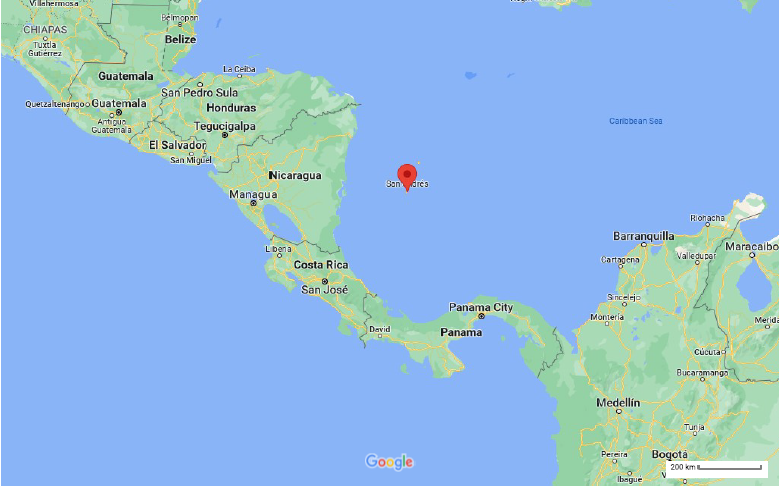
An Italian tourist has died after being bitten by a Shark while snorkelling of a beach on San Andres Island on the Caribbean coast of Colombia on Friday 18 March 2022. Antonio Straccialini, 56, from the Abruzzo Region of Italy was received a single bite to the thigh, and while he was able to pull himself out of the water, he died of blood-loss shortly after. The identity of the Shark is not completely certain, but there are reports of a pair of Tiger Sharks, Galeocerdo cuvier, being seen in the area before the attack, and this species is known to occasionally attack Humans.

A Tiger Shark in the Bahamas in 2012. Albert Kok/Wikimedia Commons.

Despite their fearsome reputation, attacks by Sharks are relatively rare and most attacks on Humans by Sharks are thought to be mistakes. Tiger Sharks have a diverse diet, including invertebrates, Fish, Birds, Marine Reptiles and Marine Mammals, which we superficially resemble when we enter the water. Marine Mammals are attacked principally for their thick adipose (fat) layers, which are a nutritious high-energy food, but which we lack. Due to this, when Sharks do attack Humans, these attacks are often broken off without the victim being consumed. Such attacks frequently result in severe injuries, but are seldom immediately fatal, and victims are likely to survive if they receive immediate medical attention.

 
The location of San Andreas Island. Google Maps.

Following the incident there are reports of local people organising a Shark hunt to find and kill the offending Animal, despite the fact that this is illegal in Colombia, where Sharks are protected, as well as pictures having been posted on social media of hunters with a dead Nurse Shark, Ginglymostoma cirratum, a species considered to present no threat to Humans. This has been condemned by environmental groups in Colombia, and in particular Colombian actor and dive master Victor Mallarino, who has observed that this response is completely inappropriate, and a consequence of poor public education about Sharks in the country. In Italy, meanwhile, many people are questioning why no alarm was raised after a Shark of a species considered to be dangerous was seen in the viacinity of Human bathers.

See also...


Follow Sciency Thoughts on Facebook.

Follow Sciency Thoughts on Twitter