Showing posts with label Biodiveristy. Show all posts

Saturday, 9 April 2022

Petalacmis triplehorni: A new species of Firefly from Bolivia.

Fireflies, Lampyridae, are Beetles closely related to Soldier and Click Beetles, noted for their remarkable light producing organs. These appear to have first developed in the larvae, which use them to warn potential predators of their unpleasant taste, but have been retained into adulthood in males of some species and co-opted for mating displays, with the females of one species also retaining these organs, and using them to attract members of other species, which are preyed on. The conspicuous nature of these Insects means that they have been observed since antiquity, with many cultures attributing supernatural significance to their appearance. However, they are relatively understudied from South America, with only two species described from South America, both placed within the genus Petalacmis, with only the males known from either species.

In a paper published in the journal ZooKeys on 4 April 2022, Luiz Lima da Silveira of the Department of Biology at Western Carolina University, and Marc Branham of the Department of Entomology and Nematology at the University of Florida, describe a new species of Petalacmis from the Santa Cruz Department of Bolivia. 

The new species is named Petalacmis triplehorni, in honour of Charles 'Chuck' Triplehorn, Professor Emeritus of the Ohio State University, who collected the first specimens of Petalacmis praeclarus that Marc Branham first encountered as a graduate student while investigating the systematics of the family Lampyridae, and served as a mentor and an inspiration to him. The species is described from fifteen specimens, collected from different locations within Santa Cruz Department by different collectors between 2000 and 2005.

 
Petalacmis triplehorni, holotype (male, prior to dissection), habitus (A) dorsal (B) ventral. Scale bar is 1 mm. Da Silveira & Branham (2022).

Known male specimens of Petalacmis triplehorni are dark brown in colour, and vary between 5.06 and 5.81 mm in length. Their antennae are distinctive, with only nine antennomeres (antennal segments), the ninth of which is very elongate and paddle-shaped. The elytra (wing cases) are subparallel, the abdomen approximately diamond shaped.

See also...


Follow Sciency Thoughts on Facebook.

Follow Sciency Thoughts on Twitter


Sunday, 27 March 2022

Conraua kamancamarai: A new species of Slippery Frog from the Fouta Djallon Highlands of west-central Guinea.

The Fouta Djallon Highlands of west-central Guinea form a series of plateaus, deep valleys, and steep slope-faces covered by a mixture of tropical and sub-tropical forests and grasslands. The area receives some of the highest rainfall in West Africa, but also has a wide range of micro-climates, providing a highly diverse environment with a high number of endemic species, which is relatively understudied by scientists. The floral uniqueness of the region has long been recognised, and there have been many calls to protect areas of pristine forest being encroached upon by agriculture and Cattle ranching, but the faunal uniqueness of the area has been very little studied.

In a paper published in the journal Zoosystematics and Evolution on 19 January 2022, Karla Neira-Salamea of the Museum für Naturkunde Berlin, Joseph Doumbia of ONG EnviSud Guinée, Annika Hillers of the Wild Chimpanzee Foundation, Laura Sandberger-Loua, also of the Museum für Naturkunde Berlin, N’Goran Kouamé of the Laboratoire de Biodiversité et Ecologie Tropicale at the Université Jean Lorougnon Guédé, Christian Brede of Lübeck in Germany, Marvin Schäfer, again of the Museum für Naturkunde Berlin, David Blackburn of the Department of Natural History at the Florida Museum of Natural History, and Michael Barej and Mark-Oliver Rödel, once again of the Museum für Naturkunde Berlin, describe a new species of Slippery Frog from the Fouta Djallon Highlands of west-central Guinea.

 
Hörè Binti landscape, Fouta Djallon, Guinea. Neira-Salamea et al. (2022).

Slippery Frogs, Conraua spp., are endemic to Africa, with seven species currently recognised, one from East Africa, three from Central Africa, and three from West Africa. However, a recent phylogenetic study of one of these species, Conraua alleni, should in fact be considered to be a species cluster (group of morphologically identical but genetically distinct species, known as 'cryptic species') rather than a distinct species. With this in mind, Neira-Salamea et al. carried out morphological and genetic tests on a group of Slippery Frogs held in the Museum für Naturkunde Berlin, which were collected during an expedition to the Fouta Djallon in 2011, establishing that Frogs from Hörè Binti, Pita and Chute de Ditinn and Dalaba in the Fouta Djallon are all members of a new, previously undescribed species.

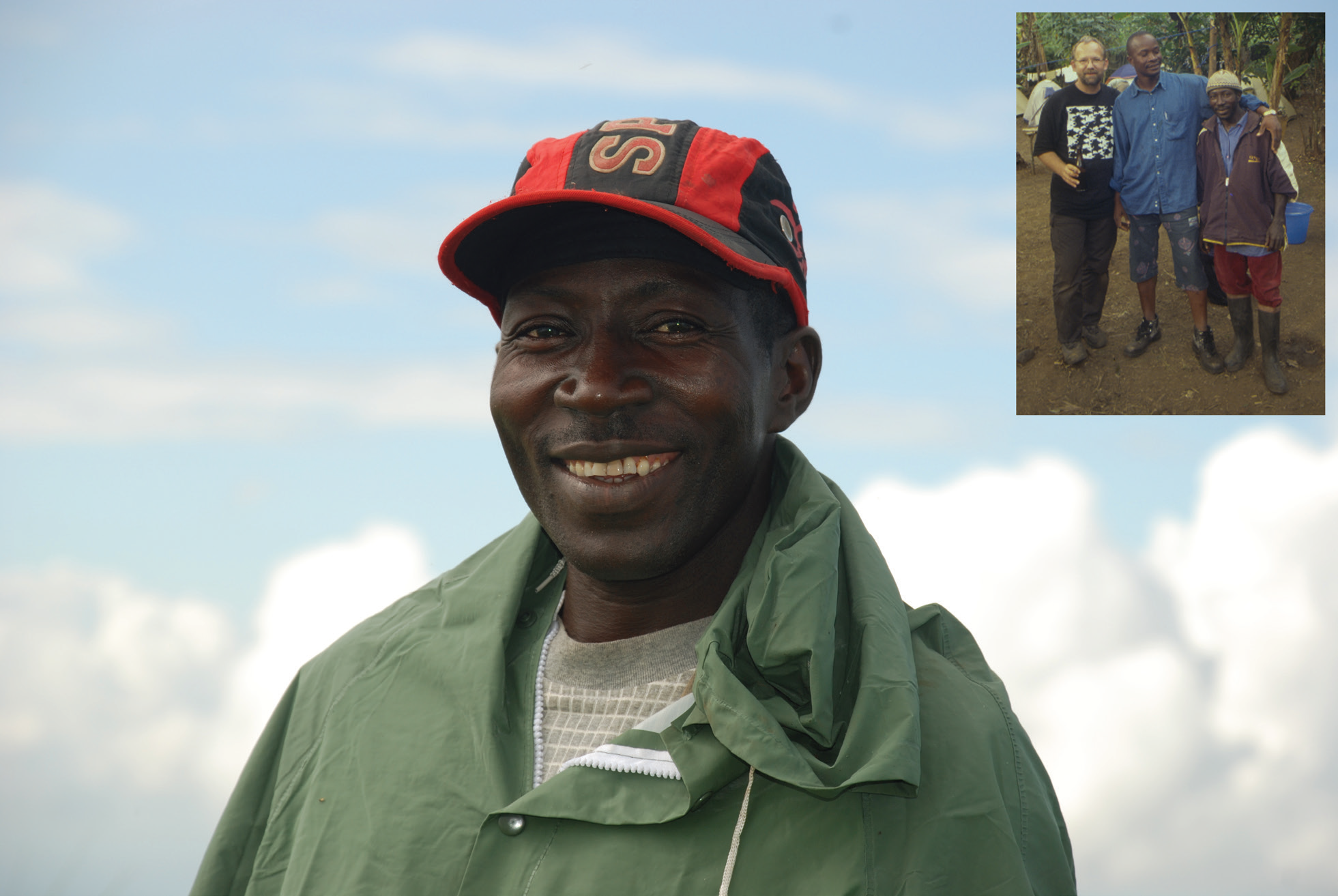
The new species is named Conraua kamancamarai, in honour of the late Kaman Camara, a long term field assistant and friend of the team, who began working with Mark-Oliver Rödel in 2002 on a survey to the Simandou Range that was organised by Conservation International, and worked with the team full time from 2007 until his death after a short illness in 2020, investigating the amphibians of the Nimba Mountains and other Guinean areas. Neira-Salamea et al. note that 'Kaman had outstanding skills in detecting and catching Frogs, and, more importantly, an unswerving positive attitude'. Kaman was born and lived in a remote village at the western foothills of the Simandou Range. He never received any formal education. Still, he repeatedly rejected other better paying job offers from mining companies, preferring instead to work with his frog team whenever it was possible.

 
Kaman Camara in June 2007 on Mount Nimba, Guinea. Inset figure taken on a Rapid Assessment to south-eastern Guinea, organised by Conservation International and Kaman’s first experience with frog work, from left to right: Mark-Oliver Rödel, Mohamed Alhassane Bangoura and Kaman Camara. Neira-Salamea et al. (2022).

Specimens of Conraua kamancamarai have a slightly dorsoventrally flattened, short and rounded body; the snout is rounded in dorsal and lateral view, the upper lip slightly projects forward. They range from 74.3 to 81.7 mm in length. Dorsal colouration ranges from uniform dark brown to predominantly brown with dark mottling or predominantly brown with dark spots. Ventral colour pattern of all specimens similar: whitish with distinct brown blotches, however, these blotches are lighter in the subadult specimens.

Colouration of life Conraua kamancamarai from the Fouta Djallon and surrounding region, Guinea, illustrating variation in colour pattern and skin texture. (a) From Dubreka, River Bindinbandan; (b) From Dalaba, Chute de Ditinn; (c) From Hörè Binti; (d) From Dubreka, River Bindinbandan; (e) From Dalaba, Chute de Ditinn; (f) From Télimélé, locality Kourakoto, river Didounpouriguè; Frogs in lower row in typical calling position, sitting in shallow water; specimens either not collected or not assignable to a voucher specimen, whereas the Frogs from Hörè Binti and Chute de Ditinn can be assigned to Conraua kamancamarai without doubt; the other Frogs may represent an undescribed Conraua species. Neira-Salamea et al. (2022).

Conraua kamancamarai occupies fast-flowing rocky streams with waterfalls within riverine forest in mountainous areas in the Fouta Djallon. Like other Frogs of the genus, Conraua kamancamarai is predominately nocturnal and aquatic. Despite their occurrence in fast flowing streams, adults show a preference for calmer river sections, where turbulent water is absent. Usually, Frogs are encountered at least partly submerged in shallow water, facing the riverbanks. When outside of the water, they remain within jumping distance to water. Disturbed Frogs seek shelter on the ground of pools, sometimes trying to burrow deeper into them and cover themselves with gravel or substrate. Mating has never been observed; however, single observations of clutches and jelly remnants of spawn indicate that oviposition sites are small puddles or depressions on the riverbanks near the spray water zone of cascades and waterfalls. Conraua Tadpoles usually were observed in silted calm ponds where up to 50 Tadpoles of about the same size have been encountered.

 
The type locality of Conraua kamancamarai near Konkouré Fetto, Fouta Djallon, Guinea. The Frogs live in clear, fast flowing streams, with riverine forest. Neira-Salamea et al. (2022).

The forest fragments where Conraua kamancamarai occurs are generally degraded by anthropogenic disturbance, particularly Peanut and Rice crops and Cattle grazing. The type locality is located between Konkouré and the largest city within the Fouta Djallon, Mamou, within a relatively short distance to the connection road and was surveyed on 20 June 2011. Along the national route one (N1), one of the largest roads connecting the East with the West of Guinea, houses are numerous, but already within a relatively short distance to the road, Human presence may be considerably scarcer. Slopes are either covered by an open, short, dry forest with signs of Cattle grazing and used for charcoal production or comparatively large fields for Peanuts or Rice crops. Only steep slopes surrounding rivers had sometimes larger trees and denser vegetation with higher humidity levels than the surroundings. The type locality is at a river within denser forest, with large boulders and some cascades, allowing for a diverse river site with fast and slow flowing parts and comparatively clear water. These forests are not protected and were in the past burned by the population as protest against government decisions in Conakry.

 
The surroundings of the type locality are heavily degraded by agriculture, Cattle grazing and charcoal production (inset figure). Neira-Salamea et al. (2022).

The classified forest (partly protected areas allowing forestry) of Hörè Binti is located within a mountainous area containing several freshwater sources. It was surveyed from 22–23 July 2010. Many fast-flowing streams with cascades have its source on the mountain. The habitat degradation due to anthropogenic alterations was dramatic and only very small forest fragments remained. The anthropogenic pressure consisted of cultivations/fields (mainly Peanut and Rice) and grazing Cattle. Only streams were surrounded by some remaining larger trees. The Ditinn/Dalaba site was within a small fragment of gallery forest with a stream, next to the waterfall of Ditinn. It was surveyed from 24–25 July 2010. Although there is a small village next to the forest, only minor anthropogenic alterations were detectable.

Because the full range of Conraua kamancamarai is unknown, Neira-Salamea et al. recoment that it be treated as 'Data Deficient' under the terms of the International Union for the Conservation of Nature’s Red List of Threatened Species. However, they also note that if the known populations do represent the entire range of the species, then it should be considered to be Endangered.

See also...


Follow Sciency Thoughts on Facebook.

Follow Sciency Thoughts on Twitter


Wednesday, 23 March 2022

Italian tourist dies after being bitten by a Shark in the Caribbean.

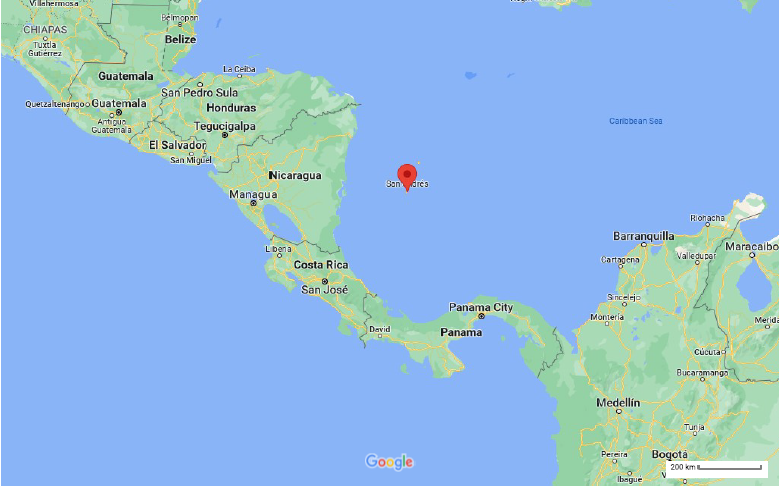
An Italian tourist has died after being bitten by a Shark while snorkelling of a beach on San Andres Island on the Caribbean coast of Colombia on Friday 18 March 2022. Antonio Straccialini, 56, from the Abruzzo Region of Italy was received a single bite to the thigh, and while he was able to pull himself out of the water, he died of blood-loss shortly after. The identity of the Shark is not completely certain, but there are reports of a pair of Tiger Sharks, Galeocerdo cuvier, being seen in the area before the attack, and this species is known to occasionally attack Humans.

A Tiger Shark in the Bahamas in 2012. Albert Kok/Wikimedia Commons.

Despite their fearsome reputation, attacks by Sharks are relatively rare and most attacks on Humans by Sharks are thought to be mistakes. Tiger Sharks have a diverse diet, including invertebrates, Fish, Birds, Marine Reptiles and Marine Mammals, which we superficially resemble when we enter the water. Marine Mammals are attacked principally for their thick adipose (fat) layers, which are a nutritious high-energy food, but which we lack. Due to this, when Sharks do attack Humans, these attacks are often broken off without the victim being consumed. Such attacks frequently result in severe injuries, but are seldom immediately fatal, and victims are likely to survive if they receive immediate medical attention.

 
The location of San Andreas Island. Google Maps.

Following the incident there are reports of local people organising a Shark hunt to find and kill the offending Animal, despite the fact that this is illegal in Colombia, where Sharks are protected, as well as pictures having been posted on social media of hunters with a dead Nurse Shark, Ginglymostoma cirratum, a species considered to present no threat to Humans. This has been condemned by environmental groups in Colombia, and in particular Colombian actor and dive master Victor Mallarino, who has observed that this response is completely inappropriate, and a consequence of poor public education about Sharks in the country. In Italy, meanwhile, many people are questioning why no alarm was raised after a Shark of a species considered to be dangerous was seen in the viacinity of Human bathers.

See also...


Follow Sciency Thoughts on Facebook.

Follow Sciency Thoughts on Twitter


Tuesday, 8 March 2022

Five new species of Staircase Snails from Borneo.

Staircase Snails, Diplommatinidae, are small terrestrial Gastropods with operculi, which get their common name from the strong ribbing on their shells, which can resemble a spiral staircase. They are members of the Cyclophoroidea, a group of Caenogastropods which have lost their combed gills and developed an internal lung independently of the Pulmonata.

In a paper published in the journal Folia Malacologia, Jaap Vermeulen of JK Art and Science and Mohd Zacaery Khalik of the Faculty of Resource Science and Technology at Universiti Malaysia Sarawak, describe five new species of Staircase Snails from Borneo.

The first new species described is placed in the genus Arinia, and given the specific name bathyodon, meaning 'deep-tooth'. The species is described from a collection of shells gathered on a limestone plateau in a primary rainforest Sangkulirang Peninsula in the Indonesian province of Kalimantan. These shells are 1.2-1.6 mm high, 0.75-0.90 mm wide, and ellipsoid-cylindrical to almost cylindrical in shape, with the last two whorls widest in frontal view. The whorls are convex, and there is a constriction of the shell before the aperture, which lacks teeth. The radial ribs are single-crested, and there are 8-12 per 0.5 mm. 

 
Arinia bathyodon: (1) Holotype, frontal view, shell height 1.6 mm; (2) same shell, right lateral view; (3) same shell, umbilical view; (4) paratype, right lateral view with part of the shell wall removed to show internal tooth. Vermeulen & Khalik (2022).

The second new species is also placed within the genus Arinia, and given the specific name congener, meaning 'of the same kind', in reference to the fact that it closely resembles the previously described Arinia similis, which is found in the same area. The species is described from a series of shells collected in the Gunung Mulu National Park in Sarawak Province, Borneo, on the path between Clearwater Cave and Moonmilk Cave. These shells are 1.0-1.2 mm in height, 0.75-0.80 mm in width, and shortly ellipsoid-cylindrical in shape, with the body whorl or last two whorls widest in frontal view. There is a constriction before the aperture, which lacks teeth. The earlier parts of the shell have 12-17 ribs per 0.5 mm, which drops to 5-7 ribs per 0.5 mm after the second half of penultimate whorl.

 
Arinia congener: (5) holotype, frontal view, shell height 1.2 mm; (6) same shell, right lateral view; (7) same shell, umbilical view. Vermeulen & Khalik (2022).

The third new species is again placed in the genus Arinia, and given the specific name semiconica, meaning 'half-cone-shaped', in reference to the shape of the shells. The species is described from a series of specimens collected at Kampong Air Putih near Samarinda, and at Gua Ambulabung in the Baay river valley on the Sangkulirang peninsula, with both localities being in Kalimantan. These shells are 1.7-2.3 mm high, 1.45-1.70 mm wide, and conical with almost flat sides, with the body whorl widest in frontal view. The whorls are convex, with the body whorl often slightly more narrowly rounded at the periphery. A constriction is present before the aperture, which lacks teeth. The ribs are single-crested with 3-6 ribs per 0.5 mm.

 
Arinia semiconica:(8) Holotype, frontal view, shell height 1.8 mm; (9) same shell, right lateral view; (10) same shell, umbilical view. Arrows indicate the position of the constrictions. Vermeulen & Khalik (2022).

The fourth new species is placed in the genus Notharinia, and given the specific name xenos, meaning 'foreigner', in reference to the fact that the genus Notharinia has previously only been identified from Laos and Cambodia, locations significantly distant from Borneo. Vermeulen and Khalik note that the genus Notharinia is similar to the genus Arinia, differing mainly in the constriction of the shell before the aperture of adult shells of Arinia, which is absent in Notharinia; something which could potentially have been lost separately in Notharinia xenos, thereby making the genus paraphyletic, but in the absence of genetic data they choose to base their diagnosis upon the available morphological data.

Notharinia xenos is described from six shells collected from limestone scarps in the upper Tatau river valley of Sarawak State Malaysia. These are 1.9-2.4 mm high and 0.85-0.90 mm wide, with cylindrical shells, slightly widened towards the base. The whorls are moderately convex, the ribs single crested and there are 8-15 ribs per 0.5 mm.

 
Notharinia xenos: (11) Holotype, frontal view, shell height 1.9 mm; (12) same shell, right lateral view; (13) same shell, umbilical view. Vermeulen & Khalik (2022).

The final new species is placed in the genus Opisthostoma, and given the specific name hemituba, meaning 'half-trumpet' in reference to the shortened shells of this species. The species is described from a series of shells collected at Gua Mardua near Kampong Pengadan on the Sangkulirang Peninsula of Kalimantan Province, Indonesia. These range from 1.6 mm to 1.7 mm in height and from 1.60 mm to 1.75 mm in width, and are shortly cylindrical to depressed conical, with the body whorl widest in frontal view. The apex of the shell is oblique and truncated. The whorls are moderately convex, and rounded, the  body whorl is rather narrowly rounded at the base, towards a constriction before the aperture. The ribs are low and thin, being widely spaced; on the spire there are 3-5 ribs per 0.5 mm, on the body whorl this drops to 2-3 ribs per 0.5 mm.

 
Opisthostoma hemituba. (14) Holotype, frontal view, shell height 1.6 mm; (15) same shell, right lateral view; (16) same shell, umbilical view. Arrows indicate the position of the constrictions. Vermeulen & Khalik (2022).

See also...


Follow Sciency Thoughts on Facebook.

Follow Sciency Thoughts on Twitter.


Tuesday, 28 September 2021

Nasalis larvatus: Estimating the conservation status of the Proboscis Monkey on the Klias Peninsula, Borneo.

Almost half of all non-Human Primates are considered to be threatened by habitat loss due to Human activities, principally the clearing of forests for urban expansion, agriculture and agroforestry, or simply timber. Primates are thought to be particularly vulnerable to these pressures due to their long life-cycles and slow breeding rates, requiring access to a range of forest resources, which in turn makes it hard for them to adapt to changes to their environments, particularly those driven by Humans. Because of this, conservation efforts directed at Primates need reliable information on the distribution of Primates and the resources upon which they rely.

The forests of Southeast Asia are considered to be of international importance by conservations, with a number of biodiversity hotspots. These forests have come under considerable pressure in recent years, with huge areas cleared for agriculture, principally the cultivation of Oil Palms, Elaeis guineensis. Particularly threatened by this expansion are the forests of Borneo, an island with a high level of endemism (i.e. species not found anywhere else) where large areas of forest have been cleared to make way for Oil Palm plantations, and where, in addition to the direct loss of forests, many wildlife populations are additionally threatened by hunters making use of the road networks put in to support the Oil Palm industry.

Proboscis Monkeys, Nasalis larvatus, are large, sexually dimorphic Monkeys endemic to Borneo, which are considered to be Endangered under the terms of the International Union for the Conservation of Nature's Red List of Threatened Species. They get their common name from the prominent noses of the adults, these being more distinctive in the larger males than the smaller females. These Monkeys typically live in groups with a single male, plus several females and their young, although groups of young males are also found. The species is found in lowland forests close to water, such as riverine forests, mangroves and peat swamps, environments which are increasingly threatened by the expansion of Oil Palm cultivation, which is typically carried out on lowland floodplains. This expansion is known to have caused problems for Proboscis Monkeys, with their habitat increasingly being fragmented into smaller areas.

 
A male Proboscis Monkey, Nasalis larvatus, in Borneo. Mark Louis Benedict/Rainforest Rescue.

In 2004 a survey of the Klias Peninsula on the eastern tip of the Malaysian state of Sabah, found 569 individual Proboscis Monkeys living in groups, while a second survey carried out in 2005, which surveyed forests along the major rivers and tributaries of Sabah State by boat, found 818 Proboscis Monkeys on the Klias Peninsula, living in 75 groups. Both surveys found that the Klias Peninsula population was the largest surviving population in the state, and probably the only population large enough to have long-term survival prospects. This reliable presence of Proboscis Monkeys has turned the Klias Peninsula into somewhat of a tourist centre, with a number of companies offering opportunities to view the Monkeys.

In a paper published in the journal Raffles Bulletin of Zoology on 9 June 2021, Henry Bernard of the Unit for Primate Studies-Borneo at the Universiti Malaysia Sabah, Nicola Abram of Forever Sabah, Menaga Kulanthavelu and Felicity Oram, also of the Unit for Primate Studies-Borneo at the Universiti Malaysia Sabah, and Ikki Matsuda, again of the Unit for Primate Studies-Borneo at the Universiti Malaysia Sabah, and of the Academy of Emerging Sciences at Chubu University, the Wildlife Research Center of Kyoto University, and the Japan Monkey Centre, present the results of a previously umpublished survey of the Proboscis Monkeys of the Klias Peninsula, undertaken in 2014, combined with a comparison of this survey to the 2004 survey, undertaken with a view to understaning any changes in the population over a ten year period.

The Klias Peninsula has an area of about 1300 km², and is genrally flat, with a maximum elevation of about 50 m above sealevel. Historically, the peninsula was covered by complex mixture of Mangrove, Nipah Palm forest, freshwater swamp forest, and peat swamp forest, interspersed with open areas and extensive wet grasslands, but much of this has been cleared to make way for small scale Human settlements and farming, as well as larger Rubber and Oil Palm plantations. Bernard et al. carried out surveys by boat, along the Padas, Padas-Damit, Klias, and Bukau rivers, concentrating on areas where Proboscis Monkey populations had been detected by the 2004 and 2005 surveys. These included the Padang Teratak Bird Sanctuary, the Padas Damit Forest Reserve, the Menumbok Forest Reserve, the Binsulok Forest Reserve, the Klias Forest Reserve, the Kg. Hindian Forest Reserve, and the Nabahan Forest Reserve.

 
The Klias Peninsula region in western Sabah, in the northern part of Borneo (inset), Malaysia, and the research sampling sites in riverine, Mangrove, and mixed Mangrove-riverine forests along rivers in Padang Teratak Bird Sanctuary, Padas Damit Forest Reserve, Menumbok Forest Reserve, Binsulok Forest Reserve, Klias Forest Reserve, Kg. Hindian Forest Reserve, and Nabahan Forest Reserve, where the river surveys of the sleeping sites of Proboscis Monkeys were conducted. Bernard et al. (2021).

Proboscis Monkeys are almost always found close to water, favouring flooded forest environments, so boat surveys are generally the best way to survey them. These Primates return to a communal roost in a tree by a riverbank each evening, which makes surveying them relatively easy, particularly if this is done first thing in the morning, before they leave the communal roost, or late in the afternoon, after they have returned to it. Therefore, Bernard et al. carried out surveys of Proboscis Monkeys between 5.30 and 9.30 am and between 4.00 and 6.30 pm, between January and March 2014. All of the main rivers and tributaries in the study area were surveyed once only, to prevent double counting. Where waterways were close together they were surveyed on the same, or at least consecutive, days, for the same reason. A total of 106 km of waterways was surveyed, in sections ranging from 6.5 to 21.7 km. The locations of trees with Monkeys in them were recorded accurately with a GPS receiver, as were the number of Monkeys in each tree, and the type of group present (single male with females or all male group), and the type of forest the location was in (Mangrove, riverine, or mixed Mangrove-riverine). The extent of each habitat type was also recorded by length along the riverbanks, and the preference of the Monkeys for each habitat calculated from this.

Bernard et al. also carried out a number of vegetation surveys. There were carried out on 40 m circular plots, with 4-6 at each site, for a total of 34 plots. Within these plots all trees with a trunk-thickness greater than 10 cm at breast height were assessed, in order to work out the total area of all the tree stems within each plot, the largest tree within each plot, and the species richness at each plot.

To assess the amount of Human disturbance at each site, Bernard et al. used two measures; the distance from the centre of each site to the boundaries of the three closest agricultural sites, and the distance from the centre of each site to the boundaries of the three closest Human settlements.

Bernard et al. estimated the abundance of Proboscis Monkeys at each site by dividing the number of Monkeys by the area of the site, then used this measure to compare to the total area of all the tree stems within each plot, the species richness within the plot, and the size of the largest tree, as well as the distance to agricultural land and Human settlements.

Bernard et al. attempted to esitmate the loss of available habitat to the Proboscis Monkeys by calculating the potential range as being all the land 1 km inland of all the surveyed rivers, calculating the land cover throughout this area for both 2004 and 2014 using Landsat and Google Earth imagery, then calculating the change from suitable to unsuitable for Monkey habitation, based upon the parameters established by the ground surveys.

Finally, Bernard et al. calculated the amount of Monkey habitat currently within protected areas, using data from the Sabah Forestry Department, as well as the extent of the habitat outside these protected areas upon which titles have been granted for large scale plantations or other agribusiness enterprises (typically Oil Palm growth), what proportion is under Native Titile (reserved for the use of indigenous people), and what proportion is under, or available for County Lease (available for development for any purpose, and therefore again likely to be converted to Oil Palm planting), as well as land that was either no form of title, or for which the title was impossible to determine.

During 35 days of fieldwork on the Klias Peninsula, Bernard et al. carried out 42 surveys at seven study sites. They found 679 Proboscis Monkeys living in 75 groups; 44 groups comprising a males and a group of females plus their young, 16 groups of young males, and 15 groups whose composition could not be determined. The Monkeys were at their most abundant in the Padas Damit Forest Reserve in the central part of the peninsula, where there were 200 Monkeys living in 21 groups. Proboscis Monkeys were only found in Mangrove and riverine forests, giving them a total available riverbank habitat of 105 km (65 km of Mangrove forest, 35 km of riverine forest, and 5 km of mixed Mangrove and riverine forest). More Monkeys were found in Mangroves (412) than riverine forest (267), although once the greater availability of Mangroves was taken into account, this indicated a preference for riverine forests (where there were an average of 7.6 Monkeys per km) over Mangroves (where there were an average of 6.3 Monkeys per km).

Within these three forest types there was a significant variation in the vegetation, which also appeared to influence the abundance of Proboscis Monkeys. The species richness of the forests did not appear to be important to the Monkeys, but the total trunk basal area (a measure of tree maturity) was important, with more Monkeys being found where this was highest, possibly because mature trees are important for roosting sites. The closeness of Human habitation or agricultural land did not appear to be a problem for the Monkeys.

Between 2004 and 2014 the Klias Peninsula lost 11 520 m² of intact forest, most of it riverine forest (11 450 m²). In addition, 11 960 m² of degraded forest (forest which still existed as woodland but had lost much of its original biodiversity) and swampland were lost. During the same time the area of Oil Palm plantations within Proboscis Monkey habitats grew by 23 210 m², although 21 860 m² of this (94%) was later judged to be economically unprofitable due to flooding and swampy conditions.

Within the total potential range of the Proboscis Monkeys in 2014, 49% was covered by Mangrove forests, 11% by 'other forest types' (presumably riverine forest), and 18% by degraded areas and swamps, suggesting that 78% of the species total range was covered by suitable habitat and 18% by marginal habitat. The remaining parts of the range were covered by Oil Palm plantations (14%), community agriculture (7%) and aquaculture (1%), all unsuitable habitats for Monkeys.

Much of the remaining potential habitat is not protected, with only 20% of riverine forests and 59% of Mangroves having protected status (i.e. 52% of the remaining suitable environment). In addition 6% of degraded forests and swamplands are protected. This means that 80% of riverine forests, 41% of Mangroves, and 94% of degraded forests and swamplands are at risk of being lost.

Of the remaining forests, 14% (19% of the riverine forest and 13% of the Mangroves) was in Production Forest Reserves, 16 920 m² (all of it Mangroves) in Class V Mangrove Forest Reserves and 29 360 m² (11 820 m² of riverine forest and 17 540 m² of Mangroves) was in Class IV Amenity Forest Reserves, where some commercial exploitation is allowed.

About 27% of the remaining forests (including intact and degraded forests and swamps) is on land which has been granted for development. This toral includes 43% of remaining riverine forests, about 13% of Mangroves, and around 35% of degraded forests and swamps. Furthermore another 16-17% of each forest type is located on State Land, for which permits for use could potentially be issued.

 
Land use and land cover data for 2014/2015 within the 1-km buffer distance from surveyed rivers, overlaid with Proboscis Monkey sightings from the 2004/2005 and 2014 surveys, Protected Areas, and Production Forest Reserve boundaries. Bernard et al. (2021).

Bernard et al. discovered populations of Proboscis Monkeys at all of the surveys locations on the Klias Peninsula, with the largest population on the central part of the peninsula. This suggests that the area can be seen as a population stronghold for the species. The distribution of the Monkeys was similar to that observed in 2004 and 2005. The 2004 and 2005 surveys found 569 individuals in 65 groups, and 818 individuals in 75 groups, respectively, to which the 679 individuals in 75 groups found by Bernard et al. compares favourably. It is likely that the differences in Monkey numbers between the counts relate to the erratic nature of Monkey behaviour and the difficulties of surveying these primates in tropical wetland environments rather than actual fluctuations in the population, and, therefore, that the population remained fairly constant between 2004 and 2014). This would appear to correlate with the limited loss of environment suffered by the Monkeys between 2004 and 2014, during with time only 2% of riverine forests disappeared, and no Mangroves.

The Monkeys were not evenly distributed throughout their environment, apparently prefering riverine forests to Mangroves, and Mangrove forests to all other environments, including mixed riverine/Mangrove forests (although the avoidance of this later environment might be an artefact, as onlu 5 km of this environment was surveyed during the study). Studies in other areas have suggested Probiscis Monkeys prefer riverine forests to either Mangroves or mixed riverine/Mangrove forests, probably due to a higher plant diversity and greater variety of food in this habitat, although Mangroves are still clearly also an important habitat.

The presence of large trees appeared to be particularly important to these Monkeys, probably because of their role as roosting sites. Larger trees both provide a greater number and variety of nesting sites, but also provide a greater distance between these sites and the ground, making it harder for predators to reach the resting Monkeys undetected.

The study did not find any direct impact on Proboscis Monkey populations made by the proximity of Human settlements of agriculture, although this may have been due to the small size of the survey. The largest threat to wildlife populations on Borneo is currently considered to be the expansion of Oil Palm plantations, and, as with other Primate species, Proboscis Monkey's tend to avoid these environments, which are comprised of extensive monocultural stands of an unfamiliar fruit tree. Other than this however, Proboscis Monkeys seem to be relatively tolerant of the presence of Humans, and will even roost close to Human settlements if that is where suitably large trees are to be found. 

Little forest was lost on the Klias Peninsula between 2004 and 2014, but there is clearly the potential for much more to go, with the 28% of riverine forest currently designated for development being of particular concern. Grants of land made under such schemes in Sabah come with time limits; i.e. if the holder does not use the land within a certain period of time, then they lose the title, which can be granted to another user. These schemes currently make no provision for the retention of intact forest, clearly creating an incentive for developers to fell such forests to retain control of the land. As such Bernard et al. strongly recommend that the law be changed to allow landowners to leave areas of forest intact in order to protect the Proboscis Monkeys.

Also of concern are the large areas of forest designated as Production Forest Reserves, particularly the area within the Padas Damit Class IV Amenity Forest Reserve, which is the area with the greatest population of Proboscis Monkeys. These areas were originally intended to be areas of forest which were left largely intact, but where a range of leisure activities were permitted, however a follow up study in 2017-18 found that large areas under this designation had been converted to Oil Palm cultivation.

Proboscis Monkeys require forests along river margins to survive. As such the fragmentation of such environments not only lowers the amount of available habitat, but also removes their ability to move from one area to another, as their preferred environment is essentially linear. Thus protecting the species in future will require not just careful monitoring of their population, but careful management of the areas where they live, and in particular careful monitoring of land use changes likely to have an adverse effect.

Bernard et al. feel it would be particularly useful to grant full protection to Proboscis Monkeys living on government land, as this would have the issuing of land grants within areas of Monkey habitat, and allow the designation of protected areas to protect the Monkeys.

The Klias Peninsula is a popular tourist destination, and viewing Proboscis Monkeys is a popular activity with tourists. Thus good management of the Monkey population is likely to be of economic as well as conservational benefit, drawing tourists to Sabah, and generating income for local communities.

See also...


Follow Sciency Thoughts on Facebook.

Follow Sciency Thoughts on Twitter