Meaning 'red wood' ('红木') in Chinese, the term 'Hongmu' refers to a group of 29 timber species with distinct features valued in China, including the rich hue, extreme durability and often a pleasant smell. Hongmu species are widely used in antique furniture reproduction in China and Vietnam. Demand for Hongmu has driven boom-and-bust cycles, marked by steep increases in harvest and export volumes from individual countries before a sudden collapse, or 'bust'. Once a species is exhausted in one country, or new control measures are put in place by governments, smuggling networks quickly identify new supplies and move to the next country or region. This phenomenon of 'boom and bust' in the Rosewood trade has been well documented and was confirmed by the
CITES Secretariat in 2019. Over the past five years, Asian timber trafficking networks have been plundering the forests of the Central and Southern Africa regions, on the quest for a tree locally known as Mukula,
Pterocarpus tinctorius. Under public pressure, governments in the Democratic Republic of Congo and Zambia, the two principal producing countries, have instituted on-and-off restrictions to stop the pillage of Mukula. However, well-connected traffickers have ensured access to the region’s fast-disappearing forest resources through bribes and secret schemes. Leading to claims that the trade has 'never stopped'.
An antique furniture reproduction factory in China filled with African precious wood. Environmental Investigation Agency (2019).
Nearly half of the world’s countries (95 in total) across five continents have been exporting Rosewood to China since 2000. At a plant genus level, where studies exist, 90 percent of Pterocarpus and Dalbergia populations, two genera that include a variety of Rosewood species, show declining or unstable populations.
Since 2015, Africa has become the world’s top Hongmu producing region, accounting for the majority of all Hongmu log imports to China by volume between January 2015 and June 2019. The colossal exports of Kosso wood,
Pterocarpus erinaceus, from West Africa have been the primary factor for this steep rise. The listings of
Pterocarpus erinaceus and the whole
Dalbergia genus on the
CITES Appendix II in 2016 increased international protection and control for 16 of Hongmu species, leaving 13 species on the Hongmu list without international protection, several of them being very rare or on the edge of commercial extinction, such as the
Burma Padauk Tree, Pterocarpus macrocarpus.
Faced with the rapid decline of easily available Hongmu trees, Asian traders have looked beyond the Hongmu list of species and diversified their supply through other Rosewood species with similar features, suitable for the furniture industry. One of them is the Mukula, Pterocarpus tinctorius, of Central and Southern Africa.
Mukula is a Rosewood species native to Africa’s broad belt of Miombo woodland, an area of 2.7 million square kilometres of tropical seasonal and dry forests crossing Angola, Burundi, the Democratic Republic of Congo, Malawi, Mozambique, Tanzania, and Zambia. The Mukula tree is known to play an important role for a variety of species including Bees, Primates, Elephants, and Rodents; it is also vital to soil preservation and other ecosystem services. Like many members of the Fabaceae family, Mukula is a favoured shade tree and its foliage commonly serves as grazing fodder for domestic animals. The reddish sap is used by rural communities for fabric dyes and body colouring. In addition, Mukula has a number of valuable antibacterial and medicinal qualities.
African Miombo woodland. Environmental Investigation Agency (2019).
Prior to the surge in international demand, domestic markets in Africa had little interest in commercialising Mukula; the timber was mainly used by villagers for housing construction. The situation has changed drastically since 2014, and despite the lack of comprehensive data, several indicators help understand the sudden change, particularly in Zambia and the Democratic Republic of Congo, the two principle producing countries.
Chinese log imports from Zambia boomed within a few months. In 2013, the value of the timber exported from Zambia to China totalled US$2 528 619. One year later in 2014, exports had risen to US$58 080 578, an increase of 2197% in comparison to the previous year. This skyrocketing trend continued the following years before a drop was registered in 2018. In 2018, China still imported 63 498 tons (equivalent to approximately 102 172 cubic metres) of timber products from Zambia worth US$62 595 020. According to the information gathered by Environmental Investigation Agency undercover investigators and available literature, the vast majority of these logs were Mukula. This estimate is coherent with the findings from the
Center for International Forestry Research who estimated the national annual production of Mukula in Zambia at 110 000 cubic metres, affecting a forest area between 900 and 1500 square kilometres.

Clandestine Mukula operation found by Environmental Investigation Agency investigators in 2019. Environmental Investigation Agency (2019).
In 2016, the harvest of Mukula trees also soared in the Democratic Republic of Congo, with the volume of trees cut down in five months totalling almost 3300 cubic metres. During the same period, 90% of the wood moving across the border from the Democratic Republic of Congo to Zambia was reportedly Mukula, Extrapolation from available sources indicates that 49 804 cubic metres of timber was being traded in one year through three checkpoints at the Democratic Republic of Congo/Zambia border, of which 44 824 cubic metres was Mukula. Chinese syndicates were reportedly financing the skyrocketing harvest, transport and export of Mukula from Africa.
The soaring illegal and unsustainable harvest of Mukula and the illicit export of logs to Asia, principally China, has been the subject of growing criticism from the public and leaders in the region. For example, a Catholic Bishop in the Democratic Republic of Congo denounced illegal logging to the media, describing logs being moved at night 'before they are smuggled into Tanzania, via Zambia, en route to China. Illegal logging of Mukula has also been reported within the Democratic Republic of Congo’s
Kundelungu National Park. Zambian Members of Parliament have repeatedly questioned the sustainability and legality of Mukula harvest driven by Chinese demand. In 2017, the Mukula crisis was debated at the national
State House in Zambia. Representatives from several districts took the floor and expressed concerns. In December 2017, the youth faction of the ruling Patriotic Front intercepted 11 trucks of Mukula for export in Chilanga and accused House Special Assistant for Politics, Kaizer Zulu, of 'illegal export of Mukula trees' (Zulu was later replaced following a series of political scandals). A
Facebook post of a video showing the youth action received hundreds of comments by citizens expressing confusion about how this could happen when Mukula harvest and transit was supposedly banned in the country.
Greenpeace also raised the issue at the international level.

Organized youths stop Mukula shipments. Environmental Investigation Agency (2019).
Under public pressure, the governments of Zambia and the Democratic Republic of Congo have announced over the years a series of on-and-off bans that traffickers have managed to routinely circumvent.
In Zambia a series of harvest moratoria and export bans, frequently announced publicly without written legislation to make the bans enforceable, have repeatedly been imposed and lifted in attempts to control the illegal and unsustainable trade.
In February 2017, the Ministry of Lands Natural Resources and Environmental Protection announced a ban on the export of logs of all tree species, although the Minister, in consultation with the Director of Forestry, may 'issue export permits for any timber if that is deemed necessary in the interest of the Republic'. An additional ban was later placed on the movement of logs beyond 100 kilometres from the harvest zone, in order to promote value added processing and job creation in rural areas. The
Road Transport and Safety Agency and the
Zambia Revenue Authority were mandated to stop and seize any truck transporting logs beyond the 100 kilometer zone. As a consequence of this ban, several hundred trucks transporting Mukula logs from the Democratic Republic of Congo to Walvis Bay in Namibia were stopped for several months. The issue caused a diplomatic row between Namibia and Zambia, which was reportedly resolved through a phone call between the two presidents.

Clandestine Mukula operation found by Environmental Investigation Agency investigators in 2019. Environmental Investigation Agency (2019).
In April 2017, the Zambian Minister of Lands and Natural Resources, Jean Kapata, announced a new ban on all logs 'in transit' on Zambian soil transported by foreigners. The new ban, one of the rare announced bans backed by a legally binding statutory instrument, reportedly took effect immediately. Ms. Kapata stated: 'Once the Statutory Instrument is signed, it will mean that Zambia is not going to allow any transit of the Mukula logs on its soil. We will have sealed where the Mukula is coming from, especially from the Democratic Republic of Congo.' The decision by Zambian authorities resulted in hundreds of log trucks being blocked at the Democratic Republic of Congo and Tanzania borders.
In June 2017, the government appointed the state-owned company
Zambia Forestry and Forest Industries Corporation to export the seized illegal timber stockpiles on its behalf. The
Zambia Forestry and Forest Industries Corporation reportedly manages 500 square kilometres of forest plantations and employs over 5000 people. The corporation became subject of a national controversy in Zambia when rumours concerning privatisation plans emerged in late 2018. Critics feared that control over the profitable and powerful state-owned company would be handed to foreign investors, in particular Chinese, through the manoeuvre. Workers also protested in response to the government’s decision to list the company on the Stock Exchange and to delay payment of salaries.
Traffickers told Environmental Investigation Agency undercover investigators on multiple occasions that the official export of seized Mukula logs by the Zambia Forestry and Forest Industries Corporation has served as a cover for a large clandestine operation for the past two years, allowing anyone with enough money and high-level connection to secretly export freshly cut Mukula logs out of Zambia. The volumes involved are difficult to evaluate, but triangulating multiple sources it can be estimated that on average a minimum of 15 nine metre containers of Mukula have been exported each month under the guise of seized stockpile wood from mid-2017 to mid-2019. This would represent approximately 330 containers of Mukula worth approximately US$10 million.
Under the guise of the official tender for the disposal of confiscated timber, the Zambia Forestry and Forest Industries Corporation issues 'special permits' to preferred companies for the transport of freshly harvested Mukula. The permits specify means of transport and the port of loading for export (usually Durban in South Africa). Based on the special permit, 'joint forces' of army, security and police issue the export permit and required transportation documents for the shipment to Durban through Zambia. These documents would also facilitate the customs clearance for shipping the timber in South Africa.
As an influential Chinese trafficker explained to Environmental Investigation Agencyinvestigators: 'If you work with the Zambia Forestry and Forest Industries Corporation, you’ll know that they have a log yard. They’ll handle the logging. After you pay them, you go to their yard, load your trucks, get their permit, and you’re good.' The trafficker confirmed that he has only bought 'freshly harvested Mukula logs' from the Zambia Forestry and Forest Industries Corporation. He explains: 'I used to smuggle through Tanzania. Now I ship out of Durban. I have to go to Durban because the permit requires a specific port of clearance.' The trafficker presented to undercover investigators the permit he has been using to export freshly cut logs outside of Zambia.
Zambia Forestry and Forest Industries Corporation permit used by a trafficker to export freshly cut logs from Zambia. Environmental Investigation Agency (2019).
Another trafficker described a variation of the confidential scheme: 'The Zambia Forestry and Forest Industries Corporation sends over info to the concession, we have our trucks go there. They’ll get the logs ready to load. When trucks arrive, they’ll inform us, so we have our people there to load. It takes three to four hours to get everything loaded.' He confirmed that the 'special agreement' with the government through The Zambia Forestry and Forest Industries Corporation is much safer and more profitable than smuggling through Tanzania. He details for investigators the break-down of his production cost, for a container worth on average US $28 000 (Free On Board Durban): 'That’s my business. Of course I paid a lot for it. If I’m not willing to pay, I won’t get this permit. Mukula itself doesn’t cost a lot of money, only US$5000 per container. Transport costs US$8000. The rest is government fees'.
According to the testimony, the total cost of production would be US$13 000 and the money paid in 'fees' to officials for the confidential scheme is an additional US$15 000. Assuming that 500+ containers have been exported, that would be about US$5.4 million per year in bribes and so-called 'fees' paid to officials.
A third trafficker told the investigators that he shares ownership of a forest concession in the northwest of Zambia with a well-connected 'friend'. He explained to the Environmental Investigation Agency investigators that they would “just need a partner” to buy the Mukula they are harvesting in their concession, and then have it legalised through the Zambia Forestry and Forest Industries Corporation permit. For his foreign business partners, this Zambian trafficker usually arranges all necessary documentation: production document, transport document from the point of harvest, export permit, and the 'certificate' for the company, which he described as the 'very crucial document' needed to start and complete the process. The Mukula logs he offered to the investigators are harvested in Northwest Province, then moved to Mansa where they are containerised, before being trucked to Lusaka. In Lusaka, the containers are moved to Namibian trucks for transport to Walvis Bay. The Zambian trafficker said he works in collaboration with an 'agent' located at Walvis Bay port who facilitates the export. Given the recent diplomatic incidents related to the Mukula trade between Zambia and Namibia, he recommended to mis-declare Mukula logs as 'African timber' or 'Guibourtia coleosperma' (False Mopane, or Rhodesian Copalwood).
Traffickers met by Environmental Investigation Agency undercover investigators showed their ongoing clandestine operations through visits in the field or videos taken of the current harvesting/ stocking/loading operations
Clandestine Mukula operation found by Environmental Investigation Agency investigators in 2019. Environmental Investigation Agency (2019).
The legitimacy of theZambia Forestry and Forest Industries Corporation scheme on Mukula has been questioned and denounced on several occasions. On one hand Ministers and other senior officials have lauded the positive outcomes of Zambia Forestry and Forest Industries Corporation’s auction of the Mukula contraband, on the other the public in Zambia remains sceptical amid reports that the company could be involved in laundering illegal logs. Under popular pressure, Board Chair Jacob Mwitwa publicly declared that only logs confiscated by the government and officially cleared by relevant institutions were allowed to be exported by the Zambia Forestry and Forest Industries Corporation, seeking to reassure the public that the corporation was by no means involved in the harvesting of Mukula trees. In December 2018, Minister Kapata, while attending the 2018 United Nations Climate Change Conference in Poland, issued a statement that the Mukula export ban would not be lifted and that the government will own the process on behalf of the Zambian people, as 'the Mukula tree is too valuable to be left to a small part of the population to reap the benefits'.
From 2013 to 2017, a Mukula rush hit the dry forest of Katanga Plateau in the Democratic Republic of Congo. The harvest and trade exploded without control and took local authorities and communities by surprise. The vast majority of the commercial Mukula harvest took place outside of designated concessions. Lured into illegal harvest and trade by quick money offered by Asian, mostly Chinese, traffickers, local community members and traditional chiefs ran to the forests to cut what they could.
Alerted by local and international outcries, the Congolese government took a series of ambiguous decisions: instituting a harvest ban in April 2017; lifting the ban in August 2017 after having reportedly taken the appropriate corrective measures; postponing the lifting of the ban in September 2017, confiscating all abandoned Mukula logs, and creating a multipartite commission in charge of the stockpile disposal process.
As of August 2018, the trade of Mukula from Democratic Republic of Congo was re-allowed through the commission’s disposal process, but Zambia was enforcing the 2017 transit ban, making it impossible to move the logs to the principal ports of the region in South Africa and Namibia. According to local sources in Lumumbashi, most of the Chinese traders left the region and the Mukula trade from the Democratic Republic of Congo died down.
This was confirmed by traffickers met by Environmental Investigation Agency investigators in Zambia who had relocated their business from the Democratic Republic of Congo following the transit ban implementation. With little interest on the demand side and no more injection of cash locally, the timber lost its commercial value and logs were abandoned in the field.
Abandoned Mukula logs in Haut-Katanga before the trade restarted in 2019. Environmental Investigation Agency (2019).
The Artisanal Loggers Association of Katanga was hit hard by the lost trade and undertook efforts to have it reopened as soon as possible. Supported by Congolese diplomacy, the association opened direct talks with Zambian authorities in September 2018. An agreement was eventually reached between the Democratic Republic of Congo and Zambia in early 2019, to allow Mukula logs from the Democratic Republic of Congo to transit through Zambia starting in April 2019 under a series of conditions. The conditions include the payment of a fee for the inspection in Zambia, the payment of a fee for an escort in Zambia, a maximum convoy size of no more than 20 trucks, a single entry point in Zambia, and a 6-month time frame for the operation, which would end in October 2019. The Ministry of Lands and Natural Resources has allowed the the Democratic Republic of Congo to transport 3400 containers of Mukula logs through Zambia for export. The Minister in charge, Jean Kapata, said this will be done under security escort so as not to allow any manipulation.
According to Environmental Investigation Agency’s sources the first convoy of Mukula logs from the Democratic Republic of Congo left the country and entered Zambia the night of 19 April 2019. The logs were reportedly fully marked and tagged, as per the protocol put in place by the disposal commission established in the Democratic Republic of Congo, under the auspices of the Program of Control of the Production and the Commercialization of Timber, which was set up to establish traceability of the Congolese logs.
Marked and tagged logs in Lumumbashi. Environmental Investigation Agency (2019).
According to several sources in the Democratic Republic of Congo, including officials, the traceability program in place would help guarantee that no freshly cut logs from the forest are laundered into the stockpile of seized logs. But as they quickly acknowledged, the program is not infallible. The risk of using the stockpile disposal process for exporting freshly cut logs is extremely high given the high value of the logs and influence traffickers have had. Two Chinese traffickers, one based in Zambia and one based in the Democratic Republic of Congo, told Environmental Investigation Agency undercover investigators in May 2019 that they would be able to supply freshly cut logs for export to China.
The powerful networks that took advantage of the Mukula rush in 2017 have quickly identified the disposal process and the reopening of the trade through Zambia as an opportunity for taking over the illegal trade where they left it two years ago. According to the Environmental Investigation Agency’s sources, the 'Untouchables', as a group of highly influential senior officials (and their relatives) and members of the Congolese Army are commonly referred to in politico-administrative spheres, are once again attempting to reenter the trade and plunder the forest. The 'Untouchables' are known for living and acting above the law, or for manipulating the law to their advantage. This group was at the heart of the illicit exploitation and trade that plagued the Democratic Republic of Congo in 2017. They have also been identified as the masterminds behind the illegal logging operations in Kundelungu Naitonal Park. Government agents who have attempted to enforce the law on them and their associates have been threatened, harassed, and physically brutalised according to the Environmental Investigation Agency’s source.
Information gathered by the Environmental Investigation Agency indicates that the 'Untouchables' are now back in the Mukula business. Sources reported that in the dead of night, on 24 April 2019, less than a week after the first official container of Mukula logs disposed by the inter-institutional commission left the Democratic Republic of Congo, individuals with Congolese Army uniforms were seen guarding and loading Mukula logs in a container that went to an unknown destination. The risk of using the stockpile disposal process to launder freshly cut logs is high, reusing the same system devised in 2017. At the time, the 'Untouchables' and their foreign associates obtained 'Special Authorizations' to purchase Mukula in volumes that far exceeded the limits of legal production. According to the Environmental Investigation Agency’s information, only eight artisanal concessions were authorised to produce a maximum of 180 cubic metres of Mukula per year. Nevertheless 20 untouchables were granted special authorisation to buy and export between 5000 and 10 000 cubic metres of Mukula in 2017

.Marked and tagged logs in Lumumbashi. Environmental Investigation Agency (2019).
Despite the lack of precise and comprehensive data regarding the status of Mukula populations, there are clear signs of the depletion of resources over the past five years, with commercial extinction likely in the near future. Due to the commercial pressure on the species, Zambian authorities decreased the minimum cutting diameter in 2015. The Center for International Forestry Research found that 84% of community loggers in Zambia had entered the business since 2012 and that 68% of them observed depletion of population stocks in the field, estimating that they would not be able to continue harvesting this tree at the same rate in five years’ time. A full 95% of key informants in the same study agreed with this assessment and anticipated the species 'going extinct'. Convergent signals of upcoming extinction have come out of Zambia. Maloza Sichone, Muchinga Province minister, declared in 2017 that emergency measures to protect the Mukula trees were needed since the 'tree is now threatened with extinction'. She continues: 'We have found it necessary for President Lungu to call in the army before the Mukula tree is completely wiped out by illegal traders'.
A Zambian trader reported to Environmental Investigation Agency that five years ago it was possible to harvest trees of 20-30 centimetres in diameter 'very close to Lusaka' about 50 kilometres from the capital. Over time, the loggers have progressively moved up from Chama to Matumbu, Matumbu to Chinsai, and Chinsai to Polokoso where they are working now, almost 1000 kilometres from Lusaka.
This was confirmed by a Chinese trafficker who informed the Environmental Investigation Agency's investigators that 'If we keep logging like this, in two years, all Mukula trees will be logged in North Province. The best-quality ones were all logged two years ago. Because Chinsali and Isoka are the best two mountainous areas with high quality Mukula. The other areas are not as good. There used to be many Mukula trees. Five years ago, you saw Mukula everywhere in East Province, everywhere you go basically. Now there’s nothing. Back then, we shipped the logs to China, and sold them at 40 000-50 000 Chinese Yuan per ton, even when market was not doing well.'
In January 2018, National Democratic Congress youth leaders in Zambia publicly took action against the pillage of the forest for Mukula. A youth leader reportedly stated: 'I will instruct our party youths to help with manpower to help with the save Mukula tree campaign. We are joining the bandwagon of saving our natural resources from extinction'.
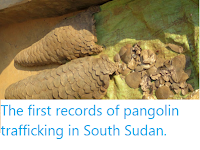
The primary Mukula extraction areas on the Katanga Plateau in Southern Democratic Republic of Congo, and the Mamba Region and Northwest Region in Zambia are located in landlocked forests, forcing traffickers to pass through several countries in order to reach a port from where the timber can be shipped to China, and, to a lesser extent, Vietnam. As with other Rosewood species, Mukula trade appears to be linked to illegal trade in endangered animal parts, and there are indications that routes used by wildlife traffickers to supply Asian markets are the same for animal and timber products. In late 2016, Chinese customs officials seized a 2.9-tonne shipment of Pangolin scales hidden in a container of African timber. In Namibia, a Chinese national identified as the owner of a key export logistics company for Angolan and Zambian timber clients has also repeatedly been linked to traffic in Rhino horn and animal skins.
The acceleration of the clandestine plundering of the forests in Zambia over the past two years and the likely resurgence of illegal trade in the Democratic Republic of Congo in 2019 is putting the populations of Mukula in the region in an extremely vulnerable situation.
Traffickers expect the species to go commercially extinct in the near future. Little if any benefit from the current Mukula rush is coming back to the forest communities and the population at large either in Zambia or the Democratic Republic of Congo.
In order to stop the current crisis, the Environmental Investigation Agency recommends that interested parties should Support the proposal by Malawi to include Mukula, Pterocarpus tinctorius, in CITES Appendix II, and consider a genus-wide listing of look-alike species of Pterocarpus on Appendix II using an annotation that facilitates proper enforcement.
See also...


.jpg)


.png)


%20(1)%20(1).png)