Thursday, 4 December 2014

A new species of Pig from the Late Miocene of Chad.


Pigs have been important parts of African faunas from the Miocene onwards, and have been extensively used to interpret environments and date strata. Unfortunately a large number of taxa have been erected from limited and fragmentary material, which has led to doubts about several interpretations of Miocene and Pliocene deposits that were initially based upon data from Pigs. The genus Nyanzachoerus was initially described in 1958 by Louis Leaky, and currently contains at least eleven species, though it is likely that this is an overestimation of true diversity, as many species were erected on very limited material.

In a paper published in the journal PLoS One on 27 August 2014,  Jean-Renaud Boisserie of the Institut de paléoprimatologie, Paléontologie Humaine: Évolution et Paléoenvironnements at the Université de Poitiers, Antoine Souron, also of the Institut de paléoprimatologie, Paléontologie Humaine: Évolution et Paléoenvironnements at the Université de Poitiers and of the Human Evolution Research Center at the University of California, Berkeley, Hassane Taïsso Mackaye and Andossa Likius of the Département de Paléontologie at the Université de N’Djamena, Patrick Vignaud, again of the Institut de paléoprimatologie, Paléontologie Humaine: Évolution et Paléoenvironnements at the Université de Poitiers and Michel Brunet, also of the Institut de paléoprimatologie, Paléontologie Humaine: Évolution et Paléoenvironnements at the Université de Poitiers and of the Collège deFrance, describe a new species of Nyanzachoerus from Toros-Ménalla, a fossil producing area in the northern Lake Chad basin, about 500 km northeast of N’Djamena.

The new species is named Nyanzachoerus khinzir, meaning ‘Pig’ in Chadian dialect Arabic. Boisserie et al. were cautious about erecting about erecting a new species of Nyanzachoerus, due to previous over-description of species within the genus, and because the site has previously been interpreted as being chronologically and environmentally similar to sites producing the widespread species Nyanzachoerus syrticus. However the site has now yielded a total of 280 specimens, including six well preserved crania (skulls), and this interpretation is no longer possible, due to its distinctive dentition.

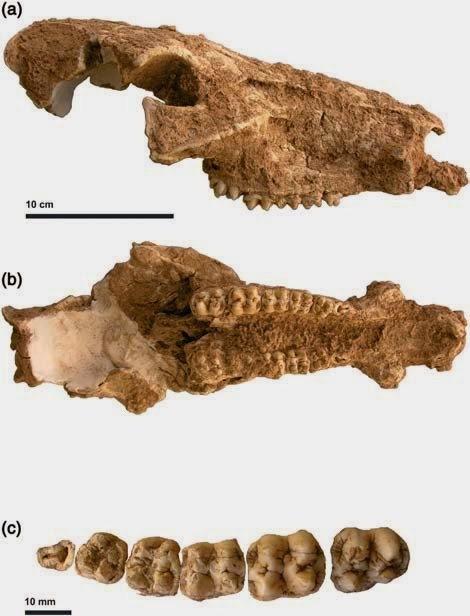
Partial cranium of Nyanzachoerus khinzir.(A) Lateral view; (B) ventral view; (C) nuchal view; (D) occlusal view of left P3-M3. Scale bars equal 10 cm (A–C) and 5 cm (D). Boisserie et al. (2014).

The Toros-Ménalla locality has produced remains of Hippopotamuses, Elephants, Bovids, Anthracotheriids (explain), Birds, Carnivores and Fish as well as the Hominid Sahelanthropus tchadensis, currently the earliest known member of the group. Correlation of the fauna with that at other sites suggests that the Toros-Ménalladeposits are between 7.4 and 6.6 million years old, while attempts at radiocarbon-dating the Hominid producing localities here have yielded results of between 7.2 and 6.8 million years old and between 7.5 and 7.1 million years old.

Crania of Nyanzachoerus khinzir.(A–C)Male partial cranium in dorsal (A), lateral (B), and rostral (C) views; (D–E) ventral view of female partial cranium in ventral (D) and lateral (E) view; (F–G) male partial cranium in dorsal (F) and lateral (G) views; (H) rostral portion of palate ventral view. Scale bars equal 10 cm (A–G) and 5 cm (H). Boisserie et al. (2014).

An isotopic analysis of specimens of Nyanzachoerus khinzir suggests that had a mixed diet, but likely to include a considerable amount of grass, probably feeding largely in a wetland environment. Combined with previous data on fauna from the area, Boisserie et al. suggest that in the Late Miocene the Toros-Ménalla area may have been similar to the modern Okavango Delta in Botswana.

Mandibles of Nyanzachoerus khinzir.(A–C) male in dorsal (A), lateral (B), and occlusal view of right p2-m3 (C); (D–F) female mandible in dorsal (D), lateral (E), and occlusal view of right p2-m3 (F).Scale bars equal 10 cm (A–B, D–E) and 2 cm (C, F). Boisserie et al. (2014).

See also…

The Chacoan Peccary (Catagonus wagneri) was first recorded from pre-Columbian archaeological sites in northern Argentina in 1930, and subsequently found to be still living in the dry Chacos thorny forests of northern Argentina, western Paraguay and southeastern Bolivia in the 1970s. The Chacos Forests are hot and dry, with average annual temperatures over 24˚C and average annual rainfall between 80 and 800 mm. The two...


Pigs (Suidae) are found throughout the Old World. They are members of the Artiodactyla, the group that also includes Cattle, Deer and Antelopes (and, curiously, Whales), though they are considered less highly derived than other members of the group, lacking a rumen (additional stomach compartment) and retaining four toes on each foot (though two of these are...


Follow Sciency Thoughts on Facebook.

Asteroid 2014 WZ120 passes the Earth.

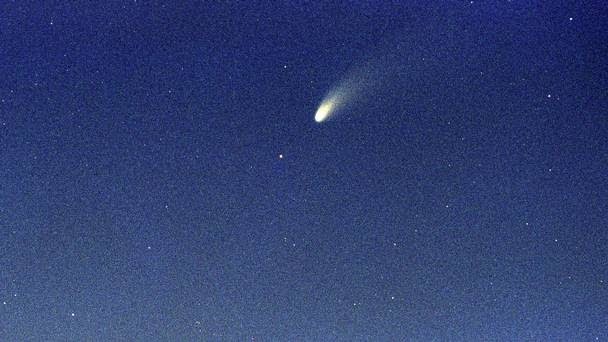
Asteroid 2014 WZ120 passed by the Earth at a distance of about 7 019 000 km (18.26 times the average distance between the Earth and the Moon, or 4.7% of the average distance between the Sun and the Earth), at about 4.10 am GMT on Wednesday 3 December 2014. There was no danger of the asteroid hitting us, though were it to do so it would have presented a serious threat. 2014 WZ120 has an estimated equivalent diameter of 160-490 m (i.e. it is estimated that a spherical object with the same volume would be 160-490 m in diameter), and an object of this size would be predicted to be capable of passing through the Earth's atmosphere relatively intact, impacting the ground with an energy equivalent to about 80-4000 megatons of TNT (roughly 4700-235 000 times the energy of the Hiroshima bomb). Such an event would result in a crater between 2.5 and 8 km across, cause devastation on a global scale and would have the potential to affect the climate globally for decades after the impact event.

 The calculated orbit of 2014 WZ120. JPL Small Body Database Browser.

2014 WZ120 was discovered on 21 November 2014 (thirteen days before its closest approach to the Earth) by the University of Arizona's Catalina Sky Survey, which is located in the Catalina Mountains north of Tucson. The designation 2014 WZ120 implies that it was the 3025th asteroid (asteroid Z120) discovered in the second half of November 2014 (period 2014 W).

2014 WZ120 has a 1203 day year orbital period and an eccentric orbit tilted at an angle of 21° to the plane of the Solar System, which takes it from 0.79 AU from the Sun (i.e. 79% of the average distance at which the Earth orbits the Sun) to 3.63 AU from the Sun (i.e. 363% of the average distance at which the Earth orbits the Sun, considerably more than twice the distance at which the planet Mars orbits the Sun). It is therefore classed as an Apollo Group Asteroid (an asteroid that is on average further from the Sun than the Earth, but which does get closer). This means that close encounters between the asteroid and Earth are fairly common, with the next predicted in April 2140. As an asteroid on a trajectory which brings it extremely close to Earth which is large enough to cause serious harm should it collide with Earth it is also classified as a Potentially Hazardous Asteroid.

See also...

 Asteroid 2014 WH6 passed by the Earth at a distance of 11 200 000 km (29.13 times the average distance between the Earth and the Moon, or 7.5% of the average distance...

Asteroid 2014 WF201 passed by the Earth at a distance of 2 398 000 km (6.24 times the average distance between the Earth and the Moon, or 0.016% of the average distance...
The Irish Astronomical Association has reported a fireball over County Antrim in Northern Ireland at about 5.30 pm GMT on Tuesday 18 November 2014. The meteor was reportedly brighter than the Moon, and...
 
Follow Sciency Thoughts on Facebook.
 

A new species of Glassperch from West Kalimantan, Borneo.


Glassperch, Gymnochanda, are small Perciforme Fish (seldom more than 30 mm) found in still pools close to swamp forest and riverine ecosystems on Borneo, Sumatra, Peninsula Malaysia and Belitung Island. They are scaleless and transparent and show high levels of sexual dimorphism, with the females tending to be inconspicuous but the males having elongated fin rays and bright fin colouration.

In a paper published in the Raffles Bulletin of Zoology on TanHeok Hui and Kelvin Lim Kok Peng of the Lee Kong Chian Natural History Museum and the Faculty of Science at the National University of Singapore describe a new species of Glassperch from West Kalimantan State (Indonesia) on Borneo.

The new species is named Gymnochanda ploegi, in honour of the late Alex Ploeg, former Secretary General of the Ornamental Fish International, who perished on Malaysia Airlines Flight MH17, which was shot down over Ukraine on 17 July 2014, for his work as a taxonomist and conservationist, particularly in the field of alien aquatic species, and his services to the ornamental fish trade. The species is described from 32 specimens gathered by local collectors for the ornamental fish trade, apparently the first time this fish has been collected.

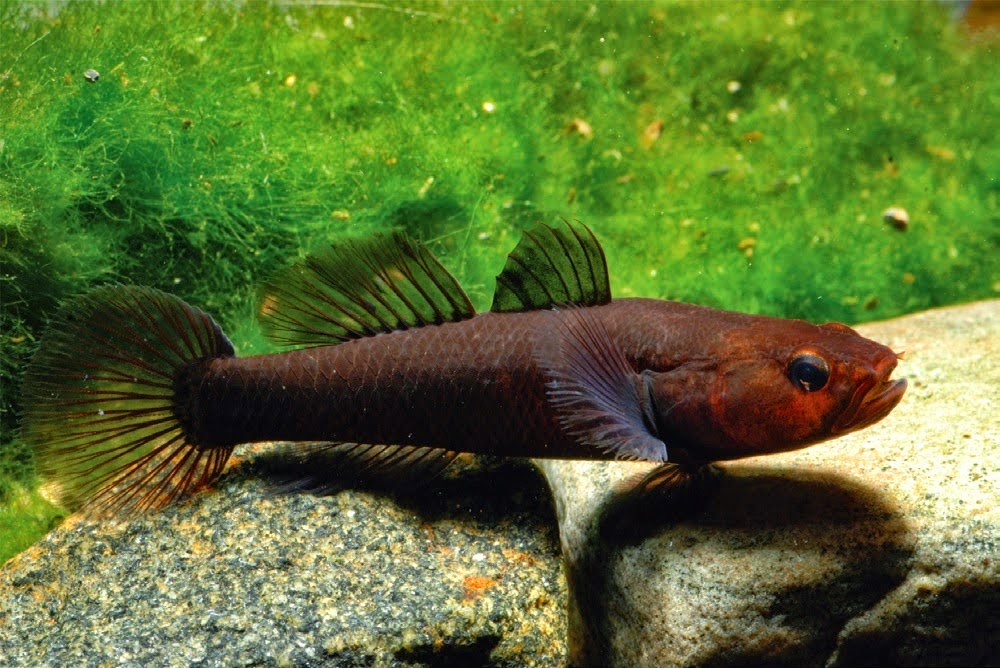
Gymnochanda ploegi, male specimen in lateral view. Tan & Lim (2014).

The specimens range from 23.9 to 27.5 mm in length. The males have red and black pigmentation on their heads, particularly around the lips and snout, and similar colouration on the fins and in dark bars on the bodies. The females have similar colouration but with less black.

Gymnochanda ploegi, female specimen in lateral view. Tan & Lim (2014).

The specimens were collected from still pools in the Sanggau and Kapuas Lakes regions in West Kalimantan. The area from which they were collected was apparently remote, and took several hours trek to reach.

See also…

Gobies are small, benthic (bottom dwelling) members of the Perch Order, found in marine and freshwater environments around the world, but most numerous and diverse in the Indo-Pacific region. There are...

Cavefish (Amblyopsidae) are a group of predominantly cave-dwelling Perciform Fish from North America. Of the eight currently described species three are found at the surface, predominantly around springs...


The Cichlid Fish genus Chalinochromis is endemic to Lake Tanganyika in East Africa. To date two species have been formally described, Chalinochromis...


Follow Sciency Thoughts on Facebook.

Magnitude 3.3 Earthquake in Victoria State, Australia.

The United States Geological Society reported a Magnitude 3.3 Earthquake at a depth of 10 km in the Shire of Cardinia in Victoria State, Australia, at about 6.05 am local time on Thursday 4 December 2014 (about 7.05 pm on Wednesday 3 December GMT). A quake of this size is highly unlikely to have caused any damage or injuries, but is large for the area, and people reported feeling it as far away as Melbourne, about 50 km to the northwest.

The approximate location of the 4 December 2014 Shire of Cardinia Earthquake. Google Maps.

Victoria is located far from any active tectonic boundary and is not an obvious place to expect earthquakes. The convergent boundary between the Pacific and Australian Plates is at its closest in South Island, New Zealand. The boundary with the Antarctic Plate far to the south is a divergent margin, which is slowly pushing Australia to the north, which accounts for some tectonic stress in the region.

More relevantly, the geology of the east of Victoria is dominated by ancient fold mountains, formed by pressure on the rocks during the assembly of the ancient supercontinent of Pangea during the Palaeozoic. This caused the flat layers of rock in the Earth's crust too fold up to form mountains, in much the same way as a piece of paper pushed from both ends. These mountains have largely eroded away today, but the layers of rock beneath eastern Victoria are still folded, stacked up against one-another rather than laid flat on top of one-another. This is a less stable arrangement, so tectonic pressures can lead to larger quakes here than might otherwise be expected.
See also...

http://sciencythoughts.blogspot.co.uk/2014/11/melbourne-woman-swallowd-by-3-m-sinkhole.html
Melbourne woman swallowd by 3 m sinkhole.
 A woman had to be rescued by firefighters after being swallowed by a sinkhole while hanging out washing in her garden on Tuesday 25 November 2014. Christina Beaumont fell into the hole at about 11.30 am local time in the Springvale South area of the city, and had to...


he town of Morwell roughly 100 km to the east of Melbourne in southern Victoria, Australia, is still blanketed in smoke three weeks after a fire was deliberately started at the GDF Suez Australian...


 A few minutes before 9 pm local time on Tuesday 19 June 2012 (slightly before 11 am GMT) the Australian state of Victoria was shaken by an Earthquake centered roughly 120 km east of the state capitol, Melbourne, and measured by Geoscience Australia as measuring 5.3 on the Richter Scale and occurring at a depth of 10 km. There are no reports of any serious damage or casualties, but a number of buildings are reported to have suffered minor damage, and there are concerns...


Follow Sciency Thoughts on Facebook.
 

Wednesday, 3 December 2014

A new species of Fern-feeding Aphid from Thailand.


Aphids are small Hemipteran Insects (True Bugs) that live on plants, draining sap with specialized mouthparts. They can reproduce extremely rapidly as they are capable of reproducing asexually, with females giving birth to young without the need for sex; a sexual phase is usually present, but tends to occur only once per year, with several intermediate generations, this sexual phase tends to be winged, while the asexual phase is not. Most Aphids feed on Angiosperms (Flowering Plants), but about 66 species in 18 genera are known to feed on Ferns. Some of these are Angiosperm-feeding species which target Ferns opportunistically, but most appear to be Fern specialists. The genus Micromyzus comprises about 10 species of Fern-feeding Aphids from Southeast Asia; it is probably closely related to the similar genus Micromyzella which comprises 12 species from southeast Africa, Indonesia and the Phillipines.

In a paper published in the journal ZooKeys on 21 November 2014, Ewa Mróz of the Department of Zoology at the University of Silesia, Łukasz Depa and Taksin Artchawakom of the Sakaerat Environmental Research Station and Jacek Gorczyca, also of the Department of Zoology at the University of Silesia, describe a new species of Micromyzus from Sakaerat Environmental Research Station, a small preserve containing dry evergreen forest, dry Dipterocarp tropical forest, bamboo forests, forest plantations and grasslands on the edge or the Khorat Plateau in Nakhon Ratchasima Province, about 300 km northeast of Bangkok.

The new species is described from six apterous (wingless) and two alate (winged) females collected from shoots of the Fern Platycerium coronarium. It is named Micromyzus platycerii, in reference to the host plant. The apterous females are 2.16–2.68 mm in length the alate females are 1.95 and 1.97 mm in length, both are brown in colour.

Microscopic slide of apterous viviparous female of Micromyzus platycerii. Mróz et al. (2014).

Microscopic slide of alate viviparous female of Micromyzus platycerii. Mróz et al. (2014).

See also…

Leafhoppers are small members of the True Bug order Hemiptera, closely related to Cicadas. They are typically small and inconspicuous as individuals, seldom more than a few millimetres in length, but in large numbers...


 Froghoppers (Cercopoidea) are small members of the True Bug order (Hemiptera), related to Cicadas (Cicadoidea), Leafhoppers and Treehoppers...

Cicadas (Cicadoidea) are large members...
 
 
Follow Sciency Thoughts on Facebook.

Tuesday, 2 December 2014

Thirteen new species of deepwater Sponges from the Caribbean Netherlands.


The shallow water reefs around Bonaire and Klein Curaçao in the Caribbean Netherlands are well studied and are considered a biodiversity hotspot, but the deeper reefs of the area are almost unknown, having been surveyed only once in 2000 by a group bioprospecting for medically interesting taxa. The Netherlands is committed to protecting and managing offshore ecosystems in the Caribbean Netherlands as part of the Exclusive Economic Zone management plan, but without a detailed understanding of the regions biodiversity this is impossible.

In a paper published in the journal Zootaxa on 29 October 2014, RobVan Soest of the Department of Marine Zoology at the Naturalis BiodiversityCenter in Leiden, Erik Meesters of the Institute for Marine Resources andEcosystem Studies in Den Helder and Leontine Becking of the Department ofEnvironmental Science, Policy and Management at the University of California,Berkeley describe thirteen new species of Sponges from deepwater reefs around Bonaire and Klein Curaçao in the Caribbean Netherlands, discovered in a series of dives by a submersible Curasub, operating from the RV Chapman as part of the Bonaire Deep Reef Expedition of 2013, carried out by the Institute for Marine Resources and Ecosystem Studies at the request of The Netherlands Ministryof Economic Affairs.

The first new species described is placed in the Homoscleromorph genus Plakinastrella and given the specific name stinapa in honour of the Stichting Nationale Parken, a non-governmental organisation managing and conserving the Bonaire National Marine Park. Plakinastrella stinapa is described from a single specimen collected from a limestone rockwall at a depth of 242 m off the coast of Bonaire. The specimen is a thick encrusting sponge, grey green in colour and covering an area of 10 x 15 cm. It had a skeleton composed of calthrops (four pointed elements), triods (three pointed elements) and diods (two pointed elements). There are twelve previously described species of Plakinastrella, of which three have been found in the Western Atlantic; from the Caribbean and off the coasts of the Carolinas and Brazil.

Plakinastrella stinapain situ on limestone rockwall west of Bonaire. Van Soest et al. (2014).

The second new species described is placed in the Demosponge genus Pachastrella and given the specific name pacoi, in honour of Paco Cárdenas, for his work on the taxonomy of tetractinellid sponges. Pachastrella pacoi is described from three specimens, one from limestone rockwall at a depth of 232 m off the coast of Cargill on Bonaire, one from sand at the base of a limestone rockwall at a depth of 159 m off the coast of Curoil Dock on Bonaire, and a third from a depth of 203 m, also off Curoil Dock. The Sponge is variable in morphology, but tends to be roughly cup-shaped, with an irregular, bumpy outer surface and a smooth inner surface. The largest specimen was 16 cm in diameter and 15 cm high. The skeleton comprises a variety of spicule morphologies in a confused mass.

Pachastrella pacoi at the base of a limestone rockwall at a depth of 159 m off the coast of Curoil Dock on Bonaire. Van Soest et al. (2014).

The third new species described is placed in the Demosponge genus Characella, and given the specific name poecillastroides, for its plate-like shape, which is reminiscent of that common in the related genus Poecillastra. Characella poecillastroides is described from a single specimen, collected from a Coral rock wall at a depth of 168 m off Curoil Dock on Bonaire. The specimen formed a thick folded plate 2-4 cm thick and covering an area of 20 x 40 cm. It was beige in colour, though its surface was greyish due to adhered sediment. It has a skeleton largely of long, needle shaped elements called oxeas, but with other elements also present. The species resembles the Barbadian Poecillastra sollasi, which has been described as intermediate between Poecillastra and Characella, but is assigned to Characella on the basis of its skeletal elements.

Characella poecillastroidesin situ off the southwest coast of Bonaire. Van Soest et al. (2014).

The fourth new species described is placed in the Demosponge genus Geodia, and given the specific name curacaoensis, meaning ‘from Curaçao’. The species is described from a single specimen, collected from a Coral rock wall at a depth of 156 m off the southwest coast of Klein Curaçao, though it is thought likely that another specimen collected at a depth of 144-153 m off the coast of Paynes Bay in Barbados in 1978 also belongs to this species. The Klein Curaçao specimen is a spherical Sponge, 5.5 cm in diameter, grey white in colour but red on its upper surface.

Geodia curacaoensis on deck. Van Soest et al. (2014).

The fifth new species described is placed in the Dermosponge genus Caminus and given the specific name carmabi, after the Caraibisch Marien Biologisch Instituut at Piscadera Baai on Curaçao. The species is described from two specimens, the first collected at a depth of between 120 m and 137 m from sand on a rock wall off the coast of Kralendijk Pier on Bonaire, and the second from a coral rock wall at a depth of 198 m off the coast of Curoil Dock, also on Bonaire. These are spherical pink sponges with an opening with a raised rim, the larger being 7 x 4 x 4 cm and the smaller 5 x 2 x 2 cm. It has a dense layer of sterrasters (speherical skeletal elements) I its cortical (skin) layer, with other elements underneath to support its shape. This is only the second species of Caminus reported from the Western Atlantic, although the first species, Caminus sphaeroconia, has been recorded from Brazil, Puerto Rico, the Virgin Islands and Barbados.

Caminus carmabi, from a coral rock wall at a depth of 198 m off the coast of Curoil Dockon Bonaire. Van Soest et al. (2014).

The sixth new species described is placed in the Demosponge genus Discodermia, and given the specific name adhaerens, meaning ‘to cling to’, a reference to its encrusting growth habit. The species is described from a single specimen collected from a Coral rock wall at a depth of 146 m off the coast of Kralendijk Pier on Bonaire. Discodermia adhaerens is a bright orange encrusting sponge, 2-3 mm in thickness but spreading over several tens of centimetres of rock. It has a skeleton of closely packed, overlapping discotriaenes (disk-shaped skeletal elements).

Discodermia adhaerens, specimen on a Coral rock wall at a depth of 146 m off the coast of Kralendijk Pier on Bonaire. Van Soest et al. (2014).

The seventh new specimen described is placed in the Demosponge genus Clathria, and subgenus Microciona and given the specific name acarnoides, due to the presence of acanthocladotylote-shaped acanthostyles (long skeletal elements with numerous spiky projections), which have only previously been recorded in members of the genus Acarnus. The species is described from a single specimen collected from a coral rock wall at a depth of 152 m off the coast of Curoil Dock on southwest Bonaire. Clathria (Microciona) acarnoides is an orange encrusting Sponge that was found covering the shell of a Mollusc.

Clathria (Microciona) acarnoides  found covering the shell of a Mollusc on a coral rock wall at a depth of 152 m off the coast of Curoil Dock on southwest Bonaire. Van Soest et al. (2014).

The eighth new species described is placed in the Demosponge Genus Antho and subgenus Acarnia and given the specific name pellita, meaning ‘forming a skin’ in reference to its encrusting habit. The species is described from a single specimen found encrusting a larger Sponge at a depth of 108 m off the coast of Kralendijk Pier on Bonaire. It is red in colour and soft, about 2 m thick and covered an area of 11 x 6 cm of the surface of the other Sponge.

Antho (Acarnia) pellita encrusting on the base of Neopetrosia eurystomata.Van Soest et al. (2014).

The ninth new species is placed in the Demosponge genus Parahigginsia and given the specific name strongylifera, in reference to its strongyle megascleres (elongate skeletal elements). The species is described from a single specimen collected from a limestone rockwall at a depth of 238 m off the coast of Bonaire. Parahigginsia strongylifera is a pale blue encrusting sponge forming a series of cone-shaped lobes, roughly 1-2 cm high. This is only the second species of Parahigginsia described, the first, Parahigginsia phakelloides being known from New Zealand and New Caladonia, and having a lamellate (layered) growth form, forming lobes up to 14 cm high.

Parahigginsia strongyliferaon a limestone rockwall at a depth of 238 m off the coast of Bonaire.Van Soest et al. (2014).

The tenth new species described is placed within the Dermosponge genus Calyx and given the specific name magnoculata, in reference to its large and conspicuous oscules. The species is described from a single specimen collected at a depth of 232 m off the southwest coast of Bonaire. Calyx magnoculata is an encrusting Sponge roughly 2 cm thick, the specimen covering roughly 11 x 16 cm of rockface and being beige in colour. It has a skeleton of tightly knit overlapping oxeas (curved needle-shaped elements). Only a single species of Calyx has previously been reported from the Western Atlantic, Calyx podatypa, from deep water off Puerto Rico and Barbados.

Calyx magnoculata shortly after collection. Van Soest et al. (2014).

The eleventh new specimen described is placed in the Dermosponge genus Neopetrosia and given the specific name dutchi in honour of Adriaan ‘Dutch’ Schriers, the owner of the Curasub, the vehicle used in the study. The species is described from a single specimen collected from sand at a depth of 217 m off the southwest coast of Bonaire. The specimen consists of a clump of white lobes 35 x 35 x 30 cm found sitting on the sand surface. It has a skeleton formed of a mesh of oxeas (curved needle-shaped elements). It is thought that specimens previously collected from Barbados should also be referred to this species.

View of submarine with collected specimen of Neopetrosia dutchi. Van Soest et al. (2014).

The twelfth new species described is also placed in the genus Neopetrosia, and given the specific name ovata, meaning ‘ovate’, in reference to the shape of the shape of the Sponge. Neopetrosia ovata is described from a single specimen collected from sand at a depth of 149 m of the southwest coast of Klein Curaçao. The specimen is a pinkish beige egg-shaped Sponge 10 cm high and 8 cm in diameter. It also has a skeleton formed of a mesh of oxeas, though less organised than that of Neopetrosia dutchi.

Neopetrosia ovata on sand at a depth of 149 m of the southwest coast of Klein Curaçao. Van Soest et al. (2014).

The thirteenth new species is also placed in the genus Neopetrosia and given the specific name eurystomata, meaning wide-mouth. Neopetrosia eurystomata is described from three specimens, two collected from sandy rubble at depths of 108 and 111 m off the coast of Kralendijk Pier on Bonaire, and one collected from sand at a depth of 88 m off Curoil Dock on Bonaire. It is vase-shaped with a wide, flaring opening, more so in the larger specimens. The largest is 30 cm high and 18 cm in width.

Neopetrosia eurystomata on sandy rubble at adepth of 108 m off the coast of Kralendijk Pier on Bonaire. Van Soest et al. (2014).

See also…

Sponges (Porifera) are generally considered to be the oldest extant animal group, with a fossil record that extends considerably into the Precambrian; phylogenomic analysis suggests they are the sister group to all other animals, which also suggests an early origin for the group.

Chalinid Dermosponges are among the hardest Sponges to classify taxonomically due to their simple anatomies and variable morphologies. They are encrusting Sponges with skeletons made up of...
Theonellid Sponges are predominantly deepwater Sponges found across the globe, with a rigid skeleton made up of interlocking silica spicules. They are noted for the production of an array of unusual chemicals, the majority of which are thought to be produced by...
 
 
Follow Sciency Thoughts on Facebook.

Monday, 1 December 2014

Two new species of Protocetid Whales from the Eocene of Gujarat State, India.


The first Whale (Cetacean) fossils appear in the early Eocene of Pakistan and India,. Early groups of Whales such as the Pakicetids, Ambulocetids and Remingtonocetids were apparently restricted to the Indian continent (which was an island unconnected to Eurasia in the earliest Eocene). The first group of Whales to be found on other continent were the Protocetids, which have been recorded from Africa and North and South America as well as India and Pakistan, and are therefore thought to have been the first Whales to have been capable of ocean-crossing journeys.

In a paper published in the journal Palaeontologica Electronica in September 2014, Sunil Bajpai of the Department of Earth Sciences at the Indian Institute of Technology and HansThewissen of the Department of Anatomy and Neurobiology at Northeast Ohio MedicalUniversity describe two new species of Protocetid Whales from the Eocene Harudi Formation in Kutch District, Gujarat, both are thought to be about 42 million years old.

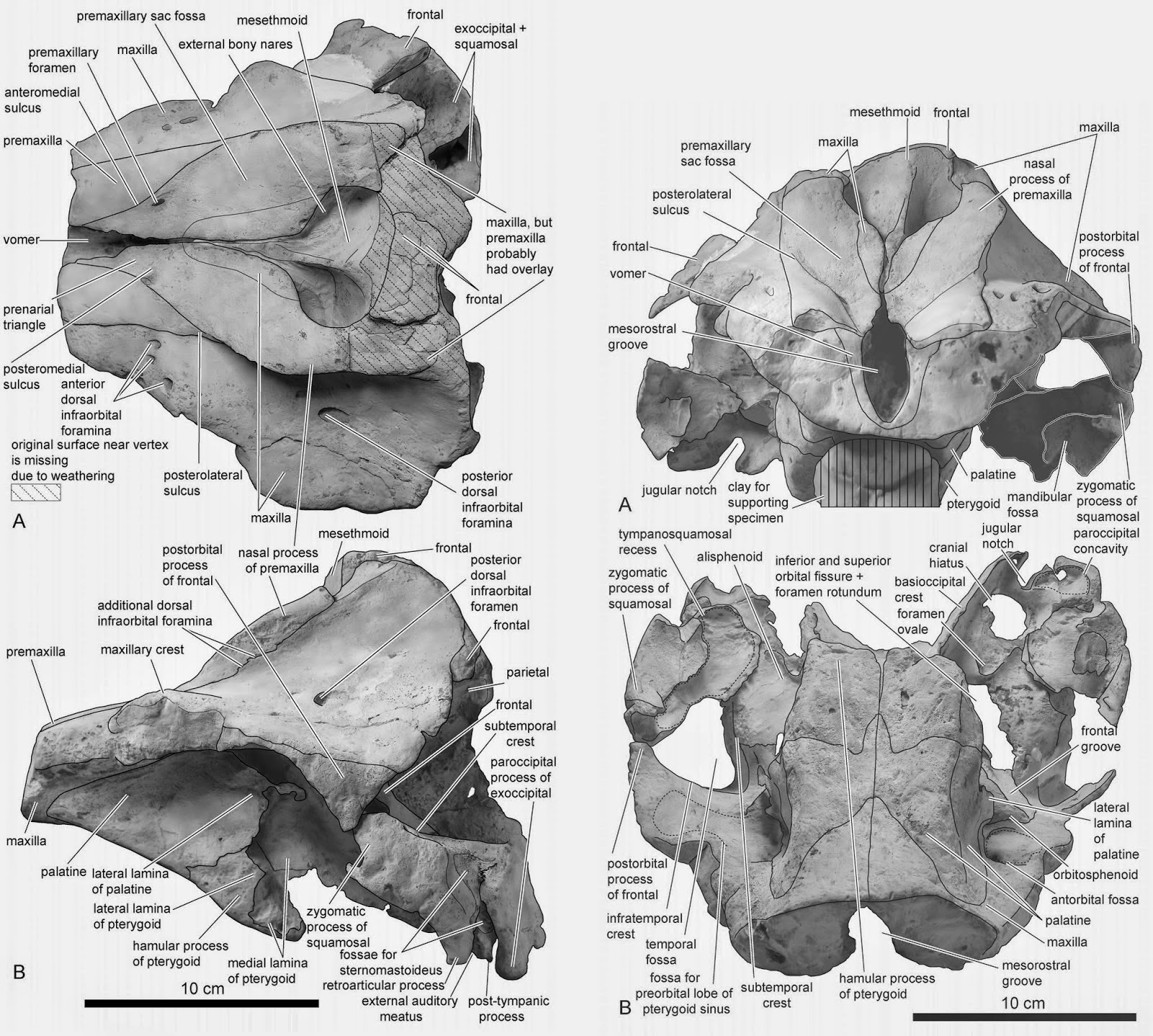
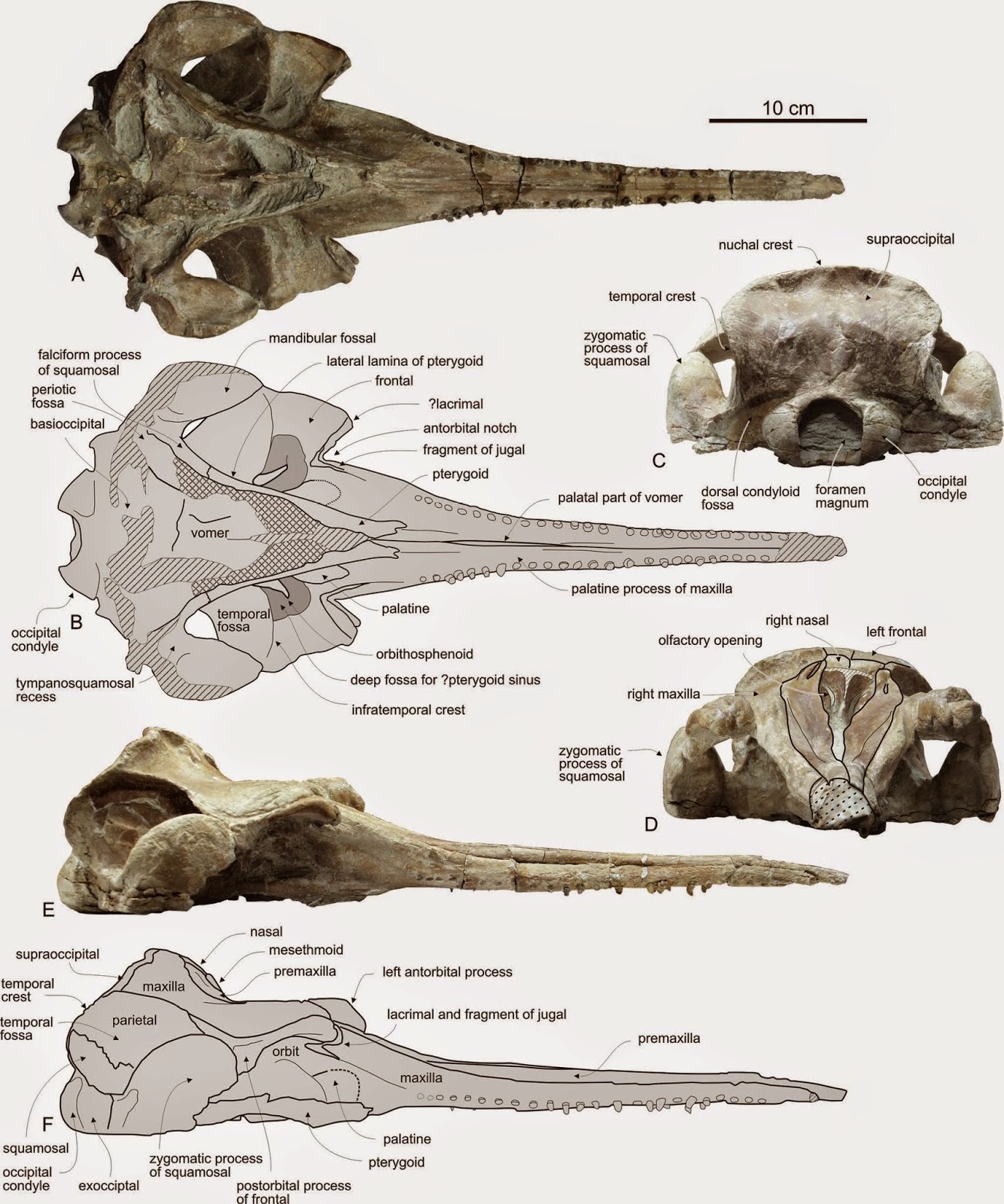
The first new species is named Kharodacetus sahnii, where ‘Kharodacetus’ means ‘Kharoda-Whale’ in reference to one of the locations that produced specimens assigned to this genus, and ‘sahnii’ honours the Indian palaeontologist Ashok Sahni. The species is described from a partial and fragmentary skull plus a detached rostrum and a partial mandible. Kharodacetus sahnii appears to have been larger and more robust than any other known Indian Protocetid.

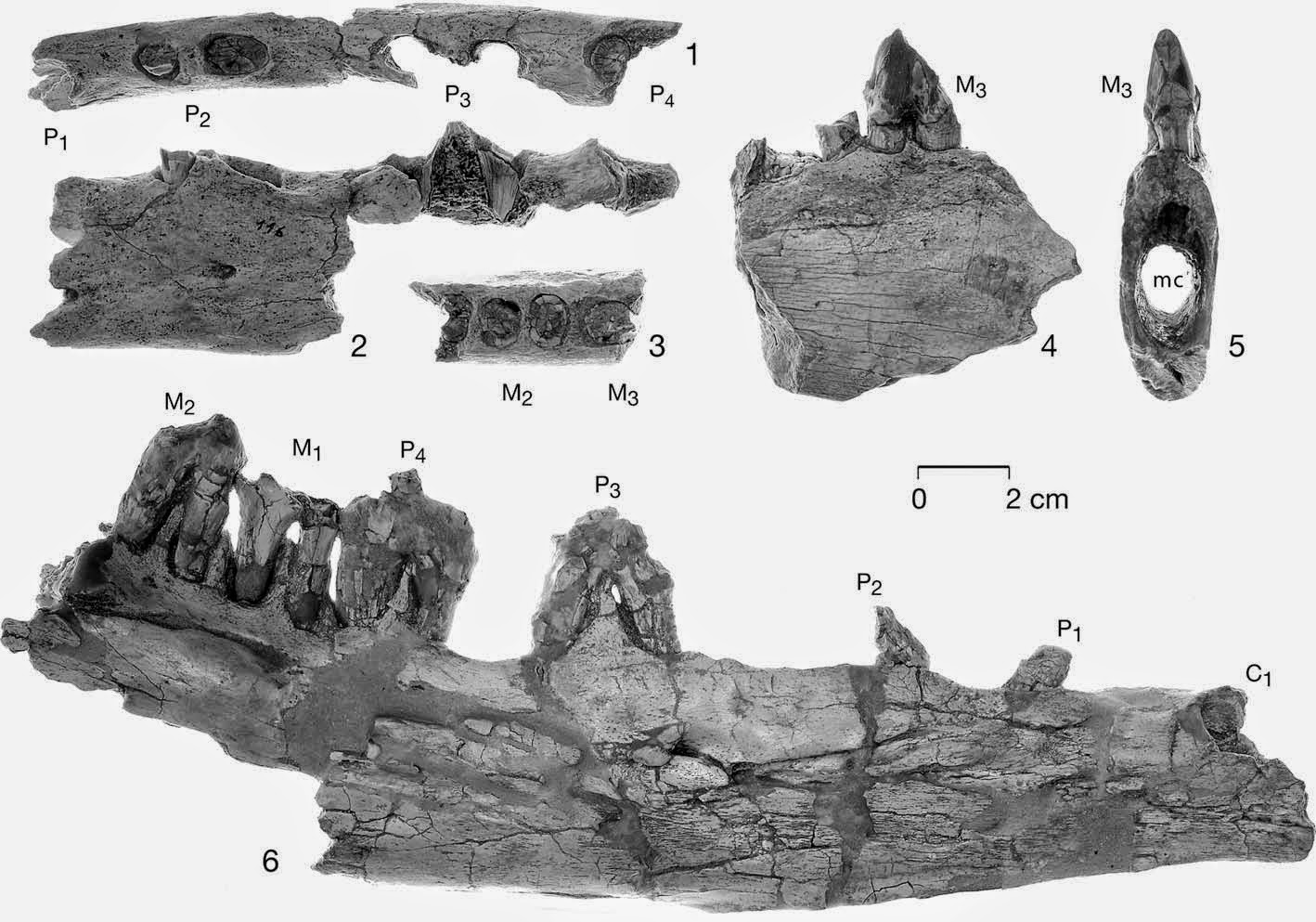
Kharodacetus sahnii. Rostrum in occlusal, right lateral, and dorsal view (1-3), and mandibles in left lateral and occlusal view (4-5). Bajpai & Thewissen (2014).

The second new species described is named Dhedacetus hyaeni, where ‘Dhedacetus’ means ‘Dhedadi-Whale’, in reference to the village of Dhedadi which is 2.1 km to the west of the site where the first specimen was found, and ‘hyaeni’ in reference to the Striped Hyenas that lived around the site where the first specimen was found. The species is described from a fragmentary partial skull with 29 fragmentary vertebrae and a separate series of 10 caudal (tail) vertebrae. It is a large Protocetid, but the smallest one yet known from Kutch, and the only one for which the vertebrae are known.

Dhedacetus hyaeni. Skull. (1-2) Right lateral view and its outline drawing. (3-4) Ventral view and its outline drawing. (5) Detail of caudal view of right maxilla with M2 roots, lateral to left, ventral to top. Abbreviations: alv. edge, edge of alveolar process of M2; ant. root M2, anterolabial root of M2; bul., bulla; ext. aud., external auditory meatus; lat. max., broken edge of maxilla lateral to molar roots; nuc. cr., nuchal crest; occ. con., occipital condyle; pal., palate, medial to teeth; pos. orb., postorbital process; post. root M2, posterolabial root of M2. Abbreviations for teeth (I1, C, P4, M2) refer to wns or roots preserved. Scale bar pertains to 1 through 4. Bajpai & Thewissen (2014).

See also…


The Earliest Whales appeared in what is now Pakistan and India at the eastern margin of the Tethys Sea then spreading along the southern margin of the Tethys...

Dolphins, Delphinidae, are the most diverse group of Whales (or indeed any form of Marine Mammals) alive today, with 36 described species including charismatic animals such as Bottlenose Dolphins and Killer Whales. Historically a large number of fossils have also been...
The Squalodelphinidae are a small group of small to medium-sized Toothed Whales known from the Miocene of Europe and North and South America. They are thought to be related to the modern Asian River Dolphin, Platanista gangetica, which lacks any close living relatives. The group is not well understood, with most described specimens being fragmentary in nature.
 
 
Follow Sciency Thoughts on Facebook.