Humans have been farming for about 12 000 years, a period which was preceded by hundreds of thousands of years of living a hunter/gatherer existence. It is logical to assume, therefore, that the social networking skills which made modern civilization possible developed largely before the event of farming. The advent of specialist hunting techniques such as net-hunting, which require advanced planning and co-operation between groups of hunters, and which can produce large amounts of meat in single events, are thought to have been a significant step in the development of Human social networks, connected to the emergence of social hierarchies and concepts of land ownership.
The lifestyle of Homo sapiens in East Africa from our emergence as a species onwards has been heavily investigated for decades, although curiously, despite the importance placed on the role of hunting as a driver of Human evolution by many early archaeologists, the techniques used to hunt have been relatively neglected, with an assumption that big game hunting was the dominant behaviour. Recent studies, however, have suggested that while big game hunting was important on the grassy plains of East Africa, in the coastal forests of the region, remote capture devices, such as snares, traps, or nets, used to target small Animals have been important for at least 125 000 years.
Given that such methods are thought to be closely associated with the emergence of social networks, the nature these hunting practices, and the ways in which they evolved over time, must be seen as an important part of the Human story. Examination of Later Stone Age sites in the semi-arid environment of southern Somalia, have shown that nets were being used to intensively hunt Dwarf Antelopes between about 26 000 and about 6000 years ago.
In a paper published in the journal Archaeological and Anthropological Sciences on 2 December 2023, Mica Jones of the School of Archaeology at the University of Oxford, presents the results of a study of Animal bones from the Late Pleistocene Guli Waabayo rock shelter in the Buur Heybe inselberg cluster, and the implications of this for the use of net-hunting by the Later Stone Age hunter/gatherers of the area.
Inselbergs are hills made from hard volcanic rock, which persists when other deposits are eroded away, typically forming elongate structures. In Somalia such structures are known as 'buurs', and in the inter-riverine region of southern Somalia, where rainfall is typically between 400 mm and 600 mm per year, clusters of these buurs can help to trap nutrient-rich soils and collect rainwater in pools and ponds, providing favourable habitats for a range of Plants and small Animals.
A previous study of the Rife Range Site at Buur Hakaba found that Later Stone Age hunters there specialised in hunting Dwarf Antelope, probably with nets, leading to the development of a more sedentary lifestyle and the holding of territories in the Early-to-Middle Holocene, a period of increased rainfall. However, the small number of remains recovered from this site, combined with an absence of dates, limits the usefulness of this study. The Guli Waabayo rock shelter at Buur Heybe, about 25 km to the northeast of Buur Hakaba, has yielded a much more extensive collection of Animal remains, combined with a series of robust dates, covering a period of 20 000 years, potentially enabling a good test site for hunting practices in the region before the start of the Holocene.

More than a hundred rock shelters and other archaeological sites have been identified in the inter-riverine region of southern Somalia since the 1930s. However, only three of these sites have been subject to any organised excavation work. The Gogoshiis Qabe site was excavated in the 1940s by the Italian archaeologist Paolo Graziosi. In the 1950s British archaeologist John Desmond Clark investigated the Guli Waabayo and Rife Range sites, establishing that there was a degree of cultural continuity between the two. Following Clark's activities, no further organised archaeological work was carried out in the region until the 1980s, when Steven Brandt and the Buur Ecological and Archaeological Project returned and carried out further excavations at all three sites. These excavations were brought to an abrupt halt with the onset of the Somali Civil War in 1989, although, with the consent of the Somali Academy of the Arts and Sciences, much of the excavated material was exported to the US, where it has been held in the collections of several institutions.
Jones examined the material brought back from Guli Waabayo to establish the identity of the small Antelope bones present; these had previously all been assigned to the genus Madoqua (Dik Diks), but this is not the only genus of small Antelopes in the Horn of Africa, and, since different Antelope have different ecologies, the identity of these bones has implications for the techniques which would have been effective when hunting them. Next Jones looked at the overall assemblage, and calculated the proportion of remains coming from each type of small Mammal, and then the proportion of each age-set within the overall sample.
Studying hunting methods used to on large prey can be achieved by looking at the weapons involved, or the use and modification of the landscape by the hunters, such as cliff jumps or kite structures. However, the study of how small game is hunted requires less direct approach, as such Animals are often captured with snares, nets, or traps made from perishable materials such as plant fibres, wood, or leather. In order to address this Zooarchaeologists have developed methods of analysing the ways in which people in the past hunted small game, based upon analysis of the variety of remains.
The composition of collections of small Animal remains will vary depending on the hunting method used. Studies conducted in places where net-drives (driving Animals into net traps) are still used, such as the Congo Basin, Australia, and the southwestern United States, has shown that this method will tend to target only one or two species, but will trap almost all members of those species within the target area. This method is most useful for targeting small Animals in forested, bushy or rocky habitats. Pursuit hunting and setting of individual traps such as snares both tend to produce a more diverse range of prey, which will be reflected in the bone assemblage left behind.
Furthermore, while net hunting captures individuals of all ages, both snare hunting and persuit hunting tend to produce a high proportion of remains from a single age group, since the young of small Animals generally lack the weight to trigger snares designed for adult Animals, and Humans hunting with bows or clubs will generally take a higher proportion of slower, juvenile Animals.
The excavations carried out at Guli Waabayo comprised 11 one metre by one metre pits, each excavated to a depth of 2.5 m. These uncovered a sequence of three Middle Stone Age/Later Stone Age technologies, although, the lower part of the exposed sequence could not be dated due to an absence of Animal remains. Dates were obtained from Ostrich shell fragments for the upper 1.5 m of the sequence, demonstrating at least sporadic occupation of the shelter from 26 000 to 6000 years ago. Two distinct Later Stone Age technologies could be seen within the sequence, the Eibian, which was used during the arid Marine Isotope Stage 2 from about 29 000 to about 14 500 years ago, and the Bardaale, used in the wetter African Humid Period from about 14 500 to about 6000 years ago.
Analysis of the faunal remains found at Guli Waabayo showed that Later Stone Age hunters across the Pleistocene/Holocene boundary targeted a diverse range of game, including large and small Mammals, Birds, Reptiles, and Fish, although they had a clear preference for Mammals massing less than 20 kg. This preference for small Mammals seems to have increased slightly in the African Humid Period, although this change in climate appears to have made relatively little difference to the site's occupants, probably because the African Humid Period was a lot less pronounced in southern Somalia than in other areas.
Of the bones present at Guli Waabayo, 3104 could be identified as coming from small Mammals, with 2111 identifiable to a lower taxonomic level. Of these 1263 have previously been identified as coming from Dwarf Antelope, with the assumption that they originated from Dik Dik. However, this assumption was never actually put to the test, and there is another form of Dwarf Antelope present in the Horn of Africa, the Suni, Neotragus moschatus.
Jones selected all of the first phalanges assigned to Dwarf Antelopes in the Guli Waabayo collection, and compared them to first phalanges from Dik Dik and Suni in the collection of the Field Museum in Chicago. The size ranges of the first phalanges did not overlap, and all of the specimens from the Guli Waabayo collection conformed with the Dik Dik form, although it was not possible to tell which species of Dik Dik they belonged to.
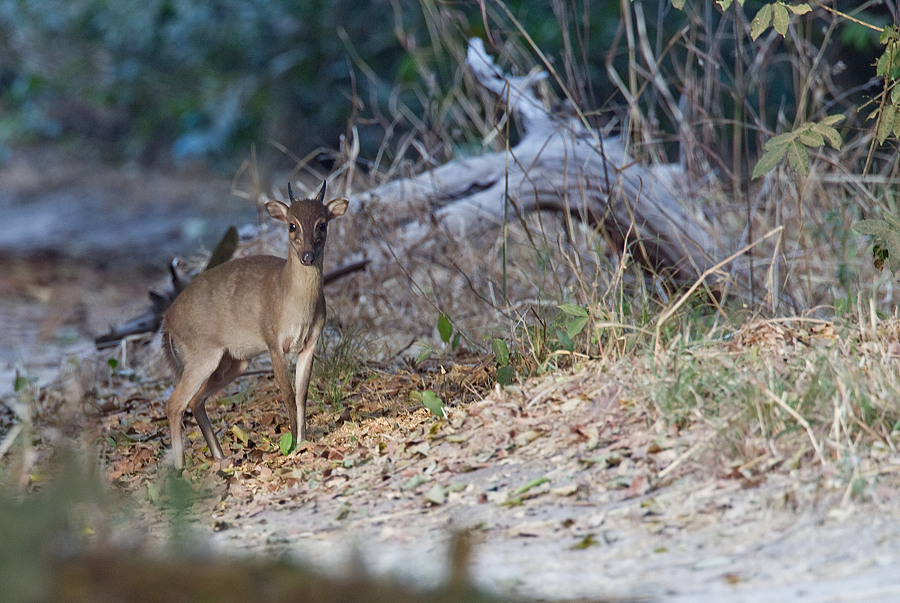
The Dik Dik genus, Madoqua, first appears in the fossil record in the Miocene. There are four living species within the genus, Madoqua guentheri, Madoqua saltiana, and Madoqua piacentinii are endemic to the Horn of Africa, while the fourth, Madoqua kirkii is found from Somalia south to Tanzania and eastern Uganda, as well as on the west coast of Southern Africa in Namibia and Angola. All species favour rocky environments with low thicket vegetation, with the inselbergs of southern Somalia providing an excellent environment, that today supports a large population of Dik Dik, which live in monogamous pairs, with each pair occupying and defending a territory with an area of about 1 km².

Dik Dik are not widely hunted in Africa today, although in places they are targeted for their meat and skins, which are used to make gloves and cloaks. The Hadza people of northern Tanzania occasionally hunt Dik Dik with bows and arrows, while the Mukogodo people, who lived in the area around Mount Kenya in the eighteenth century are believed to have hunted Dik Dik both with snares and by stalking.
Modern Somali pastoralists have been recorded to chase down Dik Dik, which seems surprising, given that these Dwarf Antelopes can reach speeds of about 42 km per hour, but is possible because they are so reluctant to leave their territories that they will often run around the perimeter when chased, allowing much slower Human pursuers to keep them in sight until they become exhausted and are easily captured. In the 1940s and 1950s several agropastoralist groups in Somalia were reported to capture Dik Dik in net hunts.
During these hunts, the men used nets about 5 m in length, strung between 2 m long poles. These nets would be used to create semi-circular traps, into which Dik Dik could be driven by men and Dogs, before being dispatched with bows and arrows, a methodology which could conceivably have been used by Later Stone Age hunters in the same region.
Having established the Small Antelope remains at Guli Waabayo came from Dik Dik, Jones next sorted the remains into age groups, based upon examination of complete and partial tooth rows, as well as loose lower 3rd molars and 4th premolars. The dental aging of modern Dik Dik has not been extensively studied, but it was still possible to separate the remains into juvenile, older juvenile, adult, and older adults, based upon the relative eruption and wear seen in the teeth.

Dik Dik remains dominated the faunal assemblage at Guli Waabayo in both Marine Isotope Stage 2 and the African Humid Period. Roughly twice as many remains assignable to Madoqua were found in Marine Isotope Stage 2 selection as in the African Humid Period selection, but this was also true of other Animals present, ab probably reflects the fact that Marine Isotope Stage 2 lasted about 14 000 years, while the African Humid Period lasted only about 6000 years. Nevertheless, the proportion of the assemblage made up by Dik Dik bones did increase, from 55.2% in Marine Isotope Stage 2, to 71.9% in the African Humid Period.

In both intervals, the age-profile of the Dik Dik remained fairly constant, with all age groups present, but adults making up almost half of the assemblage in both cases, while the other three age groups each made up between 13.3% and 21.3% of the assemblage, although Jones notes that the sample size is very small for the African Humid Period, which may mask greater variation than is recorded.

There was a relatively high proportion of Carnivore remains in both Marine Isotope Stage 2 (4.4%) and the African Humid Period (5.4%). This could potentially indicate that the site had at times been occupied by Carnivores (for example Hyenas), and that they would have been responsible for some of the other remains present. Signs of such denning behaviour are considered to include juvenile Carnivore bones, gnaw marks on the bones of other Animals. Of 88 identified small Carnivore bones present in the total collection from Guli Waabayo, only three had unfused epiphyses (two from indeterminate Carnivores and one from a small Felid). In addition a mandible was identified with an erupting third molal (a sign that it came from a juvenile Animal), which could be assigned to a Dwarf Mongoose, Helogale sp.. No bones could be attributed to juvenile medium or large Carnivores, such as Hyenas or Lions, and no neonatal Carnivore bones of any type were found. A single Dik Dik bone from Marine Isotope Stage 2 showed signs of gnawing, but this was clearly by a Rodent Three Dik Dik bones from the African Humid Period also showed signs of gnawing, with two of these again clearly having been gnawed by Rodents. Conversely, none of the Dik Dik bones showed signs of butchery with tools, although this would not typically be expected with the bones of an Animal this small. Signs of burning, another clear indicator of a Human predator, were found on 12.3% of the Marine Isotope Stage 2 Dik Dik remains, and 7.8% of the African Humid Period Dik Dik bones.
Jones's investigation confirmed that Later Stone Age hunters had extensively targeted Dik Dik, small territorial Bovids, during both Marine Isotope Stage 2 and the African Humid Period, something in line with previous research at the site. However, unlike previous researchers, Jones did not concentrate on the toral diversity of remains at the site, but specifically upon the most abundant item, the Dik Dik, with a view to understanding the importance of these Antelopes to Later Stone Age hunting communities in the area. The evidence strongly suggests that the people here became specialist hunters of Dik Dik during the arid Late Pleistocene.
This is different to the pattern observed at the Riffle Range Site, where a specialisation in net-hunting of Dik Dik appears to have developed during the African Humid Period, alongside a more general shift towards a more settled lifestyle and the permanent holding or territory by Later Stone Age groups. At Guli Waabayo the proportion of Dik Dik among the Animal remains increased in the African Humid Period, suggesting that they became a more important resource during this time, but they were clearly already a major prey species in Marine Isotioe Stage 2. This suggests that the change in climate did not provoke a major change in hunting methods or other behaviours at Guli Waabayo. This raises the possibility that the apparent change in behaviour at the Riffle Range Site 12 000 years ago may be actually indicate that the site was only sporadically inhabited prior to this, or simply that earlier remains have not been preserved. An increase in usage of the Riffle Range Site during the Holocene appears to be the more likely scenario, but why that should be is unclear.
The hunters of Guli Waabayo appear to have taken far more Dik Dik than any other Animal, even similar sized small Mammals, such as Hares or Hyraxes. Thus suggests that they had developed a specialised hunting technique which enabled them to reliably capture large numbers of Dik Dik, bur which did not work as readily on other prey. Furthermore, the Dik Dik remains have a distinct age profile, with all age groups present but adults being the most abundant. Based upon studies of modern Dwarf Antelope hunters, the most likely explanation for this is that communal net drives were used to target Dik Dik on a regular basis, but that other hunting methods were also used to catch other prey.
The selection of faunal remains present at Guli Waabayo makes it likely that both snare and pursuit hunting were also practiced, but the large proportion of Dik Dik in the remains cannot be explained by this. Snares will tend to target a range of Animals of the same size, including small Carnivores, which are present in the Guli Waabayo assemblage, but do not tend to capture juvenile Animals, which are typically too small to trigger them. Had snares been the primary hunting method at Guli Waabayo, then the overall assemblage of Animals would have been more varied, without any single species dominating, and juvenile Dik Dik would have been largely absent. Pursuit hunting, in contrast, tends to produce a far higher proportion of juvenile Animals, which are easier to run down, but again does not tend to produce an assemblage dominated by a single species.
The bone assemblage from Guli Waabayo was accumulated over thousands of years, making it unlikely that all of the Dik Dik remains there are the result of a single hunting method. Nevertheless, it does appear likely that net hunting played a significant role in the life of Later Stone Age hunters in the region.
The most egalitarian hunter/gatherer societies tend to invest little effort in the manufacture of material goods. However, as societies become more complex, an increasing emphasis is placed upon resource management, and delayed-return technologies, which ensure the future supply of food. Such technologies include both devices used to store food, and to capture Animals for consumption, and are in turn associated with a decrease in mobility, with groups tending to remain in one place for longer. In environments with strong seasonal variations in the availability of food, this can lead to the development of flexible political systems or large resource-sharing networks.
The Holocene Kansyore people of the Lake Victoria Basin are known to have used pottery and Fish weirs d to exploit seasonal Fish stocks, a specialization which resulted in long-term occupation of sites, and presumably a sense of ownership of those sites. The connection between subsistence, land use, and technology during earlier periods in East Africa is less clear, although the specialisation in hunting Dik Dik in the pre-Holocene Later Stone Age at Guli Waabayo suggests that these people had developed a lifestyle in Marine Isotope Stage 2 which was tied to long term resource management within a single environment, and the use of specialist equipment, in the form of nets, which would have required considerable investment in time to construct and maintain.
The traditional view of Late Pleistocene hunters in East Africa has been one of highly mobile groups which placed an emphasis on the hunting of large game. However, the evidence from s coastal and forested regions suggests that small game may have been a far more important resource than was previously thought, to at least some groups of hunter/gatherers. The use of delayed-return hunting technologies, such as snares, traps, or nets, would have allowed more settled populations in coastal and forested environments, enabling a diversity of survival strategies to survive alongside one another in East Africa during the Late Pleistocene. The evidence for specialist Dik Dik hunting at Guli Waabayo adds to this understanding, giving an example of a community surviving in a semi-arid environment by adopting a more settled lifestyle and a specialist method of hunting.
Most hunting methods target one Animal at a time, but net drives can trap numerous Animals at the same time, potentially leading to surpluses of meat following the hunt. Among modern communities which practice net hunting in the Congo Basin, hunts are typically communal activities, involving men, women, and children, and the re-enforcement of social bonds. In Australia the organisation of net-hunts has been associated with the emergence of political hierarchies, while in the southwestern US the organisation of communal net hunts for Rabbits has been associated with both forming co-operative bonds between different groups, and the establishment of temporary leaders.
No direct evidence of netting has been found at Guli Waabayo, however, the pattern of remains suggests that the hunters here were using communual net-drives to capture large numbers of Dik Dik during the Later Stone Age. Such hunts would likely have resulted in considerable amounts of meat becoming available at certain times, enabling the surplus to be shared among large extended communities.
If this were the case, then Dik Dik hunting would have enabled large communal gatherings, promoting social cohesion between groups and promoting further co-operation. However, the faunal data is not enough in itself to make many assumptions about these ancient societies, and further analysis of Human burials from Guli Waabayo and Gogoshiis Qabe, combined with studies of lithic tools from these sites and the Riffle Range Site, should help us gain a better understanding of these ancient East African communities.
See also...


Follow Sciency Thoughts on Facebook.
Follow Sciency Thoughts on Twitter.