
Crab Spiders of the genus Mystaria
are found in Africa from Guinea in the west to Ethiopia in the east and south
to Cape Province in South Africa. They are ambush hunters, lying in wait for
prey on plants in a wide variety of environments, from forest canopies to
grasses to coastal wetlands.
In a paper published in the journal Zootaxa on 15 October 2014,
Allet Honibull Lewis of the Department of Zoology & Entomology at the
University of Pretoria and Ansie Dippenaar-Schoeman of the Department of Zoology
& Entomology at the University of Pretoria and the ARC-Plant Protection Research Institute describe nine new species of Crab Spiders from across
Africa, eight of them in the genus Mystaria,
and one in a new genus, Leroya, which
lives exclusively in the rainforest canopy. In addition they contend that the
previously described genus Paramystaria
is invalid, and move six species from this genus to Mystaria, and one species from Mystaria
to Leroya.
The first new species described is named Mystaria budongo, in reference to the Budongo Forest of Uganda,
where it was most abundant. The species is described from sixteen specimens
collected in Rwanda, Democratic Republic of Congo, Kenya and Uganda. All of the
known specimens are male. Mystaria budongo is
2.7-2.9 mm in length, and has a pear-shaped carapace with an orange-yellow
median band and horizontal black and brown bands. The legs are yellow. The
species lives in the forest canopy.

Mystaria budongo male from Rwanda, Ibanda Makera (dorsal view). Honibull Lewis
& Dippenaar-Schoeman (2014).
The second new species described is named Mystaria irmatrix, in honour of Allet Honibull Lewis’ mother. The
species is described from 19 specimens collected in Mozambique and South
Africa, including members of both sexes and juveniles. Females were 3.15-4.14
mm in length and either orange with black markings or black with orange
markings. Males were smaller, at 2.50-3.13 mm in length, and orange or brown
with black markings. The species was found living in trees in coastal woodlands
and grasslands, along rivers and around sand dunes

Mystaria irmatrix female from Mozambique, Marracuene in antero-dorsal view. Honibull
Lewis & Dippenaar-Schoeman (2014).
The third new species is named Mystaria lindaicapensis,
honouring Linda Wiese who collected the first specimen, and referring to the
Cape region of South Africa where it is found (in both Eastern and Western Cape
Provinces). The species is described from one female and two male specimens.
The female is 3.9 mm in length and brown with orange markings. The males are
2.78 and 2.87 mm in length, and blackish brown with orange-red markings. Two of
the specimens were collected from a garden the third from woodland.

Mystaria lindaicapensis female from South Africa, Jeffreys Bay in antero-dorsal view. Honibull
Lewis & Dippenaar-Schoeman (2014).
The fourth new species described is named Mystaria mnyama, meaning ‘black’ in Zulu, a reference to the
colouration of areas on the face and around the eyes. The species is described
from one male and one female specimen, collected from grass and shrubs in Tembe Elephant Park in KwaZulu-Natal Province, South Africa. The female is 2.64 mm in
length and copper-red in colour with dark facial markings and a lighter abdomen
with two dark spots. The male is 2.29 mm in length with a dark copper-black
body with lighter markings.

Mystaria mnyama female from South Africa, Tembe Elephant Parkinantero-dorsal
view. Honibull Lewis & Dippenaar-Schoeman (2014).
The fifth new species described is named Mystaria oreadae, in reference to the Oreads (Mountain Nymphs) of
Greek mythology, as the species was found exclusively in mountainous regions.
The species is described from four female specimens, three from Nord Province
in Rwanda and one from Orientale Region in the Democratic Republic of Congo.
The specimens are 2.74-3.53 mm in length, red to orange copper with lighter or
darker markings and a pale carapace.

Mystaria oreadae female from Rwanda, Rwankuba in antero-dorsal view. Honibull Lewis
& Dippenaar-Schoeman (2014).
The sixth new species is named Mystaria savannensis,
meaning ‘Savanah-dweller’. The species is named from 111 specimens collected in
Zambia, Botswana, South Africa and Zimbabwe, including males, females and
juveniles. The females are 3.15-5.08 mm in length and orange red or dark brown
with a pale abdomen with a darker central stripe. The males are 2.50-3.27 mm in
length and copper brown in colour with a darker abdomen. The species was found
in trees, shrubs and leaf litter across a wide area of southeast Africa.

Mystaria savannensis female from South Africa, Soutpansberg in antero- dorsal views. Honibull
Lewis & Dippenaar-Schoeman (2014).
The seventh new species is named Mystaria soleil,
meaning ‘Sun’ in French, due to its bright yellow colour. The species is
described from 42 specimens collected in Masindi District, Uganda and Western
Province, Kenya. The females are 3.13-3.48 mm in length, the males 2.46-2.70
mm, females are pale brown with darker bands and spots and yellow legs, males
also have a yellow abdomen.

Mystaria soleil female from Kenya, Kakamega in dorsal view. Honibull Lewis
& Dippenaar-Schoeman (2014).
The eighth new species described is named Mystarias takesbyi, in honour of Eduard Stakesby, the husband of
Allet Honibull Lewis. The species is described from 15 specimens from Ghana, the
Democratic Republic of Congo, Gabon, Liberia, Kenya, Rwanda, Tanzania and
Uganda. Females are 2.72-4.07 mm in length and copper-red, orange or brown in
colour, usually with a darker central band and lighter patches. Males are 2.34–2.76
mm in length and a uniform dark copper red, with a lighter abdomen with faint
black marks. The species was found primarily in the rainforest canopy, but was
also found in leaf litter.

Mystaria stakesbyi female from Ghana, Legonin dorsal view. Honibull Lewis
& Dippenaar-Schoeman (2014).
The final new species is placed in a new genus, Leroya, named in honour of John and Astri Leroy; John Leroy
collected a specimen of Mystaria unicolor,
at Rwankwi in the Belgian Congo (now the Democratic Rebulic of Congo) in 1951,
when he was six years old, which is one of the specimens used to re-assign this
species to the new genus (becoming Leroya
unicolor). It is given the specific name Leroya silva, which means forest in Latin. The species is described
from nine specimens from the Democratic Republic of Congo, Rwanda and Uganda.
Females are 3.89-4.22 mm in length and copper brown in colour with a metallic
sheen. The males are 3.04–3.92 mm in length and copper or blackish-turquoise in
colour, also with a metallic sheen. The species was found exclusively in the
rainforest canopy.

Leroya silva from the Democratic Republic of Congo, Mayombe, male in dorsal view. Honibull
Lewis & Dippenaar-Schoeman (2014).
See also…
 How an invasive Grass species makes American Toads more vulnerable to Wolf Spiders.
 Invasive plants can significantly modify local habitats, particularly if they lack herbivores in the environments they are colonising, by both...
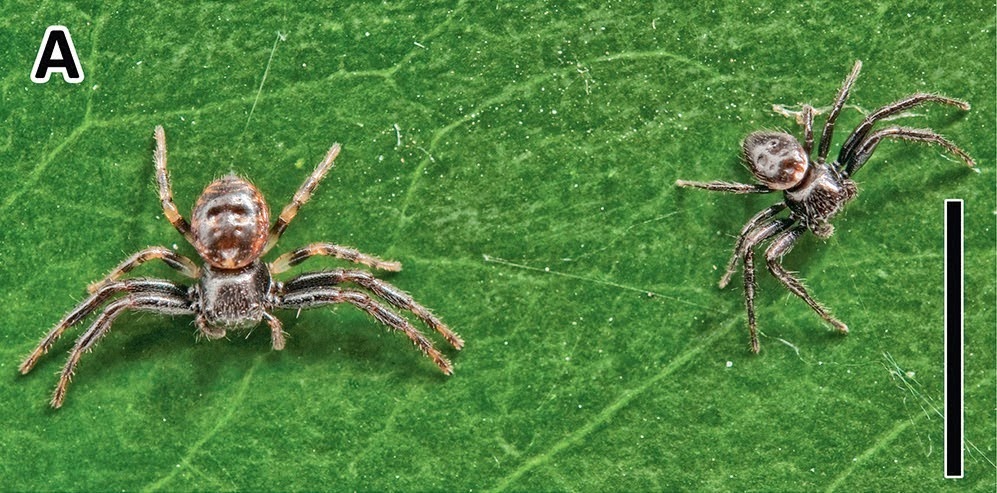
Sociality is rare in Spiders, which are by nature solitary and
aggressive. However it is known to have evolved...
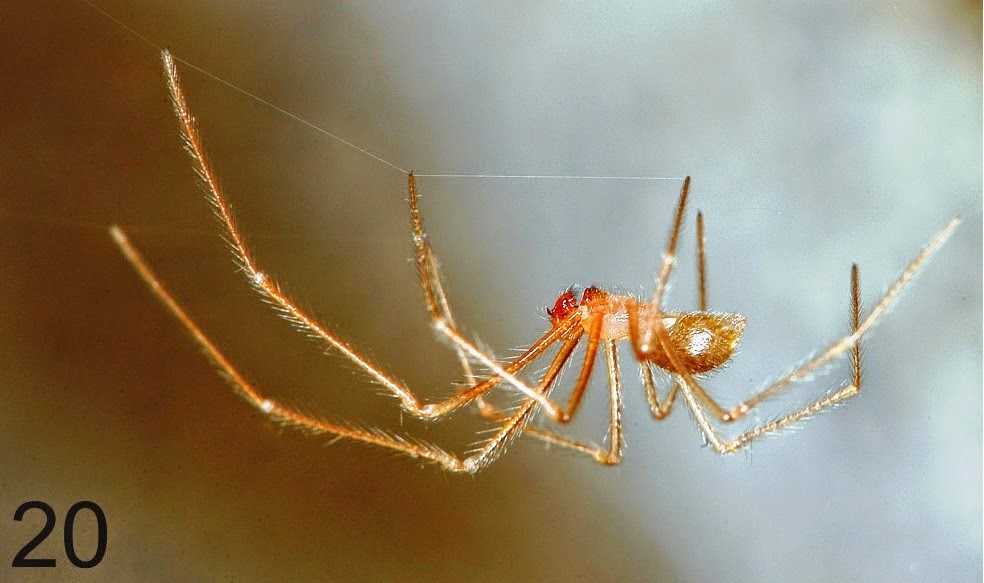
Cave Spiders (Nesticidae) are found across the Mediterranean Basin, as
well as in the Canary Islands and parts of Asia. They are cave-dwelling...
Follow Sciency Thoughts on Facebook.


