The major Cambrian Burgess Shale-type Lagerstätten provide crucial glimpses into flourishing communities of soft-bodied Metazoans from early on in the establishment of Animal-dominated ecosystems. As instances of exceptional preservation, Burgess Shale-type Lagerstätten are rare, and seem to be temporally restricted to the Cambrian. Nevertheless, Cambrian Burgess Shale-type Lagerstätten can exhibit substantial between-site variations in taxonomic composition and diversity, even at a relatively local scale. Although the overall ecological structure and diversity dynamics of Burgess Shale-type biotas appear to have been broadly conserved, community-level differences have been detected among sites surrounding the Burgess Shale, such as the Greater Phyllopod Bed, the Tulip Beds, and the more recently discovered assemblages from Marble Canyon and the ‘thin’ Stephen Formation. Lagerstätten sites from South China also show comparable faunal differentiation at various scales beyond a relatively stable underlying structure. Spatial variations in community composition and diversity are well-known from modern marine Invertebrate faunas and have been evidenced to some extent in the (mostly skeletal) fossil record, as far back as the late Ediacaran. A similar faunal partitioning may account for the emerging disparity of Cambrian Lagerstätten. Sampling Metazoan diversity across environmental variables (e.g. depth, substrate), however, has been hampered by the relatively narrow spatial extent of Burgess Shale-type deposits. Although the known outcrop area of the Burgess Shale and Chengjiang deposits has been continuously expanded, comparatively little is known of the spatial variation in faunas surrounding another major Cambrian Lagerstätte; the Sirius Passet biota from North Greenland.
Another means of capturing some of this spatial (and palaeoenvironmental) diversity is offered by the record of small carbonaceous fossils. Small carbonaceous fossils form a polyphyletic set of predominantly fragmentary organic remains extracted following a gentle acid maceration procedure. Although the taphonomic circumstances underlying small carbonaceous fossils preservation remain unclear, targeted sampling at or near known sites of Burgess Shale-type preservation has repeatedly proved to be successful. Crucially, small carbonaceous fossils preservation can provide a window into adjacent shallow water, relatively higher energy, well-oxygenated shelf environments, where whole-carcass Burgess Shale-type preservation is absent. These relatively relaxed constraints on soft-tissue fossilisation significantly expanded the spatial and temporal range of a number of otherwise poorly preserved clades, such as planktonic Crustaceans, Wiwaxiids, and Annelids.
Recently, an abundance of small carbonaceous fossils has been recovered roughly 180 km south-east of the Sirius Passet Lagerstätte, in shelf deposits of only slightly younger age that have escaped the destructive effects of thermal metamorphism. Both successions contain strata that are assigned to the Nevadella Biozone of the Montezuman Stage (Cambrian Stage 3), but the southern section is dominated by strata of Stage 4. Although some taxonomic overlap exists between these macro- and microfossil biotas, the shelf environments yielded an entirely new diversity of unmineralised Metazoan remains sourced from Scalidophorans, Arthropods, Protoconodonts and Pterobranch Hemichordates. It remains unclear, however, to what extent this difference is environmental, ecological and/or taphonomic in essence. The Sirius Passet Lagerstätte was subjected to peak metamorphic temperatures of 400°C that resulted in an almost complete volatilisation of organic matter and its conversion into amorphous kerogenised material. The shallower water small carbonaceous fossils assemblages thus may represent a taphonomically fragile component of Metazoan diversity that has been selectively destroyed by the taphonomic filters of the Sirius Passet Lagerstätte. However, this new record of metazoan diversity may also partly reflect a spatially bounded biota inhabiting inshore, well-oxygenated, higher energy environments. Increased small carbonaceous fossils sampling of these shelf settings is the key to clarifying the extent to which the relative contribution of taphonomic and ecological factors accounts for these divergences between Lagerstätten and small carbonaceous fossils assemblages in the early Cambrian fossil record.
In a paper published in the journal Papers in Palaeontology on 14 December 2020, Elise Wallet, Ben Slater, Sebastian Willman, and John Peel of the Palaeobiology Programme at Uppsala University, use small carbonaceous fossils to expand early Cambrian records of unmineralised taxa in North Greenland beyond the deeper water, upper slope assemblages of the Sirius Passet Lagerstätte, to adjacent shallower water environments in the shelf succession of the Buen Formation. Newly recovered elements of the Buen small carbonaceous fossils biota encompass the earliest mature Crustacean apparatus recovered to date, together with almost complete bradoriid valves preserved in 3D, uniting a number of small carbonaceous fossils previously found in disarticulation. More generally, our findings reveal a new diversity of Arthropod and Scalidophoran remains, providing additional hints on the poorly known soft-bodied biota inhabiting early Cambrian shelf environments.
The Buen Formation has long been studied for its rich fossil contents, most spectacularly exposed in the Sirius Passet Lagerstätte of Peary Land, North Greenland. From the atest Proterozoic to the early Palaeozoic, North Greenland formed part of the southern margin of the Franklinian Basin, an extensional basin continuing westward into Arctic Canada. The Buen Formation records an episode of siliciclastic deposition during transgression following the karstification of a carbonate platform represented by the underlying Portfjeld Formation. It is overlain by dolostones of the Aftenstjernesø Formation, forming the lowermost part of the Brønlund Fjord Group. The Buen Formation has been biostratigraphically constrained to Cambrian Series 2, Stages 3–4, based on its Acritarch (Heliosphaeridium dissimilare–Skiagia ciliosa Biozone) and Trilobite contents (Nevadella and Olenellus biozones).

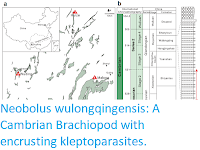
Maps and stratigraphic schemes showing the lateral and vertical extent of the Buen Formation and sampled units. (A) Extent of the Franklinian Basin and studied area magnified in (B). (B) Extent of the Buen Formation and ‘Transitional Buen’ sediments, with sampling locality. (C) Neoproterozoic and early Cambrian stratigraphic units from the southern (shelf) and northern (deep water) outcrop belts of North Greenland, and their tentative correlation with international subdivisions. (D) Sedimentary log of the Buen Formation at its type section , showing clear contrast between the sandstone-dominated lower member (0–270 m) and mudstone-dominated upper member (270–420 m). Samples were recovered from two adjacent localities referred to as Brillesø locality 1 (B1); sample JSP-B1, and Brillesø locality 2 (B2) samples 184004 and JSP-B2. Wallet et al. (2020).
The type section of the Buen Formation is located on the southern slope of the plateau Buen, in southern Peary Land. There, the roughly 425-m-thick succession is informally divided into a sandstone-dominated lower member and a mudstone-dominated upper member. This has been interpreted as representing a regional deepening upward trend, associated with a major transgressive phase throughout Cambrian Series 2, coupled with the subsidence of the Franklinian shelf. A detailed description of the lower member was given by Ian Bryant and Ron Pickerill in 1990, who studied a section in southern Nares Land, west of the type section. The succession exhibits several shallowing upwards cycles associated with cross-beds and bioturbation reminiscent of shallow subtidal litho- and ichnofacies. The upper mudstone-dominated member primarily consists of dark mudstones and siltstones with interbeds of sandstone becoming more frequent in the upper part of the member. This mudstone-dominated unit has been interpreted to represent a shallowing upwards sequence from deep shelf to inner shelf settings.
The sandstone-dominated lower member of the Buen Formation gradually thins northwards, mirroring a shift to deeper depositional settings. At its northern limit, the Buen Formation thickens to more than 700 m with passage into turbidite-dominated facies ascribed to the basinal Polkorridoren Group. Sediments between the shelf southern facies and the trough northern facies form a narrow east–west-trending belt assigned to the ‘Transitional’ Buen Formation that includes the 1-kmlong outcrop of the Sirius Passet Lagerstätte. Transitional sediments consist of two major shallowing upwards cycles grading from laminated grey–green or purple mudstones to heavily bioturbated, fine to medium-grained sandstones with turbiditic beds. The Sirius Passet Lagerstätte lies within the mudstone-dominated basal part of the first sequence, representing upper slope facies deposited in close proximity to the shelfslope break. Both the ‘Transitional’ Buen Formation and the Polkorridoren Group are considered to be broad lateral equivalents of the Buen Formation, but may also partly correlate with the upper part of the Portfjeld Formation.
The northern, deep water facies belt was deformed during the Ellesmerian Orogeny (Devonian–Early Carboniferous), with temperatures reaching chloritoid-grade metamorphism at the Sirius Passet Lagerstätte. In contrast, the studied area in the southern, shallower Buen Formation belt has undergone a relatively low level of tectonic deformation and thermal alteration, thus allowing for organic preservation.
The microfossil assemblages described in this study derive from three rock samples from the Brillesø site (southern Peary Land). Sampling focused on two fine-grained levels from the base of the upper member of the Buen Formation. These units were recovered from two nearby outcrops referred to as ‘Brillesø locality 1’ (sample JSP-B1) and ‘Brillesø locality 2’ (samples 184004, JSP-B2), representing 60-cm-thick and 20.8-m-thick mudstone-dominated successions deposited in outer-shelf conditions, respectively. Samples from Brillesø locality 2 are derived from at least 12 m stratigraphically above Brillesø Locality 1. In Laurentia, the base of the Olenellus Trilobite Zone (Cambrian Stages 3–4) was defined as the first appearance of Olenellidae, which was assumed to be concomitant with the extinction of Nevadiidae, occurring in the underlying Nevadella Zone. Both Nevadiid and Olenellid Trilobites occur in Brillesø locality 1, which has thus tentatively been correlated with the uppermost part of the Nevadella Zone, corresponding to the Nevadia addyensis Trilobite Zone of the Montezuman Stage (Cambrian Stage 3). The mudstones of locality 2 are stratigraphically 9 m above the siliciclastic succession of locality 1. They yielded an abundance of the Olenellid Mesolenellus hyperboreus but no Nevadiid Trilobites, and have thus been correlated to the Olenellus zone, possibly encompassing or lying just above the Montezuman–Dyeran boundary (Stages 3–4). In addition to macrofauna, both these levels have previously yielded unexpectedly diverse assemblages of small carbonaceous fossils, although the fossils described by Wallet et al. were recovered from different preparations within the same suite of samples.
About 50 g of each sample was macerated in hydrofluoric acid to recover organic residues. Individual small carbonaceous fossils were hand-picked and mounted for light microscopy. Figured specimens are deposited in the Museum of Evolution in Uppsala, Sweden.
Sampling yielded several thousand fragments of Metazoan origin (mounted on 239 slides) primarily preserved as flattened carbonaceous compressions, although some forms have retained a degree of three-dimensionality. Small carbonaceous fossils derived from the Protostome superphylum Ecdysozoa dominate the biota, both in terms of abundance and diversity. Other fragments could not be resolved to any particular Metazoan clade (which Wallet et al. treat as ‘Unresolved Metazoans’).
Members of the clade of moulting Animals, Ecdysozoa, have featured prominently in small carbonaceous fossil studies to date, doubtless in part because of their tendency to produce resistant, composite cuticles that are periodically shed throughout their lifetime. Ecdysozoan-derived small carbonaceous fossils have previously been classified into distinct morphogroups, some of which have been ascribed to a known macroscopic producer (e.g. Ottoia prolifica). More often, however, the fragmentary nature of Ecdysozoan small carbonaceous fossils precludes identification at the species level. Wallet et al. discriminate at least eight broad morphotypes of Ecdysozoan-derived cuticle that are resolvable to lower taxonomic ranks in the Scalidophora and Euarthropoda. Arthropods are the most common, comprising remains from Bradoriida, Trilobitomorpha and Crustacea.
Processing yielded 27 approximately triangular spines with a basally flaring morphology. The apex of the spines is composed of a denser, optically dark material, whereas the basal region is typically thinner and more translucent. In these spines, at least two different morphotypes are discernible, the first encompassing roughly 150–350-μm-long unadorned cones reaching a basal width of about 50–200 μm. In these spines, the thin-walled basal terminus forms a subrounded outline and is occasionally sculptured with a fine network of approximately 10-μm-wide polygons, although the delicate basal region is often abraded/missing. These spines terminate in an acute, sharp tip, which is either straight or curved into a slight hook. The second discernible morphotype circumscribes spines fringed with thin marginal denticles. The overall outline of these spines varies considerably between specimens, and includes forms with broadly flared bases, as well as narrower, more gently tapering forms. Fine denticles (1–70 μm long, 1–3 μm wide) are densely distributed along the periphery of the main spines, and in one instance cover the entire spine surface, resulting in a ‘hairy’ appearance.

Cuticular spines probably derived from Scalidophoran worms. (A)–(U), non-denticulate spines. Note extended basal attachment (B), (C), (G), (H) and polygonal patterning, boxed area in (G) reminiscent of Priapulid cuticles. R is a cuticular fragment covered with minute protrusions resembling Priapulid spines. (V)–(Z) denticulate spines comparable to Priapulid ‘teeth’. Enlargement in (Y) shows detail of surface covering of fine denticles. Scale bar represents: 50 μm (A)–(Z); 25 μm, enlargement in (Q); 20 μm, enlargements in (R), (V), (Y), (Z); 10 μm, enlargement in (W). Wallet et al. (2020).
Similar spines were previously reported from the Buen Formation and interpreted as the teeth and scalids of Scalidophoran Worms. The conical specimens recovered here are indistinguishable from these previously recovered forms, and are also comparable in outline to the introvert scalids of Xystoscolex and Chalazoscolex from the Sirius Passet Lagerstätte. However, the newly recovered material includes a greater diversity of hook-shaped and denticulate morphologies. The presence of a central prong together with a robust arch and thinner walled basal pad in these specimens permits a direct comparison with previously described Priapulid small carbonaceous fossils. Cone-shaped and denticulate small carbonaceous fossil spine morphologies have also been found co-occurring with Scalidophoran burrows in the early Cambrian of southwestern Sweden, further supporting their affinity to priapulid-like worms. The broadbased denticulate types in particular are characteristic of Priapulid ‘teeth’ borne on the pharynx of Cambrian worms such as Ottoia. The single specimen entirely covered in hair-like denticles closely resembles two small carbonaceous fossil spines retrieved from the Cambrian Stages 3–4 Mahto Formation in Canada (also found co-occurring with Ottoia-type Priapulid spines), as well as the introvert scalids of certain extant Priapulid Worms.
Among the most abundant small carbonaceous fossils in the Buen biota are irregular shaped fragments exhibiting a spinose ornamentation, often coupled with a surface polygonal patterning. These fragments exhibit a robust 3D construction, being convex, cone-shaped or somewhat flattened, with a wall thickness of about 15 μm. Surface spines are hollow, with complete spines measuring up to 35 lm in height and 10–50 μm in diameter at the base. Reticulate ornament consists of sub-rounded to elongate hexagons (roughly 10 μm across) delineated by even, apparently flat-topped ridges. These cuticles were previously reported among small carbonaceous fossils from the Buen Formation, and were interpreted as various taphonomic expressions of one, or several, species of Bivalved Arthropods (possibly the Bradoriid Spinospitella). The recovery of an almost complete Bradoriid valve with such ornamentation confirms this interpretation. Two additional smooth valves further demonstrate the presence of other Bivalved Arthropod morphologies/taxa in the Buen small carbonaceous fossil biota.

Bradoriid cuticular fragments. (A)–(M), spinose cuticles including conical fragments (J), (M); enlargement in (E) shows polygonal surface ornamentation; black arrowheads point to surface spines in lateral view. (N)–(S), lightly sclerotized cuticles with surface reticulation and dark protrusions. (T)–(Z) cuticles covered with rounded depressions, representing the inner surface of spinose forms (A)–(M); box in (Z) shows reticulate ornament; enlargements in (G) and white arrowheads in (Y) and (D) show spines occurring together with depressions in the same specimen. (AA)–(AE) cuticles covered with irregular protrusions; enlargement in (AA) shows polygonal surface ornamentation; note elements of marginal brim in (AB)–(AC). Scale bar represents: 50 μm (A)–(M), (T)–(AE); 40 μm (N)–(S); 20 μm, enlargement in (E), 25 μm, enlargements in (G), (AA). Wallet et al. (2020).
In addition to these spinose cuticular fragments, sampling yielded a morphologically diverse set of cuticles united by their multilayered construction and reticulate surface ornamentation. Among these forms are lightly sclerotised elements preserving high-relief subcircular projections, specimens exhibiting rounded spots forming a central depression, and cuticles covered with fine irregular protrusions (10–20 μm in diameter) occasionally preserving possible elements of an original margin. These ornamented cuticles co-occur with 3D acute spines including straight-sided to gently curved forms (typically 200–350 μm long and 25–80 μm wide at the base), along with shorter, broader spines (60–125 μm in diameter at the base and 125–190 μm long). Wallet et al. can confirm that at least some of these spines are sourced from Bivalved Arthropods, given that one such spine was found in anatomical connection to an almost intact Bradoriid valve. Other fragmented spines occasionally preserving a central fold possibly represent another Bivalved Arthropod, being distinct from these 3D specimens in their flattened, thin-walled structure and overall broader morphology.

Scanning electron micrographs of Bradoriid small carbonaceous fossils (SCFs). (A)–(B) PMU 36303 enlarged in (C) and (D). Note detail of polygonal patterning in (C) and thickness of the wall in (D); enlargement in (D) shows incomplete, faint crown of third-order spines (arrowed). (E) PMU 36304 with straight margin (hinge line?); enlargement shows hollow spine. (F) PMU 36305 enlarged in (G) with detail of polygonal patterning. (H)–(I) PMU 36306 showing marginal spine. Scale bar represents: 50 μm (A), (B), (E), (F); 25 μm (C), (D), (G), (I); 10 μm (H); 3 μm, enlargement in (D); 5 μm, enlargement in (E). All specimens from sample 184004. Wallet et al. (2020).
Taken altogether, these largely fragmentary but occasionally composite remains of Bivalved Arthropods from the Buen Formation can be tentatively accommodated into at least two morphogroups, namely Spinospitella-type and Isoxys-type fragments. The new material supports previous comparisons with the Bradoriid taxon Spinospitella coronata from the Mernmerna Formation (South Australia), which exhibits a remarkably similar surface ornamentation of fine spines and polygons covering broader cones and nodes. A similar surface sculpture was reported from a number of more fragmentary small shelly fossil taxa, including Nikolarites from the lower Cambrian of Yakutia or carapace fragments from the lower Cambrian of Siberia. However, the faint corona of third-order spines surrounding the apex of a second-order spine in one of the recovered fragments is a diagnostic feature of Spinospitella. Part of the morphological variation seen in the recovered material is probably taphonomic in origin, particularly given that patches of spinose cuticle occur together with cuticle-bearing depressions in some specimens. These distinct ornaments probably correspond to the internal and external expression of the same surface sculpture, as observed in previously described Spinospitella coronata specimens. The finely granulose specimens may, in contrast, represent an ontogenetic variant or a separate species such as Petrianna fulmenata from the Buen Formation. The 3D spines recovered in isolation represent previously unknown Bradoriid spine morphologies, but share conspicuous structural and morphological similarities with Spinospitella-type small carbonaceous fossils. Reticulated carapace fragments of Mongolitubulus henrikseni from the broadly coeval Bastion Formation of North-East Greenland are adorned with spines similar in outline to the straight-sided morphotype, but with a distinctive ornamentation of rounded scales. The more brittle 2D spines have previously been recovered from the Buen Formation and are tentatively interpreted as cardinal spines of the Bivalved Arthropod taxon Isoxys. Indeed, the overall morphology of the flexible, probably unmineralised carapace of Isoxys and its prominent cardinal spines bearing a median hinge line is very similar to that of the recovered spines.

Whole Bradoriid valves. Note detail of reticulate surface ornament and association with spines in (A). Scale bar represents: 15 μm (A); 5 μm, enlargements in (A); 30 μm (B); 50 μm (C). All specimens from sample 184004. Wallet et al. (2020).
Fragments of regularly perforated thin cuticle, occasionally preserving a polygonal network of faint ridges, were also frequently recovered in the lower portion of the studied section. The subcircular perforations are 15–30 μm in diameter, and are delineated by thickened margins in plan view. A closer examination of a folded specimen suggests that they form the abraded margin of low-relief protrusions. Where preserved, each of the faint polygons encloses a single, centrally placed perforation. Small pustules are occasionally preserved at the junction between ridges of the polygonal ornament.
Spines probably derived from Bivalved Arthropods. (A)–(F) short spine morphotype. (G)–(U) long straight-sided spine morphotype. (V)–(AF) Isoxys-like spine morphotype. (Z), (AE) and (AF) preserve a central fold reminiscent of the hinge line dividing the cardinal spines of Isoxys carapaces. Scale bar represents 50 μm. Waller et al. (2020).
The relatively large size of the polygons and their central protrusion sets these cuticles apart from other more finely ornamented polygonal cuticle (e.g. Bradoriid fragments), and hence they are more similar to the surface ornament of some Olenelline Trilobites. In particular, the Nevadiid species Limniphacos perspicullum (found as macrofossils in the Buen Formation) is described as being covered with a faint network of polygons filled with a central ‘granule’. Some of these protrusions were reported to be perforated and small ‘tubercles’ were occasionally observed at the corners of the polygons. The stratigraphic position of these recovered polygonal cuticles also coincides with the known distribution of Limniphacos perspicullum at Brillesø, being restricted to the lower part of the succession. A previous study by Ben Slater, Sebastian Willman, Graham Budd, and John Peel, reported similar small carbonaceous fossils from the Brillesø section and attributed them to ‘Wanneriid-like’ Olenellid Trilobites. A number of Olenellids indeed exhibit a similar ornamentation of polygons and granules, including some species of the genus Wanneria, Lochmanolenellus, Laudonia, and Elliptocephala. Polygonal ornamentation is also developed in contemporaneous specimens of Mesolenellus hyperboreus from the upper member of the Buen Formation. Unfigured Olenellid Trilobites are also known as small carbonaceous fossils from the Mount Cap Formation (Northwestern Canada). Although perforations are not known from these Olenellid taxa, the susceptibility of this character to chemical and/or physical abrasion does not permit ruling out an Olenellid affinity for the trilobite small carbonaceous fossils recovered by Wallet et al. (2020).

Perforated cuticles probably derived from Olenelline Trilobites. (H)–(K) and (M)–(P) preserve faint polygonal surface ornament with each polygon enclosing a single centrally placed perforation. White arrowheads in enlargement in (O) show pustules at the polygons’ corners. Black arrowheads in (L) indicate a row of perforated protrusions preserved in side view. Note possible original marginal structures in (D) and (G). Scale bar represents 50 μm except enlargement in (O) which is 25 μm. Wallet et al. (2020).
Three specimens each consisting of a series of 8–18 parallel setae connected to a perpendicular portion of basal cuticle were recovered from the lower part of the upper Buen Formation. Each of these setae bears two opposing rows of smaller setules running from base to tip, with intersetule distances of about 1 μm. The primary setae are 5–10 μm in diameter at the base and up to 180 μm long, and are separated from neighbouring setae by a gap of about 5–10 μm.

Crustacean filter plates, possible mandibles and other setae-bearing fragments. (A)–(C) Crustacean filter-feeding appendages; enlargement in (A) displays detail of plumose setae with rows of parallel setules. (D)–(M), fragments of a Crustacean pars molaris bearing hair-like projections posterodorsally grading into larger spines (black arrowheads); note preservation of the anterior edge in (E), (G)–(H) and toothed dorsal margin in (D) and (K); (F) preserves an almost entire, dorsoventrally flattened molar surface. (N)–(Q), bundles of setae of probable Crustacean origin. (R)–(S), more problematic setae-bearing cuticles. Scale bar represents: 50 μm (A)–(K), (M)–(S); 25 μm (L); 25 μm enlargements in (A), (J), (M), (R), (S); 10 μm enlargement in (L). Wallet et al. (2020).
These clusters of setae are almost identical to previously reported small carbonaceous fossils from the early Cambrian (Cambrian Series 2) Mount Cap Formation and the middle Cambrian (Miaolingian Series) part of the Deadwood Formation of Canada, which had been described as the filter plates of Branchiopod Crustaceans. Other closely comparable forms in the fossil record include the endites of the silicified Branchiopod Crustacean Castracollis wilsonae from the Devonian Rhynie chert of southern Scotland, which exhibit similar setal complexes. In contrast to the Deadwood and Rhynie chert material, the setal arrays recovered by Wallet et al. lack any attachment to articulated filter plates that demonstrate the characteristic multilobate (so-called ‘phyllopodous’) limb of Branchiopod Crustaceans. While the recovered specimens exhibit a clear gradient in setal length, which is reminiscent of the lobate endites of Branchiopod Crustaceans, this arcuate shape also lies within the known morphological range of some Malacostracan taxa. Whatever their exact affinity, the narrow (1 μm wide) intersetule distance is evidence of a filtering rather than particle screening function, thereby demonstrating a capacity for particle feeding in these Crustaceans.
Wallet et al.'s sampling yielded a distinctive subset of eight arch-shaped small carbonaceous fossils adorned by fringing denticles that increase in length towards one end of the arch. These arches have a total span of 125–225 μm and a rise of 50–200 μm. Two subtypes can be recognised. One subset was recovered together with filter plates in the lower part of the upper Buen Formation, and includes seven specimens bearing an apical crescent-shaped area covered in rows of densely distributed hair-like (roughly 1 μm wide) marginal projections reaching a maximum length of about 40 μm. In four specimens, rows of marginal denticles merge at one end of the arch, grading into a broader (5–8 μm wide, 15–30 μm long) spine morphology. Three somewhat comparable specimens were recovered from overlying beds and consist of arcuate forms bearing a mixture of triangular (1–15 μm long and 2–10 μm wide at the base) and hair-like (roughly 1 μm wide and maximum length of 40 μm) denticles spanning an entire branch of the arch, while the opposite branch appears to be devoid of triangular projections. Some triangular denticles occur as bilaterally symmetrical pairs.
The finely denticulate morphology of these sclerites and their pronounced curvature identifies these elements as a Crustacean pars molaris, although some strongly bent specimens are somewhat reminiscent of Priapulid teeth, a closer examination of the complete assemblage reveals that these elements are part of a continuum of forms corresponding to variably preserved portions of a molar surface, i.e. the grinding apical region of an originally more extensive mandibular process. Although strongly bent specimens can be recognized as the anterior, fringed tip of the molar surface, other specimens preserve elements of a toothed dorsal margin. These distinct portions of Crustacean molar are united in two specimens, one of which preserves an almost entire, posteroventrally flattened molar surface with clearly defined anterior and posterior tips. The observed gradient in denticle size and morphology along the recovered arches conforms to the known arrangement of mandibular projections in previously described Branchiopod small carbonaceous fossils from the Mount Cap and Deadwood Formations, which also exhibit a row of triangular teeth along the posterodorsal margin. A dorsal row of stout teeth also adorns the otherwise finely denticulate pars molaris of some modern Branchiopod taxa, and of the fossil taxon Lepidocaris from the Devonian Rhynie chert. Although the characteristically ellipsoidal, fringed gnathal edge of Branchiopod Crustaceans is apparent in some of the specimens recovered by Wallet et al., the lack of phylogenetically informative characters such as a posterior shoulder or distinct ridge-forming rows of inner spines impedes definitive assignment to the Branchiopoda. The fringed pars molaris of other Crustaceans (e.g. Malacostracans or Remipedes) is also comparable to the grinding elements recovered here. Although the lack of unambiguous crown-group Crustacean synapomorphies precludes lower order taxonomic assignment, the identification of a pars molaris in the small carbonaceous fossils recovered by Wallet et al. confirms the presence of an Arthropod with a mandibulate feeding apparatus at the very least.
Alongside conspicuous filter feeding elements, other more enigmatic setae-bearing small carbonaceous fossils were recovered from the two sampling localities. Among these forms are four specimens consisting of bundles of tightly assembled, slender setae connected to a thick-walled filamentous mass from which they protrude at either side, in a fan-like fashion. Individual setae in these bundles are less than 1 μm wide and up to 75 μm long. In the small carbonaceous fossils from the Mount Cap Formation, Butterfield reported somewhat similar fibre-like projections in a fan-like arrangement along the margins of what was identified as a crustacean labrum. Based on these close similarities, and their co-occurrence with identifiable Crustacean filtering plates and mandibles, Wallet et al. deem it likely that these fan-shaped setal fragments they recovered are also sourced from Cambrian Crustaceans.
Many small carbonaceous fossils from the Buen biota, although arguably Metazoan, could not be accommodated into any particular Animal clade. Most of these forms are fragments of cuticle with one or another distinctive patterns of ornamentation. Against a background of more ambiguous fragments, four distinctive morphotypes of cuticle can be identified.
One distinct cuticle type encompasses fragments bearing characteristic linear thickenings. These cuticles were almost exclusively recovered in the upper part of the Brillesø section. These fragments grade between forms with alternating thick and thin parallel lineations or ridges, for which the broader ridges are roughly 3–5-fold as wide as the interspaced thinner ridges, and more complex forms exhibiting an orthogonal grid-like network of thin, densely distributed lineations. Certain Hyolith conchs and opercula are known to bear a densely striated surface, including Trapezovitus cf. sinscus, and Nasaaraqia hyptiotheciformis, from the Buen Formation. Fibrous shell structure is characteristic of many Hyolith conchs, producing a longitudinal striation. Fragments bearing more irregular or thicker lineations more closely invoke the anastomosing network of ridges covering certain Trilobite cranidia (including Mesolenellus hyperboreus from the Buen Formation).

Cuticular fragments bearing linear thickenings. (A)–(S), elongated fragments with thick and thin lineations; thick and thin lineations occur together in (H), (K) and N; (O)–(S) bear thick irregular lineations reminiscent of the anastomosing network of ridges covering some Trilobite cranidia. (T)–(Y), cuticular fragments covered with a grid-like network of thin lineations. (Z)–(AO), striped cuticular fragments; (AI)–(AO) are comb-shaped fragments preserving a transverse network of ridges on their thin-walled portion. (AP)–(AR) possibly represent disarticulated pieces of the thinner cuticle portion of (AS); enlargement in (AR) shows median lineation. Scale bar represents 50 μm, except magnification in (AR) 20 μm. Wallet et al. (2020).
Another cuticle morphotype is represented by 18 elongated rod-shaped fragments with a striped ornamentation, laterally divided into a thickened part with an irregular outer margin adjacent to a thinner portion with a more regular, sharp-edged outer margin. Some of these specimens preserve a series of transverse ridges along the thinner portion of cuticle, resulting in a comblike appearance. Similar forms were previously described from the Buen Formation and interpreted as marginal fragments of a Bradoriid carapace, possibly from the dorsal hinge. One specimen that appears to support this anatomical connection is a large, heavily sclerotised cuticular fragment with a thinner-walled, slightly curved margin reminiscent of that seen on the portions of striped cuticle. Juvenile forms of the co-occurring shelly taxon Petrianna fulmenata are known to exhibit a dense network of parallel ridges across the latero-admarginal structure, one possible source of the comb-shaped small carbonaceous fossils recovered here. Regardless of their exact phylogenetic affinity, these comparisons suggest at the very least that these striped cuticles are sourced from the broken margins of a larger, sclerotised carapace.
A further distinct assemblage of cuticles encompasses forms exhibiting a rough surface texture, with sinuously curved, thickened margins. Some specimens of this type bear a superficial resemblance to Sphaeromorphic Acritarchs. However, when compared across the population as a whole, these rounded portions of cuticle are found to be simply the coiled, or bulbous portions of a variable continuum of shapes. The thickened margins of these cuticles might suggest that these specimens record primary shapes, however, their irregular outline does not seem to have any consistent pattern beyond the occasional rounded or pointed projection.
Small carbonaceous fossils with sinuous margins. (A)–(I) superficially resemble sphaeromorphic acritarchs but are most likely to represent a taphonomic variant of cuticles in (J)–(S). White arrowheads indicate perforations. Scale bar represents 50 μm. Wallet et al. (2020).
Other rarer fragments include forms with a distinctively fibrous microstructure. In one spine-shaped specimen, this inner fabric consists of interwoven fibres, a feature known from the small carbonaceous fossil taxon Protohertzina compressa, recovered from Cambrian sediments of Baltica and interpreted as Chaetognath grasping spines. However, at 125 μm long, this singular specimen is substantially smaller than the currently known size distribution of Protohertzina compressa. Other small carbonaceous fossils recovered by Wallet et al. appear to be internally constructed from closely spaced linear striations, which run in parallel and do not cross or unite into bundles. This distinctive microstructure has previously been interpreted as being characteristic of secretion via a microvillar system, which itself has been proposed as a Lophotrochozoan symplesiomorphy. On this basis, six specimens are interpreted by Wallet et al. as possible Lophotrochozoan elements. These include a fragment fringed by a thick, gently tapering margin reminiscent of the prong of an Annelid chaeta, a specimen bearing thin marginal denticles, along with a broadly spine-shaped organic sheet, in which constitutive fibres change direction from a longitudinal to transverse orientation near the apex.

Fibrous small carbonaceous fossils. (A) Possible fragment of Protohertzinia compressa spine preserving internal construction of fibrous bundles visible in enlarged area. (B)–(G), small carbonaceous fossils preserving an inner fabric of fine parallel fibres, potentially indicative of secretion via a Lophotrochozoan microvillar system. (E) Exhibits a thick spine-like margin, reminiscent of the prongs flanking Annelid chaetae; enlargement shows inner fabric of parallel fibres. Enlargement in (F) displays fringing hair-like denticles. Enlargements in (G) show longitudinal fibres at the base and transverse fibres across the apical spine. Scale bar represents: 50 μm (A)–(G); 20 μm enlargement in (A); 25 μm enlargements in (E), (F) and (G). Wallet et al. (2020).
Other cuticular fragments include smooth, curved portions possibly sourced from the margins of Trilobite carapaces, multilayered elements possibly representing fragments of an Arthropod doublure, spinose cuticles, along with cuticle fragments covered with various patterns such as intersecting lineations, thickened subcircular structures, and parallel striations overlapped by thicker, subparallel ridges. Some cuticles have sharply defined circular structures that occur in clusters on portions of cuticle, which could conceivably represent separate biological entities such as colonies of Microalgal, Protistan or even Metazoan epibionts.
 Taxonomically uncertain cuticular small carbonaceous fossils exhibiting distinctive margins and/or ornament. (A)–(D) Possible margins of demineralized Trilobite carapaces. (E)–(O) Multilayered fragments representing potential elements of an Arthropod doublure. (P)–(Q) Spinose cuticles. (R)–(AD) Variably patterned cuticular fragments. Enlargements in (AA) and (AB) show clusters of sharp-edged dark circles, possibly representing separate Algal or Metazoan entities. (AE)–(AJ) Striated cuticles. (AF) and (AG) show evenly spaced parallel striations overlapped by a thick parallel ridge. Enlargement in (AI) displays fine orthogonal network of striations. (AK) Cuticular small carbonaceous fossils, possibly a fragment of Brachiopod valve with two subparallel, slightly curved dark stripes. Scale bar represents: 50 μm (C)–(AK); 80 μm (A), (B); 25 μm enlargements in (AA), (AB), (AF); 10 μm enlargement in (AI). Wallet et al. (2020).
Other unresolvable elements include a small number of slender spines that lack any basal pad or attachment to characteristic cuticle, but occasionally preserve a two-layered wall construction. One such spine shows an abrupt inner wall constriction reminiscent of the inner linear cavity of some larger Hyolith conchs from the Chengjiang Lagerstätte. Smooth cuticular fragments are abundant, and occasionally preserve an apparently original biological margin or a finely perforated, multilayered microstructure reminiscent of that seen on Brachiopod shell layers. Despite their ambiguity, these fragments demonstrate that a rich range of soft-tissue types can be captured by this mode of preservation.
Slender spines of uncertain affinity. In specimen (E) spine exhibits an inner wall layer that narrows half way towards the tip. Scale bar represents 50 μm. Wallet et al. (2020).
The newly recovered Buen small carbonaceous fossils enhance our picture of early Cambrian ecosystems on the present-day northern margins of Laurentia, and expand upon previously documented small carbonaceous fossil diversity. Articulated Bradoriid material ties together several small carbonaceous fossil types previously found in isolation, while 3D fragments elucidate Bradoriid carapace composition and ultrastructure. Perhaps most significantly, Wallet et al.'s sampling has revealed the microscopic details of the earliest Crustacean feeding apparatus recovered to date.

Smooth cuticular fragments of unknown affinity. (A) Superficially resembles a Sphaeromorphic Acritarch with a median split, but has a robust 3D structure. (B) Rounded small carbonaceous fossil exhibiting a central perforation. (C)–(V) Cuticular fragments of various shapes preserving marginal structures. (W)–(AM) Smooth cuticles. Specimen in (AB) resembles the bulbous tip of a Hyolith conch. Note multilayered construction in (W), (Y), (AD)–(AK). (AD)–(AL) exhibit a finely porous microstructure and possibly represent fragments of various Brachiopod organic shell layers. Scale bar represents: 50 μm (A)–(U), (W), (AD)–(AM); 75 μm (V), (X)–(Z), (AA)–(AC); 20 μm enlargement in (AE). Wallet et al. (2020).
Definitive evidence for Crustaceans in the Cambrian fossil record is scarce. Putative occurrences in Burgess Shale-type Lagerstätten are now considered to occupy more stem-ward positions as they have failed to reveal any convincing synapomorphy shared with an extant subset of the Crustacea. Similarly, the proposed eucrustacean affinity of Phosphatocopines and Bradoriids has largely been ruled out following descriptions of their soft part anatomy, although some Bradoriid taxa fall closer to the crown-group Crustacean clade under a polyphyletic scenario. The earliest record of crown-group Crustaceans was for a long time confined to upper Cambrian (Furongian) Orsten biotas of Sweden (e.g. Bredocaris, Rehbachiella), but later findings have expanded this taphonomic window, pushing the Eucrustacean record back to the late lower Cambrian (Cambrian Series 2) of China. These predominantly larval forms exhibit a relatively low degree of appendage differentiation, which, although fulfilling criteria for crown-group Crustacea membership, hinders lower-level phylogenetic interpretations. Small carbonaceous fossils have since proven to be crucial for the early fossil record of Eucrustaceans, shedding light on phylogenetically informative adult characters with unparalleled detail (e.g. a Copepod ‘dorsal seta’). The oldest known Ostracod small carbonaceous fossils are upper Cambrian (Furongian) in age, while Branchiopods and Copepods are found no earlier than the middle Cambrian (Miaolingian). Older, yet phylogenetically more ambiguous small carbonaceous fossils of crown-group Crustaceans are known from the early Cambrian Stages 3–4 Mount Cap Formation.
The Crustacean apparatus reported by Wallet et al. displays a relatively high degree of appendage specialisation, including grinding and filtering elements that are directly comparable to previously described Crustacean small carbonaceous fossils. The scarcity of setal types in the recovered material and the apparent absence of grasping and grazing appendages may point to a relatively passive, generalist form of feeding compared with the more specialised Crustacean appendages retrieved from the Mount Cap Formation. However, the contribution of taphonomy and sampling to this signal remains uncertain. On a conservative basis, the degree of morphological sophistication displayed by the feeding apparatus recovered here is deemed insufficient to rule out a stem-group position, although its phylogenetic assignment to total-group Mandibulata is supported by the identification of a clearly differentiated pars molaris.
The recovered filter plates and molars co-occur with both Nevadiid and Olenellid trilobites, placing them within the upper part of the Nevadella Trilobite Zone of Cambrian Stage 3 (Nevadia addyensis Biozone), which immediately underlies the Olenellus zone from which the Mount Cap specimens were recovered. The oldest Crustacean larvae from Orsten-type Lagerstätten were reported from the Eoredlichia–Wutingaspis Biozone of the Nangaoan Stage of South China, although this zone is not recognised internationally and its correlation with global subdivisions remains unclear (Stage 3?). The Greenland material therefore represents the oldest clearly differentiated Crustacean apparatus known to date and demonstrates that a relatively complex form of food processing was achieved in this group by at least late Cambrian Stage 3 (about 515 million years ago).
Fossil Bivalved Arthropods are typically recovered as mineralised shields composed of calcium phosphate. This shell composition is widely considered as being largely secondary in origin, particularly given the known flexibility of bivalved carapaces, which is evident in a number of extensively folded and wrinkled specimens. However, it has previously been assumed that several Bradoriid species (e.g. Petrianna and Spinospitella) were originally mineralised to some extent on the basis of their reported resistance to compaction and mechanical disruption, resulting in brittle, rather than plastic deformation features. The material recovered by Wallet et al. exhibits conspicuous structural and morphological similarities with Spinospitella and other spinose Bradoriids, and also provides evidence for brittle mechanical properties expressed as cracks and sharp fragment outlines. However, Spinospitella-type small carbonaceous fossils differ from previously described Spinospitella specimens in their organic composition. The brown colour and translucence of recovered Spinospitella-type small carbonaceous fossils indeed argue for the prominence of carbonaceous compounds, although the presence of residual minerals in the organic matrix cannot be ruled out in optically darker portions of cuticle (e.g. second-order spines). These results strongly support the secondary origin of most of the phosphate contained in Bradoriid small shelly fossils, even in specimens displaying an apparently robust shield construction. The growing list of secondarily phosphatised taxa in the small shelly fossil record further emphasises its profound reliance on phosphatisation taphonomic windows. The Bradoriid carapaces recovered by Wallet et al. demonstrate that small carbonaceous fossils processing is a means to capture a measure of diversity unaffected by the vagaries of phosphogenesis.
The spinose ornamentation of Spinospitella-type small carbonaceous fossils recovered here is expressed in a slightly muted form compared with the material from the Mernmerna Formation of Australia, which is characterised by generally longer second-order spines (25–50 μm) with smaller bases (12–23 μm) and higher-relief third-order spines. The Australian assemblage shows considerable ontogenetic variation, with spinose ornamentation restricted to marginal areas and first-order spines in the smallest (75–84 μm long) specimens, and covering most of the shield in the largest (1.3 mm long) specimen. Although elements of a spinose carapace margin and nodes are present in the Bradoriid small carbonaceous fossil assemblage recovered here, second-order spines are equally well-developed and densely distributed in all other 3D fragments, consistent with the known ornamentation of adults. Rather than representing ontogenetic variation, the slightly broader and shorter morphology of second-order spines in the Buen Spinospitella-type small carbonaceous fossils may instead be palaeoecological or taphonomic in origin. In contrast, the almost intact, 140-μm-long reticulated valve recovered by Wallet et al. may document the earliest known ontogenetic stage of Spinospitella.
A number of small shelly fossil taxa have previously been identified in small carbonaceous fossils assemblages, substantially extending the taxonomic overlap between these fossil groups. Being chiefly represented by disarticulated and/or fragmentary remains, many small shelly fossils and small carbonaceous fossils are classified using form-taxonomic schemes. In rare instances, however, the recovery of articulated specimens has paved the way for classification systems rooted in ‘whole organism’ biology (e.g. Halkieria, Mongolitubulus, Hallucigenia). Increasing the continuity between small shelly fossil and small carbonaceous fossil records therefore offers the prospect of extending the palaeogeographic and biostratigraphic range of these biological taxa. The almost entire Bradoriid valves recovered as small carbonaceous fossils by Wallet et al. demonstrate that a high degree of completeness and articulation can be achieved even among small (roughly 300-lm-long) organic specimens that are directly comparable to ‘small shelly’ counterparts (e.g. Spinospitella, Nikolarites, Mongolitubulus). These almost intact Bradoriid valves and their numerous taphonomic and/or ontogenetic variants provide a solid basis for the identification of fragmentary Bradoriid small carbonaceous fossils in the future.
The small carbonaceous fossil assemblage recovered from the southern, outer shelf outcrops of the Buen Formation encompasses a number of clades that are unknown from the Sirius Passet Lagerstätte, including members of the Mandibulata and the Bradoriida, but also the Pterobranchia and Protoconodontida as documented by previously recovered small carbonaceous fossils. Conversely, the Sirius Passet Lagerstätte captures a picture of Metazoan diversity dominated by problematic stem-group members of various Metazoan clades. The Sirius Passet biota is also known for its rich assemblage of Sponges, which were not recovered as small carbonaceous fossils from southern outcrops and are only rare in the Macrofauna. The emerging diversity of shelf settings and its narrow taxonomic overlap with deeper water biotas in North Greenland may hint at a palaeoenvironmentally driven pattern of community partitioning. However, the complex metamorphic history of the Sirius Passet region also imposes significant taphonomic constraints on organic preservation in North Greenland. Wallet et al. assess the relative contribution of taphonomy and palaeoecology in the current fossil distribution of the Crustacea and Bradoriida, and discuss the absence of Poriferans in the Buen small carbonaceous fossil biota.
The Crustacean apparatus recovered in Wallet et al.'s study adds to the mounting evidence for the presence of specialised Crustaceans in relatively shallow shelf environments by the later part of the early Cambrian. Crustacean small carbonaceous fossils have so far been recovered only from intermediate to shallow shelf facies, and, with rare exceptions, Orsten Lagerstätten are confined to relatively shallow marine settings. In contrast, the deeper water Burgess Shale-type Lagerstätten have yet to provide unambiguous evidence for crown-group Crustaceans. Whether this distribution pattern is controlled by palaeoenvironmental, palaeoecological and/or taphonomic parameters remains unclear at present. It is possible that taphonomic removal or coalescence of subtle characters partly accounts for the plesiomorphic appearance of putative crustaceans in Burgess Shale-type Lagerstätten. Phylogenetically informative characters such as setal arrays and finely denticulate molar surfaces preserved in small carbonaceous fossils are delicate, and their light orange to light brown hues suggest that a relatively low level of thermal maturation is required for their preservation. In contrast, small carbonaceous fossils extracted from more thermally altered deposits such as the Burgess Shale are much darker, extensively cracked and tend to consist of relatively recalcitrant structures, while the processing of Lagerstätten with even higher-grade thermal alteration such as the Sirius Passet has yielded only amorphous kerogenised remnants. Differences between small carbonaceous fossil biotas therefore suggest that the metamorphic history of host sediments exerts a strong influence on the taxonomic composition that is ultimately recovered, and may at least in part explain the current distribution of fossil Crustaceans.
Bivalved Arthropods, in contrast, are present in both the microfossil and macrofossil records of the Buen Formation, although with marked taxonomic differences between sites and preservation styles. In the Sirius Passet Lagerstätte, Bivalved Arthropods are exclusively represented by the Waptiid-like taxon Pauloterminus spinodorsalis, Isoxys and other problematic Bradoriid-like Arthropods. Isoxys may also be present in the upper Buen Formation, demonstrating a broad palaeoenvironmental tolerance that is compatible with its presumed pelagic lifestyle. In contrast, Spinospitella-type Bradoriids are not known from the Sirius Passet Lagerstätte or from shelly biotas from more southern outcrops, in spite of their conspicuous recalcitrance when preserved as small carbonaceous fossils. This difference may be temporal in nature in the current setting given that the Sirius Passet biota is older than the small carbonaceous fossil assemblage recovered by Wallet et al., or even size related, with the Spinospitella-type forms too small to be preserved or detected in the macrofossil fauna. Wallet et al. speculate, however, that the exclusive occurrence of thick-walled Spinospitella-type small carbonaceous fossils in the shallow settings mirrors a narrow range of oxygen- and/or depth-related distribution compatible with an epibenthic lifestyle. Most Bradoriids are indeed best known from depositional environments reflecting well-oxygenated shelves.
The predominance of Arthropods in the material recovered by Wallet et al. echoes the signal from Cambrian Burgess Shale-type Lagerstätten, in which Arthropods comprise a substantial majority of the fauna. In contrast, the absence of sponges in the recovered organic residues and their relative scarcity as mineralised spicules in the Brillesø section stand in stark contrast to the prevalence of Poriferan faunas in the Sirius Passet region and other Burgess Shale-type Lagerstätten. Joseph Botting and John Peel suggested that warm, high-energy environments are unfavourable for silica preservation and introduce a deep gap in the fossil record of Hexactinellid taxa. Nevertheless, disarticulated Sponge remains are common in the carbonate successions immediately overlying the Buen Formation. Although sponges show a potential for organic preservation as small carbonaceous fossils, the current Sponge small carbonaceous fossil record is limited to only a handful of delicate specimens from the early Cambrian of Newfoundland and Sweden. The various depositional settings spanned by Burgess Shale-type preservation nonetheless provide evidence for some degree of inshore–offshore partitioning in Sponge communities, in that they are most abundant in deeper water biotas. Various depth-related factors (e.g. silica availability, temperature, turbulence, substrate) are critical for the establishment of Poriferan reefs in modern marine ecosystems, and may also have been significant controls on the distribution of Sponges across Cambrian shelves. Although any nascent patterns of lateral variation in early Cambrian communities are currently overprinted by strong sampling and/or taphonomic biases, the emerging divergence between deep-water Burgess Shale-type biotas, their shallower water small carbonaceous fossils equivalents and the more common fossil record of skeletal fossils hints that an underlying ecological trend may be resolvable. Wallet et al. report a rich small carbonaceous fossils biota encompassing the earliest known Crustacean feeding apparatus, 3D Bradoriids, Scalidophorans, Trilobites and a spectrum of new small carbonaceous fossil morphologies. These new finds encourage continued exploration of the poorly known non-biomineralising component of biotas that inhabited well-oxygenated, shallower water settings in the Cambrian. Widespread sampling across shelf environments and taphonomic windows using small carbonaceous fossils stands as a unique way to capture data across a broader spectrum of ecological niches and obtain a clearer, more comprehensive picture of the emergence of Phanerozoic-style ecosystems in the Cambrian.
See also...


Online courses in Palaeontology.
Follow Sciency Thoughts on Facebook.
Follow Sciency Thoughts on Twitter.