Showing posts with label Togo. Show all posts

Thursday, 24 July 2025

Rypticus africanus: A new species of Soapfish from the eastern Atlantic.

Soapfish, Grammistes and Rypticus spp., are bottom-dwelling Perciform Fish related to Groupers, generally found on reefs and other rocky marine environments. They get their common name from their ability to secrete a toxic, soapy, mucus as a defence mechanism. The genus Grammistes is restricted to the Indo-Pacific region, while members of the genus Rypticus are found in the Western Pacific, Atlantic and Caribbean. Only two species of Rypticus have been found on the African coast, the Greater Soapfish, Rypticus saponaceus, and the Spotted Soapfish, Rypticus subbifrenatus. The Greater Soapfish is known from both sides of the Atlantic being found from the coast of Florida, throughout the Caribbean, and as far south as Brazil in the western Atlantic, and from Mauritania south as far as Angola in the eastern Atlantic. However, a genetic study of museum specimens published in 2003 suggested that the eastern and western populations of the Greater Soapfish might in fact be separate species.

In a paper published in the Journal of Fish Biology on 21 July 2025, Gabriel Soares Araujo of the Center for Marine Biology at the University of São Paulo, Cláudio Sampaio of the Laboratório de Ictiologia e Conservação at the Universidade Federal de AlagoasLuiz Rocha of the  Department of Ichthyology at the California Academy of Sciences, and Carlos Eduardo Ferreira Leite of the Departamento de Biologia Marinha at the Universidade Federal Fluminense, re-examine the genetics of the Greater Soapfish, and formally describe the populations from the African coast as a separate species.

Araujo et al. examined specimens from Cape Verde, Ghana, São Tomé and Príncipe, and Togo. All were found to be genetically distinct from western Atlantic specimens of Rypticus saponaceus, forming a distinct population which is estimated to have split from the west Atlantic population in the Early Pleistocene, about 2.5 million years ago, at the onset of the Pleistocene, and surprisingly being more closely related to the Pacific Rypticus bicolor. Since Rypticus saponaceus was originally described from specimens from Florida, the east Atlantic population is described as a new species, which Araujo et al. name Rypticus africanus.

Time-calibrated phylogeny of the genus Rypticus based on mitochondrial COI gene sequences. Values near the nodes represent estimated divergence times (Mya). The 95% highest posterior density intervals are shown in parentheses. Coloured circles represent the biogeographic regions where species of Rypticus are distributed. Vertical bars depict the results of lineage delimitation tests. Araujo et al. (2025).

Specimens of Rypticus africanus examined range from 112 to 215 mm in length, and have three dorsal fin spines, 22-24 dorsal fin rays, 15-17 anal fin rays, 16-18 pectoral fin rays, and 24-25 caudal (tail) fin rays. The head is distinctly pointed, the dorsal fin originates slightly posterior to upper end the of gill opening, and the tail is rounded. They are brown or dark grey in colour, with numerous pale round spots of variable size on their flanks.

(a)–(c) Rypticus africanus from São Tomé and Príncipe, illustrating the variation in colour pattern between individuals: (a) São Tomé Island, (b), (c) Príncipe Island and (d) Rypticus saponaceus from Salvador, Bahia, Brazil, shown for comparison. Araujo et al. (2025).

Although Rypticus africanus has only been sampled from four areas (Cape Verde, Ghana, São Tomé and Príncipe, and Togo), Araujo et al. believe the name should be applied to all African populations currently described as Rypticus saponaceus, from Mauritania to Angola.

See also

Friday, 14 April 2023

Outbreak of Pneumococcal Meningitis in Togo.

Since mid-December 2022, Togo has been responding to a Meningitis outbreak that has so far resulted in a total of 141 cases and 12 deaths (a fatality rate of 8.5%), with almost half of the cases affecting children and young adults between 10 and 19 years of age. Overall, 22 samples have been confirmed as Streptococcus pneumoniae, according to a press release issued by the World Health Organization on 11 April 2023.

Togo is located in the African Meningitis Belt, with seasonal outbreaks recurring every year. However, the current outbreak is concerning due to different concomitant factors, including the security crisis in the Sahel which causes population movements, and suboptimal surveillance capacity. This is also the country’s first time dealing with a Pneumococcal Meningitis outbreak.

An incident management system has been established to coordinate the outbreak response activities, and the World Health Organzation is supporting the shipment of antibiotics (ceftriaxone) to improve case management.

The World Health Organzation assesses the overall risk posed by this outbreak as high at the national level, moderate at the regional level, and low at the global level.

On 15 February 2023, the Ministry of Health of Togo officially declared a Meningitis outbreak in Oti Sud District, Savanes Region, in the northern part of the country. From 19 December 2022 to 2 April 2023, a total of 141 suspected cases of meningitis with 12 deaths have been reported from Oti Sud District, corresponding to an attack rate of 112 per 100 000 population.

Number of reported meningitis cases and deaths, 19 December 2022 (week 51 of 2022) to 2 April 2023 (week 13 of 2023), Oti Sud District, Savanes Region, Togo. World Health Organization.

A total of 118 cerebrospinal fluid samples were collected from suspected cases, of which 22 were confirmed by polymerase chain reaction and culture for Streptococcus pneumoniae at the national reference laboratory (81 samples were negative and the results for 15 samples are pending).

The most affected age group is 10–19 years (66 cases, or 47% of the total), followed by the over 30-year age group with 20% of cases (28), and the 20-29 year age group with 15% of cases (22). There is no difference in the case distribution by gender, with 71 (53%) cases reported among males.

Togo introduced the 13-valent Pneumococcal Conjugated Vaccine in 2014, which is currently administered in three doses at the first, second and third months of life. The administrative 13-valent Pneumococcal Conjugated Vaccine coverage in the Savanes Region is 100% for the third dose, but the immunization history is not available for the individual cases, and it is not known if the serotype(s) involved are covered by the vaccine. Additionally, the most affected age groups were born before the 13-valent Pneumococcal Conjugated Vaccine introduction in 2014 and could have not received the vaccine.

Meningitis is a devastating disease with a high case fatality rate and serious long-term complications (sequelae). It remains a major global public-health challenge. Many organisms can cause Bacterial Meningitis. Neisseria meningitidisStreptococcus pneumoniae, and Haemophilus influenzae type b constitute the majority of all cases of Bacterial Meningitis and 90% of Bacterial Meningitis in children. It is estimated that about one million children die of Pneumococcal Disease every year.

Streptococcus pneumoniae is an Encapsulated Bacterium, and about 90 distinct Pneumococcal serotypes have been identified throughout the world, with a small number of these serotypes being able to cause disease. Pneumococci are transmitted by direct contact with respiratory secretions from patients and healthy carriers. Serious Pneumococcal infections include Pneumonia, Meningitis and Febrile Bacteraemia; Otitis Media, Sinusitis and Bronchitis are more common but less serious manifestations. The incubation period is two to 10 days. Pneumococcal Meningitis has a high case fatality rate (36%–66%) in the African Meningitis Belt, requires longer treatment than Meningococcal Meningitis, and is more frequently associated with severe sequelae.

Diagnosis of Bacterial Meningitis typically requires lumbar puncture. In the absence of lumbar puncture, diagnosis can only be suspected through clinical examination (but not confirmed, except with a positive blood culture). Culture and polymerase chain reaction are confirmatory tests for Bacterial Meningitis. Rapid diagnostic tests can support the diagnosis but are not confirmatory. Identification of serotypes or serogroups and susceptibility to antibiotics are important to define control measures. Molecular typing and whole genome sequencing can identify additional differences between strains and inform public health responses.

A range of antibiotics is used to treat Meningitis, including penicillin, ampicillin, and ceftriaxone. During epidemics of Meningococcal and Pneumococcal Meningitis, ceftriaxone is the drug of choice. Nevertheless, Pneumococcal resistance to antimicrobials is a serious and rapidly increasing problem worldwide.

Togo is part of the African Meningitis Belt and annually records Meningitis cases and deaths. Although the country has experience in the management of Meningococcal Meningitis outbreaks over the past years, the current Streptococcus pneumoniae outbreak is unusual as the country has never managed a Pneumococcal Meningitis outbreak in the past, and national capacity is limited. 

To date, no imported cases have been reported in neighbouring countries. However, several factors are likely to increase the risk of spread, including the country's location in the African Meningitis Belt; the epidemic season, which typically runs from January to June; constraints in the provision of vaccination services, which do not allow for optimal vaccination coverage to protect the population; the fact that the main age groups affected by the outbreak are not protected by the routine vaccination against Streptococcus pneumoniae introduced in Togo in 2014; the security crisis in the Sahel, affecting the Savanes Region, hampering public health interventions and causing population movements; the precarious economic conditions in the country, particularly in the Savanes Region; and the sub-optimal surveillance capacity for early case detection, diagnosis and treatment in the Oti Sud District. Neighbouring countries are also in the African meningitis belt, and the Oti Sud district borders Ghana and Benin, making it possible for the disease to spread to other countries in the region.

Considering the above-described situation, the World Health Organization assesses the overall risk posed by this outbreak as high at the national level, moderate at the regional level, and low at the global level.

See also...

Follow Sciency Thoughts on Facebook.

Follow Sciency Thoughts on Twitter


Sunday, 3 April 2022

Lassa Fever reported in Togo, West Africa.

The World Health Organisation was notified of an outbreak of Lassa fever in Togo following the confirmation of a case on 26 February 2022. Active case finding, and contact tracing has been conducted following the confirmation. The risk of transmission for this outbreak is assessed as low at the national and regional level given the experience of national authorities with past outbreaks and the cross-border communication with neighbouring countries.

On 26 February 2022, the national authorities in Togo notified the World Health Organization of an outbreak of Lassa fever after a 35-year-old female patient, from the town of Takpamba in the Oti-South District of the Savanes Region was laboratory confirmed as having been infected with the disease.  The town borders Ghana and is located 96 kilometres from Dapaong, the capital city of the Savanes Region. The patient had previously lived in a village in the Save Commune in Benin, four kilometres from the Nigerian border, and arrived in Takpamba on 4 February prior to the onset of symptoms.  

On 11 February, the patient developed symptoms including fever, abdominal pain and cough, and consulted the local health care facility on 14 February.  Following three days of oral treatment and no improvement, the case was taken to another health centre where she was hospitalised for 24 hours and was later referred to a hospital where she was managed as an outpatient. On 22 February, the patient returned to the previously visited hospital following persistence of symptoms as well as having developed vomiting and bloody diarrhoea. As a result of her clinical picture, Lassa Fever was suspected, and the individual was isolated and notified to the health authorities.  A sample was taken for laboratory analysis at the National Institute of Hygiene, Togo, and tested positive for Lassa Fever on 26 February. The patient died the same day, and a safe and dignified burial was performed.

A total of 26 contacts were identified from two health districts of the Savanes Region, including 10 health care workers, one of whom was symptomatic and isolated. The symptomatic health care worker was exposed through direct contact with the case but upon testing was negative for Lassa Fever.  As of 23 March, all contacts have completed the follow-up period, and none developed Lassa Fever. No outbreak has been reported from Benin or Ghana associated with this reported outbreak in Togo, however, there is an ongoing outbreak in Nigeria.

 
Confirmed case of Lassa fever in Togo, bordering Ghana and Benin. World Health Organization.

Lassa fever is caused by the Lassa Virus, a member of the Arenavirida Virus family, single stranded RNA Viruses which cause a range of illnesses in animals and Humans, including Lujo Fever (a haemorrhagic disease endemic to southern Africa), Lymphocytic Choriomeningitis (a form of Meningitis) and Whitewater Arroyo Fever (a haemorrhagic disease endemic to the southwestern United States). It is an acute Viral haemorrhagic fever that is primarily transmitted to Humans through direct or indirect contact with food or household items contaminated with the urine or faeces of infected Rodents of the genus Mastomys. Though to a lesser extent, person-to-person infections can occur during the acute febrile phase through virus particles present in blood and bodily fluids of the infected person. This includes transmission in the health care facility and laboratory; thus, health care workers should be among the risk groups targeted for prevention. Overall, the case fatality ratio is around 15% among hospitalized patients with severe presentation. 

The incubation period of Lassa Fever ranges from 6 to 21 days. The onset of the disease, when symptomatic, is gradual, starting with fever, general weakness, and malaise. After a few days, headache, sore throat, muscle pain, chest pain, nausea, vomiting, diarrhoea, cough, and abdominal pain may follow. In severe cases, facial swelling, fluid in the lung cavity, bleeding from the mouth, nose, vagina or gastrointestinal tract and low blood pressure may develop.  

The antiviral drug, Ribavirin has been given as treatment for Lassa Fever in recent years, however, recent systematic reviews showed there is no strong evidence about the efficacy of Ribavirin treatment on the outcome of patients with Lassa Fever as well as optimal dosing regimens, highlighting the need for further research, particularly in the form of randomized clinical trials. Therefore, if the decision is to use Ribavirin, it should be made under clinical trial protocol to evaluate safety and efficacy of the drug and the dosage. There is currently no approved vaccine for Lassa Fever, however, optimized supportive care provided as early as possible with rehydration and symptomatic treatment can increase the chance of survival.

Lassa Fever is endemic in West Africa with cases frequently reported from Benin, Ghana, Guinea, Liberia, Mali, Nigeria and Sierra Leone. Togo is affected to a lesser extent, however, since 2016, outbreaks and sporadic cases have been reported in the country every few years.  Notable Lassa Fever outbreaks have occurred in Togo in 2016, 2017, and the most recent was in January 2019 when two imported cases from Nigeria were reported in the Central and Kara regions of Togo. No further cases were identified, and the Ministry of Health declared an end to the outbreak in February 2019.  

Outbreaks of Lassa fever in Togo have involved importation and exportation of cases at various times to nearby countries requiring the need for cross-border communication. In both endemic regions and areas with sporadic cases in West Africa, the majority of cases are reported during the dry season from December to April.

See also...


Follow Sciency Thoughts on Facebook.

Follow Sciency Thoughts on Twitter


Friday, 8 January 2021

Cholera outbreak in Togo, West Africa.

The World Health Organization has reported an outbreak of Cholera in the city of Lomé in Togo, West Africa. Health authorities in the country reported 67 cases of 'diarrhoea and vomiting' between 11 November and 28 December 2020, with the National Institute of Hygiene in Lomé confirming Cholera as the causative agent on 17 November. Two patients have died of the disease, a mortality rate of 3%. Forty of the patients are male and 27 female, with their average age being 24. Worryingly, 19 of the patients are described as fishermen who regularly visit ports in Ghana, Benin, and Nigeria, raising the possibility that the epidemic may have spread beyond Togo's borders.

Cholera is caused by the Bacterium Vibrio cholerae, a Gram-negative, comma-shaped Gammaproteobacteria, related to other pathogenic Bacteria such as Yersinia pestis (Bubonic Plague), and Esherchia coli (food poisoning). The Bacteria produce proteins which can cause watery diarrhoea, which helps spread the disease, and can prove fatal in severe cases, as patients are killed by extreme dehydration.

 
SEM image of Vibrio cholerae Bacteria. Kim et al. (2000).

See also...


Follow Sciency Thoughts on Facebook.

Follow Sciency Thoughts on Twitter.
 

Saturday, 22 November 2014

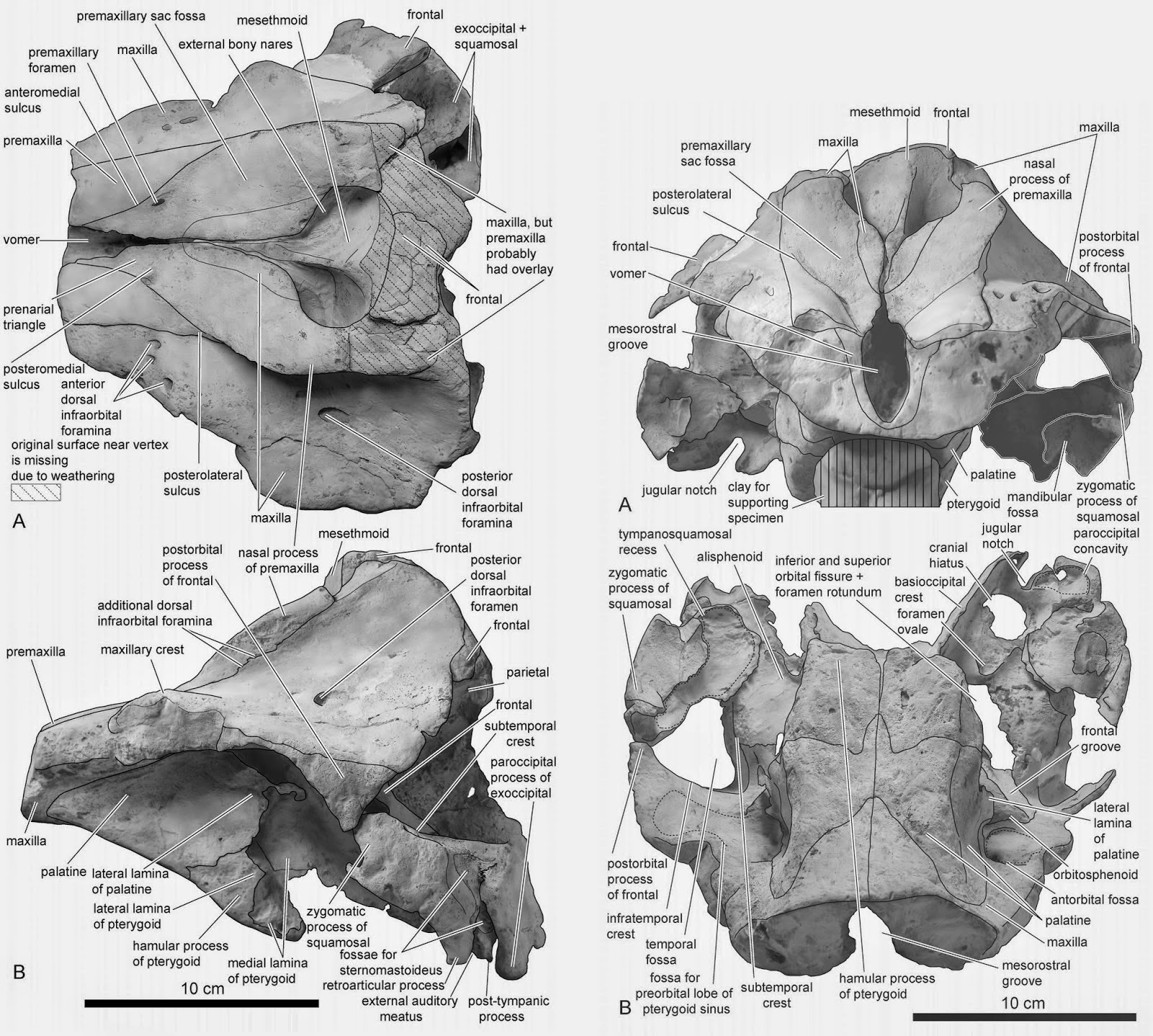
A Protocetid Whale from the early Middle Eocene of Togo, West Africa.


The Earliest Whales appeared in what is now Pakistan and India at the eastern margin of the Tethys Sea then spreading along the southern margin of the Tethys (North Africa) and eventually reaching the Atlantic, then along the west coast of Africa, with specimens known from the later Eocene of Morocco, Senegal and Nigeria.
 
In a paper published in the Journal of Paleontology in January 2014, Philip Gingerich of the Department of Earth and Environmental Sciences and Museum of Paleontology at the University of Michigan and Henri Cappetta of the Institut des Sciences de l’Evolution at the Université de Montpellier II, describe a new species of Protocetid (the earliest group of Whales known from outside Pakistan and India) from the early Middle Eocene Kpogamé-Hahotoé Phosphate Beds to the northeast of Lomé.

The new species is named Togocetus traversei, where ‘Togocetus’ means ‘Togo-Whale’ and ‘traversei’ the late Michel Traverse of Bourg de Lignerolles in France, who was an operations manager at the Kpogamé-Hahotoé Phosphate Works and collected many vertebrate specimens.

Togocetustraversei is described from a partial left dentary (jawbone), a series of teeth, a series of vertebrae and a number of fragmentary limb bones and ribs. It is thought that most of these bones come from a single specimen, however they were disarticulated and scattered, probably due to predation or scavenging shortly after death, and many bones were also broken by the actions of heavy machinery at the site.

Dentary remains of middle Lutetian Togocetus traversei, from Kpogamé-Hahotoé. (1, 2) Partial left dentary with roots oralveoli for a single-rooted P1 and double-rooted P2–4, in occlusal and left lateral view; (3) partial right dentary with roots for M2–3; (4, 5) partial left dentary with M3; (6), right dentary with the alveolus for C1; and partial crowns of P1–M2. Note the narrow, deep dentaries; endof the mandibularsymphysis near the anterior root of P3; diastemata separating C1, P1, P2, P3 and P4; and unusually small mandibular canal for a protocetid. Abbreviation: mc = mandibular canal. Gingerich & Cappetta (2014).

Gingerich and Cappetta also report the remains of two other Protocetids from the site, as well as a Protosirenid (early Sirenian) a Dugong and some unidentified Mammal bones.

See also…

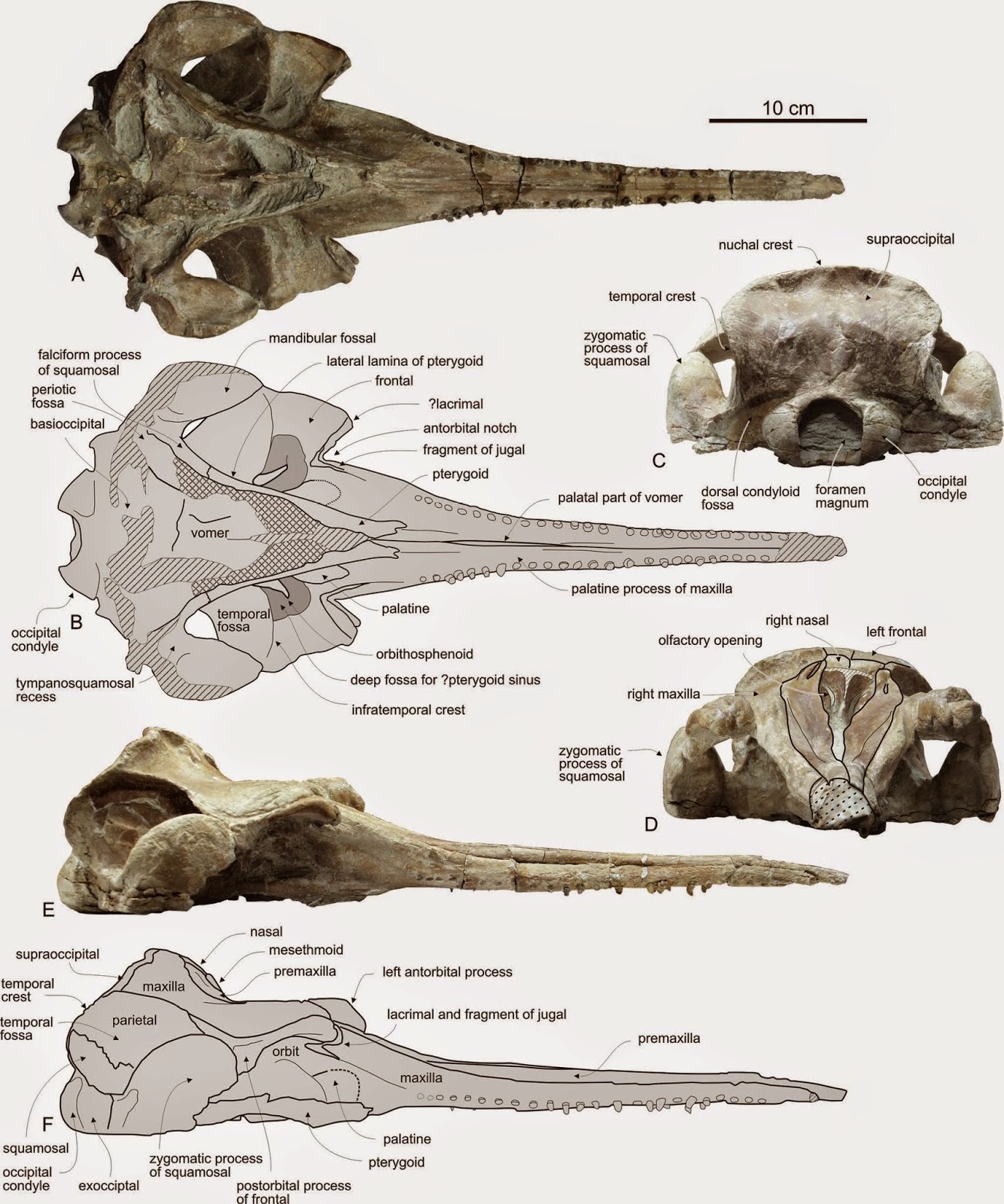
Dolphins, Delphinidae, are the most diverse group of Whales (or indeed any form of Marine Mammals) alive today, with 36 described species including charismatic animals such as Bottlenose Dolphins and Killer Whales. Historically a large number of fossils have also been...


The Squalodelphinidae are a small group of small to medium-sized Toothed Whales known from the Miocene of Europe and North and South America. They are thought to be related to the modern Asian River Dolphin, Platanista gangetica, which lacks any close living relatives. The group is not well understood, with most described specimens being fragmentary in nature.


Follow Sciency Thoughts on Facebook.

Sunday, 7 September 2014

Four new species of Forest Gecko from West and Central Africa.

The application of genetic studies to populations of widespread animals and plants in recent years has revealed that many widespread ‘species’ are in fact made up of several different cryptic species, which resemble one-another closely (or even completely) but are in fact genetically distinct and incapable of reproducing with one another. This has profound implications for the conservation of the species in question, as it often becomes apparent that ‘species’ thought to have widespread distributions and large population sizes are often made up of several smaller populations with much more limited distributions, which are much more vulnerable to extinction. 

In a paper published in the Bonn zoological Bulletin in June 2014, Philipp Wagner of the Department of Biology at Villanova University and Zoologisches Forschungsmuseum Alexander Koenig, Adam Leaché of the Department of Biology & Burke Museum of Natural History and Culture at the University of Washington and Matthew Fujita of the Department of Biology at the University of Texas at Arlington, describe four new species of Forest Geckos that had previously been assumed to be populations of the species Hemidactylus fasciatus, which has recently been found to be a cluster of cryptic species. While these species are very similar morphologically, they do show differences in size and colouration, which enables them to be distinguished.

The species Hemidactylus fasciatus was first described in 1842, based upon specimens from the collection of the British Museum (now the Natural History Museum), and it is unclear exactly where the holotype originated (in taxonomy a single specimen is designated as the holotype, against which any subsequent specimens can be compared; when species are split those specimens determined to be of the same species as the holotype retain the original species name, whilst those determined to be of a different species are assigned a new name). Wagner et al. conclude that this specimen belongs to a large population that includes all specimens west of the Dahomey Gap (a gap in continuous forest running from eastern Ghana to western Nigeria and reaching from the grasslands of the Sahel south to the Gulf of Guinea), including Geckos from Guinea, Liberia, Côte d’Ivoire and Ghana.

Living specimen of Hemidactylus fasciatus from Liberia. Wagner et al. (2014).

Hemidactylus fasciatus (as now defined) is a large Forest Gecko, reaching 172 mm in length. It is pale grey in colour, with dark crossbands on its dorsal side (back), and lacks any form of spots or coloured tubercles. It has a broad, dark band collecting its eyes to the dark stripe on the back of its neck, and a pale upper lip.

The first new species described is named Hemidactylus kyaboboensis, meaning ‘from Kyabobo’, in reference to the Kyabobo National Park in the Volta region of Ghana. This species is known only from patches of discontinuous moist semi-deciduous rainforest within the Dahomey Gap, in the Togo Hills of eastern Ghana and the Missahöhe forests of Togo. Hemidactylus kyaboboensis is a medium sized Forest Gecko, reaching about 140 mm in length. It is grey in colour with darker crossbands on its dorsal surface, though these are less distinct than in Hemidactylus fasciatus, and it has prominent whitish spots and stripes. It has a narrower band connecting its eyes to the stripe on its neck, and a darker upper lip.

Living specimen of Hemidactylus kyaboboensis from the Kyabobo National Park. Wagner et al. (2014).

The second new species described is named Hemidactylus eniangii, in honour of the Nigerian herpetologist and conservation biologist Edem Eniang, who helped to collect the specimens from which this species was described in Cross River National Park, Nigeria. Hemidactylus eniangii is a medium sized Forest Gecko reaching about 140 mm in length. It is grey in colour with distinct darker bands, a narrow band connecting the eye to the neck stripe and a dark upper lip.

The holotype of Hemidactylus eniangii. Wagner et al. (2014).

The third new species described is named Hemidactylus coalescens, in reference to the method used to determine the species within the group (coalescent-based Bayesian analysis of 1,087 single nucleotide polymorphisms). It is a medium sized Forest Gecko, reaching 174 mm in length, grey in colour with narrow darker crossbands on its dorsal surface, and a very fine line connecting the eye to the neck stripe. Hemidactylus coalescens is found in the Congolian rainforest south of the Sanaga River, including southern Cameroon, Gabon and Congo.

Living specimen of Hemidactylus coalescens from the Campo Region of Cameroon. Wagner et al. (2014).

The final new species is named Hemidactylus biokoensis, meaning ‘from Bioko’, in reference to Bioko Island, an Equatorial Guinean territory in the Gulf of Guinea, to which it is endemic. Hemidactylus biokoensis is a medium sized Forest Gecko reaching 166.7 mm in length. It is pale in colour with darker crossbands on its back, and ligher spots on these bands. The stripe connecting the eye to the neck stripe is narrow. 

Living specimen of Hemidactylus biokoensis from the Reserva científica de la Caldera de San Carlos on Bioko Island. Wagner et al. (2014).

The rainforests of West and Central Africa are not continuous in extent, being broken up by areas of savannah grassland and dry forest, that are thought to have expanded into areas of continuous wet forest during the last Pleistocene glaciation, and never completely retreated. These drier areas serve as barriers to moisture-loving species such as Forest Geckos, and are likely to have led to fragmentation of an original population into smaller groups, which then became genetically isolated. These African forests appear to be home to a large number of highly localized Reptile and Amphibian species, which probably have their roots in forest fragmentation during the Pleistocene.

See also


As with many other groups, studies of Australian Geckos have, in recent years, revealed the presence of many cryptic species; populations which resemble other species yet are genetically distinct and incapable of...


In 1853 Lieutenant Colonel Edward Frederick Kelaart...


Broad-headed Snakes (Hoplocephalus bungaroides)...

Follow Sciency Thoughts on Facebook.

Sunday, 8 June 2014

Oil tanker hijacked off the coast of Togo.

An oil tanker has reportedly been hijacked off the coast of Togo, West Africa. The incident occurred at about 6.00 pm GMT on Wednesday 4 June 2014, when the Liberian Registered MT Fair Artemis sent a distress signal claiming to have been attacked by pirates. Officials at the Ghanaian port of Tema reported having received a radio message from the ship's captain on Friday 6 June, informing them that his ship had been hijacked and looted. The ship's owners Fairdeal Group have declined to confirm or deny this last report, but have affirmed that they remain committed to returning the crew and vessel to a safe port.


The MT Fair Artemis. Marine Traffic.

Piracy has become an increasing problem off the West African coast in the last year, with oil vessels a common target. the majority of attacks have been in inshore waters around the Niger Delta, and have involved local Nigerian criminals. Nigeria has a thriving black market in oil, driven by high poverty levels combined with a sprawling and hard to defend oil infra-structure, high fuel costs and poor relations between oil companies and local residents. Attacks further afield within the region are, however, a new development, and one that is causing alarm within the industry.

The last reported position of the MT Fair Artemis. Google Maps.

The MT Fair Artemis was reportedly carrying refined oil products rather than crude oil when it was attacked, making it a particularly lucrative target. There is very little capacity for refining oil in West Africa, and even Nigeria, which is one of the world's largest oil producers, is largely dependent on imported petroleum products for fuel. This means that black marketeers must either steal refined oil products, or refine crude oil themselves with home-made equipment, a difficult and often dangerous process.

See also...

 At least three dead following helicopter crash in Jubilee Oil Field off coast of Ghana.

Three people are known to have died in a helicopter crash off the...


 Nigerian sailor survives two days in sunken oil service vessel.

A Nigerian sailor has survived for two days in a tugboat that sank in 30 m of water roughly 32 km off the coast of Delta State, on 26 May 2013. The West African Ventures owned Jascon-4 was stabilizing...


 Oil spill in Bayelsa State, Nigeria.

A major spill has been reported in the Nembe Kingdom area of Bayelsa State, Nigeria, with oil covering mangrove swamps, rivers and commercial waterways. The spillage appears to have originated near to the Shell-owned Well 62, early on the morning of Friday 12...


Follow Sciency Thoughts on Facebook.