Showing posts with label Scandinavia. Show all posts

Sunday, 25 January 2026

Protesters block entrance to mine project site in Norway.

A group of protesters from the environmental group Nature and Youth have blocked entrances to a mining project in the Hammerfest Municipality in Finnmark County on the northern coast of Norway. The group of about 70 protesters from all over Norway have took the step on Saturday 24 January 2026 in support of the local Sámi community, who believe that traditional fisheries for Salmon and Cod are threatened by the project. Protests of this kind are illegal in Norway, and previous protests at the site have led to protesters being detained by the police.

The location of Hammerfest Municipality the north coast of Norway. Google Maps.

The mining project, which is operated by Blue Moon Metals, aims to excavate around 74 million tonnes of copper ore from a deep pit mine beneath a former open pit mine, which was active in the 1970s. The Norwegian government has approved this project because it considers copper a vital resource for a transition to green technologies (i.e. replacing fossil fuel-derived energy with electricity generated by renewable means). 

However, the planned operation intends to dump waste generated from the mine into Repparfjord, an important fishing ground for the local Sámi community, who believe that this is likely to have a significant affect on local fish stocks. The practice of dumping mine waste into the sea is still legal in Norway, but is illegal almost everywhere else (the only other countries which allow the practice are Indonesia, Turkey and Papua New Guinea).

Protesters blocking an entrance to the Nussir Mining Project in northern Norway on 24 January 2026. The banner reads 'We promise a hell - no dumping of tailing in the Repperfjord'. Jannik Abel/Nature and Youth.

Blue Moon Minerals, who acquired the site in February 2025, aim to mine the site in line with a mining permit issued to the former owners, Nussir Property, a decade ago, but Nature and Youth argue that significant new discoveries have been made about fish spawning in Repparfjord have been issued since this time, and that on that basis the mine should not be allowed to proceed. 

See also...

Thursday, 11 April 2024

Hoard of medieval silver coins found on Visingsö Island, Sweden.

Archaeologists from the Jönköping County Museum carrying out surveying work ahead of the installation of geothermal heating system in a church on Visingsö, an island on Lake Vättern in south-central Sweden, have uncovered a pair of medieval graves, one of which contained a hoard of silver coins. The coins were found close to the foot of the skeleton of a man thought to have been between 20 and 25 when he died. Similar finds are common in earlier, pre-Chistian burials in Scandinavia, but their inclusion in what is thought to have been a Christian burial is very unusual.

A hoard of silver coins discovered on Visingsö Island, Sweden. Jönköping County Museum.

The hoard comprises 170 coins of a type known as silver bracteates, which had a stamped motif on one side only, which were common in Germany and Scandinavia after between the twelfth and fifteenth centuries. These coins retained their value for only a limited time, then had to be taken back to the issuing authority and restamped, which was intended as a way of ensuring that money continued to circulate and couldn't be hoarded. The coins in the Visingsö hoard are thought to date to between 1150 and 1180, and contain many stamps not previously seen by modern archaeologists.

See also...

Sunday, 13 August 2023

Thousands forced to flee their homes as much of southern Norway affected by flooding.

Thousands of people have been forced to flee their homes, and at least one person has died, in flooding which has affected much of southern Norway. The country received about three times as much rainfall as would usually be expected in the month of July, with no sign of a let-up in the first part of August. Many rivers have burst their banks, and a series of landslides have been triggered as sediments became waterlogged, impacting transport networks and other infrastructure. Landslides are a common problem after severe weather events, as excess pore water pressure can overcome cohesion in soil and sediments, allowing them to flow like liquids. Approximately 90% of all landslides are caused by heavy rainfall. On Wednesday 9 August the Braskereidfoss Hydroelectric Dam on the Glomma River partially collapsed under the weight of water that had built up behind it, sending floodwaters across the border into Sweden. One woman is reported to have died after falling into a flooded stream on Tuesday 8 August.

Floodwaters from the Storelv River pouring through the centre of Hønefoss, to the northwest of Oslo, on 9 August 2023. Annika Byrde/NTB/Reuters.

Summer rainfall in Norway is usually driven by evaporation over the North Sea, leading to rain when westerly winds prevail, and drier spells when the wind blows from the east. However, much of this summer's rain has been driven by the exceptionally high temperatures in the Baltic Sea this July, which have led to higher rates of precipitation, and high levels of rainfall when the wind blows from the east. The average annual rainfall in Norway has risen by 18% in the past century, with much of that increase happening in the past four decades. Should high summer temperatures in the Baltic become a regular feature of a warming climate, then it is likely that Norway, and Scandinavia in general, could shift towards a much wetter climate.

Flooding at Aurdal in southeast Norway on 11 August 2023. Ole Berg-Rusten/NTB/AFP/Getty Images.

See also...

Follow Sciency Thoughts on Facebook.

Follow Sciency Thoughts on Twitter.


Tuesday, 29 November 2022

Investigating burial customs in Bronze Age Finland.

Bronze age Scandinavian burial practices are well documented from southern Norway and Sweden, as well as Denmark, where a wide range of burial styles, including large elite burial mounds, gallery graves, cairns and flat ground cemeteries. Away from this area the range of practices is much less diverse. In Finland, where the Bronze Age is thought to have lasted from about 1800 to about 500 BC, the only form of burial known from this period is the cairn. There are, however, a very large number of these cairns, some estimates suggesting as many as 10 000, of which only a tiny fraction have ever been excavated. Furthermore, many of the cairns that have been investigated have yielded no archaeological material. Where material has been found beneath cairns, the most common thing recovered is burned Human bone, apparently produced when the dead were cremated. Since many of the cairns which have been investigated were excavated at a time when methods in archaeology were rather less vigorous, it is possible that many of these also contained burned bone, but that this was overlooked. However, there are other possible explanations for the boneless cairns; they may have formerly contained unburned burials in wooden coffins (something known from southern Scandinavia), which would have decomposed far more quickly than burned bone in the acidic soils present across most of Finland. Alternatively, the interpretation of these sites as burial cairns may be completely wrong, they may simply represent piles of rocks formed as agricultural land was cleared, as landmarks used by sailors, indicators of land ownership, or sacred sites of some other, non-burial related nature. These possible explanations have been debated for over a century, without any evidence being found to favour one theory over another. 

Bronze Age cairns in Finland, particularly those found close to the coast, tend to be different to those constructed in the Stone Age (9000-1800 BC), being more monumental in nature. The largest of these Bronze Age cairns are the largest prehistoric monuments in Finland. The practice of cremating the dead appears to have been introduced to Finland at the beginning of the Bronze Age, and to have persisted till the end of the Iron Age, which in Finland is placed at 1050 AD. However, the way in which the cremated remains were buried changed considerably over that time, starting with large stone cairns in the Early Bronze Age, which shrank over time. Later a soil infill between the stones appeared, eventually progressing to the remains being buried beneath the ground in flat cemeteries. 

In a paper published in the International Journal of Osteoarchaeology on 9 June 2022, Kati SaloJarkko Saipio, Maddie Hentunen,  Kristiina Mannermaa, and Markku Oinonen of the University of Helsinki, present a review of cremated bone remains from cairn burials in Bronze Age Finland held in the National Museum of Finland, and provincial museums in Finland. They examine the number of burials beneath each cairn, the location of the cairns in relationship to resources such as agricultural land, and the health of those buried, as reflected by pathologies detectable on the cremated remains. They also look at the distribution of the cairns across Finland, and their timescale, introducing a number of new carbon-dates, and compare the burials to Bronze Age burials elsewhere in Scandinavia and around the Baltic Sea. Salo et al. aim to understanding the relationship between the changing use of food resources, health of the population, and burial customs over the course of the Bronze Age in Finland.

Bone material from 218 cairns was examined, including material from 76 cairns in the Satakunta Region of central Finland, where the densest concentrations of cairns are found, 50 cairns from the northern coast of Ostrobothnia, most of which have been shown to be Iron Age in origin, 36 cairns from the Southwest Finland Region, 33 cairns from the southern coast of the Uusimaa and Kymenlaakso regions, 16 from inland regions, and 7 from the Åland Islands.

Location of the cairn burial sites in this study. Dashed lines represent land uplift isobases. As the land uplift is greatest in the Ostrobothnian area (northern coast), these cairns have also mostly been located near the coastline in the Bronze Age. Wesa Perttola in Salo et al. (2022).

The study concentrates on the Bronze Age, and includes material from 118 cairns dating to this period, but also includes material from 57 Iron Age cairns, 37 cairns that may be either Bronze Age or Iron Age, and 6 cairns that have been shown to contain material from both the Bronze and Iron ages.

The cairns range from 1.6 to 21 m in width, 1 to 20 m in width, and 0.2 to 3 m in height, with an 'average' cairn being roughly 8 m long, 7 m wide, and 1 m high. Ninety seven of the cairns are built on top of identifiable stone rings, made of larger stones than the rest of the cairn, 31 are built around large individual boulders, and 24 are built around stone cists (small stone-built coffin-like boxes or ossuaries used to hold the bodies of the dead).

Bronze Age cairn in Satakunta (Kaupinvuori in Rauma). Leena Koivisto in Salo et al. (2022).

The most common item recovered from the cairns other than bone was ceramic, with 58 cairns producing ceramic fragments. This was followed by iron artefacts, recovered from 42 cairns, bronze objects, recovered from 41 cairns, quartz, 41 cairns, flint, 18 cairns, other lithic items, 37 cairns, and burnt clay, 14 cairns. However, some of the ceramic, stone, and burnt clay items may have come from Stone Age settlements overlain by the cairns, while some of the metal items may post-date cairn construction.

Salo et al. obtained 15 new carbon dates from bone fragments recovered from 14 cairns during the course of the study. These were added to previously obtained carbon dates, contributing to a growing chronological database for Bronze Age Finland. Altogether, 67 dates have now been obtained from 43 cairns. This dating of cairns in Finland has enabled the connection of cairn-building activities to be connected to other events in ancient Finland, such as shifting shorelines.

Nine of the new dates obtained by Salo et al. were from Satakunta, and six were from the Åland Islands. Thirteen were obtained from cremated Human bone, one from cremated Dog bone (which was found with cremated Human bones), and one from a Sheep or Goat bone. The two bones dated from the same cairn were the Dog bone and a Human bone, both from a cairn in the Åland Islands, with both dating from the Late Bronze Age. The Sheep or Goat bone was of Iron Age origin.

The dates obtained showed that many late Bronze Age cairns in Satakunta were built on top of Late Neolithic or Early Bronze age settlements, something which had previously been suspected, but which archaeologists had been unable to confirm by now. Late Bronze Age cairns in Satakunta were also often built around large solitary stones, generally glacial erratics (large stones deposited away from their source after being carried by glaciers). Furthermore, they demonstrate a connection between the distribution of Late Bronze Age cairns and agricultural land; in the Early Bronze Age cairns tended to be built on high up on prominent features, while Late Bronze Age cairns are typically located close to good agricultural land, and often known Bronze Age settlements. In Gotland (Sweden) the Late Bronze Age saw the appearance of permanent settlements, and across southern Scandinavia population levels are known to have risen from about 1000 BC onwards, leading people to expand into new areas. These changes are likely to have been linked to changing economic circumstances. An increase in the number of bronze artefacts originating from Scandinavia has also been recorded in Satakunta in the Late Bronze Age, something not observed in other parts of Finland. 

Salo et al. were able to identify the remains of a minimum of 212 individual Humans from 164 cairns. The majority of the cairns (132) nappeared to hold only a single burial, with 32 cairns holding the remains of between two and five individuals. The single cairn that contained the remains of at least five individuals also yielded Iron Age material, but with a single Bronze Age metal item. Two cairns in the Luistari cemetery in Eura were shown to contain at least four individuals. Both appear to have been repeatedly used over a long period of time, but with their oldest remains dating to the Late Bronze Age. 

Five left zygomatic bones (cheekbones) from the Salo Palomäki Cairn, indicating a minimum of 5 individuals were buried beneath the cairn. Kati Salo in Salo et al. (2022).

Iron Age cairns were more likely to contain multiple burials than Bronze Age cairns, although it is also possible that all the cairns contained more individuals than have been recorded, since the numbers are based upon the minimum number of individuals that could have produced the recovered remains. One Iron Age site, Cairn 89 from Rieskaronmäki, in Nakkila, in the Satakunta Region, is thought to contain five-to-six individuals, buried at different locations within the cairn over a period of about 270 years, based upon radiocarbon dates.

Single-burial cairns are also common in Bronze Age Sweden, although here double-burials are more common. Salo et al. also note that several other burial types are present in Bronze Age Sweden, and that in some of these multiple burials are more common. 

Ninety five cairns were shown to contain identifiable Animal bones, 53 of which also contained Human remains. A further 15 cairns contained unidentifiable Animal remains; although in all of these cases the sample of material was very small, i.e. less than 3 g. The majority of these Animal bones were uncremated; 27 of the cairns were found to contain cremated Animal bones alongside cremated Human remains, but these were all dated to the Iron Age. Additionally, some of the cremated Animal bones found in Bronze Age cairns may actually come from older, Stone Age, settlements covered by the monuments. This absence of cremated Animal remains from Bronze Age cairns in Finland appears to be significant, implying that the burning of Animals with the deceased and/or the deposition of burned Animal remains alongside the deceased, was not a common practice. These practices were common in Middle and Late Iron Age burials in Finland, and in Bronze Age burials elsewhere in Scandinavia. This difference in timing may be linked to the later adoption of field-cultivation in Finland than elsewhere in Scandinavia.

Iron Age cairns in Finland were also more likely to contain artefacts than Bronze Age cairns, and were more likely to be built on top of older settlements, which may also reflect improving agricultural knowledge.

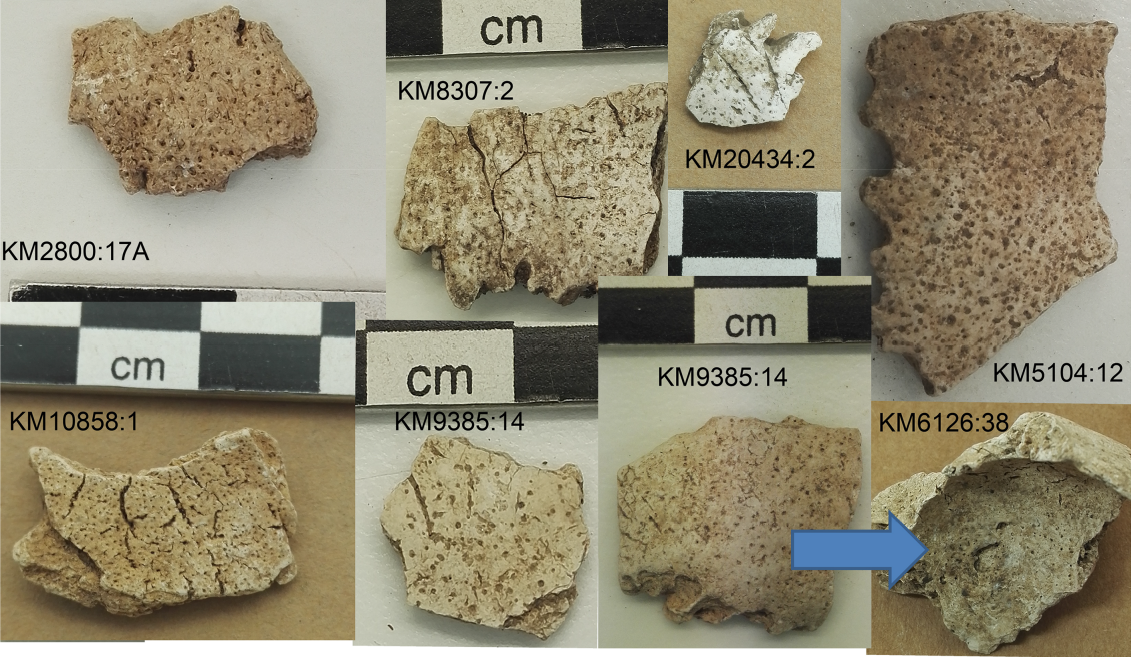
Between fifteen and eighteen individuals from fifteen Bronze Age cairns and seven individuals from Iron Age cairns could be diagnosed with porotic hyperostosis; a pathological condition in which patches of spongy bone form on the cranium as a result of anemia, which in turn may be a result of malnutrition or a genetic condition. A further nineteen cairns, ten of which could be dated to the Bronze Age, produced remains with signs of osteoarthritis.

Porotic hyperostosis in Rauma Huhdanniska (KM2800:17A), Eura Junnila (KM8307:2), Parainen Trollberg (KM20434:2), Harjavalta Kaasanmäki (KM5104:12), Laihia Murhaasto (KM10858:1), and Vöyri Viskusbacken (KM9385:14). Cribra orbitalia from Nakkila Kuusisto site (KM6126:38). Kati Salo in Salo et al. (2022).

Two Iron Age Cairns and two Bronze Age cairns produced remains with signs of having lost teeth before death. Two Bronze Age cairns produced remains with signs of periapical lesions (tissue produced by a bone or tooth in response to an infection), and one Bronze Age and one Iron Age cairn produced remains with signs of  periosteal bone formation, which is generally provoked by an injury. Osteochondritis dissecans, caused by repetitive trauma to a joint, was observed in remains from a Bronze Age cairn, and may also be present in remains from an Iron age Cairn. One Bronze Age cairn produced a vertebra with a possible Schmorl's node, a form of spinal disk herniation, which would probably have been caused by repetitive injury.

Joint conditions. Possible Schmorls node from Eura Kivimäki site (vertebral body, KM 7412:4). Signs of degerative joint disease from Uusikaarlepyy Råbacken (vertebral body, KM24015:20), Nakkila Rieskaronmäki (articular facet of a rib, SatM16455:4), Laihia Riitasaari (body of a cervical vertebra, KM10435:1), Pedersöre EsseLillmossbacken (scapula, glenoid KM10105:9), and Isokyrö Kaaminmäki (atlas, articular facet for dens axis KM10678:60). Possible osteochondritis dissecans (first hand phalanx, proximal) from Eura Uotinmäki (KM5629:232) and Laihia Riitasaari (KM 10435:1) sites. Kati Salo in Salo et al. (2022).

The commonest form of pathology seen in archaeological material is dental. However, teeth seldom survive cremation, and the material used in Salo et al.'s study was no exception to this, with only small fragments of tooth found. Some of the alveolar fragments found showed signs of dental problems - tooth loss and periapical lesions - showing that these conditions were present in the population, but providing little other information. 

Cribra orbitalia and porotic hyperostosis, spongy bone formation around the orbit and cranium, respectively, both of which are caused by chronic iron deficiencies, were observed in several sets of remains. These can be caused by a direct shortage of iron in the diet, by other dietary problems, such as a lack of vitamin B12, or genetic conditions, something which today is most common among people living around the Mediterranean Basin. Similar conditions can also be caused by Malaria, something common in Finland until the early twentieth century.

The mostly densely populated areas in Bronze Age Finland were around the coast, making it highly likely that Fish were an important dietary resource. Remains from archaeological sites close to the coast around Europe over a wide range of times have been shown to be more prone to porotic hyperostosis and cribra orbitalia than inland populations, and it has been suggested that these conditions might have been caused by parasites contracted from Fish. 

The adoption of agriculture has been widely linked to declining health in many Human populations, and the Bronze Age is thought to have been the period during which agriculture became widespread in Finland.

Cribra orbitalia and porotic hyperostosis have been shown to be rare in populations from the Neolithic-Bronze Age transition in southern Sweden, and the Late Bronze Age of Estonia. These conditions have been shown to be very common in Early Bronze Age Poland, where they are found in more than 20% of the population, however, this is in a sample of remains with much better overall preservation, so direct comparison is difficult.

The other common pathology found in the collection is marginal osteophytes, or signs of osteoarthritis. This is found in 10 individuals, who are typically older than the majority of the samples. Of the 10 individuals, all but one were found in Satakunta, and all but one were found in cairns built on top of former settlements. The majority of the remains with osteophytes appear to have been male, which is common in ancient populations. This may be a sign that the individuals had been undertaking hard physical labour, associated with agriculture, which is believed to have been adopted in Satakunta before other regions of Finland. The practice of building cairns on top of former dwelling sites appears to have been linked to the adoption of agriculture, something which had happened by the Late Bronze Age in Satakunta, but which did not happen until the Iron Age in other parts of Finland. Other studies have shown that early agriculturalists were particularly prone to osteoarthritis of the vertebral joints, which seems to be the area most affected in the individuals from Satakunta.

Another practice that appears to have been adopted earlier in Satakunta than other areas is that of placing more than one individual beneath the same cairn. These cairns with more than one internment were also the ones which had the highest rates of osteophytes and porotic hyperostosis, with these individuals also being more likely to be male. Thus these were older male individuals who had been involved with hard manual labour, probably agriculture related, and were suffering from iron-deficiency, something also associated with the adoption of agriculture, which led to lower levels of meat consumption. Analysis of Animal bone from Late Bronze Age cairns in Satakunta suggests that Seal meat was disappearing from the diet at this time. 

Other pathologies, such as trauma or periostitis, were much less common, but this does not mean that they were absent from the population. Other studies of cremated remains have shown that these are generally much less common, suggesting that this is related to the cremation process, rather than the health of the population, possibly because new bone growth tends to split away from older bone when burned. Degenerative joint disease and porotic hyperostosis are more likely to survive cremation, and have been shown to be more common in other populations where cremation was practised.

It is likely that future excavations will uncover more remains from cairns in Finland, and that this will lead to a more detailed understanding of cairn-building people and the lives they lead. Salo et al. suggest that more detailed studies of Iron Age cairns may lead to a better understanding of the transition to an agricultural lifestyle across Finland. 

Strontium isotope analysis could potentially be used to determine the origin of the individuals within the cairns. Studies using this method have been carried out in Estonia, and Gotland (Sweden), where genetic analysis of Bronze Age burials has also been undertaken, although this is not likely to be possible in Finland, where cremation appears to have been a universal practise, as DNA cannot usually be recovered from cremated remains.

The Bronze Age is the earliest period in Finland where sufficient remains exist for a large scale comparison between sites, and Salo et al.'s study provides insights into this little-known area of the European Bronze Age. The common Bronze Age practise appears to have been to bury a single individual beneath a large cairn, although this appears to have changed over time, with multiple burials appearing in the Late Bronze Age and becoming more common in the Iron Age, apparently reflecting a change in burial custom associated with the spread of agriculture. These single burials appear to have been much less likely to have been accompanied by Animals or artefacts than contemporary burials in southern Scandinavia, probably reflecting cultural and economic differences between the two areas. Porotic hyperostosis is more common than in other Bronze Age populations around the Baltic Sea, and osteophytes are seen to appear earlier in Satakunta than other areas of Finland, apparently connected to an earlier adoption of agriculture.

See also...


Follow Sciency Thoughts on Facebook.

Follow Sciency Thoughts on Twitter.


Sunday, 7 August 2022

Understanding the threat to social cohesion presented by the emergence of a warrior caste in the Nordic Bronze Age.

The emergence of a warrior caste is seen as one of the defining features of the European Bronze Age, accompanied by concepts of a warrior ideal. The precise role of such warriors within society is debatable, and likely to have varied from place to place, but it is generally accepted that a ruling warrior elite appeared in Southern Scandinavia, northern Germany, and parts of Poland and the Netherlands. However, the exact nature of this ruling class is uncertain, with centralised kingdoms, local chiefdoms, extended ruling families, and flatter societies in which one's status was entirely dependent on personal prowess have all been suggested. 

Whatever the truth of this, the widespread occurrence of Warrior Burials (individual warriors buried with weapons and other grave goods indicative of social status), buried weapons hoards, and rock art depicting the actions of warriors, all clearly send a message that these were an important group of people.

Warriors are considered to have been important figures in the trade in metals. They are known to have taken part in (sometimes lengthy) journeys by both land and sea. Moreover, the presence of items associated with personal grooming in Warrior Burials suggests that they were image conscious, and possibly felt the need to distinguish themselves from other members of the community. Such a desire to distinguish themselves may have related to the membership of an elite caste which controlled access to some forms of knowledge, possibly concerning navigation, the symbolic interpretation of rock art, or the use of weapons.

Studies of the Bronze Age societies which produced these warriors have not generally considered the impact of their activities upon those societies. Warriors are assumed to have gone to war, fought, and then returned and continued with their lives, something which seems unlikely given our knowledge of later warrior societies, and the difficulties that modern soldiers often have re-integrating into their societies after taking part in conflicts.

In a paper published in the European Journal of Archaeology on 3 August 2022, Christian Horn of the Department of Historical Studies at the University of Gothenburg, considers the threat that such warriors may have presented to their own societies, and how those communities may have dealt with that threat.

Horn considers the evidence for warfare during the Nordic Bronze Age, and considers against whom such conflicts are likely to have been fought. He then considers the impact that the presence of the warriors who fought in these wars may have had on the societies which produced them, and looks for evidence for those societies having taken steps to cope with this threat.

Warfare appears to have been a common practice during the Nordic Bronze Age. The Early Bronze Age saw the appearance of the first swords, weapons which were to become the preferred status symbol of warrior classes for the next three millennia, as well as the refinement of spears, which had been around since at least the Neolithic, as weapons of war.

Bronze weapons are less prone to corrosion than iron weapons, which has allowed the examination of many Bronze Age weapons for traces of use. This has uncovered significant evidence of these weapons being used regularly (rather than just held as status symbols), including V-shaped notches, likely to have been caused by blows from other blades, U-shaped notches, variously interpreted as being caused by impacts against axes, shields, or bone, and signs of the weapons having been regularly repaired and maintained to keep them battle-ready.

(a)–(b) Early Bronze Age spears from Torsted (Denmark, NM K B15118.19); (c) Late Bronze Age spear from Bad Oldesloh (Germany, LMSH KS923); (d) Early Bronze Age full-hilted sword from Bragby (Sweden, SHM 14759); (e) Early Bronze Age sword from Vreta Kloster (Sweden, SHM 10419:211). Horn (2022).

Evidence of violence is also fairly common in burials from the Early Bronze Age of southern Scandinavia. Examples of this include burial from Over-Vindinge in Denmark, where the skeleton of a man aged between 50 and 60 buried between 1600 and 1500 BC was found to have a broken spear tip embedded in his pelvis. Another burial site, at Kråkerøy in Norway, produced the body of a man who was suffering from malnutrition, but had apparently died as a result of several sword blows to the head and neck. Another male body showing signs of having died from sword blows to the head and arm was found on a former seafloor at Granhammar in Sweden, possibly indicating that he died in a conflict at sea in about 800 BC.

Larger scale sites are also known from the region. At Sund in Norway the bodies of 22 men, women, and children, apparently all killed in a single incident, were found. These remains all showed signs of long-term malnutrition and hard labour, making it likely that they were slaves or other low status individuals. Finally in the Tollense Valley in Germany, a battlefield site has produced 140 sets of remains to date, with roughly 5-7% showing signs of violent injuries (this does not mean that the other remains are those of people who died peacefully, as fatal injuries to soft tissue will not be preserved in skeletonised remains). Many of these injuries appeared to be old wounds, which had healed at the time of the battle, implying warriors who had taken part in more than one conflict.

Weapons, and Human remains, give a good idea about the physical effects of violence in Early Bronze Age Scandinavia, but art has the capacity to reflect how this violence was perceived and imagined by the people involved. Rock art dating to the period is widespread across Southern Scandinavia, and includes over 6000 known depictions of Human figures, as well as more than 20 000 depictions of boats. Not all aspects of life are shown in this art. Pottery and houses are never shown, and agricultural activities are known form only a few sites. 

In order to analyse the representation of violence in these images, Horn looked at a dataset of 4000 images held by the Swedish Rock Art Research Archive. Images which were damaged or unclear were excluded from the study, leaving 3742 Human figures.  Of these, 977 could be identified as male, while 32 can be identified as female. Offensive weapons were carried by 74% of the male figures, 34% of the unidentified figures, and 6% of the female figures, while defensive weapons were carried by 575 figures, 226 of which also had an offensive weapon; of these 417 could not have their sex identified, while 158 were male (i.e 16% of unidentified figures and 15% of males had defensive weapons).

A network analysis carried out by Horn found that male figures were strongly associated with exaggerated calves, swords and boats; axes, spears, and shields were also common. Female figures were also strongly associated with exaggerated with exaggerated calves and boats, but their association with swords was much lower, and other weapons absent. Long hair was also important for female figures.

Weapons are far more common in male burials than female ones in the Scandinavian Bronze Age, and violence-related injuries more frequent on male bodies, both of which suggest a male-dominated society in which social status was linked to the ability to wage war. Many pieces of rock art also depict figures in which weapons are fused with male sexual organs, apparently indicating the concept of sexual violence, and not just against women; these scenes depict both heterosexual and homosexual couplings, as well as couplings between Humans and Animals.

Scenes potentially showing sexualized violence. (a) A warrior with erect penis stabs a sexless figure with a sword or spear (Tanum 158:1); (b) Scene depicting various forms of sexual intercourse involving armed figures, and a figure with a raised spear in a fighting position (Kville 182:1). Horn (2022).

The depiction of acts of sexual violence, combined with evidence of violence against low-status individuals, makes it unlikely that these Bronze Age Scandinavian fighters were 'clean' warriors bound by some sort of noble code. Rather, these individuals appear to have been capable of using severe violence and brutality to subdue opponents. The depictions of weapons being carried and presence of weapons in burials probably indicate that the open carrying of weapons was normal, something well documented in more recent warrior-dominated societies. The widespread depictions of violence also make it likely that violence was celebrated rather than sanctioned. In such an environment it would be very easy for warriors to turn violence against weaker groups within their own society, in order to protect or bolster their own social standing.

The Battle of Tollense took place in the thirteenth century BC, a time also noted for numerous other conflicts. This has been linked to the appearance of the Urnfield Culture, which brought with it new belief systems and practices which clashed with local religions and customs. Some of the fighters from Tollense have been shown to have come from far from a long way away from the battle, suggesting they were invading outsiders. However, the much of the conflict occurring during this period still seams to have been local in nature. 

All of the fighters appearing in Bronze Age Scandinavian Rock Art are depicted in the same way, armed with similar weapons. The Vitlycke Panel at Tanum in Sweden depicts two identical warriors fighting across a boundary, shown by a row of spots. This may imply a standardised way of drawing such fighters, regardless of their actual origin or appearance, but Horn believes that is part of a body of evidence suggesting most conflict was in fact local in nature. The spear tip which killed the man at Over-Vindage was of local manufacture, and the man buried at Granhammar appears to have been killed by a local axe. The victims of the massacre at Sund were also probably killed in some local conflict, possibly linked to slaving.

Scene showing three or four warriors with similar bodies and equipment in a fight across a border depicted by a row of cupmarks at Vitlycke (Tanum 1:1). Horn (2022).

Warriors in Bronze Age Scandinavian rock art are often closely associated with boats, which again appear standardised in form, with very little variation. A scene depicting a Horse battle at Litsleby in Sweden, thought to date to the end of the Bronze Age, shows two groups of mounted warriors, again with no difference between the figures or their equipment. All of this appears to represent Scandinavian warriors fighting other Scandinavians, rather than invaders from elsewhere in Europe with different weapons and cultural items.

Fighting scenes. (a) Warriors with spears and two boats, Massleberg (Skee 614:1); (b) Warriors on horseback armed with shields and spears, Litsleby (Tanum 72:1). Horn (2022).

Warriors crossed boundaries into the territories of other groups to commit acts of violence, and used violence to defend the boundaries of their own group. Thus they were often absent from the group, and frequently tainted by death, which many societies have regarded as spiritually polluting. This can make warriors somewhat outsiders in their own communities, figures to be venerated, but also figures viewed with a degree of fear and suspicion.

The threat presented by warriors returning to their communities may also have been more tangible. A group of warriors returning from battle in a state of arousal and being treated with high kudos can present a threat to rulers even today, with plenty of modern warlords having ceased power under these circumstances. Even where local rulers were already from a warrior class, they could easily be overthrown by returning, battle-hardened young warriors with greater fighting skills or ruthlessness. If this happens repeatedly it can seriously threaten the stability of a society, something which is likely to have been a serious risk in the Nordic Bronze Age.

Furthermore, violence can be an addictive activity, particularly in societies where it is generally applauded, and when the use of violence becomes a successful political tool it can be very hard to stop. This may have been the cause of events like the massacre at Sund and the violent killing at Grenhammar. If the majority of conflicts being fought in Scandinavia at this time were local in nature, then the communities to which warriors were returning would have closely resembled the societies which they had been fighting, further undermining any social taboos against violence at home.

If returning warriors were, as Horn theorises, a threat to their own societies both spiritually and politically, then those societies can reasonably have been expected to take measures to minimise that threat, something for which he believes he has evidence.

Horn suggests that the burial of weapons, common in Scandinavia and other areas of Europe during the Bronze Age, could represent a ritual sacrifice associated with a right of passage which enabled warriors to give up their warrior status and move on to other roles in society. Such sacrifices may have involved the ritual destruction of the weapons. In Scandinavia and Northern Europe weapons burials almost always occur within 20 km of navigable waters; i.e. less than a day's walking distance. Thus potentially these burials could represent the giving up of the weapons of an entire group of warriors involved in maritime raiding.

Interpreting ritual activities from ancient sites is difficult, and requires careful excavation of the site. Many older weapons hoards in Scandinavia (and other areas) were discovered before archaeologists had an appreciation of this, resulting in a loss of information from these sites. However, some archaeologists, even in the nineteenth century, did provide careful context of their discoveries, enabling some interpretation to be made.

The Smørumøvre Hoard was excavated by Danish Archaeologist Jens Jacob Asmussen Worsaae in the 1850s. Worsaae recorded that the hoard comprised a group of bronze spearheads tightly packed together, and embedded in the floor of a former lake, possibly indicating that the had been bound into a package without their hafts before ritual deposition. The Torstead Hoard, again from Denmark, was uncovered in the 1960s, and provides better context. This hoard comprises forty spearheads and seven axeheads, deposited between 1800 and 1600 BC, within a small stone structure, which could not have held the hafts of any of these weapons. The removal of the hafts of these weapons could be a way of ritually 'killing' them by rendering them into a useless state. Some of the spears buried at Torstead also had their tips broken off, as did several swords from a hoard at Dystrup, with other swords being damaged in other ways. The Torstead Hoard was even buried in a small stone cist, similar to the ones in which Human remains were deposited at the time, re-enforcing the idea that these weapons may have been considered dead.

This ritual killing of weapons may have represented a way for warriors to shed their identities and re-integrate into their communities, something which has been recorded in some more recent societies, and proposed as an explanation for similar hoards from the Chalcolithic of Europe and Late Bronze Age of Britain.

Rock art may also have played some role in the ritual reinstatement of warriors into society. Curiously, areas where numerous hoards of Bronze Age weapons have been found tend to have very few rock paintings, while areas with large numbers of rock paintings often lack depositions of weapons, although both tend to be local to water. 

In Sweden, the majority of Bronze Age rock art is found along the stretch of coast between Bohuslän to Mälardalen, and long the large rivers of this area, and around lakes Vänern and Vättern. At Gerum a large panel depicts 95 boats, 43 figures, 28 animals, 16 footprints (some of them shod), and 187 cupmarks. The land here has been uplifting since the end of the last Ice Age, and the panel was likely completely covered by water until shortly before carving began, with carvings being made close to the water, possibly from a boat, constantly working their way down the rock face as it became exposed.

The carvings at the Berget III site in the Tyrifjorden-Randsfjorden area of Norway are also thought to have been made from a boat. This carvings are 1.7-1.8 m above sealevel today, but when they were carved would have been only slightly above the water when they were carved. This is also thought to have been true of the rock art at Flögen in Sweden, where a series of boats (and a single Bull), were depicted over the course of the Bronze Age. These are now between 11.66 and 12.51 m above sealevel, but would have been slightly above the water when made, making it likely that the artists were either in a boat or standing on frozen ice.

(a) Density of Nordic Bronze Age metalwork based on published large catalogues. (b) Density of Nordic Bronze Age rock art. Horn (2022).

All of the rock art is placed close to water, but never in sight of the open sea. Instead it is placed within straits, fjords, and bays in places it can be seen from land, but hidden from the sea, presumably indicating that the scenes were directed inwards, for the benefit of the local community, but hidden from outsiders.

In the Early Bronze Age, warriors (and others) were buried in stone barrows and cairns, where weapons and other grave goods could be easily placed. By the Late Bronze Age, however, cremation had taken over as the predominant way of disposing of the dead, severely limiting the potential for sending metal goods with the dead. In areas where rock art was common, the amount of grave goods placed in tombs was lower, and the tombs tended to be placed close to the panels, and often directly above them, possibly indicating that these could serve as a substitute for grave goods. The proximity of these tombs and art to the sea, while at the same time being hidden for it and visible to the community may have in some way been symbolic of a warrior's final journey.

Grave goods included in Warrior Burials were often diverse and numerous, including weapons, equipment for personal grooming, and decorative items. In contrast, the weapons depicted in rock art are generally very simple in their execution. Curiously, many weapons were drawn in the earliest Nordic Bronze Age were subsequently reworked and modified extensively through the remainder of the period, sometimes having Human figures added.

Once the practice of burning the dead became predominant in the Late Bronze Age, the amount of grave goods buried with the cremated dead shrank, and became less varied. At the same time the burials themselves became less conspicuous, typically on hillslopes, or as secondary burials inside existing tombs. The process began between about 1300 and 1100 BC, when detailed images of warriors began to appear in the rock art, with these detailed warriors becoming most common and elaborate between about 950 and 720 BC.

Horn interprets this as an attempt to depict a warrior ideal in art, as this medium took over from elaborate burials as the main way to remember the dead. This art may well have been used in conjunction with other rituals, and helped to convey older narratives about warriors and heroes, but this does not mean that such rituals were not also intended to help warriors find their correct place in society, or step into and out of the role of warrior when this was required. 

Nordic Bronze Age rock art appears to have been used to celebrate an ideal of maritime warriorhood. The placement of this art, at the entrance/exit to enclosed waterways, combined with a ritual link to metalworking, may suggest that this art played a role intended to help men change their roles, from fierce maritime warriors on the outside, to responsible members of the community when at home. 

The long-distance raiding abilities of early Scandinavian cultures are often considered in historical studies, but shorter raids against nearby communities would have been much more common, and no less dangerous. Furthermore, those involved in such nearby conflicts would have had far less time for any associated bloodlust to subside before returning to their home communities, making them more dangerous at home. This could have created a need for a ritual means to re-integrate these warriors into their home communities. Horn theorises that the location of the rock art, combined with the fact that this was periodically reworked, strongly implies that this art was involved in the journey-related rituals, the most likely of which to need a ritual intervention were war raids.

The ritual sacrifice of weapons, combined with the retelling and embellishment of local warrior legends, performed at the boundaries of communities and the outside world, could have been a way for men to keep their identities as warriors in the outside world separate from their roles within their home community, thereby reducing the danger of internal conflicts within small communities.

See also...

Follow Sciency Thoughts on Facebook.

Follow Sciency Thoughts on Twitter.