Showing posts with label Finland. Show all posts

Tuesday, 29 November 2022

Investigating burial customs in Bronze Age Finland.

Bronze age Scandinavian burial practices are well documented from southern Norway and Sweden, as well as Denmark, where a wide range of burial styles, including large elite burial mounds, gallery graves, cairns and flat ground cemeteries. Away from this area the range of practices is much less diverse. In Finland, where the Bronze Age is thought to have lasted from about 1800 to about 500 BC, the only form of burial known from this period is the cairn. There are, however, a very large number of these cairns, some estimates suggesting as many as 10 000, of which only a tiny fraction have ever been excavated. Furthermore, many of the cairns that have been investigated have yielded no archaeological material. Where material has been found beneath cairns, the most common thing recovered is burned Human bone, apparently produced when the dead were cremated. Since many of the cairns which have been investigated were excavated at a time when methods in archaeology were rather less vigorous, it is possible that many of these also contained burned bone, but that this was overlooked. However, there are other possible explanations for the boneless cairns; they may have formerly contained unburned burials in wooden coffins (something known from southern Scandinavia), which would have decomposed far more quickly than burned bone in the acidic soils present across most of Finland. Alternatively, the interpretation of these sites as burial cairns may be completely wrong, they may simply represent piles of rocks formed as agricultural land was cleared, as landmarks used by sailors, indicators of land ownership, or sacred sites of some other, non-burial related nature. These possible explanations have been debated for over a century, without any evidence being found to favour one theory over another. 

Bronze Age cairns in Finland, particularly those found close to the coast, tend to be different to those constructed in the Stone Age (9000-1800 BC), being more monumental in nature. The largest of these Bronze Age cairns are the largest prehistoric monuments in Finland. The practice of cremating the dead appears to have been introduced to Finland at the beginning of the Bronze Age, and to have persisted till the end of the Iron Age, which in Finland is placed at 1050 AD. However, the way in which the cremated remains were buried changed considerably over that time, starting with large stone cairns in the Early Bronze Age, which shrank over time. Later a soil infill between the stones appeared, eventually progressing to the remains being buried beneath the ground in flat cemeteries. 

In a paper published in the International Journal of Osteoarchaeology on 9 June 2022, Kati SaloJarkko Saipio, Maddie Hentunen,  Kristiina Mannermaa, and Markku Oinonen of the University of Helsinki, present a review of cremated bone remains from cairn burials in Bronze Age Finland held in the National Museum of Finland, and provincial museums in Finland. They examine the number of burials beneath each cairn, the location of the cairns in relationship to resources such as agricultural land, and the health of those buried, as reflected by pathologies detectable on the cremated remains. They also look at the distribution of the cairns across Finland, and their timescale, introducing a number of new carbon-dates, and compare the burials to Bronze Age burials elsewhere in Scandinavia and around the Baltic Sea. Salo et al. aim to understanding the relationship between the changing use of food resources, health of the population, and burial customs over the course of the Bronze Age in Finland.

Bone material from 218 cairns was examined, including material from 76 cairns in the Satakunta Region of central Finland, where the densest concentrations of cairns are found, 50 cairns from the northern coast of Ostrobothnia, most of which have been shown to be Iron Age in origin, 36 cairns from the Southwest Finland Region, 33 cairns from the southern coast of the Uusimaa and Kymenlaakso regions, 16 from inland regions, and 7 from the Åland Islands.

Location of the cairn burial sites in this study. Dashed lines represent land uplift isobases. As the land uplift is greatest in the Ostrobothnian area (northern coast), these cairns have also mostly been located near the coastline in the Bronze Age. Wesa Perttola in Salo et al. (2022).

The study concentrates on the Bronze Age, and includes material from 118 cairns dating to this period, but also includes material from 57 Iron Age cairns, 37 cairns that may be either Bronze Age or Iron Age, and 6 cairns that have been shown to contain material from both the Bronze and Iron ages.

The cairns range from 1.6 to 21 m in width, 1 to 20 m in width, and 0.2 to 3 m in height, with an 'average' cairn being roughly 8 m long, 7 m wide, and 1 m high. Ninety seven of the cairns are built on top of identifiable stone rings, made of larger stones than the rest of the cairn, 31 are built around large individual boulders, and 24 are built around stone cists (small stone-built coffin-like boxes or ossuaries used to hold the bodies of the dead).

Bronze Age cairn in Satakunta (Kaupinvuori in Rauma). Leena Koivisto in Salo et al. (2022).

The most common item recovered from the cairns other than bone was ceramic, with 58 cairns producing ceramic fragments. This was followed by iron artefacts, recovered from 42 cairns, bronze objects, recovered from 41 cairns, quartz, 41 cairns, flint, 18 cairns, other lithic items, 37 cairns, and burnt clay, 14 cairns. However, some of the ceramic, stone, and burnt clay items may have come from Stone Age settlements overlain by the cairns, while some of the metal items may post-date cairn construction.

Salo et al. obtained 15 new carbon dates from bone fragments recovered from 14 cairns during the course of the study. These were added to previously obtained carbon dates, contributing to a growing chronological database for Bronze Age Finland. Altogether, 67 dates have now been obtained from 43 cairns. This dating of cairns in Finland has enabled the connection of cairn-building activities to be connected to other events in ancient Finland, such as shifting shorelines.

Nine of the new dates obtained by Salo et al. were from Satakunta, and six were from the Åland Islands. Thirteen were obtained from cremated Human bone, one from cremated Dog bone (which was found with cremated Human bones), and one from a Sheep or Goat bone. The two bones dated from the same cairn were the Dog bone and a Human bone, both from a cairn in the Åland Islands, with both dating from the Late Bronze Age. The Sheep or Goat bone was of Iron Age origin.

The dates obtained showed that many late Bronze Age cairns in Satakunta were built on top of Late Neolithic or Early Bronze age settlements, something which had previously been suspected, but which archaeologists had been unable to confirm by now. Late Bronze Age cairns in Satakunta were also often built around large solitary stones, generally glacial erratics (large stones deposited away from their source after being carried by glaciers). Furthermore, they demonstrate a connection between the distribution of Late Bronze Age cairns and agricultural land; in the Early Bronze Age cairns tended to be built on high up on prominent features, while Late Bronze Age cairns are typically located close to good agricultural land, and often known Bronze Age settlements. In Gotland (Sweden) the Late Bronze Age saw the appearance of permanent settlements, and across southern Scandinavia population levels are known to have risen from about 1000 BC onwards, leading people to expand into new areas. These changes are likely to have been linked to changing economic circumstances. An increase in the number of bronze artefacts originating from Scandinavia has also been recorded in Satakunta in the Late Bronze Age, something not observed in other parts of Finland. 

Salo et al. were able to identify the remains of a minimum of 212 individual Humans from 164 cairns. The majority of the cairns (132) nappeared to hold only a single burial, with 32 cairns holding the remains of between two and five individuals. The single cairn that contained the remains of at least five individuals also yielded Iron Age material, but with a single Bronze Age metal item. Two cairns in the Luistari cemetery in Eura were shown to contain at least four individuals. Both appear to have been repeatedly used over a long period of time, but with their oldest remains dating to the Late Bronze Age. 

Five left zygomatic bones (cheekbones) from the Salo Palomäki Cairn, indicating a minimum of 5 individuals were buried beneath the cairn. Kati Salo in Salo et al. (2022).

Iron Age cairns were more likely to contain multiple burials than Bronze Age cairns, although it is also possible that all the cairns contained more individuals than have been recorded, since the numbers are based upon the minimum number of individuals that could have produced the recovered remains. One Iron Age site, Cairn 89 from Rieskaronmäki, in Nakkila, in the Satakunta Region, is thought to contain five-to-six individuals, buried at different locations within the cairn over a period of about 270 years, based upon radiocarbon dates.

Single-burial cairns are also common in Bronze Age Sweden, although here double-burials are more common. Salo et al. also note that several other burial types are present in Bronze Age Sweden, and that in some of these multiple burials are more common. 

Ninety five cairns were shown to contain identifiable Animal bones, 53 of which also contained Human remains. A further 15 cairns contained unidentifiable Animal remains; although in all of these cases the sample of material was very small, i.e. less than 3 g. The majority of these Animal bones were uncremated; 27 of the cairns were found to contain cremated Animal bones alongside cremated Human remains, but these were all dated to the Iron Age. Additionally, some of the cremated Animal bones found in Bronze Age cairns may actually come from older, Stone Age, settlements covered by the monuments. This absence of cremated Animal remains from Bronze Age cairns in Finland appears to be significant, implying that the burning of Animals with the deceased and/or the deposition of burned Animal remains alongside the deceased, was not a common practice. These practices were common in Middle and Late Iron Age burials in Finland, and in Bronze Age burials elsewhere in Scandinavia. This difference in timing may be linked to the later adoption of field-cultivation in Finland than elsewhere in Scandinavia.

Iron Age cairns in Finland were also more likely to contain artefacts than Bronze Age cairns, and were more likely to be built on top of older settlements, which may also reflect improving agricultural knowledge.

Between fifteen and eighteen individuals from fifteen Bronze Age cairns and seven individuals from Iron Age cairns could be diagnosed with porotic hyperostosis; a pathological condition in which patches of spongy bone form on the cranium as a result of anemia, which in turn may be a result of malnutrition or a genetic condition. A further nineteen cairns, ten of which could be dated to the Bronze Age, produced remains with signs of osteoarthritis.
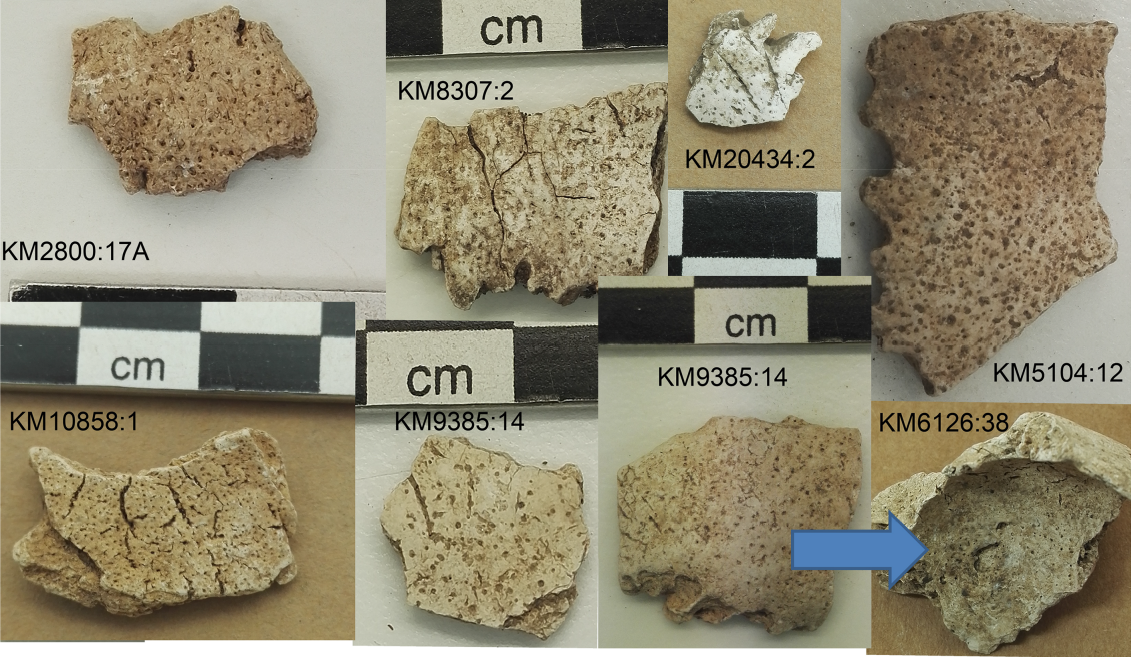
Porotic hyperostosis in Rauma Huhdanniska (KM2800:17A), Eura Junnila (KM8307:2), Parainen Trollberg (KM20434:2), Harjavalta Kaasanmäki (KM5104:12), Laihia Murhaasto (KM10858:1), and Vöyri Viskusbacken (KM9385:14). Cribra orbitalia from Nakkila Kuusisto site (KM6126:38). Kati Salo in Salo et al. (2022).

Two Iron Age Cairns and two Bronze Age cairns produced remains with signs of having lost teeth before death. Two Bronze Age cairns produced remains with signs of periapical lesions (tissue produced by a bone or tooth in response to an infection), and one Bronze Age and one Iron Age cairn produced remains with signs of  periosteal bone formation, which is generally provoked by an injury. Osteochondritis dissecans, caused by repetitive trauma to a joint, was observed in remains from a Bronze Age cairn, and may also be present in remains from an Iron age Cairn. One Bronze Age cairn produced a vertebra with a possible Schmorl's node, a form of spinal disk herniation, which would probably have been caused by repetitive injury.

Joint conditions. Possible Schmorls node from Eura Kivimäki site (vertebral body, KM 7412:4). Signs of degerative joint disease from Uusikaarlepyy Råbacken (vertebral body, KM24015:20), Nakkila Rieskaronmäki (articular facet of a rib, SatM16455:4), Laihia Riitasaari (body of a cervical vertebra, KM10435:1), Pedersöre EsseLillmossbacken (scapula, glenoid KM10105:9), and Isokyrö Kaaminmäki (atlas, articular facet for dens axis KM10678:60). Possible osteochondritis dissecans (first hand phalanx, proximal) from Eura Uotinmäki (KM5629:232) and Laihia Riitasaari (KM 10435:1) sites. Kati Salo in Salo et al. (2022).

The commonest form of pathology seen in archaeological material is dental. However, teeth seldom survive cremation, and the material used in Salo et al.'s study was no exception to this, with only small fragments of tooth found. Some of the alveolar fragments found showed signs of dental problems - tooth loss and periapical lesions - showing that these conditions were present in the population, but providing little other information. 

Cribra orbitalia and porotic hyperostosis, spongy bone formation around the orbit and cranium, respectively, both of which are caused by chronic iron deficiencies, were observed in several sets of remains. These can be caused by a direct shortage of iron in the diet, by other dietary problems, such as a lack of vitamin B12, or genetic conditions, something which today is most common among people living around the Mediterranean Basin. Similar conditions can also be caused by Malaria, something common in Finland until the early twentieth century.

The mostly densely populated areas in Bronze Age Finland were around the coast, making it highly likely that Fish were an important dietary resource. Remains from archaeological sites close to the coast around Europe over a wide range of times have been shown to be more prone to porotic hyperostosis and cribra orbitalia than inland populations, and it has been suggested that these conditions might have been caused by parasites contracted from Fish. 

The adoption of agriculture has been widely linked to declining health in many Human populations, and the Bronze Age is thought to have been the period during which agriculture became widespread in Finland.

Cribra orbitalia and porotic hyperostosis have been shown to be rare in populations from the Neolithic-Bronze Age transition in southern Sweden, and the Late Bronze Age of Estonia. These conditions have been shown to be very common in Early Bronze Age Poland, where they are found in more than 20% of the population, however, this is in a sample of remains with much better overall preservation, so direct comparison is difficult.

The other common pathology found in the collection is marginal osteophytes, or signs of osteoarthritis. This is found in 10 individuals, who are typically older than the majority of the samples. Of the 10 individuals, all but one were found in Satakunta, and all but one were found in cairns built on top of former settlements. The majority of the remains with osteophytes appear to have been male, which is common in ancient populations. This may be a sign that the individuals had been undertaking hard physical labour, associated with agriculture, which is believed to have been adopted in Satakunta before other regions of Finland. The practice of building cairns on top of former dwelling sites appears to have been linked to the adoption of agriculture, something which had happened by the Late Bronze Age in Satakunta, but which did not happen until the Iron Age in other parts of Finland. Other studies have shown that early agriculturalists were particularly prone to osteoarthritis of the vertebral joints, which seems to be the area most affected in the individuals from Satakunta.

Another practice that appears to have been adopted earlier in Satakunta than other areas is that of placing more than one individual beneath the same cairn. These cairns with more than one internment were also the ones which had the highest rates of osteophytes and porotic hyperostosis, with these individuals also being more likely to be male. Thus these were older male individuals who had been involved with hard manual labour, probably agriculture related, and were suffering from iron-deficiency, something also associated with the adoption of agriculture, which led to lower levels of meat consumption. Analysis of Animal bone from Late Bronze Age cairns in Satakunta suggests that Seal meat was disappearing from the diet at this time. 

Other pathologies, such as trauma or periostitis, were much less common, but this does not mean that they were absent from the population. Other studies of cremated remains have shown that these are generally much less common, suggesting that this is related to the cremation process, rather than the health of the population, possibly because new bone growth tends to split away from older bone when burned. Degenerative joint disease and porotic hyperostosis are more likely to survive cremation, and have been shown to be more common in other populations where cremation was practised.

It is likely that future excavations will uncover more remains from cairns in Finland, and that this will lead to a more detailed understanding of cairn-building people and the lives they lead. Salo et al. suggest that more detailed studies of Iron Age cairns may lead to a better understanding of the transition to an agricultural lifestyle across Finland. 

Strontium isotope analysis could potentially be used to determine the origin of the individuals within the cairns. Studies using this method have been carried out in Estonia, and Gotland (Sweden), where genetic analysis of Bronze Age burials has also been undertaken, although this is not likely to be possible in Finland, where cremation appears to have been a universal practise, as DNA cannot usually be recovered from cremated remains.

The Bronze Age is the earliest period in Finland where sufficient remains exist for a large scale comparison between sites, and Salo et al.'s study provides insights into this little-known area of the European Bronze Age. The common Bronze Age practise appears to have been to bury a single individual beneath a large cairn, although this appears to have changed over time, with multiple burials appearing in the Late Bronze Age and becoming more common in the Iron Age, apparently reflecting a change in burial custom associated with the spread of agriculture. These single burials appear to have been much less likely to have been accompanied by Animals or artefacts than contemporary burials in southern Scandinavia, probably reflecting cultural and economic differences between the two areas. Porotic hyperostosis is more common than in other Bronze Age populations around the Baltic Sea, and osteophytes are seen to appear earlier in Satakunta than other areas of Finland, apparently connected to an earlier adoption of agriculture.

See also...

Follow Sciency Thoughts on Facebook.

Follow Sciency Thoughts on Twitter.


Saturday, 30 October 2021

Estimating the benefits of agroforestry to European wildlife.

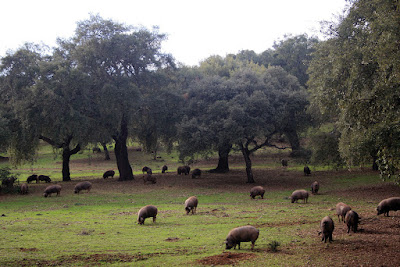
The term agroforestry is used to denote practices in which the cultivation of trees is integrated either with the rearing of livestock (in which case it is called silvopasturalism) or other plant crops (silvoarablism). This is a traditional practice across much of Europe, where methods such as grazing livestock in orchards are very widespread, with newer methods being developed more recently, such as short-rotation coppicing being carried out alongside rows of other crops. Systems in which productive trees are grown around the edges of fields are also sometimes considered to be agroforestry, although in these cases the trees are managed separately to the other produce, and may be under separate ownership.

 
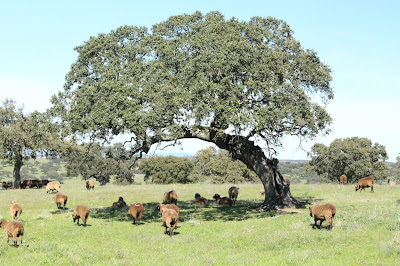
Pigs grazing in an open Oak forest system in Spain, a system known as a 'dehesa'. Álvarez (2016).

Europe has suffered particularly severe losses of biodiversity compared to other parts of the world, and this is particularly severe in areas where intensive agriculture is prevalent. Agroforestry promotes a more diverse landscape than arable monoculture, potentially resulting in higher biodiversity. Quantifying the benefits of this could potentially lead to the system being more heavily prioritised under the European Common Agricultural Policy or any successor system.

Agroforestry systems have been well studied in tropical environments, where the evidence suggests that the system offers significant advantages in biodiversity preservation over intensive monocultural systems, but nevertheless tends to lead to reduced biodiversity compared to both primary and secondary forests. The system is less well studied in temperate regions, with most studies tending to concentrate on single groups of Animals, such as Birds or Insects. This leaves the benefits of such systems in Europe somewhat unclear, particularly as the definitions of agroforestry can vary, leading to differences in what systems are included in studies, making comparisons between studies difficult. 

 
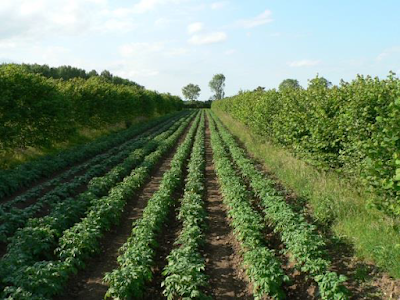
Hazel short rotation coppice system alongside crops in Suffolk, UK. Smith et al. (2014).

In a paper published in the journal BMC Ecology and Evolution on 23 October 2021, Anne‑Christine Mupepele of Nature Conservation and Landscape Ecology and Biometry and Environmental System Analysis at the University of Freiburg, and Matteo Keller and Carsten Dormann, also of Environmental System Analysis at the University of Freiburg, present the results of a meta-analysis which combined results from a number of studies of agroforestry systems across Europe.

Mupepele et al. sought to answer three questions, 'What is the effect of agroforestry on biodiversity relative to forests, pastures, cropland or abandoned, shrub-encroached agroforestry?', 'Is the effect of agroforestry on biodiversity influenced by environmental variables, specifically the kind of agroforestry system (silvopasture or silvoarable), sampling method, the specific measure of biodiversity, sampling year, country, climate and the reference used?' and 'How strong and robust is the underlying evidence of these results?'

To which end they located 1411 previous studies of agroforestry systems in Europe, 50 of which were eventually included in the study, representing 69 individual agroforestry sites. Each of these had a direct comparison of a type of agroforestry (silvoarable or silvopastoral) to forests, cropland, pasture, and/or abandoned agroforestry systems.

 
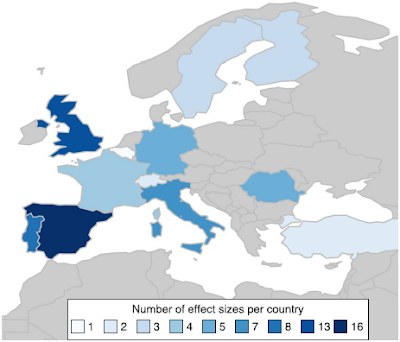
Map of Europe with the number of effect sites per country. Mupepele et al. (2021).

The studies included in the analysis covered sites across Europe where agroforestry systems have been studied between 1984 and 2019. The majority of these sites were caried out in Iberia and the Mediterranean region, with twelve studies from Spain, eight from Portugal, five from Italy, one from France and one from Turkey. Temperate central Europe was represented by six studies from the UK, four from Romania, two each from France, Germany, and Switzerland, and one each from Belgium and northern Italy. The northern boreal region was represented by four studies from Sweden and two from Finland.

Thirty six of the included studies looked at silvopastoral systems, with thirty six studies looking at 52 sites, while silvoarable systems were the subject of thirteen studies looking at seventeen sites. The biodiversity of agroforestry was most commonly compared to that of pasture (23 sites), or forests (21 sites), then abandoned agroforestry systems (thirteen sites) and cropland (12 sites).

 
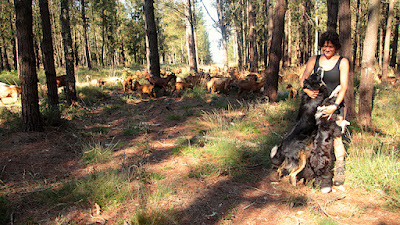
Sheep grazing in a plantation of Pine and Eucalyptus in Spain. Monica Pelliccia/Mongabay.

The different studies measured biodiversity in different ways, and concentrated on different groups. In order to make a comparison between these diverse studies, Mupepele et al. divided the measured wildlife into five groups, Arthropods, Birds, Bats, Plants, and 'Fungi plus Lichens and Bryophytes', Most of the included studies measured biodiversity at the 'species richness level', although other measures were used.

Mupepelele et al.'s results showed no overall benefit for biodiversity compared to the average derived from all systems. However, silvoarable systems were found to host considerably more biodiversity than other croplands, although they generally hosted less biodiversity than forests. Silvopastoral systems produced less clear results, with measures often producing conflicting results in different studies (i.e. one study might show higher Avian biodiversity in a silvopastoral system than a forest, while another showed the reverse.

Birds and Artropods were typically found at higher levels of diversity in agroforestry envoronments than other systems, Where the original group sorted Arthropods into different groups (e.g. Bees, Beetles and Spiders', then this biodiversity increassed, although this was across all environments, with no change in the beneficial effect of agroforestry.

 
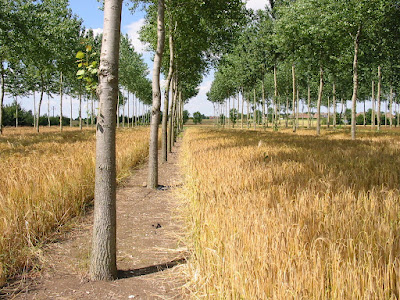
Cereal crops grown alongside trees in Bedfordshire, UK. Agroforestry Research Trust.

Mupepele et al. note that the quality of the studies they were referencing varied somewhat, with some using replicated experimentation with clear controls, whilst others were more observational in nature. To compensate for this, they tried applying a statistical weighting method that gave more value to the more statistically strong studies, but found this made no difference to the overall result. They also carried out funnel plot and Egger’s regression tests for undetected biases in their data, but did not find bias was a problem.

A previous  meta-analysis led by Mario Torralba of the Department of Geosciences and Natural Resource Management at the University of Copenhagen found that agroforestry had a much stronger impact on biodiversity, which caused Mupepele et al. to consider the differences between their findings and that of the earlier study. They note that Torralba et al.'s study was published in 2016, and contained the results from two studies published in 2015 on the benefits of agroforestry in Mediterranean ecosystems, both of which produced very strong positive results, and that if these were excluded from Torrialba et al.'s data then the result was closer to that of Mupepele et al. who included several post 2015 studies with less clear results.

Properly done, meta-analyses can provide a powerful tool for understanding ecological systems in ways not possible from individual studies or unsystematic literature searches. However, the robustness of these results is dependent on the methods used to analyse the data, and in particular the use of weighting to take into account the quality of the studies being referenced. This needs to be done carefully, as failure to apply the right weighting can often lead to very different results. This said, applying weighting to Mupepele et al.'s results resulted in no significant change in the outcome of the study, which strongly supports the robustness of their findings. 

The application of repeated meta-analyses to the same data set can reveal changes over time, as new studies add to the overall picture, dampening the results from atypical studies that might have a profound impact on a smaller data-set. By building a cumulative model in which data were added in chronological order, Mupepele et al. were able to demonstrate that the impact of agroforestry upon biodiversity remained essentially unchanged over time, despite the presence of some anomalous data. They do, however, note that silvoarable systems make up a relatively small proportion of the whole, and that the addition of a higher proportion of studies of these systems in future might change the results of the meta-analysis.

 
Merino Sheep under a Cork Oak in a montado silvopastoral system in Portugal. European Agroforestry Foundation.

The ability to reproduce results is an important principle in science, but can be difficult in fields like ecology, which look at complex natural systems, no two of which are ever completely the same. Mupepele et al.'s results differed strongly from the earlier results of Torralba et al., resulting in their drawing different conclusions; Torralba et al. concluded that agroforestry has a general positive impact upon biodiversity, while Mupepele et al. concluded that this benefit was only clear when agroforestry was compared to croplands, despite both studies having used much of the same data. Mupepele et al. note that Torralba et al. included hedgerows and woody riparian buffers to agricultural land as agroforestry, while Mupepele et al. excluded them on the basis that they are not emplaced for silvicultural purposes (i.e. the trees used in these settings are grown for their value as boundaries, not as a crop in themselves). Neither did Torralba et al. include data from studies which suggested agroforestry had a negative impact on biodiversity. Mupepele et al. believe that scientists should be very clear about what data they are including in meta-analyses, the criteria for choosing this data, and the reasons to do so, in order to help policy-makers judge the significance of different studies. 

Mupepele et al. conclude that silvoarable systems produce an increase in biodiversity compared to conventional croplands, particularly with regard to Birds and Arthropods, but that this increase is not large, and there was no overall positive benefit of agroforestry to all other settings. Notably, silvopasturalism showed no clear benefit over either forestry or conventional pasturelands. Where previous studies have produced enthusiastic support for agroforestry, and strongly suggested these systems are linked to a significant increase in biodiversity, Mupepele take a more cautious approach, noting that relatively few studies find an unqualified link between agroforestry and increased biodiversity, and that literature reviews and meta-analyses need to be careful to include both the positive and negative impacts of systems when drawing on data from multiple studies. Nevertheless, they do conclude that agroforestry can have a positive impact on biodiversity under some circumstances, as well as providing carbon sequestration and other ecosystem services, and that a better understanding of how these systems work could lead to more informed future decisions by policy makers.

See also...


Follow Sciency Thoughts on Facebook.

Follow Sciency Thoughts on Twitter


Thursday, 26 August 2021

Interpreting the gender identity of the Suontaka Vesitorninmäki burial.

Reports of women buried with weapons always generate considerable interest in archaeology. One notable example of this is the Suontaka Vesitorninmäki grave from southern Finland, which has been interpreted as a woman buried with two swords, based upon the feminine clothing of the individual, and the presence of jewellery, which is not generally found in male burials of the period (the grave has been dated to between 1050 and 1300 AD). This site has been held up as an example of a powerful woman in a late Iron Age/early medieval society since its discovery in the 1960s, and was on permanent display as evidence of a female leader at the National Museum of Finland from 1995 to 2016, with one of the swords from the site being on display in the ‘Meet the Vikings’ exhibition at the National Museum of Denmark as a woman's weapon.

In a paper published in the European Journal of Archaeology on 15 July 2021, Ulla Moilanen of the Department of Archaeology at the University of Turku, Tuija Kirkinen of the Department of Cultures at the University of Helsinki, Nelli-Johanna Saari and Adam Rohrlach of the Max Planck Institute for the Science of Human History, Johannes Krause of the Max Planck Institute for Evolutionary Anthropology, Päivi Onkamo of the Department of Biology at the University of Turku, and Elima Salmela of the Organismal and Evolutionary Biology Research Programme at the University of Helsinki, present a review of our understanding of the Suontaka grave, re-examining the original field documentation of the site and presenting new microscopic analysis of material from the grave and a DNA analysis of the genetic identity of the individual from the grave.

 
Location of the Häme (Tavastia) region in Finland, with Suontaka marked with a red dot. Moilanen et al. (2021).

For much of the history of archaeology, bodies have been identified as male or female, depending on analysis of skeletons and/or the presence of grave goods interpreted as masculine or feminine, with genetic analysis recently added to the available repertoire of techniques. However, simply dividing Human populations into men and women is sometimes an oversimplification, with a range of genetic, chromosomal, and hormonal conditions known to blur the biological lines between the sexes, and people sometimes self-identifying in ways that differ from their biology. Recent developments in neurology have demonstrated that our brains do not neatly divide into 'male' and 'female' groups, but show a variation in personality, cognition, and behaviour that is individualistic rather than coupled to biological sex.

Since the 1970s, anthropologists have come to an understanding that biological sex and socially determined gender are different things, with gender roles essentially learned, with people tending to conforn to the norms expected of their body-type, while biological sex is an expression of chromosomal, hormonal, anatomical, and physical features.

Modern western perceptions of a binary division of the sexes tend to dominate in archaeology, but other cultures have had different perspectives. Early medieval cultures had their own views on masculinity and femininity, but it is unclear how fixed these roles were in their perception, and to what extent they could be modified by circumstances. Traditionally, medieval societies have been perceived as having very distinct male and female roles, but more recent studies have suggested that they may have been more flexible in their views.

The practice of identifying the gender of individuals by the grave goods buried with them adds further confusion to this issue, since we cannot be confident about how rigid these rules were. The presence of swords in medieval graves in northern Europe is generally taken as a strong indicator of masculinity, and as having the status as a member of a warrior class, but this secondary role, one as a class identifier rather than a gender one could potentially confuse the issue. Individuals identified as female by their body type, and who are buried with jewellery (usually taken as a sign of femininity), have occasionally been found with axes, spear- and arrow-heads, but swords are much rarer, and generally taken as cause for comment. Notably, bodies which are identified as female, and which are buried with swords, are generally lacking in 'feminine' grave goods such as jewellery, possibly suggesting that women were allowed to take on masculine gender under some circumstances in Scandinavian culture, but that once they had done so, were expected to conform to their new gender identity. Working from this assumption, the presence of weapons in 'female' graves becomes problematic, and has led to archaeologists sometimes looking for more explanation than might be merited, such as assuming that graves containing both weapons and jewellery must have originally been double burials, despite there being no evidence for a second body. Such investigations potentially tell us more about the cultural assumptions of the archaeologists excavating the burial than those of the people who dug the grave in the first place.

Discovered in 1968, the Suontaka Vesitorninmäki gained fame for the mixture of 'masculine' and 'feminine' grave goods found within a single burial. The most notable item was a bronze-hilted sword with Urnes style ornamentation (slim, stylised animals woven into patterns, typically indicative of late eleventh or early twelfth century manufacture), with the grave also containing a second, hiltless sword blade, two oval brooches, a small penannular (ring shaped, with part of the circumference missing) brooch, a twin-spiral chain-bearer, and a sickle. Traditionally, swords are considered to be masculine items in burials, while jewellery is feminine. Sickles can be found in graves associated with either gender in Finland, but are more common in female burials. All of the objects point towards a burial in the late eleventh or early twelfth century AD, which would coincide with the Crusade Period in Finland (during which Sweden invaded southwestern Finland, officially to convert the pagan Finns to Christianity, although it is likely that the Finns were already Christian by this point). A subsequent radiocarbon date obtained from a fragment of femur obtained from the grave indicated the burial took place between 1040 and 1174 AD.

 
The objects found in the Suontaka grave. (A) bronze-hilted sword (NM 17777:1); (B) hiltless sword (NM 17777:2) with silver inlays (inset); (C) two oval brooches with textile fragments (NM 17777:4–5); (D) twin-spiral chain-bearer (NM 17777:6); (E) sheathed knife (NM 17777:3); (F) penannular brooch (NM 17777:7); (G) sickle (NM 17777:8). Moilanen et al. (2021).

The original excavation of the Suontaka Vesitorninmäki site was carried out in October 1968, after the bronze-hilted sword was discovered during work on a water pipeline. The discovery of the sword led to archaeologist Oiva Keskitalo investigating to the site. Keskitalo subsequently discovered an area of darker soil cross-cutting the pipeline trench, further investigation of which revealed the grave. The pipeline intersected the upper right corner of the grave, which was where the sword was located. The distance between the sword and the skeletal remains and other artefacts within the grave was not recorded, but some of the dark soil needed to be removed to expose these, whereas the sword appears to have been on top of the dark layer, making it likely that the sword was not part of the original burrial assemblage. No other graves have been found in the area, so the grave was either a solitary burrial, or is the sole survivor of a burial ground which has otherwise been lost.

The context of the find makes the interpretation of the sword difficult; the site had been disturbed by pipeline workers before archaeologists were called in, and the site was excavated in late autumn, with temperatures dropping as low as -10°C. However, it would have been warmer at the bottom of the pit, so the field observations should be seen as reasonably reliable. The position and shape of the skeleton were documented, with the tibias, femora, pelvis, elbow joints, ribs, and skull all in place when they were uncovered, although they were in an advanced state of decomposition and almost entirely composed of soft material which could not be recovered, with the exception of two femora fragments. 

 
(A) Plan of the Suontaka burial. ‘Täckdike’ marks the water pipe trench which led to the discovery of the grave. (B) Artist’s reconstruction of the burial, showing the position of the objects on the body. Drawing by Veronika Paschenko. Moilanen et al. (2021).

The rarity of swords in graves which also contain 'feminine' grave goods led to some controversy in how the Suontaka Vesitorninmäki burial should be interpreted. The most obvious possibility, based upon 1960s archaeologists' understanding of early medieval graves, was that this was a double burial, and that there must originally have been two bodies in the grave. Confronted with a grave containing a skeleton associated with two brooches and a sword, Keskitalo searched for evidence of a second body, but could find none. The grave was found to have an even floor, upon which the body had been placed, with no evidence of a coffin, and was apparently two small for a second corpse. It is possible that a second body could have been placed on top of the first body, something which is known to accelerate the decay rate of the upper body (or bodies), but the grave lacks any sign that would be associated with that, such as varying soil colouration caused by an upper decomposition layer, and the only artefact that does not appear to have been placed in context with the skeleton is the bronze-hilted sword.

The sword without a hilt was located on the left side of the pelvis, with the sheathed knife on top of it. The two oval brooches, and associated fibres, were located beneath the shoulders, which implies the body was dressed in the typical female clothing of the day. The chain bearer lacked associated chains and was located in the centre of the chest, which may imply it was worn as a pendant rather than as an actual chain-bearer, something typically associated with female burials. The penannular brooch was located at about waist level, the sickle placed upon the chest. Items placed on top of bodies tend to move downwards, although this is likely to be less notable in an instance like the Suontaka Vesitorninmäki grave, where no coffin was used, enabling sediment to replace tissue as it decayed. This supports the idea that all the objects other than the bronze-hilted sword were placed directly on the body, rather than on another corpse that subsequently decomposed completely.

No samples of soil were deliberately collected at the time of the excavation, but small amount of soil was excavated along with the recovered femur fragments, which Moilanen et al. analysed for fragments of hair or textiles. They were able to recover a total of 23 Mammal hair-fragments, mostly between 0.2 and 2 mm in length, and three fragments of Bird feathers, between 0.2 and 0.5 μm. Seven of the hairs were unidentifiable. Fourteen of the hairs came from Sheep (i.e. wool), of which nine were naturally coloured (six white and three brown) and five had apparently been died (three bluish green and two blue). In addition there was one hair identified as either coming from a Fox or a Mustelid, and one identified as either Rabbit or Hare, the latter of which was purple in colour, again probably due to dying. None of the feather fragments could be identified. 

 
Examples of identified animal hairs from the soil sample. (A) Leporidae; (B) Vulpes vulpes or Mustelidae (K20); (C) Ovis aries (K13); D: Aves (K19). Moilanen et al. (2021).

The limited amount of bone material recovered from the grave prevented any osteological analysis, but it did prove possible to extract DNA from the sample. This sample was again limited in nature, preventing a full genetic analysis, but did allow for sex identification, as this is one of the tests which requires the least amount of data.

Surprisingly, the most likely outcome of this test was neither an XX ('normal female') or XY ('normal male') karyotype, but rather an XXY karyotype, i.e. a male (the presence of an Y chromosome usually determines maleness), but with a second X chromosome, a condition called Klinefelter syndrome. In modern populations about 1 in 576 male Humans have Klinefelter syndrome, the majority of whom will never show any symptoms of the condition, but in some cases symptoms are present, including infertility, small genitalia, breast development, and occasionally a small vaginal opening beneath the penis. There are also some psychological symptoms that are sometimes associated with the condition when physical symptoms are not present, but since these are closely linked to cultural background, and observed in men who have been told they have it, it is difficult to assess how they could be related to twelfth century Finland.

The Suontaka Vesitorninmäki grave appears to have contained a single individual, dressed in a way that would have been considered feminine at the time. The grave contains a hiltless sword associated with the body, the other, bronze-hilted, sword appears to post-date the original burial. It is possible it was deliberately placed at the grave site by a later generation; such hiding of swords in burial mounds and other special locations for magical purposes is known to have been practiced. However, the hiltless sword was clearly buried with the body, and presumably therefore relates to the person in the grave. The sword bears no sign of battle-damage, and the hilt may have been deliberately removed (although it might have been made of material which has degraded post-burial), which might be a way of indicating the owner of the sword was less than completely masculine. The presence of an apparently intentionally unusable sword is curious, as the burial occurred in a time of violent cultural disturbance, with a number of hillforts being erected in the area at the time, and other swords locally recovered from the period often showing battle damage.

The hairs recovered from the grave imply the presence of both naturally coloured and dyed fabrics, and possibly garments made from fur or Animal skin; such materials were often used to make cloths linings, mittens, pouches, and knife sheaths in early medieval Finland. The presence of a Rabbit or Hare hair might imply a garment made from a textile made from Rabbit fur, or blended Rabbit fur and wool, both of which would have been high value items at the time. The feather fragments might relate to a pillow or other bedding item. All of this points towards an individual with some social standing in the society in which they lived.

The possibility that the individual in the grave was a male with Klinefelter syndrome is not unprecedented in archaeology; other individuals with the condition have been reported from Viking Age Iceland, early Neolithic Germany, and possibly the Orkney Islands in the Viking Age, although none of these graves appeared to be otherwise atypical for the cultures that produced them. Based upon this, the discovery of an individual with Klinefelter syndrome in a grave bearing a mixture of goods with different gender-associations is a novel one.

However, it should be remembered that Klinefelter syndrome does not necessarily have any visible symptoms, and that people's personal gender identity sometimes varies considerably from their anatomical appearance, and that it is dangerous to make assumptions about the Suontaka Vesitorninmäki individual's gender identity purely based upon their karyotype.

The possibility that the individual did show some noticeable symptoms of Klinefelter syndrome cannot be completely overlooked, however. The age of the individual is unknown, but it is likely they had lived past puberty, when any such symptoms would have become more obvious. Gender roles tend to be shaped by both an individual's perception of themselves, and the way in which their wider society views them. In Early Modern Finland masculinity is known to have been closely related to the ability to sire children, and a man who could not do so was likely to be seen as less that fully masculine, although it is unclear how far back in time these cultural assumptions can safely be projected.

Clothing is also an important manifestation of personal identity. This appears to have been well understood in medieval Europe, where there are numerous tales of female warriors adopting male dress and identities. In early modern Finland cross-dressing was strongly associated with anatomical ambiguity, and anyone wearing gender-inappropriate clothing was likely to be refferred to as a hermaphrodite (although, again it is hard to judge how far back in time this assumption can be extrapolated). Seen in this light, an individual buried with a mixture of male and female accoutrements could quite possibly have been anatomically non-binary. However, our current understanding of the culture of early medieval culture would predict such an individual would be viewed in a fairly negative light, whereas the context of the Suontaka Vesitorninmäki burial implies an individual held in high regard by those that buried them. 

Early medieval Scandinavia is generally viewed as having had an ultra-masculine culture, with strongly defined gender roles, in which it would be seen as shameful for a man to adopt women's clothing. However, there is some evidence that individuals with more ambivalent gender identities could have been involved in ritual practices, and would therefore have been tolerated, and even valued. A twelfth century grave from Vivallen in western Sweden was found to contain a male body buried in female clothing, but with masculine grave goods. This grave has been interpreted as that of a shaman, possibly deriving from the Sámi culture of northern Scandinavia. 

A binary view of gender assumes that there is a single way of being a man and a single way of being a woman. The Vivallen and Suontaka Vesitorninmäki burials suggest that medieval Scandinavian societies may not always have seen the world in this way. The Suontaka Vesitorninmäki burial in particular appears to present evidence of a non-binary individual being able to hold a valued role in such a society, despite being willing to be conspicuously different from the norm. It is of course possible that such an individual was respected because of their birth rank rather than because of their difference; an unusual person from a powerful and well-connected family would probably be tolerated more easily that one from a less prominent family, since people would seek to avoid conflict with that person's relatives, no matter what they might privately think. The presence of a sword in the grave may be indicative of this, since swords were a valuable artefact at the time, and not necessarily available to every male member of the population. The individual does appear to have been a local; the brooches are of a local type and nothing in the grave appears to indicate a foreign origin, whereas other Scandinavian graves (such as Vivallen) in which males were buried with female items have been interpreted as being of strangers, buried with inappropriate items as a sign of disrespect.

In early medieval times, Suontaka does not appear to have been a remote location; the area is surrounded by other archaeological sites, including a hillfort, sacrificial stones, cemeteries, and settlement sites surrounded by ancient fields. The village was probably one of the more important in the region, possibly the site of local assemblies. The presence of a burial with grave goods including feather bedding, fur cloths and a silver-inlaid sword would appear to support this view, as well as the likelihood that the individual buried came from a wealthy and well-connected family, and might therefore have been tolerated a degree of cultural freedon not accorded to all members of society. However, it is also possible that the people of early medieval Finland were more flexible in their views of gender roles than has generally been assumed. The Suontaka Vesitorninmäki individual appears to have been buried with items associated with both genders, and those items appear to have been indicative of a degree of wealth. This makes it less likely that that person had been forced into a gender ambivalent role as a mark of humiliation, and more likely that they were able to express their identity freely, in contrast to the normal expectations of their society (or our expectations of it) and still hold a relatively high position in that society. The addition of a second, high-status sword at some time after the initial burial would seem to imply that the individual retained their high status after death, and was seen as important by subsequent generations.

The Suontaka Vesitorninmäki  individual was previously interpreted as a woman buried with two swords. The grave was clearly well stocked with high value items, but it is likely that only one of the swords was part of the original grave assemblage, with the second being added later. The individual in the grave now seems less likely to have been female, and more likely to have been a male individual with Klinefelter syndrome. The individual appears to have been a male, but one who would not fit the expected norms of a masculine society in which warfare was celebrated. Nevertheless, the individual appears to have been a respected member of that society, implying that that society was more open-minded about individuals who did not fit typical gender roles that has previously been assumed, although to what extent this was dependent on that person's pre-existing social rank is unclear.

See also...


Follow Sciency Thoughts on Facebook.

Follow Sciency Thoughts on Twitter


Friday, 8 January 2021

Understanding the importance of Animal remains from Medieval archaeological sites in Finland.

Zooarchaeological material from urban sites is significant source material for understanding the diet and provisioning of a town’s inhabitants, in addition to the town’s socio-economic development and spatial organisation. Comparing urban and rural material can exhibit evidence of the relationship between towns and their surrounding areas. Evidence of crafts, industry and commerce provides information about specialisation and the process of urbanisation. The networks for acquiring and processing animal products can indicate characteristics of the economic system. In Finnish towns such as Turku, small-scale agriculture persisted in the form of subsistence until the early 20th century. Thus, some of the meat that was consumed was acquired from Animals raised by the inhabitants themselves, and some was acquired from live Animals that were brought from the surrounding rural areas. Animals were slaughtered in the household’s own yard in the autumn, with the meat being preserved for consumption.

Zooarchaeological research from urban sites could help to reconstruct patterns of animal use in the past and study variations in Animal husbandry practices, production and consumption in different locations and periods. This requires a comparison of quantitative data from different contexts, phases or sites; thus, inter-site studies using ‘big data’ are becoming more common. However, inter-site comparison is meaningful only if the assemblages in question are similar enough. Zooarchaeological material can be formed as a result of a range of activities, such as slaughter, carcass preparation, meat consumption, crafts, rituals, the disposal of Dead animals and general waste management, all of which affect the species and anatomical distribution of a bone assemblage. Ideally, inter-site comparisons should include contextual data and be limited to comparing assemblages that were created through similar activities, e.g. food disposal. Additional factors affecting the comparability of the samples include variations in the preservation, recovery and analysis of the bone deposits affecting the species and anatomical distribution, which are major components of comparative studies.

In urban sites, assemblages resulting from the selective acts of slaughter, food-processing, consumption and crafts are sometimes present and can be identified by the species and anatomical distribution. Thus, waste pits for specialised craft activities may consist of selective elements of one species only. Animal heads and lower limbs tend to be concentrated in the place of slaughter or where crafts such as tanning, bone-working or horn-working took place. In general, ribs and vertebrae are more commonly found in the place of consumption. The proportion of Cattle to smaller Animals is likely to be lower in kitchen waste, as larger cattle Bones were more often defleshed and discarded before food was prepared. Cattle bones that do appear in kitchen waste consist largely of rib and vertebrate fragments, while for the smaller Animals that are present there is a more equal distribution of anatomical elements, as they would have been brought into the kitchen in a less processed state, or even as virtually complete carcasses. Pre-burial taphonomic processes, such as trampling, attrition and burning, can also affect the composition and identifiability of the material. The recovery methods applied during the excavations affect the species abundance and anatomical distribution. There are also challenges in combining samples that have been identified by different people (inter-analyst variation) and recorded using different methods. In addition, comparisons between different taxonomic groups are especially challenging. The data is affected by different numbers of skeletal elements per individual, different preservation and recovery rates, and cultural differences in processing practices. 

In addition, comparisons between different taxonomic groups are especially challenging. The data is affected by different numbers of skeletal elements per individual, different preservation and recovery rates, and cultural differences in processing practices. However, mixed deposits can also occur because of the proximity of the activities: the same waste pit or layer might simply have been used for all types of waste created within the yard. This seems to be common in medieval and postmedieval Turku. Historical sources and zooarchaeological material indicate that slaughtering, butchering, consumption and crafts often took place in household yards, resulting in mixed deposits. In Turku, some contexts included larger amounts of Cattle, Sheep and Goat horn cores or metapodials, probably connected with craft activities. These bones were found mixed with household waste, and the effect of the metapodials and horn cores on the context’s species distribution was estimated to be slight. It also seems that only a limited amount of meat consumed in households was purchased as ready-cut pieces between the 14th and 18th centuries.

In a paper published in the Journal of Archaeological Science: Reports on 9 October 2020, Auli Bläuer of the Natural Resources Institute Finland and the Department of Archaeology at the University of Turku, investigates the variability of species composition and anatomical distribution in urban faunal material from the excavations of Katedraalikoulu (2014–2015) in Turku, and studies the effect of possible intra-site variability on inter-site comparisons.

The basic mechanism behind this variation is examined. Do the differences in contexts reflect differences in the general patterns of Animal exploitation, the activities that created them, or depositional factors? First, different methods of describing the variation in the samples are applied. Second, patterns in the faunal samples are examined, considering the origin of the variations observed. To observe the patterns in the faunal material more clearly, data from Katedraalikoulu is also compared with four deposits created through specialised activities, with little evidence of mixing. These include kitchen, slaughter, and craft waste and the ritual deposit of butchered but complete skeletons, which serves as an example of a nonselective deposit. These analyses add to the knowledge of the spatial organisation of the town, in addition to the level of specialisation and urbanisation in Turku. Further, the results aid in understanding the factors affecting inter-site comparison.

The Katedraalikoulu site is located in the centre of the medieval town of Turku, near the Old Great Market and medieval town hall. The excavations on the site were conducted by the Museum Centre of Turku in 2014 and 2015, and they revealed medieval layers with well-preserved organic material such as seed, pollen, Moss, Invertebrates, and Animal bones. In Bläuer's paper, animal bones recovered from seven contexts are presented, dating from the 13th to the 16th centuries. Thus, the contexts do not belong to a single period of use. During the excavations, soil was transported to tables, where it was trowelled carefully, and all observed finds were hand-picked. In addition, soil samples of about 30 litres were taken and wet sieved with a 1 mm mesh. Fish bone material from the Katedraalikoulu site has been previously published by Lembi Lõugas and Auli Bläuer.

The archaeological interpretations about the contexts are variable. Contexts M040 and M259 were layers with various burnt material, interpreted as debris created by fires that destroyed a building or buildings. Context M051 was found inside of a wooden frame, interpreted as a latrine. A close investigation of the material revealed two phases in the filling: at the bottom, there was a waste layer connected with the use of the latrine and most of the shaft was filled with a secondary deposit. Contexts M059 and M536 were interpreted as Animal dung and bedding layers created by Animal husbandry on the premises, deposited in the yard. M093 is the bottom layer of the site, representing layers pre-dating the town. Context M129 was layer of clayey soil with soot, interpreted as a waste dump.

Four deposits from Naantali, Rauma, Uusikaupunki, and Raisio were selected for comparison and to assist in detecting patterns in the faunal material. These are materials, which represent waste from one activity (food preparation and consumption, craft, slaughter or ritual), and they exhibit little evidence of mixing. These include the medieval kitchen waste layer from the Bridgettine Abbey of Naantali and post-medieval slaughter waste pits from the town of Uusikaupunki, containing skulls, mandibles, and the lower leg bones of Cattle. In the town of Rauma, shallow depressions with postmedieval Cattle metapodial raw material production waste were recovered. Raisio Mulli is a Late Iron Age settlement site with a ritual deposit, including butchered but complete Sheep and Goat skeletons, and complete Pig and Chicken skeletons (nineteen Sheep, four Goats, two Pigs, and two Chickens). After butchery and assumed consumption, the Sheep and Goat bones were carefully collected and deposited in a pit in the ritual area, at the same time disturbing the previous deposits. In addition to the mixed ritual area, two separate Sheep skeletons were found in single pits. These deposits serve as comparative material, with little selection regarding bone elements. However, they have undergone butchery and taphonomic processes such as fragmentation during burial.

Meaningful comparisons between assemblages requires reproducible quantification of the species and anatomical profiles. These exhibit valuable information concerning the utilisation of the animals and the activities practised at the archaeological site. For the quantification of the Katedraalikoulu faunal material, the Number of Identified Specimens method was used. With well-documented pros and cons, Number of Identified Specimens is still the most common quantification method used in the research literature and therefore the one commonly available for inter-site comparisons. Long bone shafts, ribs, and vertebrae too fragmented for species identification were recorded as either a large or small ungulate. Specimens identified to the large Ungulate level are most likely Cattle, Bos taurus, because only Cattle have been identified of the potential species, including Horse, Equus caballus, Elk, Alces alces, and Wild Forest Reindeer, Rangifer tarandus fennicus. Small Ungulate bones are derived from Sheep, Ovis aries, Goats, Capra hircus, and Pigs, Sus scrofa. Most Cattle vertebrae and ribs are found in the large ungulates category, as is the proportion of Sheep, Goat, and Pig vertebrae and ribs in the small Ungulate category. Therefore comparison of the large and small Ungulates produces potentially different proportion of abundances than comparison on the species level.

The proportion of different Animal classes (Mammal, Bird, Fish) was calculated as variation on the composition of the faunal material could reveal different deposition activities, such as presence of kitchen waste. 

Presenting anatomical distribution element by element may be the most accurate recording method, but it is impractical when comparing several contexts or sites, because figures with such detailed data would be difficult to read and interpret. Bones of Cattle (including large Ungulates), Sheep, and Goats (Sheep and Goat, and Sheep or Goat), and Pigs were divided into categories, representing different utilisations of carcass parts. It is realised that the utilisation pattern and butchering practices varied in time, place, and for different species, but for comparison purposes, some categorisation is required. Horn cores have often been utilised for horn working. Metacarpals might be attributed to several activities such as slaughter, tannery, or crafts. Cattle muzzles, including the premaxilla and the anterior part of the mandible, and phalanges were a source of gelatine and were utilised in traditional cooking. Cattle carpal bones may have been left attached to the radius-ulna or metacarpals during butchering, and distal tibia to calcaneus, talus, and other tarsals. Thus, these bones are considered here as a non-specific group. The anatomical distribution was also examined by calculating the proportion of bone elements belonging to the trunk of Animals considered part of the diet (thus excluding Dog, Cat, Mouse, and Rat bones).

To further examine the composition of the faunal remains in different contexts, Simpson’s Diversity Index (an unbiased measure of evenness) and Richness (the number of species present in the sample) were calculated by using PAST V.4.01 software. Evenness refers to the relative dominance of different species. In an even assemblage, all species are equally abundant while an uneven assemblage has one or a few dominant species. Evenness and Richness are useful tools for reproducible quantifying of the taxonomic diversity and in detecting variation and change in the utilization patterns of Animals. To calculate richness, certain species were counted together due to challenges in species-level identification. These include Sheep and Goat, wild Galliformes, Fish from the Perch family, and Cyprinids. When using the proportion of the three most abundant mammal species in the comparisons, Sheep, Goat and Sheep, or Goat bones were counted together and regarded as a single species unit.

To be able to identify the primary refuse deposition evidence open epiphysis-metaphysis pairs were recorded (one element of minimal bone movement). These are unlikely to remain paired if soil layers are disturbed and therefore they indicate primary deposition.

A total of 23 105 bones, teeth, or bone fragments was recovered from seven investigated contexts from the Katedraalikoulu excavations. Sheep and Goat, Cattle, Mountain Hare, Lepus timidus, and Pig bones are the most abundant Mammal bones counted with the Number of Identified Specimens method. As expected, the recovery method affects the species distribution of handpicked and sieved samples. Thus, 96% of the Fish, 18% of Hare, and 1% of Cattle remains are derived from the water-sieved samples. There is notable variation in the presence of different animal classes (Mammal, Bird, Fish) in different contexts and in hand-picked and water-sieved material. Fish bones are most abundant in M129 and in M051. In addition, M129 includes a high number of unidentified Fish bones, mainly pins. The proportion of the main domesticates, Cattle, Sheep, Goats, and Pigs, also varies. The proportion of Cattle is lowest in M129 (15%), and highest in M040 (48%). For Sheep or Goats, and Pigs the lowest proportions are found in M040 and M093 (33% and 7%), and the highest in M129 (60% and 26% respectively).

 
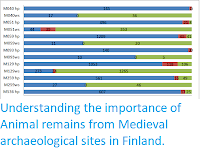
Percentages of Mammal, Bird, and Fish bones in the Katedraalikoulu samples (Number of Identified Specimens). Hp, hand-picked material, ws, water-sieved sample. Bläuer (2020).

Comparing the proportions of large and small Ungulates (counting Cattle and large Ungulates together and Sheep, Goat, Pig, and small Ungulates) reveals a similar pattern to a comparison of Cattle, Sheep, or Goats and Pigs. However, the proportion of large Ungulates is 10% higher than just Cattle bones in M040, M051, M093, and M259, meaning that proportionally more bones have been identified as large Ungulates than small Ungulates.

 
(a) Number of Identified Specimens of large Ungulate remains (combined Cattle and small Ungulates) and small Ungulate remains (combined small Ungulate, Sheep, Goat, and Pig). (b) Number of Identified Specimens comparisons of specimens that were identifiable to the genera level (Cattle, Sheep or Goat and Pig). Bläuer (2020).

There is some variation in the anatomical distribution of the samples. Anatomical elements has been divided into groups in order to estimate the activities they have resulted from. The groups are mostly anatomical but for cattle hooves and muzzle bones have been combined to form a group of bones used for gelatine extraction. For cattle, the counts of specimens assumed to relate to food preparation and consumption (elements from the trunk, upper limbs, hooves, and muzzle) are highest for M059, M093, and M129. None of the samples exhibits a special abundance of metapodials or horn cores. For Sheep and Goats, the proportion of metapodials is high in M259, and low in M129 and Naantali, and the proportion of trunk bones is low in M051 and M536. It should be noted that many rib and vertebrae fragments belonging to Sheep, Goats, and Pigs have been categorised as small Ungulates. For Pigs, the number of identified fragments is smaller in every context, which hampers detailed comparison. However, it should be noted that bones from the head are absent in the Naantali sample, while material from Katedraalikoulu exhibits a more equal distribution of elements, though trunk bones are absent in M059.

 
Anatomical distribution of Cattle bones from Katedraalikoulu, Naantali, Uusikaupunki, and Rauma. Number of Identified Specimens for M040 89, M051 260, M059 337, M093 70, M129 139, M259 257, M536 221, Naantali 585, Rauma 2048, and Uusikaupunki 397. Head; skull bones (excluding horn cores and premaxillae), mandibles (excluding the anterior part), os hyoideum, and teeth. Trunk; ribs, vertebrae, and sternum. Upper limb bones;  scapula, humerus, radius, ulna, pelvis, femur, patella, and proximal tibia. Hooves and muzzle, premaxilla, anterior mandibula, phalanges 1–3, carpals, and tarsals, including distal tibia. Bläuer (2020).

To further examine the species and anatomical variation within the samples, the proportion of trunk elements (vertebrae, ribs, and sternum) in the samples was counted and compared with the proportion of the three most abundant Mammal species in the sample. It is assumed that in deposits related to food processing and consumption, the proportion of trunk elements is high and the species distribution more equal, because the small species are better represented, suggesting the proportion of the three most common species should be low. These are compared to the samples consisting of slaughter, craft, and kitchen waste, as well as ritual deposits consisting of butchered but complete Animal carcasses. As expected, single activity deposits are located in the margins of the chart area. Slaughter and craft waste from Uusikaupunki and Rauma exhibit the dominance of one species and a small number of trunk bones. Naantali kitchen waste includes high species variability and abundant trunk bones. Mulli ritual deposits exhibit low species diversity but a higher number of trunk elements. The Katedraalikoulu contexts fall within this variation but are closer to the kitchen waste deposit type.

 
Anatomical distribution of Sheep and Goat bones from Katedraalikoulu, Naantali, and Mulli (one Sheep). NISP for M040 25 (not shown), M051 111, M059 194, M093 34 (not shown), M129 146, M259 132, M536 113, Naantali 284 and Mulli 150. Head; skull bones excluding horn cores, mandible, os hyoideum, and teeth. Trunk, ribs, vertebrae, and sternum. Upper limb bones, scapula, humerus, radius, ulna, pelvis, femur, patella, and tibia. Bläuer (2020).

The similarity of the proportion of trunk elements in the Naantali kitchen waste and Mulli ritual deposits merits a closer examination. If Naantali includes selected body parts from meat-rich areas, should it not include more trunk elements than an intentional deposit of skeletons? Examining the anatomical distribution of Mulli and Naantali more closely, it can be seen that while the number of trunk elements is higher in Naantali than in Mulli, the higher number of long bone fragments in the former make up for the difference in percentages. Thus, the anatomical distribution is not similar, but the abundance of long bone fragments in Naantali diminishes the proportion of trunk elements. When divided into head, trunk, and upper and lower leg bones, the difference in the anatomical representation becomes apparent.

 
Anatomical distribution of Pig bones from Katedraalikoulu and Naantali. NISP for M040 14 (not shown), M051 40, M059 53, M093 4 (not shown), M129 61, M259 29, M536 35, Naantali 62. Head; skull, mandible, os hyoideum, and teeth. Trunk; ribs, vertebrae, and sternum. Upper limb bones; scapula, humerus, radius, ulna, pelvis, femur, patella, tibia, and fibula. Bläuer (2020).

Simpson’s diversity index (unbiased) was compared with species richness in the sample for the water-sieved samples. M093 exhibits the least diversity and richness. M051 is the most diverse sample, and Naantali the richest.

 
Percentage comparison of the three most common Mammal species (Cattle, Sheep/Goat, Pig or Hare), and the percentage of trunk bones of consumed Animals in the contexts. Bläuer (2020).

Some data was also collected for the preservation and deposition of faunal material to estimate their effect on the species and anatomical distribution and interpretation of the primary and secondary character of the context. Based on the presence of anatomical articulations (complete but unfused epiphysis-metaphysis pairs) and conversely, abrasion on the surface of the bones (recorded as present or absent), it was concluded that while M040 and M259 are both derived from layers of burnt debris, there was a difference in their deposition history. M040 includes abraded bones and no epiphysis-metaphysis pairs; M259 includes bone material with very good preservation in 17 epiphysis-metaphysis pairs. The shaft of latrine M051 is likely to be filled with secondary material, as the bones are abraded and show evidence of Dog or Pig gnawing, which would have been impossible after the material was inside the structure. The lowest fill of the latrine, however, is likely to be primary human excrement deposition including primary Fish bones that have passed through digestive systems mixed with bones from upper fill. M093 included both abraded bones, but also one epiphysis-metaphysis pair, indicating the possibly mixed origin of the sample. M059 and M536 were both interpreted as yard deposits with signs of animal husbandry. However, while material from M059 was well preserved, with seven epiphysis-metaphysis pairs, M536 with worn bones may instead be yard deposits in secondary deposition. In contrast with other contexts, bone fragments more than 10 cm long are rare in M129. However, the fragment size was not systematically recorded in this analysis.

 
Comparison of Simpson’s Diversity Index and Species Richness. Bläuer (2020).

Observations and interpretations of the archaeological context do not always accord with the bone material. For example, the matrix of M259 is burnt debris and demolition material from a fire (e.g. soot, burnt clay, brick fragments and mortar, burnt wood), but the bone material is mostly unburned and in primary deposition, with accumulations of especially sheep and goat metapodials. Thus, it is likely that the bone material is not directly connected to the fire event but relates perhaps to utilisation of vacant space for small-scale craft activities after the fire. Context M093 was initially archaeologically interpreted as a meadow pre-dating the urban phase. However, both bone and plant material are more likely to represent a phase of urban occupation and the first evidence of waste accumulation, rather than the utilisation of agricultural land. For cattle yard deposits in M059 and M536, different deposition events are proposed. Bone material from M059 is largely in the primary context, perhaps kitchen waste accumulated in the older yard matrix, with M536 probably being a secondary fill. Similar discrepancy with ecofacts and other archaeological data has been noted in previous urban studies. Combining different types of data could help to study the complexity of the archaeological deposition processes, and in more precise identification of primary and secondary layers. This in turn could help to understand the use and development of the urban space.

The intra-site context variation in Katedraalikoulu may affect intersite comparisons. For example, the proportion of Fish, even in the standard-sized sieved samples, varied significantly. The proportion of Cattle in the main domesticates in M129 was only 15%, but it was 48% in M040 and 33% in the material as a whole. Thus, the selection of the contexts for analysis and comparative material may affect the results.

Food preparation and consumption could be one of the factors affecting anatomical and species distribution. The large number of Fish and Bird bones, the small bone fragment size, and the high proportion of trunk elements indicate that the sample from M129 includes waste from food processing and consumption. The same also seems to apply to material from M059, with the exception of the low proportion of Fish bones and the presence of large bone fragments. These contexts exhibit also the lowest proportions of Cattle bones. This may indicate that the selection towards discarding large bone elements before food preparation may affect species distribution. Similar results have been obtained from the Naantali kitchen waste deposits. However, in M129 and M059, Cattle bone elements from limbs are well represented, as they are from the trunk, unlike in Naantali. While divergent in other ways, these two deposits do not differ from other contexts when Simpson’s diversity index and sample richness are compared. Thus, it seems possible that the observed variation in the species proportion is affected by food preparation and consumption patterns.

The highest proportion of Cattle bones is derived from contexts that have been interpreted as mainly secondary deposits (M040, M051). This may indicate some destruction of smaller or more fragile elements, such as bones with low structural density, e.g. ribs and vertebrae. Thus, the preservation may have influence on the anatomical distribution. However, the high proportion of Fish bones for M040 indicates that this is unlikely. For M051, most of the Fish bones are derived from the bottom primary fill. Post-discard taphonomic factors; gnawing, trampling, and relocating bones may have accelerated the demise of the bones of smaller species. Thus, more cattle bones would originally have been deposited in the yard area far from the kitchen, and additional attrition could have enhanced the difference further.

Waste from small-scale tannery activity, sheep and goat metapodials, was observed in context M259. The total number of metapodials was 42 (Number of Identified Specimens), which consisted of 28% of all the Sheep and Goat bones. Without these bones, the number of Cattle, and Sheep and Goat bones in the sample would be equal, and the proportion of the Cattle higher, 44% instead of 38%. Thus, waste from craft activities mixed with domestic waste may have a small effect on the proportions of the Animals in the sample, even if it does not make a great difference in the overall pattern in this case. A similar conclusion has previously been reached in the analysis of medieval and post-medieval material from Turku.

The Katedraalikoulu faunal remains exhibit context-dependent intrasite variation. All the samples from Katedraalikoulu represent a minor variation on the same common theme. An examination of species composition and anatomical distribution demonstrates that most of the material from Katedraalikoulu seems to be derived from general domestic waste, including all anatomical elements, the exceptions being M 129 and M059, which include material from food preparation and consumption. For the presence of the main domesticates, the major pattern seems to remain constant with minor fluctuation: Cattle and Sheep (and Goats) are the most common domesticates in the urban diet in Medieval Turku, with Pigs utilised less. A similar pattern has been observed in previous studies. This could implicate that also inter-site comparisons could present valid results, as long as waste type is controlled.

Thus, intra-site context variation is a factor that should be considered before attempting inter-site or inter-phase comparisons. The identification of various activity areas within an urban area provides information about the organisation of the slaughter and animal utilisation, meaning the livestock trade and crafts, and everyday environment and realities of the inhabitants. In this study, using species abundance and the proportion of Fish and Bird bones and trunk elements incorporated with examining bone-surface modifications, bone fragmentation, and articulation patterns per context, proved efficient tools for identifying the deposit type, while Simpson’s diversity index and species richness were less efficient.

The analysis of the faunal material reveals that in medieval Katedraalikoulu in Turku, the specialisation of acquiring and processing Animal products was still limited. Yard deposits typically include anatomical elements relating to slaughter, butchery, consumption and even small-scale craft activities. This is likely to represent a system where live Animals, raised or purchased, were slaughtered in the yard for a household’s own consumption. Small-scale crafts could also be practised in the same area. However, the deposits are not uniform. In this material, the most significant factor affecting the proportions of the main domestic species and Mammal, Bird and Fish bones is the process of meat preparation, which leads to an accumulation of specialised kitchen waste that is rich in fish and bird bones, with fewer Cattle bones. In the more generalised waste deposits, the pattern of Cattle, Pig, and Sheep or Goat proportions is relatively uniform. While craft activities may affect proportions of certain species, this was not a major factor in the Katedraalikoulu material.

To understand the frequently complex histories of urban depositions, archaeological and environmental data should be combined. In large urban faunal materials indicators such as gnawing marks, epiphysismetaphysis pairs, burning and abrasion are useful tools to gather information about the taphonomic processes that have shaped the assemblage. Also, this data contributes to the study of activity areas in the urban space. For future studies, these results stress the importance of having an awareness of past activities and processes, and the potential of faunal studies for the study of urban sites. Animal bones from urban deposits are an important source for the comparative analyses of the urbanisation processes, economic networking, spatial development and local characteristics of towns. However, the potential variations in the deposition history of the contexts may reduce the meaningfulness of these studies. Thus, classifying context types by their anatomical and species distribution is recommended prior to a comparative analysis.

See also...


Follow Sciency Thoughts on Facebook.

Follow Sciency Thoughts on Twitter.