Showing posts with label Models. Show all posts

Saturday, 20 April 2024

Assessing the importance of plate tectonic for the development of complex life.

Over the past three decades, research has shown that the overwhelming majority of stars in our galaxy have planets. Logically, a proportion of those planets will have the conditions for life, and life will actually arise on some proportion of the planets which can support it. Furthermore, a small proportion of the planets with life are likely to produce intelligent life, capable of radio communication and other activities which we might be able to detect. This works out at a very small proportion of stars hosting civilizations, but a very small proportion of hundreds of billions still works out at a very large number. We have, nevertheless, never detected any sign of intelligent life (of life at all) beyond our own planet, leaving us, as far as we know the only civilization in the universe, something referred to as the Fermi Paradox. A number of possible explanations have been offered for this paradox, most of which revolve around the idea that while life is probably quite common in the galaxy, complex life is probably much rarer. A variety of reasons why this might be the case have also been proposed, with a link to the other phenomenon also as far as well know unique to our planet, plate tectonics, frequently being proposed.

In a paper published in the journal Scientific Reports on 12 April 2024, Robert Stern of the Department of Sustainable Earth Systems Science at the University of Texas at Dallas, and Taras Gerya of the Department of Earth Sciences at ETH-Zurich, re-examine the biological and geological history of the Earth, looking for connections between key stages in the development of life on Earth and changes in the Earth's geological activity.

Life is generally accepted to have first appeared on Earth more than 3800 million years ago, but the first Animals did not appear until less than 1000 million years ago. Various possible explanations have been proposed for this, including lower oxygen levels on the early Earth and a possible lack of key biological innovations until more recent times. The fact that Animals, Plants, and even multicellular Algae did not appear until quite late in the Neoproterozoic suggests that some profound change in the Earth or its biology led to this development, and Stern and Gerva suggest that this change was a shift from single lid to plate tectonics, and the subsequent profound shifts in the Earth's atmospheric oxygen levels.

The timing of the onset of plate tectonics is still a matter of debate among Earth Scientists, with two broad camps, one which argues that plate tectonics began during the Archean, while the other argues that the current plate tectonic regime began in the Neoproterozoic (although there may-or-may-not have been earlier phases of plate tectonics on Earth). The processes of seafloor spreading, subduction, and continental collision lead to the formation of a distinctive set of minerals, rocks, and rock assemblages, some of which appear to be absent before the onset of the Neoproterozoic, although it has been argued that these differences are due to higher mantle temperatures on the early Earth. Similarly, it is possible to track the movements of continents over the Neoproterozoic and Phanerozoic through the traces of magnetic fields left in some types of rocks when they form, but in rocks older than about 1200 million years this method is not reliable, leaving us uncertain about the movement of the continents that long ago. 

In previous work, Robert Stern divided indicators of plate tectonics into three groups, (1) indicators of seafloor spreading and subduction initiation, (2) subduction indicators, and (3) plate collision indicators. All of these indicators are present in rocks from Neoproterozoic and Phanerozoic times, but their presence in older rocks is far less clear. 

In order for plate tectonics to operate, it is necessary for oceanic lithosphere to be subducted at plate margins, and it is likely that this oceanic lithosphere was not sufficiently strong and dense enough for this to happen in a coherent way until the upper mantle had cooled to between 100°C and 150°C above current temperatures, again something which is predicted to have happened in the Neoproterozoic.

If plate tectonics did indeed start, then it is unlikely to have started all over the world at once, but instead should have started in one place, then taken hundreds of millions of years to spread around the globe. This would result in a gradual increase in the presence of Stern's three indicators for the presence of plate tectonics, something which can again be seen in the Neoproterozoic rock record. The first ophiolites, which are indicators of subduction initiation, appear about 870 million years ago, with the first indicators of actual subduction zones appearing about 750 million years ago, and the first indicators of continental collision appearing about 600 million years ago. 

As far as we understand, an active silicate body can have either a single lid or plate tectonic system. This being the case, for plate tectonics to have initiated in the Neoproterozoic, the Earth must have had a single lid system in the Mesoproterozoic. Stern's previous work also identified three potential indicators for single lid systems. These are (1) an elevated thermal regime, (2) an abundance of unusual dry magmas such as A-type granites and anorthosites, and (3) a lack of new continental margins. The Mesoproterozoic shows an absence of Stern's indicators for plate tectonics, but is rich in the three indicators for single lid tectonics. Curiously, indicators for plate tectonics do appear to be present in the Palaeoproterozoic.

Evolution of Earth’s tectonic regime over the past 1.6 billion years; (a) single lid tectonic indicators, (b) plate tectonic indicators cumulative plot, (c) simplified climate history, (d) Simplified biological evolution. Stern & Gerva (2024).

There is a similar shift in the formation of mineral deposits between the Mesoproterozoic and Neoproterozoic, with orogenic gold and porphyry copper deposits, all associated with an active tectonic regime, being common in Neoproterozoic strata but absent in the Mesoproterozoic, while iron oxide copper gold  deposits and iron-titanium-vanadium-phosphorus deposits, both of which are associated with anorthosites are common in the Mesozoic but rare in the Neoproterozoic.

Finally, the palaeomagnetic record does not show any significant movement of continental landmasses during the Mesoproterozoic, while this is common in younger rocks. Particularly noteworthy is the supercontinent of Nuna (or Colombia), which assembled during the Palaeoproterozoic, then appears to have persisted relatively unchanged throughout the Mesoproterozoic.

Plate tectonics requires a global mosaic of plates, which it could be reasonably expected would take hundreds of millions of years to form a a single lid system. Theoretically, following the formation of an initial subduction zone with associated transform systems and divergent plate boundary margins, the system could slowly propagate to form a global mosaic. The rate at which such a system could form would be governed by the rate at which new subduction zones can form and lengthen. In Cretaceous and younger rocks, subductive trenches appear to be able to lengthen at rates of between 100 and 600 km per million years, which would require between 92 and 550 million years to develop a global network of about 55 000 km of convergent margins.

The last 1.6 billion years of Earth’s tectonic history. Stern & Gerva (2024).

The Neoproterozoic is also known to have had major carbon isotope excursions (changes in the proportions of different carbon isotopes laid down in sedimentary deposits) as well as several glacial interludes, major disruptions to the Earth's environment which we associate with plate tectonics. The most notable of these is the Neoproterozoic Snowball Earth, a prolonged phase of near-global glaciation, which may have been triggered by a huge increase in volcanic activity or true polar wander.  The first major carbon isotope event in the Neoproterozoic is the Bitter Springs Event, at about 811 million years before the present, while the youngest is the Shuram Event, about 570 million years ago. If these events bracket a change from a single lid to a plate tectonic system, then that change took about 241 million years, with the Neoproterozoic Snowball Earth, which started at about 720 million years ago and ended about 580 million years ago, in the middle. If the beginning and end of the Snowball Earth mark the transition period then it is shorter, at about 140 million years. The fact that both the carbon isotope excursions and the glaciation events were sporadic suggests that this process was not smooth, bur occurred in a series of episodes. The Palaeoproterozoic is also noted for several isotope excursions, as well as glacial events, and the Great Oxidation Event, during which the Earth first developed an oxygenated atmosphere. All of these events occurred between about 2.50 and 2.05 billion years ago, with a proposed interval of plate tectonics between 2.05 and 1.80 billion years ago, giving an apparent different relationship between these geochemical events and plate tectonics. This Palaeoproterozoic tectonic interval appears to have ended with the formation of the Supercontinent of Nuna, although these ancient events are not well understood and would merit significant further investigation.

Life first appeared on Earth more than 3.8 billion years ago, but appears to have remained fairly simple for the next three billion years, with all terrestrial ecosystems dominated by Prokaryotes (Bacteria and Archaea), simple organisms which lack cell nuclei organelles. All complex multicellular life on Earth is Eukaryotic (i.e. has cells with nuclei and organelles), so Eukaryotic life had to appear before multicellular life-forms. The fossil record shows what appear to be Eukaryotic single-celled organisms dating back to at least the Palaeoproterozoic, suggesting a link between the emergence of the first Eukaryotes and the Great Oxygenation Event, the first case of co-evolution between the evolution of the atmosphere and Eukaryotic life.

The Mesoproterozoic lacks any such major events, making it impossible to split it into any subdivisions, and making its beginning and end points somewhat arbitrary. The interval between 1800 and 800 million years ago (roughly the Mesoproterozoic) has been referred to as the 'Boring Billion' because of this lack of events, with oxygen levels staying roughly constant, geobiological systems apparently remaining unchanged, and constant carbon isotope ratios throughout. The period, which lasted for about 20% of Earth's history, also saw stability in the proportion of sulphur molybdenum, chromium, and strontium isotopes trapped in sediments throughout, and a prolonged low nutrient system.

In contrast, the Neoproterozoic is a period of both climatic instability and rapid biological evolution, during which the Snowball Earth occurred, as well as major shifts in the carbon cycle, the ocean's oxygen content, a major diversification in microscopic Eukaryotes, and the appearance of Metazoans. The era can be split into three periods based upon clear geological differences, the longer and somewhat uneventful Tonian, between 1000 and 720 million years before the present, the Snowball Earth Cryogenian, and the Ediacaran, which saw the first widespread Metazoan fossils. Molecular clocks suggest that the first multicellular organisms appeared during the Tonian, the bilaterian body plan appeared in the Cryogenian, and that the majority of Metazoan phyla diversified during the Late Ediacaran, between 560 and 540 million years ago. All known Animal phyla are believed to have arisen during the Neoproterozoic.

Five conditions are thought to have been needed for this biological shift to have occurred; an increased nutrient supply, increased oxygen levels in both the atmosphere and oceans, an improved climate, an increased rate of habitat formation and destruction, and a sustained evolutionary pressure caused by such shifting environments.

Summary diagram showing how plate tectonics stimulates life and evolution whereas a single lid tectonic style retards life and evolution. Stern & Gerva (2024).

Nutrients are essential for life, and in particular organic carbon (i.e. compounds with bio-available carbon - we cannot, for example, eat diamonds), ammonium (which provides bio-available nitrogen), ferrous iron (again, bio-available iron) and phosphates (bio-available phosphorus). Phosphorus, in particular, plays vital role in biogeochemistry and is considered a global limiting nutrient. A shortage of phosphorus is thought to have been one of the major restrictions on the Mesoproterozoic biosphere. Phosphorus typically becomes available through the erosion of rocks, and its subsequent delivery to the oceans via rivers. This makes it likely that rock weathering was much reduced during the Mesoproterozoic. In the modern world, fresh rocks are constantly exposed at the surface due to tectonic processes, providing new sources of phosphorus and other nutrients, while soil formation covers rocks, inhibiting this supply. The Earth has gone through phases of enhanced nutrient supply associated with major uplift events, such as the Pan-African Orogeny, the Transgondwanan Supermountain Orogeny, and the Circum-Gondwanan Orogens, which all occurred on convergent plate boundaries associated with tectonic transitions. These events greatly increased the rate of erosion, and therefore the delivery of phosphorus into the oceans, with the microbial enhancement of carbon and sulphate acid weathering being an important part of this delivery process. Rising oxygen levels in the atmosphere would have increased the role of microbes in weathering, which in turn would have increased the rates at which organic carbon was buried and phosphorus was delivered to the oceans, resulting in depleted phosphorus depletion in palaeosols (preserved terrestrial soils), something observed during both the Neoproterozoic Oxygenation Event and the Palaeoproterozoic Great Oxygenation Event.

Further evidence for a major onset of uplift, erosion, and weathering during the Ediacaran can be seen in a rise in the proportion of the isotope strontium⁸⁷ within marine sediments. Strontium⁸⁷ is radiogenic, formed by the decay of rubidium within rocks, and can enter the water column either by the erosion of rocks in which this decay has occurred, or by the erosion of older marine sediments. The proportion of this isotope began to rise during the Tonian, and continued to do so throughout the Neoproterozoic, with a significant increase during the Ediacaran, and the highest values recorded in Earth's rock record being found in the Early Palaeozoic. This Neoproterozoic increase in the proportion of strontium⁸⁷ is thought to have been associated with the Pan-African uplifts and the formation of the Transgondwanan Supermountains. These events were caused by continental collisions, with no similar events having apparently happened during the Mesoproterozoic. Thus the low strontium⁸⁷ levels seen in the Mesoproterozoic are another line of evidence supporting a phase of single lid tectonics during this era. The production of phosphorus, iron, and other nutrients by erosion broke the Mesoproterozoic nutrient drought, stimulating biological evolution. 

Free oxygen levels in both the atmosphere and oceans are likely to have been caused by a proliferation of photosynthetic Cyanobacteria, Prokaryotes which have been around since at least the Palaeoproterozoic, combined with a more efficient burial of organic carbon (which will tend to react with free oxygen). This increased oxygen availability enabled the evolution of larger more complicated organisms, such as Animals, something impossible under the low-oxygen conditions of the Mesoproterozoic. Larger, more complicated Animals need higher oxygen levels than smaller, simpler ones, with oxygen levels during the Cambrian thought to have been much lower than today, but Mesoproterozoic oxygen levels are thought to have been lower still, incapable of supporting even simple Animal life. A range of isotopic proxies indicate a significant oxygenation event during the Neoproterozoic, leading to oxygen levels capable of supporting Animal life in most marine ecosystems by the end of the Cryogenian. 

The most likely explanation for this increase in oxygen is that an increase in nutrient supply led to a boom in phytoplankton growth, converting more carbon dioxide into organic matter. This would have allowed the development of more sophisticated Algae with increased photosynthetic abilities, something thought to have happened in the Late Cryogenian. This in turn further boosted oxygen production, as well as transforming the base of the food chain and providing novel food sources for the first Animals. An alternative explanation is increased weathering on land, leading to more nutrients flowing into the oceans, provoking a surge in Cyanobacterial and Algal production, which caused oxygen levels to rise. The common element to all hypothesis is that more phytoplankton were dying and being buried, increasing the  amount of organic carbon sequestered at the same time as sedimentation rates increased in the new rift basins and continental margins of the changing world.

A stable climate is important for Metazoan life. Prokaryotes can thrive at temperatures between 0°C and about 120°C, but most Animal life needs a temperature between about 5°C and about 35°C. Single lid and plate tectonics will provide different climatic regimes. Under a plate tectonic system, the regular release of volcanic gasses can have either a warming or cooling effect; notably mid-ocean ridges produce large amounts of carbon dioxide, tending to warm the climate, while volcanoes on convergent margins produce lots of sulphur dioxide, tending to cool the environment. 

The presence of oceans on the Earth's surface tends to modulate the overall temperature, due to the thermal inertia of water (it takes a lot more energy to warm water than air). This means that the Earth has a more temperate climate when a higher proportion of its surface is covered by water, and a harsher climate when the proportion of the surface covered by water is lower. This means that during a plate tectonic regime, the climate will go through cycles, with a warm greenhouse phase typically arising about 100 million years after a continental breakup event as the oceans widen. It is unclear how the depth and extent of the oceans would have varied under a single lid tectonic system, but it is likely that any change would have been considerably less significant than under a plate tectonic regime.

The process of weathering silicate rocks uses carbon dioxide. This means that the continual exposure and weathering of new silicate rocks, as happens under a plate tectonic system, will consume more carbon dioxide, leading to a reduction in the proportion of this greenhouse gas in the atmosphere, cooling the climate. Thus the enhanced erosion and weathering under a plate tectonic regime will not only release more nutrients, leading to more photosynthesis in the oceans and a subsequent rise in the burial of organic carbon in marine sediments, it also directly removes carbon dioxide from the atmosphere. Under a single lid system, the amount of uplift occurring should be close to zero, leading to a much lower nutrient flux and a lower exposure of silicate rocks to weathering by carbon dioxide.

Plate tectonics also removes large amounts of marine carbonate rocks and buried organic carbon from the Earth's surface systems as they are drawn down into the Earth at subduction zones, further reducing the amount of carbon dioxide in the atmosphere, and leading to further cooling. 

The carbon cycle on planets with single lid tectonic cycles is not well understood, and that of the Mesoproterozoic Earth less so. Two planets in the modern Solar System have single lid tectonic systems, Venus and Mars, and both of these have atmospheres which are more than 95% carbon dioxide, suggesting a poor ability to cycle this gas. However, models of the early Earth suggest that it might have been possible to recycle carbon dioxide reasonably efficiently if volcanic activity was sufficiently high, through the weathering, burial, sinking and delamination of carbonated crust. This fits with the observation that the Mesoproterozoic Earth had a relatively warm climate without any glacial phases, despite the Sun being 5-20% dimmer than today, presumably due to the contribution of greenhouse gasses.

The constant formation and then destruction of new ecosystems is a feature of an active plate tectonic system. This is also something required for the efficient evolution of biological organisms, but is unclear to what extent this would happen under a single lid tectonic system, possibly leading to a system of biological stasis.

The continuous environmental change of a plate tectonic system should present a constant need for biological innovation, with constantly changing nutrient fluxes, topographies, climates, and habitats. This is particularly true along active plate margins, in shallow marine ecosystems which appear to have been hotspots for biological innovation throughout the Earth's recent history. In these environments plate tectonics produces shifting habitats with abundant nutrient and sediment supplies, as well as strong currents and tides, which will tend to distribute these nutrients. 

The switch a plate tectonic system appears to have stimulated the rapid diversification of life, something which may not have been possible at all under a single lid system. The most dramatic environmental shifts encountered under a single lid system are likely to have been mantle plumes, which would cause global warming when they first appeared, due to the production of carbon dioxide, followed by a period of cooling as weathering of basalts leads to carbon oxide levels lowering again. Under this system the oceans would also likely suffer from conditions of anoxia, acidification, and toxic metal-input.

Without the driving force of plate tectonics, the evolution of biological life appears to be an extremely slow process. Under a plate tectonic regime, the evolution and demise of new organisms, groups of organisms, and whole global ecosystems, appears to follow the opening and closing of oceans. This makes it extremely unlikely that complex life would have arisen on Earth without the development of a plate tectonic system.

We know that life appeared in Earth's oceans more than 3.8 billion years ago, and remained within the oceans for more than 3 billion years. Despite this, it is generally accepted that the presence of dry land on Earth was needed for both the origin and evolution of life, since without this all nutrients would eventually be lost from surface systems. It is possible that the first life originated in ancient palaeosols (or more accurately, regalith), but seawater appears to have been a vital environment for much of the history of life, providing a nutrient bath in which primitive organisms could absorb nutrients through their cell membranes, as well as protection from the Sun's harmful ultraviolet radiation. All complex life on Earth is Eukaryotic, and it is generally accepted that Eukaryotic cells first evolved in the sea, where water would provide structural support for these larger cells until they evolved it themselves. This structural support would also have been needed for the first Metazoans, which appear to have been the soft-bodied organisms recorded in the Ediacaran Biotas.

Stern and Gerva reason that while primitive life must evolve in the sea, advanced civilizations need to evolve on dry land. Changing terrestrial ecosystems provide even more varied habitats than the oceans, providing an additional stimulus for biological evolution, and areas around the margins of continental plates tend to produce particularly varied habitats, as can be seen in the circum-Mediterranean, Mesoamerica, Madagascar and Southeast Asia today. The harsher terrestrial environment also stimulates life to produce specialist water retention and gas exchange structures, reproduction by internal fertilization, and movement systems which do not rely on the support of water, all of which lead organisms to become increasingly sophisticated and complex. 

This biological complexity is one of the prerequisites to developing a system for organisms to transfer experiences and knowledge to one-another, which in turn has the potential to lead to abstract thinking, and the development of language, technology, and science.  In particular, an advanced civilization would require the organisms building it to develop a familiarity with both fire and electricity, something more-or-less impossible if they are restricted to water. Thus the development of an advanced civilization on a planet would require the presence of a plate tectonic system, which Stern and Gerva suggest should be added to the Drake Equation.

The Drake Equation, as envisaged by astrobiologist Frank Drake, proposed that the number of potentially detectable  advanced civilizations in the Galaxy would be equal to the average rate of star formation, multiplied by the fraction of stars which host planets, multiplied by the fraction of planets which hold the conditions for life, multiplied by the fraction of planets which hold the conditions for life which actuallt develop life, multiplied by the proportion of planets with life which develop civilizations, multiplied by the proportion of civilizations which produce detectable signals (such as radiowaves etc.), multiplied by the lifetime of such civilizations. 

Based upon this, Drake made an 'educated guess' that between 200 and 50 000 000 detectable civilizations might exist in the Galaxy, with subsequent estimates by other scientists producing figures from below a hundred to several million. Stern and Gerva suggest that the proportion of planets with life that go on to develop civilizations should be considerably lower than in most estimates, due to the additional requirement for these planets to develop plate tectonic systems which operate for several hundred million years.

See also...

Friday, 22 December 2023

Examining the possibility of undetected small terrestrial planets in the Outer Solar System.

Free floating planets (which is to say, planet-sized objects floating free in space, unbound to any star) were first observed more than two decades ago, and this population is now known to contain terrestrial mass objects as well as large Jupiter-type planets.

In a paper published in The Astrophysical Journal Letters on 18 December 2023, Amir Siraj of the Department of Astrophysical Sciences at Princeton University, discusses the possibility that one or more terrestrial sized planets might have been captured by the Sun's gravity early in the history of the Solar System, and be as yet undiscovered components of the Outer Solar System.

Siraj notes that this is a different topic to the search for Planet Nine, a hypothetical body with a mass six times that of Earth and a semi major axis (average distance from the Sun) of about 400 AU (i.e. 400 times as far from the Sun as the Earth), which has been proposed due to observed clustering extreme trans-Neptunian objects in the Outer Solar System.

Siraj instead debates the possibility of sub-Earth-mass planets in the Outer Solar System, motivated by the fact that such bodies have been observed free floating in space, and could potentially be captured by the Sun's gravity.

An artist's impression of a free floating planet. NASA/JPL/CalTech/Wikimedia Commons.

In theory, any stellar system is most likely to capture drifting planets when it is still very young, and within its birth cluster, that is to say a cluster of stars forming within a single molecular cloud, which acts as a stellar nursery. This is the stage at which young stellar systems are most likely to eject planets, and the time when they are close to the largest number of other systems, making it most likely that such planets will be captured.

Stellar nurseries are variable in nature, with planets more likely to be captured in clusters where the molecular cloud is expanding rapidly. To give a conservative estimate of the probability of planet-capture, Siraj assumed a gently collapsing cluster, which is thought to be the environment in which planetary capture is least likely.

Surprisingly, despite applying the most conservative conditions, Suraj's simulation predicts that there wit be approximately 1.2 captured planets with a mass at least equivalent to that of Mars in the Outer Solar System, and 2.4 planets with a mass equivalent to Mercury or larger. If less conservative assumptions are made, this increases to roughly 2.7 planets with a mass equal to that of Mars or larger, and about 5.2 Mercury sized or larger planets. The average distance from the Sun of these planets would be 1400 AU, with half of all such bodies orbiting at between 600 AU and 3500 AU.

Detecting such planets would be another problem, as they would be very faint objects, and we do not actually know where to look for them. The Legacy Survey of Space and Time project at the Vera C. Rubin Observatory is due to Survey the entire Southern Hemisphere sky every three nights in six optical bands ranging from 320 to 1050 nm for a ten year period. 

The largest high-performance optical lens ever fabricated (1.55 m feet in diameter) in a clean room at the SLAC National Accelerator Laboratory, where the lab assembles the 3,200-megapixel digital camera of the Legacy Survey of Space and Time instrument. Farrin Abbott/SLAC.

This survey should be capable of detecting such planets in the Outer Solar System, if they are present and visible from the Southern Hemisphere (bodies in the Outer Solar System will orbit extremely slowly, taking hundreds or even thousands of years to complete a single orbit of the Sun, and are also likely to have more eccentric orbits than the planets of the Inner Solar System, making it possible that bodies could spend an entire ten year period in the northern sky). Suraj estimates that this survey could detect between about 1.0 and 1.4 Mercury sized planets, and 0.7-0.9 Mars sized planets, although only planets in the innermost part of the Outer Solar System, between about 400 AU and about 700 AU from the Sun. 

See also...

Follow Sciency Thoughts on Facebook.

Follow Sciency Thoughts on Twitter. 


Sunday, 21 August 2022

(594913) 2020 AV2 'Ayló'chaxnim: The first discovery of an asteroid orbiting entirely inside the orbit of Venus.

Close to a million asteroids have been discovered to date, almost all of them outside the orbit of the Earth. Of the tiny majority that break this rule, the vast majority are Apollo Asteroids, which have Earth-orbit crossing orbits, but spend most of their time outside the orbit of the Earth. Much rarer are the Aten Asteroids, which have Earth-orbit crossing orbits, but are closer to the Sun than the Earth is for the majority of the time. Rarer still, are the Atira Asteroids, which orbit entirely inside of the orbit of the Earth. Theoretically, a small subset of these asteroids will orbit entirely inside the orbit of Venus, although to date no such asteroid has been discovered.

In a paper published on the online arXiv database at Cornell University and accepted for publication in the Monthly Notices of the Royal Astronomical Society, Bryce Bolin of the Division of Physics, Mathematics and Astronomy and Infrared Processing and Analysis Center at the California Institute of Technology, Tomas Ahumada of the Department of Astronomy at the University of Maryland, Pieter van Dokkum of the Department of Astronomy at Yale University, Christoffer Fremling, also of the Division of Physics, Mathematics and Astronomy at the California Institute of Technology, Mikael Granvik of the Department of Physics at the University of Helsinki and the Asteroid Engineering Lab at the Luleå University of Technology, Kevin Hardegree-Ullman of the Steward Observatory of the University of Arizona, Yuichi Harikane of the Institute for Cosmic Ray Research at the University of Tokyo and the National Astronomical Observatory of Japan, Josiah Purdum of the Caltech Optical Observatories of the California Institute of Technology, Eugene Serabyn, of the Jet Propulsion Laboratory at the California Institute of Technology, John Southworth of the Astrophysical Research Institute at Liverpool John Moores University, and Chengxing Zhai, also of the Jet Propulsion Laboratory at the California Institute of Technology, describe the discovery of the first known asteroid orbiting entirely within the orbit of Venus.

The object was discovered by the Zwicky Transient Facility at the Palomar Observatory, which used the Samuel Oschin Schmidt Telescope to detect transients (short lived phenomena) in the Northern Hemisphere sky. Specifically, a portion of the Zwicky Transient Facility's activities, the Twilight Survey, is dedicated to looking at objects and events close to the Sun, alternating between evening and morning observing twilight on clear nights.

This survey covered approximately 40 000 square degrees of sky between September 2019 and January 2020, covering an area with a solar elongation of between 35 and 60 degrees. Objects orbiting entirely within the orbit of Venus should have solar elongations of less than 46 degrees, and calculations suggest that about 85% of such objects should have a maximum solar elongation which falls within the range covered by the Zwicky Transient Facility's Twilight Survey.

On 4 January 2020 the Zwicky Transient Facility detected an object about 40 degrees from the Sun. This object was given the designation 2020 AV2, which implies that it was the 71st asteroid (asteroid V2 - in numbering asteroids the letters A-Z, excluding I, are assigned numbers from 1 to 25, with a number added to the end each time the alphabet is ended, so that A = 1, A1 = 25, A2 = 49, etc., which means that V2 = (25 x 2) + 21 = 71) discovered in the first half of January 2020 (period 2020 A; the year being split into 24 half-months represented by the letters A-Y, with I being excluded).

Sun-centric sky distribution of Twilight Survey coverage between 2019 September 19 and 2020 January 30. The blue star indicates the first observed location of 2020 AV2 and the yellow star indicates the Sun. The colour scale is the number of Zwicky Transient Facility visits per square degree. Bolin et al. (2020).

Following this initial discovery follow-up observations were made with the Kitt Peak Electron Multiplying Charge Coupled Device Demonstrator on 9 January 2020, and the Southern Astrophysical Research Telescope and Magellan Telescope on 17-19 July 2020. These observations enabled the calculation of the orbit of 2020 AV2, establishing that it has an aphelion distance (the point on its orbit which is furthest from the Sun) of 0.65 AU (65% of the distance at which the Earth orbit's the Sun). This places the orbit of 2020 AV2 entirely inside the orbit of Venus, which has a perihelion distance (point on its orbit closest to the Sun) of 0.71 AU.

This conformation led to the International Astronomical Union's Minor Planet Centre giving the asteroid the designation (594913), indicating that it is the 594 913rd confirmed asteroid. This conformation gives its discoverers the right to name the asteroid (a right which is not always exercised, given the very large number of asteroids discovered, and the fact that the majority of these are discovered by automated surveys), with the International Astronomical Union's Working Group on Small Body Nomenclature accepting the name 'Ayló'chaxnim, which means 'Venus girl' in the Luiseño language indigenous to southern California, on 8 November 2021. Bolin et al. further propose that the term 'Ayló'chaxnim be used as a generic name for all asteroids orbiting inside the orbit of Venus.

Zwicky Transient Facility images of 'Ayló'chaxnim. (A) One of the Zwicky Transient Facility discovery 30 second r-band images of 'Ayló'chaxnim taken on 4 January 2020. 'Ayló'chaxnim is indicated by the red circle. (B) Composite image of the first four Zwicky Transient Facility 30 second r-band exposures over a 22 minute time interval. The images were aligned on the background stars before being co-added. 'Ayló'chaxnim is indicated by the red circles, with the first observation labelled with a red arrow. The apparent faintness of the third detection is due to variations in sky transparency over the 22 minute sequence. The asteroid was moving about 130 arcseconds per hour in the northeast direction resulting in a roughly 10 arcseconds spacing between the detections of 'Ayló'chaxnim. The spatial scale in (B) is the same as in (A). (C) Recovery image of 'Ayló'chaxnim made using the 6.5 m Magellan Baade telescope and Four Star infrared camera on 2021 July 18. The asteroid was moving in the northeast direction at 100 arcseconds per hour. The cardinal directions are indicated. Bolin et al. (2022).

Bolin et al. calculate that (594913) 2020 AV2 'Ayló'chaxnim will enter a 3:2 orbital resonance with Venus (orbit locked to that of Venus on which it will orbit three times for every two orbits of Venus) in approximately 60 000 years time, and that 10 000 years later repeated close encounters with Mercury will have caused it to have lost much of the variation in its orbital path. This resonant orbit will protect the asteroid from close encounters with Venus, in the same way that the resonant orbit between Pluto and Neptune protects Pluto from close encounters with Neptune. (594913) 2020 AV2 'Ayló'chaxnim should remain locked into this orbital resonance for 10 000 years, then move in and out of it for another 100 000 years.

Orbital configuration of 'Ayló'chaxnim. (A) A side view of the plane of the Solar system. The orbits and locations of Earth (purple), Venus (blue), Mercury (red) and 'Ayló'chaxnim (yellow) on 4 January 2020 are shown looking from the side. (B) The same as panel (A) but looking from above the orbital plane of the inner Solar System. The perihelion and aphelion directions of 'Ayló'chaxnim and the planets are plotted with dotted and solid lines respectively. The perihelion distance of Venus, 𝑞Venus, and the aphelion distance of 'Ayló'chaxnim, 𝑄'Aylo'chaxnim are indicated with labelled barred lines. The heliocentric cartesian coordinates 𝑥, 𝑦 and 𝑧 are indicated with the position of the Sun as the origin. Bolin et al. (2022).

Bolin et al. further estimate that (594913) 2020 AV2 'Ayló'chaxnim has migrated to within the orbit of Venus within the past million years, and is likely to remain within this area for about 2 million years from now; earlier calculations of this residence time were shorter, however Bolin et al.'s is based on more data, and therefore presumably more accurate.

The currently available data prevents the accurate calculation of the evolution of (594913) 2020 AV2 'Ayló'chaxnim's orbit into the tens of millions of years scale. However, a model developed by Bolin et al. suggests that (594913) 2020 AV2 'Ayló'chaxnim has a 50% chance of colliding with the Sun or a planet within the next 10 million years, and a 90% chance of undergoing such a collision in the next 90 million years. The model also suggests that (594913) 2020 AV2 'Ayló'chaxnim has a 13% chance of eventually colliding with the Sun, a 52% chance of eventually colliding with Venus, a 16% chance of colliding with the Earth, a 13% chance of colliding with Mercury, and a 2% chance of colliding with Mars, leaving the asteroid with a 4% chance of either surviving on approximately its current orbit for more than 50 million years (the limit of the simulation) or being ejected from the Solar System.

Spectroscopic data on (594913) 2020 AV2 'Ayló'chaxnim collected by the Keck telescope suggests that it has a reddish surface, probably indicative of a silicate S-type asteroid-like composition. Such asteroids are most abundant in the Main Asteroid Belt, the probable point of origin of (594913) 2020 AV2 'Ayló'chaxnim; Bolin et al. calculate an approximately 77% chance that the asteroid originated in the inner Main Asteroid Belt, an 18% chance that it derives from the Hungaria Asteroid Group, which orbit just inside the Main Asteroid Belt, and a 4% chance that it derives from a group of asteroids within the Main Asteroid Belt which have a 3:1 orbital resonance with Jupiter.

Based upon the albedo of (594913) 2020 AV2 'Ayló'chaxnim (i.e. the amount of light it reflects), Bolin et al. calculate that it has a diameter of about 1.6 km.

There are estimated to be about 1000 Near Earth Asteroids with diameters in excess of 1 km, although only about 0.3% of these (i.e. three km-scale asteroids) are estimated to remain permanently inside the orbit of Venus. Thus (594913) 2020 AV2 'Ayló'chaxnim appears to be a significant (if predicted) discovery of an unusual Solar System body. However, this region of the Solar System is relatively underexplored, leaving us with no independent test of the models of this area at this time.

See also...

Follow Sciency Thoughts on Facebook.

Follow Sciency Thoughts on Twitter.


Sunday, 6 March 2022

Using drones and machine learning to search for an observed meteorite in Australia's Western Nullarbor.

Meteorites can tell us much about the history of the Solar System, having formed in the protoplanetary nebula from which that system formed. They provide useful insights into the physical and chemical compositions of asteroids, and even larger Solar System bodies, but can be hard to find, and begin to be affected by processes on Earth from the moment they arrive. In recent years, fireball observatory networks have been set up in a number of areas, each of which uses a series of cameras to track meteor falls, enabling scientists to track their trajectories and therefore an approximate idea of where any meteorites might have fallen, as well as to calculate their original orbital paths, providing valuable insights into the connection between the composition of meteorites and their origin within the Solar System. However, locating meteorites is still a labourious process, usually involving a team of trained searchers walking in a line 5-10 m apart, sweeping the area of the fall until the meteorite is found, or, more often, the search is abandoned; only about 20% of such searches are successful.

In a paper published on the arXiv database at Cornell University on 3 March 2022, Seamus Anderson, Martin Towner, John Fairweather, Philip Bland, Hadrien Devillepoix, Eleanor Sansom, Martin Cupak, Patrick Shober, and Gretchen Benedix of the Space Science and Technology Centre at Curtin University present the results of a study which used drones and machine learning to search for an observed meteorite in Australia's Western Nullarbor Desert.

The observed meteor fell over the Lintos Paddock area of Kybo Station in Western Australia on the evening of 1 April 2021. This was observed by two cameras operated by Curtain University's Desert Fireball Network, located at Mundrabilla Station and O'Malley Siding, 149 km and 471 km to the east of the end point of the meteor's trajectory. The object was traced from an initial altitude of 87 km until it was only 25 km above the ground, during which time it slowed from 25.4 km per second to 8.4 km per second over a period of 3.1 seconds, while travelling on a slope of 64°. Because of the distance from the observation sites, and the lack of triangulation due to both sites being in the same direction, Anderson et al. created a series of models to predict the final end point of the object.

 
The DFN 09 meteorite fall at Kybo Station, Western Australia. (Clockwise from top) Fireball observations from DFN camera stations at Mundrabilla Station and O’Malley Siding, and their location within Western Australia; The 90% certainty searching area (transparent white), the best fit fall line (red markers), and the location of the recovered meteorite (yellow star); Pre-impact orbit for the DFN 09 meteoroid. Anderson et al. (2022).

Anderson et al. calculated that the object would have a mass of between 150 g and 700g, and identified an area 5.1 km², within which there was a 90% certainty of the meteorite having fallen. This was a high enough certainty to warrant a visit to the area, resulting in a three-day field trip, during which the area was surveyed with a drone and the data from the survey processed by machine learning, resulting in the eventual recovery of a 70 g meteorite.

Favourable and unfavourable prediction distributions from two images. Given a 70% confidence threshold, Image/Distribution (A) will return 3 meteorite candidates, while Distribution (B) will return over 100 candidates. (B)-like images are later used for retraining. For clarity, the number of detections displayed in image (B) is capped at 50. Anderson et al. (2022). 

A DJI M300 drone with a Zenmuse P1 camera was used to study the target area, producing 57 255 images with a 20% overlap. Of these, Anderson et al. were able to process 5096 on site, producing a total of 46 501 000 tiles for their machine learning algorithm to analyse, by comparing patterns to a database of known Nullarbor objects. From these tiles, the algorithm identified 56 384 first stage candidates, which were then studied with a 3x3 grid graphical user interface to eliminate obvious false positives. This reduced the number of candidate tiles to 259 second stage candidates, which were inspected with a second user interface, this time allowing toggling and zooming, to identify more likely objects. This reduced the number of candidates to 38, which were then revisited by the drone for closer inspection, finally reducing the number of candidate objects to four, which were then visited directly by Human researchers.

 
The four stage process for eliminating false positives and verifying meteorite candidates. (From Left to Right) (1) Grid GUI. (2) Zoom-pan GUI. (3) Drone visit. (4) In-person visit.

The meteorite was found less than 50 m from the ideal line predicted by Anderson et al. in the 88th image taken on by the third flight of the drone on the first day of the study. While it has not formally been studied or classified yet, it is a 70 g object measuring approximately 5 x 4 x 3 cm, with a preferentially smoothed side, and a fusion crust typical of chondritic meteorites that have passed through the atmosphere.

 
The recovered meteorite as seen in person (top two), and from the survey drone (bottom one). For scale, a 15 cm long felt pen is placed next to the meteorite (top right). The yellow box in the bottom image is 22 cm on one side. Anderson et al. (2022).

Although their software enabled them to find and recover the meteorite rapidly, Anderson et al. are at pains to emphasise that they have not developed a meteorite-detection program, but rather a program for detecting anomalous objects in images of an area, in this case the Western Nullarbor. As well as the meteorite, the program detected a range of other anomalies, including tin cans, bottles, Snakes, Kangaroos, and piles of bones from multiple Animals. They also note that the program detected equipment used by the surveyors and left around their camp, and which also had not been included in the training data given to the program. They hope that in future the software can be used not just to identify meteorites, but also in fields such as wildlife monitoring, or search and rescue.

See also...


Follow Sciency Thoughts on Facebook.

Follow Sciency Thoughts on Twitter.


Sunday, 26 December 2021

Evidence for life in the clouds of Venus.

Venus resembles the Earth in many ways; it is roughly the same size, giving it similar gravity, which in turn enables it to retain a thick atmosphere, something the other rocky planets of the Solar System (Mercury and Mars) lack. Unfortunately, the atmosphere of Venus is a little bit too dense for this model to carry any further; Venus is shrouded in a dense cloak of carbon dioxide, resulting in a runaway greenhouse effect and a surface temperature of about 700K (427°C). Despite this apparent hostility, scientists have long speculated that life might exist on Venus, not on its surface, but in the cloud layer between 48 and 60 km above, where Earth-like temperatures and pressures prevail.

 
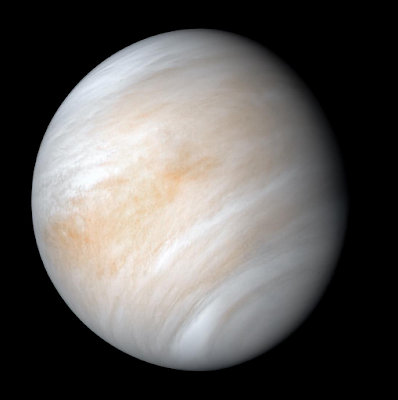
The planet Venus as imaged by the Mariner 10 space probe in 1974. NASA/JPL/Caltech.

Venus has a layer of clouds about 20 km thick, including the 12 km which have Earth-like, temperate conditions. Unfortunately, these clouds are thought to be made not of of water droplets, but concentrated sulphuric acid, with a very low water content, quite unsuitable for any form of life as we understand it. 

However, 50 years of spectrographic observations of Venus have left a number of unresolved mysteries about the planet's atmosphere. 

The most puzzling of these is the presence of water and sulphur dioxide in the atmosphere above the clouds. Water is present throughout the atmosphere of Venus, albeit at very low levels, while sulphur dioxide, which can be measured in parts per million below the clouds, can still be measured in parts per billion above the clouds. Both gasses are thought to be present in the atmosphere of Venus as a result of volcanic emissions, and should in theory be uniformly mixed throughout the atmosphere to an altitude of about 70 km, where they should be destroyed by ultraviolet photodissociation. However, the observed abundances do not support this, suggesting that sulphur dioxide is significantly depleted relative to oxygen in and above the cloud layers.

Previous models have suggested that sulphur dioxide could be photochemically oxidized to sulphur trioxide, which would in turn react with water droplets in the clouds to form sulphuric acid. However, sulphur dioxide is about five times as abundant as water, so if this were happening then all water should be eliminated in the cloud layer, while the sulphur dioxide level should only be reduced by about 20%.

Another persistent mystery is the presence of free oxygen in the clouds of Venus, the formation of which cannot be explained by any current model of the planet's atmosphere and processes. Furthermore, the atmosphere of Venus appears to be in a state of chemical disequilibrium (i.e. it contains gasses that should react with one-another till one or more is eliminated unless they are being constantly being topped up).

Another mystery is the apparent presence of ammonia in Venus's atmosphere. This was first detected by the Russian Venera 8 probe in 1972, although this was initially rejected as an anomaly, but later found again by NASA's Pioneer Venus probe. Pioneer Venus's long-term observation of the clouds of Venus also found further chemical disequilibrium within the cloud layers, as well suggesting that at least the lower layers contained substantial solid material, incompatible with a sulphuric acid composition. Other mysteries uncovered within the cloud layer were the presence of methane and phosphine, as well as an unknown ultraviolet-absorbing molecule.

In a paper published in the Planetary Science Journal on 23 July 2021, Paul Rimmer of the Department of Earth Sciences and Cavendish Laboratory at the University of Cambridge, and the MRC Laboratory of Molecular Biology, Sean Jordan and Tereza Constantinou of the Institute of Astronomy at the University of Cambridge, Peter Woitke of the School of Physics & Astronomy and Centre for Exoplanet Science at the University of St Andrews, Oliver Shorttle of the Department of Earth Sciences and Institute of Astronomy at the University of Cambridge, Richard Hobbs also of the Institute of Astronomy at the University of Cambridge, and Alessia Paschodimas of the Centre for Exoplanet Science and School of Earth and Environmental Sciences at the University of St Andrews, proposed a model in which a base molecule was present in the clouds of Venus, reacting with sulphur dioxide in the atmosphere to form sulphites, and thereby explaining the depletion of sulphur dioxide in the planet's atmosphere.

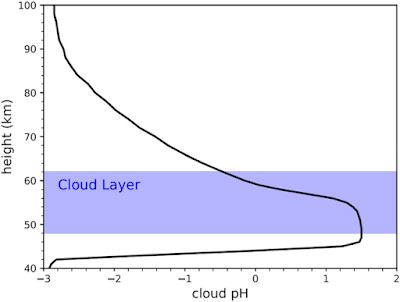
This reaction would also consume water, but this would be released again as the sulphites broke down in the lower atmosphere, providing a model that would account for the observed levels of water and sulphur dioxide in the atmosphere of Venus. The formation of sulphites would also have a profound impact on the composition, and pH, of the cloud layer. This has previously been assumed to more-or-less pure sulphuric acid, resulting in a pH of about -11, but Rimmer et al.'s model would raise this to somewhere between -1 and 1. This is within the tolerance range of extremophilic Bacteria and Archaeans on Earth, whereas -11 would be completely unsurvivable for any Earthlife-like organism.

In their initial paper, Rimmer et al. used sodium hydroxide as base in their model, not because they thought it was likely to be present, but simply as a standard base with predictable interactions. In a second paper published in the Proceedings of the National Academy of Sciences of the United States of America on 20 December 2021, William Bains of the Department of Earth, Atmospheric, and Planetary Sciences at the Massachusetts Institute of Technology and the School of Physics & Astronomy at Cardiff University, Janusz Petkowski, also of the Department of Earth, Atmospheric, and Planetary Sciences at the Massachusetts Institute of Technology, Paul Rimmer, lead author of the original study, and Sara Seager, again of the Department of Earth, Atmospheric, and Planetary Sciences, and of the Department of Physics and the Department of Aeronautics and Astronautics at the Massachusetts Institute of Technology, suggest that ammonia might be the base present in the clouds of Venus, discuss the implications of that.

The presence of ammonia in the clouds of Venus would result in the observed gas balance, with the upper atmosphere depleted in sulphur dioxide, but still containing water, as well as solid particles being formed in the clouds, and the presence of free oxygen.

In order for ammonia to form in the clouds of Venus, it would be necessary to reduce nitrogen by bonding it to hydrogen, which would require source of electrons as well as a source of hydrogen. Since there is almost no free hydrogen in the clouds, Bains et al. consider water to be the most likely candidate for the hydrogen doner, with electrons being obtained by the oxidation of carbon monoxide, carbonyl sulphide, sulphur dioxide, nitrogen, water, or hydrochloric acid.

Bains et al. reason that the most likely process would be the reaction of nitrogen with water to produce ammonium hydroxide and oxygen, as this requires less water and less energy than other potential reactions, and because it is the only reaction that would directly produce both ammonia and oxygen (which have been observed) without producing other oxidized species (which have not been observed) and would then require more energy to break down releasing oxygen.

The next question Bains et al. address is the rate at which the clouds must be depleting sulphur dioxide from the atmosphere in order to produce the observed levels, assuming that the sulphur dioxide rate is being topped up from below at a steady rate. This leads to the calculation that 100 billion tonnes of ammonia must be produced each year, roughly equivalent to the amount of free oxygen produced by photosynthesis each year. This would also result in about 100 billion tonnes of mass being lost from the bottom of the cloud layer through the precipitation of solid sulphite particles, which is in line with observations.

Any reaction producing ammonia on Venus would require considerable energetic input, leading Bains et al. to look for plausible sources of such energy. Lightning is present on Venus, and is capable of reducing nitrogen to ammonia, but the level of energy available from lightning would be far short of that needed to produce the observed gas ratios, and in any case unlikely to produce free oxygen. Ultraviolet-driven photochemistry can also produce ammonia, but again is most unlikely to do so at the observed levels (although how the presence of large amounts of sulphuric acid would have on this process has never been explored). Similarly, volcanoes can produce ammonia on Earth, but it is highly unlikely that Venusian volcanoes could be producing the observed levels of ammonia.

The ability to harvest chemical energy to reduce nitrogen to ammonia in an oxidising environment is a characteristic of life on Earth, where many Microorganisms live by doing just that, so Bains et al. posit that it is not unreasonable to suggest similar organisms might be carrying out this process in the clouds of Venus. The energy requirements of such a process would be high, and there would need to be clear benefits involved for any organism to do this, but Bains et al. suggest that creating a habitable environment by de-acidifying the cloud droplets would satisfy this requirement.

 
Predicted pH profile of cloud particles. The blue shaded region shows the altitude where clouds are present, from 48 km to 62 km. Note that the plot extends above and below the cloud tops because there are plausibly cloud particle populations that extend down to the altitude where sulphuric acid is sublimated, and up into the mesosphere where sulphuric acid aerosol evaporation may explain the anomalous sulphur dioxide inversion at 80 km to 100 km. This model provides no constraints on the composition of the mesospheric particles, which may well be composed of pure sulphuric acid. Bains et al. (2021).

Bains et al. suggest that the production of the levels of ammonia needed to drive this process is not beyond the plausible range of biological organisms living within the clouds. 100 billion tonnes of ammonia production per year equates to 3.10 billion grams of ammonia per second. On Earth, several species of Cyanobacteria can fix nitrogen into ammonia at rates of 0.000 000 041 g per gram of wet weight per second, which means that 8.1 billion tonnes, wet weight, of these organisms could produce 100 billion tonnes of ammonia per year. Any life in the clouds of Venus is unlikely to closely resemble Earthly Cyanobacteria, but assuming an organism with similar productivity was involved, then it would only represent about 1.5% of the mass of the lowest 5 km of the cloud layer.

Bains et al.'s model provides a better match for the observed abundances of gasses in the atmosphere of Venus, and in particular can account for; (1) the observed disequilibria in the clouds of Venus, (2) the observed presence of oxygen in the clouds, (3) the observed abundance of water in the clouds, (4) the detected ammonia in the clouds, and (5) the observed abundance profile of sulphur dioxide in and above the cloud layer.

Oxygen was detected in the clouds of Venus by the Pioneer Venus and Venera 14 probes, but this was rejected at the time due to the implied disequilibria that would have to exist in Venus's atmosphere. However, since that time is has become overwhelmingly clear that something is causing a disequilibrium in the atmosphere of Venus, and it is therefore reasonable to assume that oxygen is present. Bains et al.'s model predicts the presence of oxygen at levels at only one twentieth of the levels observed by Pioneer Venus and Venera 14 (although it does not rule out the production of further oxygen by other biological processes), but at a far higher level than any other model currently available.

Ammonia was also observed in the clouds of Venus by the Pioneer Venus and Venera 8, but this finding was also rejected at the time, as it was assumed the clouds were made up of droplets of concentrated sulphuric acid, and environment in which ammonia could not survive. Bains et al.'s model produces a much less acidic cloud layer, potentially with a pH above zero, within which ammonia could potentially exist.

Bains et al.'s model predicts the precipitation of ammonium sulphate and ammonium sulphite beneath the cloud layer, forming droplets that would fall until they are evaporated by the rising temperature of the atmosphere. This would result in the thermal decomposition of these molecules, which would release free ammonia, which would be oxidised to form nitrous oxides, something else detected by Pioneer Venus.

This model would also result in larger, probably non-spherical, droplets within the lower cloud layer, which would present a potential home for any biological organism. This is consistent with observations of the cloud layers on Venus, which again cannot easily be explained by any non-biological process.

Bain's et al.'s model can also explain the 'stagnant haze' that has been observed beneath the cloud layer on Venus. This haze extends downwards from the cloud base at 47 km above the ground, to an altitude of about 30 km, and its composition is unclear. The temperature of this haze layer is about 100°C at its upper extent and about 200°C at its base. This would be consistent with sulphate and sulphite salt particles falling from liquid droplets that evaporate at about 100°C, and which themselves decompose at temperatures of 200°C. This would also result in the formation of hydrogen sulphide in the layer beneath the clouds, something else which has been tentatively identified in the data from the Venera 14 and Pioneer Venus probes.

This study provides a new perspective on the habitability of the clouds of Venus. These clouds have previously been viewed as made up entirely of sulphuric acid, creating an extremely acidic and extremely dry environment, something deeply hostile to even the most tolerant forms of life. Bains et al.'s model shows how living organisms could inhabit a layer in the lower parts of these clouds, maintaining a much less acidic environment, with larger semisolid ammonium sulphite and sulphate particles through the production of ammonium.

The predicted pH within this layer, -1 to 1, is within the tolerance levels of some Extremophilic micro-organisms on Earth, and the temperature range, 60-80°C, is that which would be considered optimal for many such organisms. Furthermore, many micro-organisms which we would not considered extremophilic can produce ammonia as a defence against acidic conditions (including some pathogens, such as Mycobacterium tuberculosis and Candida albicans, which use this ability to neutralise the acids in phagosomes produced by our bodies as a defence against them).

Bains et al. note that there are still problems with their model. Most notably, the model only predicts a relative humidity of 0.02% in the lower cloud layer. This is 50 times drier than the lowest conditions that can be endured by the most drought-tolerant organisms on Earth (spores, and aestivating stages of Tardigrades and some micro-organisms can survive such conditions, but are not biochemically active). However, the levels of water reported in studies of the cloud layer is variable, which may mean that the distribution of water within these clouds is variable, with both arid and humid regions, allowing for the presence of active life.

The origin of life on Venus is an interesting question. Some models of Venus's history suggest that the young planet was much more hospitable, with a temperate climate and liquid water on its surface, with hostile conditions developing later due to a runaway greenhouse effect. Under such a model, life could have originated on the surface of Venus, and subsequently migrated into the clouds (this is not unreasonable as, although it is not obvious, there is quite a bit of life in the Earth's upper atmosphere).

See also...


Follow Sciency Thoughts on Facebook.
Follow Sciency Thoughts on Twitter.