Showing posts with label Atmospheric Chemistry. Show all posts

Saturday, 20 April 2024

Assessing the importance of plate tectonic for the development of complex life.

Over the past three decades, research has shown that the overwhelming majority of stars in our galaxy have planets. Logically, a proportion of those planets will have the conditions for life, and life will actually arise on some proportion of the planets which can support it. Furthermore, a small proportion of the planets with life are likely to produce intelligent life, capable of radio communication and other activities which we might be able to detect. This works out at a very small proportion of stars hosting civilizations, but a very small proportion of hundreds of billions still works out at a very large number. We have, nevertheless, never detected any sign of intelligent life (of life at all) beyond our own planet, leaving us, as far as we know the only civilization in the universe, something referred to as the Fermi Paradox. A number of possible explanations have been offered for this paradox, most of which revolve around the idea that while life is probably quite common in the galaxy, complex life is probably much rarer. A variety of reasons why this might be the case have also been proposed, with a link to the other phenomenon also as far as well know unique to our planet, plate tectonics, frequently being proposed.

In a paper published in the journal Scientific Reports on 12 April 2024, Robert Stern of the Department of Sustainable Earth Systems Science at the University of Texas at Dallas, and Taras Gerya of the Department of Earth Sciences at ETH-Zurich, re-examine the biological and geological history of the Earth, looking for connections between key stages in the development of life on Earth and changes in the Earth's geological activity.

Life is generally accepted to have first appeared on Earth more than 3800 million years ago, but the first Animals did not appear until less than 1000 million years ago. Various possible explanations have been proposed for this, including lower oxygen levels on the early Earth and a possible lack of key biological innovations until more recent times. The fact that Animals, Plants, and even multicellular Algae did not appear until quite late in the Neoproterozoic suggests that some profound change in the Earth or its biology led to this development, and Stern and Gerva suggest that this change was a shift from single lid to plate tectonics, and the subsequent profound shifts in the Earth's atmospheric oxygen levels.

The timing of the onset of plate tectonics is still a matter of debate among Earth Scientists, with two broad camps, one which argues that plate tectonics began during the Archean, while the other argues that the current plate tectonic regime began in the Neoproterozoic (although there may-or-may-not have been earlier phases of plate tectonics on Earth). The processes of seafloor spreading, subduction, and continental collision lead to the formation of a distinctive set of minerals, rocks, and rock assemblages, some of which appear to be absent before the onset of the Neoproterozoic, although it has been argued that these differences are due to higher mantle temperatures on the early Earth. Similarly, it is possible to track the movements of continents over the Neoproterozoic and Phanerozoic through the traces of magnetic fields left in some types of rocks when they form, but in rocks older than about 1200 million years this method is not reliable, leaving us uncertain about the movement of the continents that long ago. 

In previous work, Robert Stern divided indicators of plate tectonics into three groups, (1) indicators of seafloor spreading and subduction initiation, (2) subduction indicators, and (3) plate collision indicators. All of these indicators are present in rocks from Neoproterozoic and Phanerozoic times, but their presence in older rocks is far less clear. 

In order for plate tectonics to operate, it is necessary for oceanic lithosphere to be subducted at plate margins, and it is likely that this oceanic lithosphere was not sufficiently strong and dense enough for this to happen in a coherent way until the upper mantle had cooled to between 100°C and 150°C above current temperatures, again something which is predicted to have happened in the Neoproterozoic.

If plate tectonics did indeed start, then it is unlikely to have started all over the world at once, but instead should have started in one place, then taken hundreds of millions of years to spread around the globe. This would result in a gradual increase in the presence of Stern's three indicators for the presence of plate tectonics, something which can again be seen in the Neoproterozoic rock record. The first ophiolites, which are indicators of subduction initiation, appear about 870 million years ago, with the first indicators of actual subduction zones appearing about 750 million years ago, and the first indicators of continental collision appearing about 600 million years ago. 

As far as we understand, an active silicate body can have either a single lid or plate tectonic system. This being the case, for plate tectonics to have initiated in the Neoproterozoic, the Earth must have had a single lid system in the Mesoproterozoic. Stern's previous work also identified three potential indicators for single lid systems. These are (1) an elevated thermal regime, (2) an abundance of unusual dry magmas such as A-type granites and anorthosites, and (3) a lack of new continental margins. The Mesoproterozoic shows an absence of Stern's indicators for plate tectonics, but is rich in the three indicators for single lid tectonics. Curiously, indicators for plate tectonics do appear to be present in the Palaeoproterozoic.

Evolution of Earth’s tectonic regime over the past 1.6 billion years; (a) single lid tectonic indicators, (b) plate tectonic indicators cumulative plot, (c) simplified climate history, (d) Simplified biological evolution. Stern & Gerva (2024).

There is a similar shift in the formation of mineral deposits between the Mesoproterozoic and Neoproterozoic, with orogenic gold and porphyry copper deposits, all associated with an active tectonic regime, being common in Neoproterozoic strata but absent in the Mesoproterozoic, while iron oxide copper gold  deposits and iron-titanium-vanadium-phosphorus deposits, both of which are associated with anorthosites are common in the Mesozoic but rare in the Neoproterozoic.

Finally, the palaeomagnetic record does not show any significant movement of continental landmasses during the Mesoproterozoic, while this is common in younger rocks. Particularly noteworthy is the supercontinent of Nuna (or Colombia), which assembled during the Palaeoproterozoic, then appears to have persisted relatively unchanged throughout the Mesoproterozoic.

Plate tectonics requires a global mosaic of plates, which it could be reasonably expected would take hundreds of millions of years to form a a single lid system. Theoretically, following the formation of an initial subduction zone with associated transform systems and divergent plate boundary margins, the system could slowly propagate to form a global mosaic. The rate at which such a system could form would be governed by the rate at which new subduction zones can form and lengthen. In Cretaceous and younger rocks, subductive trenches appear to be able to lengthen at rates of between 100 and 600 km per million years, which would require between 92 and 550 million years to develop a global network of about 55 000 km of convergent margins.

The last 1.6 billion years of Earth’s tectonic history. Stern & Gerva (2024).

The Neoproterozoic is also known to have had major carbon isotope excursions (changes in the proportions of different carbon isotopes laid down in sedimentary deposits) as well as several glacial interludes, major disruptions to the Earth's environment which we associate with plate tectonics. The most notable of these is the Neoproterozoic Snowball Earth, a prolonged phase of near-global glaciation, which may have been triggered by a huge increase in volcanic activity or true polar wander.  The first major carbon isotope event in the Neoproterozoic is the Bitter Springs Event, at about 811 million years before the present, while the youngest is the Shuram Event, about 570 million years ago. If these events bracket a change from a single lid to a plate tectonic system, then that change took about 241 million years, with the Neoproterozoic Snowball Earth, which started at about 720 million years ago and ended about 580 million years ago, in the middle. If the beginning and end of the Snowball Earth mark the transition period then it is shorter, at about 140 million years. The fact that both the carbon isotope excursions and the glaciation events were sporadic suggests that this process was not smooth, bur occurred in a series of episodes. The Palaeoproterozoic is also noted for several isotope excursions, as well as glacial events, and the Great Oxidation Event, during which the Earth first developed an oxygenated atmosphere. All of these events occurred between about 2.50 and 2.05 billion years ago, with a proposed interval of plate tectonics between 2.05 and 1.80 billion years ago, giving an apparent different relationship between these geochemical events and plate tectonics. This Palaeoproterozoic tectonic interval appears to have ended with the formation of the Supercontinent of Nuna, although these ancient events are not well understood and would merit significant further investigation.

Life first appeared on Earth more than 3.8 billion years ago, but appears to have remained fairly simple for the next three billion years, with all terrestrial ecosystems dominated by Prokaryotes (Bacteria and Archaea), simple organisms which lack cell nuclei organelles. All complex multicellular life on Earth is Eukaryotic (i.e. has cells with nuclei and organelles), so Eukaryotic life had to appear before multicellular life-forms. The fossil record shows what appear to be Eukaryotic single-celled organisms dating back to at least the Palaeoproterozoic, suggesting a link between the emergence of the first Eukaryotes and the Great Oxygenation Event, the first case of co-evolution between the evolution of the atmosphere and Eukaryotic life.

The Mesoproterozoic lacks any such major events, making it impossible to split it into any subdivisions, and making its beginning and end points somewhat arbitrary. The interval between 1800 and 800 million years ago (roughly the Mesoproterozoic) has been referred to as the 'Boring Billion' because of this lack of events, with oxygen levels staying roughly constant, geobiological systems apparently remaining unchanged, and constant carbon isotope ratios throughout. The period, which lasted for about 20% of Earth's history, also saw stability in the proportion of sulphur molybdenum, chromium, and strontium isotopes trapped in sediments throughout, and a prolonged low nutrient system.

In contrast, the Neoproterozoic is a period of both climatic instability and rapid biological evolution, during which the Snowball Earth occurred, as well as major shifts in the carbon cycle, the ocean's oxygen content, a major diversification in microscopic Eukaryotes, and the appearance of Metazoans. The era can be split into three periods based upon clear geological differences, the longer and somewhat uneventful Tonian, between 1000 and 720 million years before the present, the Snowball Earth Cryogenian, and the Ediacaran, which saw the first widespread Metazoan fossils. Molecular clocks suggest that the first multicellular organisms appeared during the Tonian, the bilaterian body plan appeared in the Cryogenian, and that the majority of Metazoan phyla diversified during the Late Ediacaran, between 560 and 540 million years ago. All known Animal phyla are believed to have arisen during the Neoproterozoic.

Five conditions are thought to have been needed for this biological shift to have occurred; an increased nutrient supply, increased oxygen levels in both the atmosphere and oceans, an improved climate, an increased rate of habitat formation and destruction, and a sustained evolutionary pressure caused by such shifting environments.

Summary diagram showing how plate tectonics stimulates life and evolution whereas a single lid tectonic style retards life and evolution. Stern & Gerva (2024).

Nutrients are essential for life, and in particular organic carbon (i.e. compounds with bio-available carbon - we cannot, for example, eat diamonds), ammonium (which provides bio-available nitrogen), ferrous iron (again, bio-available iron) and phosphates (bio-available phosphorus). Phosphorus, in particular, plays vital role in biogeochemistry and is considered a global limiting nutrient. A shortage of phosphorus is thought to have been one of the major restrictions on the Mesoproterozoic biosphere. Phosphorus typically becomes available through the erosion of rocks, and its subsequent delivery to the oceans via rivers. This makes it likely that rock weathering was much reduced during the Mesoproterozoic. In the modern world, fresh rocks are constantly exposed at the surface due to tectonic processes, providing new sources of phosphorus and other nutrients, while soil formation covers rocks, inhibiting this supply. The Earth has gone through phases of enhanced nutrient supply associated with major uplift events, such as the Pan-African Orogeny, the Transgondwanan Supermountain Orogeny, and the Circum-Gondwanan Orogens, which all occurred on convergent plate boundaries associated with tectonic transitions. These events greatly increased the rate of erosion, and therefore the delivery of phosphorus into the oceans, with the microbial enhancement of carbon and sulphate acid weathering being an important part of this delivery process. Rising oxygen levels in the atmosphere would have increased the role of microbes in weathering, which in turn would have increased the rates at which organic carbon was buried and phosphorus was delivered to the oceans, resulting in depleted phosphorus depletion in palaeosols (preserved terrestrial soils), something observed during both the Neoproterozoic Oxygenation Event and the Palaeoproterozoic Great Oxygenation Event.

Further evidence for a major onset of uplift, erosion, and weathering during the Ediacaran can be seen in a rise in the proportion of the isotope strontium⁸⁷ within marine sediments. Strontium⁸⁷ is radiogenic, formed by the decay of rubidium within rocks, and can enter the water column either by the erosion of rocks in which this decay has occurred, or by the erosion of older marine sediments. The proportion of this isotope began to rise during the Tonian, and continued to do so throughout the Neoproterozoic, with a significant increase during the Ediacaran, and the highest values recorded in Earth's rock record being found in the Early Palaeozoic. This Neoproterozoic increase in the proportion of strontium⁸⁷ is thought to have been associated with the Pan-African uplifts and the formation of the Transgondwanan Supermountains. These events were caused by continental collisions, with no similar events having apparently happened during the Mesoproterozoic. Thus the low strontium⁸⁷ levels seen in the Mesoproterozoic are another line of evidence supporting a phase of single lid tectonics during this era. The production of phosphorus, iron, and other nutrients by erosion broke the Mesoproterozoic nutrient drought, stimulating biological evolution. 

Free oxygen levels in both the atmosphere and oceans are likely to have been caused by a proliferation of photosynthetic Cyanobacteria, Prokaryotes which have been around since at least the Palaeoproterozoic, combined with a more efficient burial of organic carbon (which will tend to react with free oxygen). This increased oxygen availability enabled the evolution of larger more complicated organisms, such as Animals, something impossible under the low-oxygen conditions of the Mesoproterozoic. Larger, more complicated Animals need higher oxygen levels than smaller, simpler ones, with oxygen levels during the Cambrian thought to have been much lower than today, but Mesoproterozoic oxygen levels are thought to have been lower still, incapable of supporting even simple Animal life. A range of isotopic proxies indicate a significant oxygenation event during the Neoproterozoic, leading to oxygen levels capable of supporting Animal life in most marine ecosystems by the end of the Cryogenian. 

The most likely explanation for this increase in oxygen is that an increase in nutrient supply led to a boom in phytoplankton growth, converting more carbon dioxide into organic matter. This would have allowed the development of more sophisticated Algae with increased photosynthetic abilities, something thought to have happened in the Late Cryogenian. This in turn further boosted oxygen production, as well as transforming the base of the food chain and providing novel food sources for the first Animals. An alternative explanation is increased weathering on land, leading to more nutrients flowing into the oceans, provoking a surge in Cyanobacterial and Algal production, which caused oxygen levels to rise. The common element to all hypothesis is that more phytoplankton were dying and being buried, increasing the  amount of organic carbon sequestered at the same time as sedimentation rates increased in the new rift basins and continental margins of the changing world.

A stable climate is important for Metazoan life. Prokaryotes can thrive at temperatures between 0°C and about 120°C, but most Animal life needs a temperature between about 5°C and about 35°C. Single lid and plate tectonics will provide different climatic regimes. Under a plate tectonic system, the regular release of volcanic gasses can have either a warming or cooling effect; notably mid-ocean ridges produce large amounts of carbon dioxide, tending to warm the climate, while volcanoes on convergent margins produce lots of sulphur dioxide, tending to cool the environment. 

The presence of oceans on the Earth's surface tends to modulate the overall temperature, due to the thermal inertia of water (it takes a lot more energy to warm water than air). This means that the Earth has a more temperate climate when a higher proportion of its surface is covered by water, and a harsher climate when the proportion of the surface covered by water is lower. This means that during a plate tectonic regime, the climate will go through cycles, with a warm greenhouse phase typically arising about 100 million years after a continental breakup event as the oceans widen. It is unclear how the depth and extent of the oceans would have varied under a single lid tectonic system, but it is likely that any change would have been considerably less significant than under a plate tectonic regime.

The process of weathering silicate rocks uses carbon dioxide. This means that the continual exposure and weathering of new silicate rocks, as happens under a plate tectonic system, will consume more carbon dioxide, leading to a reduction in the proportion of this greenhouse gas in the atmosphere, cooling the climate. Thus the enhanced erosion and weathering under a plate tectonic regime will not only release more nutrients, leading to more photosynthesis in the oceans and a subsequent rise in the burial of organic carbon in marine sediments, it also directly removes carbon dioxide from the atmosphere. Under a single lid system, the amount of uplift occurring should be close to zero, leading to a much lower nutrient flux and a lower exposure of silicate rocks to weathering by carbon dioxide.

Plate tectonics also removes large amounts of marine carbonate rocks and buried organic carbon from the Earth's surface systems as they are drawn down into the Earth at subduction zones, further reducing the amount of carbon dioxide in the atmosphere, and leading to further cooling. 

The carbon cycle on planets with single lid tectonic cycles is not well understood, and that of the Mesoproterozoic Earth less so. Two planets in the modern Solar System have single lid tectonic systems, Venus and Mars, and both of these have atmospheres which are more than 95% carbon dioxide, suggesting a poor ability to cycle this gas. However, models of the early Earth suggest that it might have been possible to recycle carbon dioxide reasonably efficiently if volcanic activity was sufficiently high, through the weathering, burial, sinking and delamination of carbonated crust. This fits with the observation that the Mesoproterozoic Earth had a relatively warm climate without any glacial phases, despite the Sun being 5-20% dimmer than today, presumably due to the contribution of greenhouse gasses.

The constant formation and then destruction of new ecosystems is a feature of an active plate tectonic system. This is also something required for the efficient evolution of biological organisms, but is unclear to what extent this would happen under a single lid tectonic system, possibly leading to a system of biological stasis.

The continuous environmental change of a plate tectonic system should present a constant need for biological innovation, with constantly changing nutrient fluxes, topographies, climates, and habitats. This is particularly true along active plate margins, in shallow marine ecosystems which appear to have been hotspots for biological innovation throughout the Earth's recent history. In these environments plate tectonics produces shifting habitats with abundant nutrient and sediment supplies, as well as strong currents and tides, which will tend to distribute these nutrients. 

The switch a plate tectonic system appears to have stimulated the rapid diversification of life, something which may not have been possible at all under a single lid system. The most dramatic environmental shifts encountered under a single lid system are likely to have been mantle plumes, which would cause global warming when they first appeared, due to the production of carbon dioxide, followed by a period of cooling as weathering of basalts leads to carbon oxide levels lowering again. Under this system the oceans would also likely suffer from conditions of anoxia, acidification, and toxic metal-input.

Without the driving force of plate tectonics, the evolution of biological life appears to be an extremely slow process. Under a plate tectonic regime, the evolution and demise of new organisms, groups of organisms, and whole global ecosystems, appears to follow the opening and closing of oceans. This makes it extremely unlikely that complex life would have arisen on Earth without the development of a plate tectonic system.

We know that life appeared in Earth's oceans more than 3.8 billion years ago, and remained within the oceans for more than 3 billion years. Despite this, it is generally accepted that the presence of dry land on Earth was needed for both the origin and evolution of life, since without this all nutrients would eventually be lost from surface systems. It is possible that the first life originated in ancient palaeosols (or more accurately, regalith), but seawater appears to have been a vital environment for much of the history of life, providing a nutrient bath in which primitive organisms could absorb nutrients through their cell membranes, as well as protection from the Sun's harmful ultraviolet radiation. All complex life on Earth is Eukaryotic, and it is generally accepted that Eukaryotic cells first evolved in the sea, where water would provide structural support for these larger cells until they evolved it themselves. This structural support would also have been needed for the first Metazoans, which appear to have been the soft-bodied organisms recorded in the Ediacaran Biotas.

Stern and Gerva reason that while primitive life must evolve in the sea, advanced civilizations need to evolve on dry land. Changing terrestrial ecosystems provide even more varied habitats than the oceans, providing an additional stimulus for biological evolution, and areas around the margins of continental plates tend to produce particularly varied habitats, as can be seen in the circum-Mediterranean, Mesoamerica, Madagascar and Southeast Asia today. The harsher terrestrial environment also stimulates life to produce specialist water retention and gas exchange structures, reproduction by internal fertilization, and movement systems which do not rely on the support of water, all of which lead organisms to become increasingly sophisticated and complex. 

This biological complexity is one of the prerequisites to developing a system for organisms to transfer experiences and knowledge to one-another, which in turn has the potential to lead to abstract thinking, and the development of language, technology, and science.  In particular, an advanced civilization would require the organisms building it to develop a familiarity with both fire and electricity, something more-or-less impossible if they are restricted to water. Thus the development of an advanced civilization on a planet would require the presence of a plate tectonic system, which Stern and Gerva suggest should be added to the Drake Equation.

The Drake Equation, as envisaged by astrobiologist Frank Drake, proposed that the number of potentially detectable  advanced civilizations in the Galaxy would be equal to the average rate of star formation, multiplied by the fraction of stars which host planets, multiplied by the fraction of planets which hold the conditions for life, multiplied by the fraction of planets which hold the conditions for life which actuallt develop life, multiplied by the proportion of planets with life which develop civilizations, multiplied by the proportion of civilizations which produce detectable signals (such as radiowaves etc.), multiplied by the lifetime of such civilizations. 

Based upon this, Drake made an 'educated guess' that between 200 and 50 000 000 detectable civilizations might exist in the Galaxy, with subsequent estimates by other scientists producing figures from below a hundred to several million. Stern and Gerva suggest that the proportion of planets with life that go on to develop civilizations should be considerably lower than in most estimates, due to the additional requirement for these planets to develop plate tectonic systems which operate for several hundred million years.

See also...

Sunday, 21 January 2024

Evidence for an oxygenation event 1.4 billion years ago, during the Middle Proterozoic 'Boring Billion'.

The Middle Proterozoic Era, between 1.8 billion years ago and 800 million years ago, is often known as the 'Boring Billion', due to an apparent lack of significant change in the Earth's biology, climate, and ocean chemistry. Oxygen levels were much lower than today, although there is considerable debate as to exactly how low, with some experts arguing for levels between 1% and 10% of modern levels, while others believe the figure should be between 0.1% and 1%. In the past decade a number of studies have come to the conclusion that oxygen levels fluctuated during the Middle Proterozoic, with a series of transient oxygenation events occurring over the era, with studies of redox-sensitive trace metal enrichments and biomarkers preserved in the middle Xiamaling Formation of North China suggesting that one of these occurred about 1.4 billion years ago.

Photosynthesis by living organisms is the major source of oxygen in the Earth's atmosphere, however an increase in the rate of photosynthesis is not in itself sufficient to change the oxygen level in the Atmosphere; a number of substances present on the Earth's surface reacting with free oxygen, which has a buffering effect on the atmosphere. 

Oxygen can only begin to build up in the atmosphere once substances such as organic carbon and pyrite are buried in sufficient quantities to neutralise this buffering effect. Plausible causes of such burial are events such as upwellings of poorly oxygenated waters from the deep sea, or increased weathering on land particularly of phosphate rich flood basalts from Large Igneous Provinces, leading to nutrient-rich runoffs entering the sea. Either of these scenarios would have provoked a spike in biological activity, with phytoplankton absorbing the carbon from carbon dioxide in the atmosphere while releasing the oxygen, then sinking and being buried beneath sediments when they died. Another possible scenario is an increase in sulphur, in the form of sulphate from the erosion of calcium sulphate (gypsum), or in the form of sulphur dioxide another product of Large Igneous Province volcanism, entering the (iron-rich) Proterozoic ocean, and forming pyrite minerals which then sunk and were buried, removing iron from the ocean and allowing oxygen to build up. 

The emplacement of the black shales of the Xiamaling Formation was roughly coeval with an episode of Large Igneous Province volcanism about 1.4 billion years ago, which suggests a connection between the volcanism and the apparently oxygen enriched environment in which these deposits were laid down, although direct evidence for this has yet been found.

Large Igneous Province formation during the Phanerozoic has been linked to changes in atmospheric composition and ocean chemistry, global climate change, and significant changes in the evolution of the biosphere. It is reasonable to assume that Large Igneous Province formation during the Proterozoic would have had similarly environmental impacts, altering the redox balance of the oceans, and leading to the burial of much organic material within sediments and raising the proportion of oxygen in the atmosphere. Volcanic emissions linked to Large Igneous Province emplacement could be expected to increase the amount of both carbon dioxide and sulphur dioxide in the atmosphere, leading to an increase in photosynthesis and pyrite burial. Subsequent weathering of volcanic rocks on land would lead to increased levels of nutrients entering the oceans, further increasing biological productivity, and leading to the deposition of carbon-rich black shale deposits.

In a paper published in the journal Geophysical Research Letters on 19 January 2024, Lei Xu of the China University of Geosciences (Beijing), Maxwell Lechte of the Department of Earth and Planetary Sciences at McGill University, Xiaoying Shi, also of the China University of Geosciences (Beijing), Wang Zheng of the School of Earth System Science at Tianjin University, Limin Zhou of the National Research Center of Geoanalysis, Kangjun Huang of the State Key Laboratory for Continental Dynamics and Early Life Institute at Northwest University, Xiqiang Zhou of the Institute of Geology and Geophysics of the Chinese Academy of Sciences, and the College of Earth and Planetary Sciences at the University of Chinese Academy of Sciences, and Dongjie Tang, again of the China University of Geosciences (Beijing), present the results of a geochemical study of the Xiamaling Formation within the Yanliao Basin of North China, which examined proxies for palaeo-productivity such as phosphorus content, total organic carbon, and trace element ratios, as well as data on molybdenum isotope ratios and sulphur isotope ratios with pyrite, with the aim of determining the relationship between large-scale magmatism and the oxygenation of surface waters in the Middle Proterozoic.

Geological setting of the study area. (a) Simplified paleogeographic map of the approximately1.4 billion-year-old strata, showing the spatial and temporal distributions of approximately 1.4–1.3 billion-year-old large igneous provinces and continental rift zone. (b) Extent of the Yanliao Basin during the period from about 1.42–1.32 billion years ago.  (c) Simplified paleogeographic map of Yanliao Basin showing localities of the Xiamaling Formation sections. (d)–(f) Simplified maps showing geology of the Jixian area, Zhaojiashan and Jizhentun area, and the Renjiazhuang area. Xu et al. (2024).

The Xiamaling Formation was laid down in an open marine setting within the extensional Yanliao Basin, on the North China Craton, the last sedimentary series laid down prior to the breakup of the ancient supercontinent of Nunu. Palaeomagnetic evidence suggests that at this time the craton was located between 10°N and 30°N. 

It was not possible to find a single location where the entire Xiamaling Formation was exposed, so Xu et at. investigated four separate exposures, each of which exposed a part of the sequence, at the Tielingzi, Zhaojiashan, Jizhentun, and Renjiazhuang villages across the Jixian-Huailai-Xiahuayuan-Chengde region. The Xiamaling Formation disconformably overlies the Tieling Formation (i.e. it lays over the Tieling Formation, but it was not laid down directly in sequence, there was a time interval, and possibly erosion and deformation, between the end of Tieling Formation deposition and the onset of Xiamaling Formation deposition) and is in turn disconformably overlain by the Changlongshan Formation. The Xiamaling Formation is made up primarily of dark shale and siltstone, and can be divided into four subunits, names Members I-IV, with Member I being the lowest. The four members record a large transgressive-regressive cycle (increase and decrease in global sealevels, which would cause water to transgress onto land and then regress from it in a coastal environment), the Member II recording the peak of the transgression. The four members are quite distinctive, and can easily be distinguished at the different locations, making corelation between the sites reasonably easy. The two most useful sites for the study proved to be those at Zhaojiashan and Jizhentun, which were easy to compare to one-another due to their proximity (only about 10 km apart). The boundary between the Tieling and the Xiamaling formations was exposed at Jixian, which is about 180 km from Zhaojiashan and Jizhentun, but still easy to correlate with the other two exposures.

Stratigraphic correlation of the Xiamaling Formation in North China, with key ages, volcanic ash beds and lithographic sequences. Xu et ai. (2024).

Member I of the Xiamaling Formation disconformably overlies the Tieling Formation, apparently as part of the transgressive process (i.e. the area was above water and subject to erosion between the deposition of the two formations. Members I and II contain well-preserved horizontal lamination but lack obvious wave-agitated structures or crossing-bedding, which is consistent with deposition in a sub-tidal environment below the fair-weather wave base. Member III and the lower part of Member IV have no recognizable sedimentary structures indicative of storm-wave influence, which implies that they were deposited below the storm wave base, deeper than about 100 m. 

The age of the Xiamaling Formation has been well constrained, with a bentonite (clay derived from volcanic ash) layer at the base of Member one having yielded a zircon which has been uranium-lead dated to 1.418 billion years before the present (± 14 million years). Zircon minerals are formed by the crystallisation of cooling igneous melts. When they form they often contain trace amounts of uranium, which decays into (amongst other things) lead at a known rate. Since lead will not have been present in the original crystal, it is possible to calculate the age of a zircon crystal from the ratio between these elements. However, it is likely that the unconformity at the base of the Xiamaling Formation means that the lowermost part of Member I is of slightly different ages in different places. Zircons from bentonite and tuff layers within Member III have yielded dates of 1.3922 and 1.3844 billion years before the present, and a date of 1.323 billion years before the present has been obtained from Member IV. Thus, the Xiamaling Formation can be safely considered to be between 1.42 and 1.32 billion years old.

Xu et al. collected 300 new samples of shale and siltstone for their study, with 22 samples coming from Member I at Tielingzi, 73 samples from Member II at Zhaojiashan, and 152 samples from Members III and IV at Jizhentun. Furthermore, 53 black shale samples were obtained from Member III at Renjiazhuang. These samples were then cleaned, dried, ground into powder, and then analysed for trace elements, total sulphur, total organic carbon, and mercury concentration.

Macroscopic depositional features of the Xiamaling Formation. (A) Grey silty shale in the Member I (Jixian section). (B) Green fine-grained sandstone in the basal Member II (Zhaojiashan section). (C) Alternating red and green shale beds in the middle Member II (Zhaojiashan section). (D) Alternating green and black shale beds in the upper Member II (Zhaojiashan section). (E) Alternating siliceous rocks and black shale beds in the basal Member III (Jizhentun section). (F) Black shale with volcanic ash layers in the middle Member III (Jizhentun section). (G) Green shale with limestone concretions in the upper Member IV (Jizhentun section). (H) Black shale with volcanic ash layers in the middle Member III (Renjiazhuang section). Xu et al. (2024).

There is a clear corelation between mercury levels and total organic carbon in the shales of the Xiamaling Formation, but these seem independent of total sulphur, aluminium, and iron levels. This suggests that the formation can be split into three stages. Stage I, comprising Member I and the lower and middle parts of Member II, has low mercury levels, and a low mercury/total organic carbon ratio. Stage II, comprising the upper part of Member II and all of Member III, shows a  sharp spike in the mercury/total organic carbon ratio. In Stage III, which comprises Member IV, this returns to the 'normal' level seen in Stage I. 

Palaeo-productivity, as evidenced by phosphorus and total organic carbon levels and enrichment in copper, zinc, and nickel, show a similar trend, with a peak in Stage II, slightly after the mercury/total organic carbon ratio peak. The total organic carbon peak is more closely aligned with the total organic carbon/reactive phosphorus ratio than it is with the mercury/total organic carbon ratio. Stage II shows peaks in total organic carbon (which rises 26% by weight) phosphorus (increases 0.26% by weight), the phosphorus/aluminium ratio, the copper/aluminium ratio, the zinc/aluminium ratio, and the nickel/aluminium ratio. Proxies for palaeo-productivity also rise in deposits of equialent age across North China and northern Australia during the same time interval. 

The possibility of an oxygenation event 1.4 billion years ago has recently faced some robust challenges. There is no obvious chromium fractionation in the shales of the Xiamaling Formation, something which would be expected if atmospheric oxygen levels were higher than about 1% of modern levels. Nor does Member III show any enrichment in vanadium, something which might be expected if oxygen levels reached 4% of today's levels. An alternative hypothesis has been suggested, in which the observed changes in chemistry reflect the basin receiving runoff from a different terrestrial catchment area, rather than any wider change in oceanic or atmospheric chemistry. It is also possible that the in the low oxygen conditions of the Middle Proterozoic, the shallow seas and atmosphere could have had a weak buffering effect on each-other, making it dangerous to make assumptions about atmospheric chemistry from marine sediments. 

Xu et al. argue that the evidence supports a rise in oxygen levels in both seawater and atmosphere about 1.4 billion years ago, and that the black shales deposited at this time in the North China, North Australian, and possibly other cratons, are evidence for this. A number of geochemical lines of evidence support this. For example, a higher proportion of heavy molybdenum isotopes is found in shales of the lower part of Member III of the Xiamaling Formation than in other Middle Proterozoic strata, closer to that seen in modern seawater, which suggests an ocean with oxygen levels approaching modern levels. Studies of uranium isotopes sediments of the Velkerri Formation of northern Australia have suggested that about /75% of the seafloor was oxygenated about 1.4 billion years ago. Furthermore, the proportion of the isotope sulphur³⁴ in pyrite drops in the higher part of Member III of the Xiamaling Formation, which is thought to be indicative of elevated levels of sulphate in the ocean, which in turn is likely to be a result of higher erosion on land, due to an oxygenated atmosphere.

On this basis Xu et al. argue that even if global oxygen levels did not rise significantly 1.4 billion years ago, there is significant evidence for at least a localised oxygenation event in the Yanliao Basin. Analysis of iron minerals and other oxygen sensitive elements in the sediments of Member IV of the Xiamaling Formation all suggest that the seafloor was oxygenated at the time of deposition, which is unlikely without wider marine oxygenation. Limestones from the upper part of Member IV have higher iodine to calcium and magnesium ratios, which is considered to be another indicator of an oxygenated water column. 

Large Igneous Province emplacement is known to have occurred between about 1.4 and 1.3 billion years ago, with a small peak in volcanic activity at about 1.42 billion years ago, followed by a rapid onset of Large Igneous Province volcanism at 1.40 billion years ago, peaking at about 1.38 billion years ago. This has been recorded on most continents, and is assumed to have had a significant impact on the Proterozoic environment. The widespread black shale emplacement at about 1.4 billion years ago is generally thought to be connected to this Large Igneous Province emplacement event, although establishing a direct causative relationship has proved difficult, largely because of the poor age constraint of most Middle Proterozoic sediments. Recent studies have used high mercury levels found in many of these black shales to suggest a link to volcanic events. However, mercury can be scavenged into sediments by organic matter, sulphides, clay minerals, and iron-magnesium oxyhydroxides. Xu et al.'s results suggest that there is a correlation between mercury and organic carbon in the Xiamaling Formation, but no correlation between mercury and sulphides, iron, or aluminium, which supports the hypothesis of a link between mercury and organic carbon deposition in this sequence.

In Stage II of the Xiamaling Formation there is a spike in mercury/organic carbon deposition, which could have been caused either by enhanced scavenging of mercury from seawater by organic material, or increased amounts of mercury entering the water column. Fluctuating redox conditions can also lead to an increase in mercury deposition, but iron and trace metal analysis suggests that redox conditions were relatively stable during Stage II. A euxinic (low oxygen, high sulphur) environment, which is thought to have been present, would lead to higher mercury deposition into sediments, where the sulphur would be reduced by the actions of bacteria, leading to an increased amount of both mercury and organic material within the sediments. However, there is a drop in the amount of sulphur Stage III, where there is no reason to believe the waters would have been less euxinic than during Stage II. This makes a higher mercury inputs into the ocean during Stage II the most likely explanation.

A variety of sources can lead to raised mercury levels in the oceans. In the modern world this is often linked to the combustion of wood and/or coal, but neither of these is likely in the Middle Proterozoic. More plausible scenarios include hydrothermal activity, remineralization of organic carbon from deep seawater, enhanced continental weathering, and volcanic aerosols. The sediments of the Xiamaling Formation record a positive europium anomaly, which is unlikely to be associated with enhanced hydrothermal activity. There is no sign of any organic matter remineralization during Stage II, which makes it unlikely this was the source of the mercury. The known extensive Large Igneous Province volcanism from approximately the time when these deposits were being laid down gives a very plausible origin for the mercury present, and the mercury/total organic carbon ratios, as well as being high, are similar to those found in Phanerozoic sediments which are known to be associated Large Igneous Province emplacement, further supporting Xu et al.'s hypothesis. Large Igneous Province emplacement would have been sporadic over the interval 1.40-1.35 billion years ago, making it unlikely to have ceased during Xiamaling Stage III. However, Stage II does appear to represent the most intense. The available mercury/total organic carbon and zircon data suggests that volcanism began about 1.41 billion years ago, with the onset of the oxygenation event at about 1.40 billion years ago.

The availability of phosphorous has been a limiting factor for life throughout Earth's history, and is a major control on ocean productivity, the burial of organic matter, and the production of oxygen. A sudden influx of nutrients including phosphorus, into Middle Proterozoic basins such as the Yanliao in North China and the McArthur Basin in northern Australia would have provided a stimulus for biological production, increasing the rates of both organic matter burial and oxygen production. An upwelling of nutrient-rich deep seawaters has been suggested as a source of the increased production seen in the Xiamaling Formation, but Xu et al. argue that the weathering of volcanic rocks following a major interval of Large Igneous Province emplacement is a more plausible cause. Such Large Igneous Provinces are composed largely of mafic rocks, which have a much higher phosphorus content than either ultramafic or felsic rocks. A link between the 1.4 billion year ago Large Igneous Province emplacement and the subsequent spike in oxygen has previously been suggested, but evidence to support this has been absent.

Correlation of geochemical data from the Xiamaling Formation and the Velkerri Formation based on age, volcanic ash and stratigraphic sequence. Xu et al. (2024).

Xu et al. demonstrate that mercury levels first increase 135 m from the base of the Xiamaling Formation during Stage II. This is slightly before the increase in nutrient elements (phosphorus, copper, nickel, zinc) and elevated organic matter and pyrite burials, which starts 150 m above the base. This provides a clear chronological link between the onset of volcanism and the subsequent oxygenation event. The higher phosphorus levels seen in Stage II than in either Stage I or Stage III suggest that weathering of the new igneous rocks provided significant source of this element, raising the phosphorus levels in the oceans leading to a boom in biological activity within the oceans. This manifests in a sharp increase in the amount of organic carbon being buried, with a maximum being reached 173 m above the base of the Xiamaling Formation.

Xu et al. propose that weathering of phosphorus from the Large Igneous Provinces provoked a major increase in ocean productivity about 1.4 billion years ago, leading to an increased rate of organic carbon burial and a rise in atmospheric oxygen. This rise in atmospheric oxygen would have further increased the rate of erosion on land, leading to high levels of sulphur entering the oceans, leading to the development of euxinic conditions, increasing the rate of pyrite burial, and further oxygen production. The high levels of organic carbon and available phosphorus suggest that phosphorus was being efficiently recycled within the oceans of the time, further raising oxygen production.

Xu et al. are careful to point out that this is not the only known instance of Large Igneous Province weathering prompting an oxygenation event; both the Great Oxidation Event and Neoproterozoic Oxidation Event, the two most significant oxygenation events in Earth's history, were closely associated with episodes of Large Igneous Province emplacement. 

The high mercury and total organic carbon deposition rates in the middle Xiamaling Formation strongly suggest that the deposition of this formation was influenced by the 1.40-1.35 billion years ago Large Igneous Province emplacement episode. The increased levels of mercury and organic carbon were linked to high inputs of nutrients, particularly phosphorus, into the ocean, fuelling higher biological production, increased pyrite burial, and an oxygenation event at about 1.4 billion years ago. 

See also...


Thursday, 11 August 2022

Wildfires in the Silurian.

Free oxygen first appeared in the Earth's atmosphere during the Great Oxidation Event, between 2.5 and 2.3 billion years ago, and has played a significant role in all biogeochemical cycles ever since. A soil-forming microbial cover is thought to have begun to form on the Earth's landmasses about 850 million years ago, which further contributed to the oxygen content of the atmosphere. Following this, atmospheric oxygen concentrations are thought to have remained fairly constant until the appearance of the first land Plants in the Ordovician. 

These first Plants emerged into a world already dominated by Fungi, a group which quickly acquired the ability to both break-down the tissues of dead plants, and to form mycorrhizal relationships with living ones, enhancing the flow of nutrients through these primitive terrestrial ecosystems, and causing another rise in oxygen levels. The oldest known Vascular Plant, Cooksonia, a leafless, dichotomously branching Plant reaching less than 10 cm high, appeared during the Wenlock Epoch of the Silurian, between 433.4 and 427.4 million years ago, and has been recorded from rocks in Ireland and the Czech Republic. However, Cooksonia is not the most common form in the deposits where it is found, it lived in a landscape dominated by Namatophytes, vegetative organisms comprised of aggregations of tubes and cuticles, which were almost certainly Fungi, and possibly Lichens, and fossils of which have been found around the world.

The appearance of terrestrial Plants is generally accepted to have provoked a rise in atmospheric oxygen levels, although the extent of this is hard to determine, and scientists have differing opinions upon when oxygen levels comparable to those seen today were first achieved. 

In a paper published in the journal Geology on 13 June 2022, Ian Glasspool and Robert Gastaldo of the Department of Geology at Colby College, attempt to reconstruct the oxygen content of the Silurian atmosphere, by using charcoal fragments from deposits in Wales and Poland as evidence of Silurian wildfires, which would have required a minimum level of oxygen to occur.

Charcoal can only form when the atmospheric oxygen pressure is between 70% and 140% of that of today's atmosphere. Lower than this, and plant matter will not combust, higher, and it will combust completely, turning all available carbon into CO₂. Charcoal first appears in the Ordovician, suggesting that the atmosphere had sufficient oxygen for it to form then, but disappears again in the (Early Devonian, 419.2-410.8 million years ago), and is absent for much of the the rest of the Devonian. 

Glasspool and Gastaldo examine microscopic charred plant fragments from the Middle Silurian Pen-y-lan Mudstone at Rumney in Wales, and which is about 10 million years older than the previous oldest charred vegetative material, from the Late Silurian Winnica Formation at Winnica in Poland.

Silurian palaeogeography with Rumney (Wales, UK) and Winnica (Poland) localities plotted against International Geological Congress time scale version 2021.7. Abbreviations: Ord., Ordovician; Sa, Sandbian; Ka, Katian; Hi, Hirnantian; Rh, Rhuddanian; Ae, Aeronian; Te, Telychian; Sh, Sheinwoodian; Ho, Homerian; Go, Gorstian; Lu, Ludfordian; Pd, Přídolí; Lo, Lochkovian; Pr, Pragian; Em, Emsian; Ei, Eifelian; Gi, Givetian; Fr, Frasnian; Fa, Famennian. Glasspool & Gastaldo (2022).

Organic material from Rumney is dominated by Nematophytes, and in particular members of the genus Pachytheca. Glasspool  and Gastaldo obtained charred vegetative fragments from rock samples obtained from a borehole, drilled by the British Geological Survey, at depths of between 314.71 and 316.3 m. 

Since the exact nature of Nematophytes is unclear, it was necessary to use proxies to estimate the temperature at which this material may have burned; previous research having found that charcoal can be made from wood at temperatures between 410 and 730°C, and from Bracket Fungi at between 440 and 940°C. Based upon the degree of charring, Glasspool  and Gastaldo conclude that the material from Rumney burned at an average of about 490°C if Namatophytes were woody, or about 540°C if they were Bracket Fungus-like, although the most charred were probably burned at about 640°C (if woody) or 820°C (if Bracket Fungus-like).

Select charred phytoclasts: Rumney (Wales, UK) Nematophytes in reflected light (A), (B) and scanning electron microscopy images of Nematophytes from Winnica (Poland) (C), (D). (A) High reflectance and brittle fracture in Prototaxites. (B) Outer cortex of Pachytheca. (C) Trilayered Nematophyte cf. Tristratothallus. (D) Aggregation of small and large tubes. Glasspool & Gastaldo (2022).

The development of an oxygen-rich atmosphere has been crucial for the development of life on Earth, and particularly so for the emergence of Animals onto land. However, there is no direct way of measuring the oxygen content of ancient atmospheres is impossible, forcing scientists to rely on proxies for this information. As the formation of charcoal requires atmospheric oxygen levels approaching those of today, charcoal is an excellent proxy for the development of an oxygen-rich atmosphere, and Glasspool and Gastaldo's evidence that this may have developed by the Wenlock Epoch of the Silurian Period. about 430 million years ago.

There are some significant carbon isotope excursions (short intervals in which the proportions of carbon isotopes in sedimentary rocks shift significantly) in the Silurian, including notable ones in the Wenlock to Přídolí epochs, which suggests that the Silurian carbon cycle was more prone to severe disruption than that of any other period of the Phanerozoic. While some fairly good models of oxygen fluctuations in the Silurian have been developed, these operate on a scale of tens of millions of years, and cannot provide helpful data on the sort of sudden, short lived events that would cause these isotope excursions. However, a stratigraphic model of fire intervals within the Silurian could potentially address this mystery, something Glasspool and Gastaldo propose creating.

Most current predictions of oxygen levels in the atmosphere suggest that the oxygen content remained below 15% from the Late Ordovician until the Early Devonian. However, this is inconsistent with evidence for wildfires in the Silurian, as an oxygen content of 16% or above is needed for the combustion of dry vegetative matter. One model (GEOCARBSULFOR) does allow for higher oxygen levels, but still below 18%, which would allow for small fires under very dry conditions, though Glasspool and Gastaldo question whether any Silurian Plant or Fungus was capable of surviving in such an environment. The deposits at Rumney record a fairly high proportion of charcoal in a marine sediment, which would generally imply a conflagration of some size, inconsistent with any current model of Silurian oxygen levels.

Most of the data from Rumney implies a fairly low temperature fire (how low depending on whether the vegetation was Plant- or Fungus-like), but there are charcoal fragments which formed at far higher temperatures, suggesting at least pockets of high temperature fire. This seems implausible given the nature of the fuel, though Glasspool and Gastaldo suggest it it more plausible if Nematophytes were Fungal in nature, as Fungi naturally burn at higher temperatures.

The limiting factor for vegetative growth in the Silurian was probably the availability of phosphorus. Fungi and Bacteria can liberate this from rock to some extent, enabling the growth of Lichens and Plants (the later through symbiotic mycorrhizal relationships), but the phosphorus then becomes locked into the Plant or Fungus body, even after it dies. Fires would have had the ability to free up phosphorus locked into dead vegetation, making it available for new growth on land and in the oceans, where it could prompt blooms of photosynthetic algae, further rising the oxygen level. However, too frequent or severe fires would have damaged the soil structure, killing off microbial communities and creating a sterile environment.

See also...

Online courses in Palaeontology. 

Follow Sciency Thoughts on Facebook.

Follow Sciency Thoughts on Twitter.


Sunday, 26 December 2021

Evidence for life in the clouds of Venus.

Venus resembles the Earth in many ways; it is roughly the same size, giving it similar gravity, which in turn enables it to retain a thick atmosphere, something the other rocky planets of the Solar System (Mercury and Mars) lack. Unfortunately, the atmosphere of Venus is a little bit too dense for this model to carry any further; Venus is shrouded in a dense cloak of carbon dioxide, resulting in a runaway greenhouse effect and a surface temperature of about 700K (427°C). Despite this apparent hostility, scientists have long speculated that life might exist on Venus, not on its surface, but in the cloud layer between 48 and 60 km above, where Earth-like temperatures and pressures prevail.

 
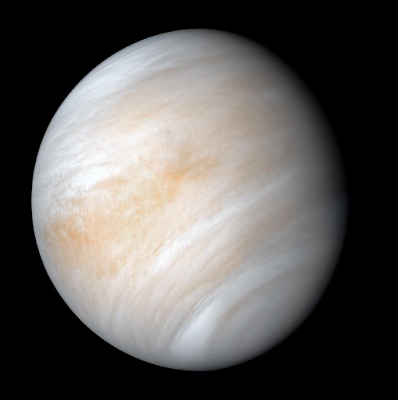
The planet Venus as imaged by the Mariner 10 space probe in 1974. NASA/JPL/Caltech.

Venus has a layer of clouds about 20 km thick, including the 12 km which have Earth-like, temperate conditions. Unfortunately, these clouds are thought to be made not of of water droplets, but concentrated sulphuric acid, with a very low water content, quite unsuitable for any form of life as we understand it. 

However, 50 years of spectrographic observations of Venus have left a number of unresolved mysteries about the planet's atmosphere. 

The most puzzling of these is the presence of water and sulphur dioxide in the atmosphere above the clouds. Water is present throughout the atmosphere of Venus, albeit at very low levels, while sulphur dioxide, which can be measured in parts per million below the clouds, can still be measured in parts per billion above the clouds. Both gasses are thought to be present in the atmosphere of Venus as a result of volcanic emissions, and should in theory be uniformly mixed throughout the atmosphere to an altitude of about 70 km, where they should be destroyed by ultraviolet photodissociation. However, the observed abundances do not support this, suggesting that sulphur dioxide is significantly depleted relative to oxygen in and above the cloud layers.

Previous models have suggested that sulphur dioxide could be photochemically oxidized to sulphur trioxide, which would in turn react with water droplets in the clouds to form sulphuric acid. However, sulphur dioxide is about five times as abundant as water, so if this were happening then all water should be eliminated in the cloud layer, while the sulphur dioxide level should only be reduced by about 20%.

Another persistent mystery is the presence of free oxygen in the clouds of Venus, the formation of which cannot be explained by any current model of the planet's atmosphere and processes. Furthermore, the atmosphere of Venus appears to be in a state of chemical disequilibrium (i.e. it contains gasses that should react with one-another till one or more is eliminated unless they are being constantly being topped up).

Another mystery is the apparent presence of ammonia in Venus's atmosphere. This was first detected by the Russian Venera 8 probe in 1972, although this was initially rejected as an anomaly, but later found again by NASA's Pioneer Venus probe. Pioneer Venus's long-term observation of the clouds of Venus also found further chemical disequilibrium within the cloud layers, as well suggesting that at least the lower layers contained substantial solid material, incompatible with a sulphuric acid composition. Other mysteries uncovered within the cloud layer were the presence of methane and phosphine, as well as an unknown ultraviolet-absorbing molecule.

In a paper published in the Planetary Science Journal on 23 July 2021, Paul Rimmer of the Department of Earth Sciences and Cavendish Laboratory at the University of Cambridge, and the MRC Laboratory of Molecular Biology, Sean Jordan and Tereza Constantinou of the Institute of Astronomy at the University of Cambridge, Peter Woitke of the School of Physics & Astronomy and Centre for Exoplanet Science at the University of St Andrews, Oliver Shorttle of the Department of Earth Sciences and Institute of Astronomy at the University of Cambridge, Richard Hobbs also of the Institute of Astronomy at the University of Cambridge, and Alessia Paschodimas of the Centre for Exoplanet Science and School of Earth and Environmental Sciences at the University of St Andrews, proposed a model in which a base molecule was present in the clouds of Venus, reacting with sulphur dioxide in the atmosphere to form sulphites, and thereby explaining the depletion of sulphur dioxide in the planet's atmosphere.

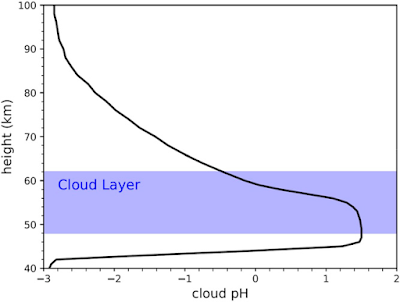
This reaction would also consume water, but this would be released again as the sulphites broke down in the lower atmosphere, providing a model that would account for the observed levels of water and sulphur dioxide in the atmosphere of Venus. The formation of sulphites would also have a profound impact on the composition, and pH, of the cloud layer. This has previously been assumed to more-or-less pure sulphuric acid, resulting in a pH of about -11, but Rimmer et al.'s model would raise this to somewhere between -1 and 1. This is within the tolerance range of extremophilic Bacteria and Archaeans on Earth, whereas -11 would be completely unsurvivable for any Earthlife-like organism.

In their initial paper, Rimmer et al. used sodium hydroxide as base in their model, not because they thought it was likely to be present, but simply as a standard base with predictable interactions. In a second paper published in the Proceedings of the National Academy of Sciences of the United States of America on 20 December 2021, William Bains of the Department of Earth, Atmospheric, and Planetary Sciences at the Massachusetts Institute of Technology and the School of Physics & Astronomy at Cardiff University, Janusz Petkowski, also of the Department of Earth, Atmospheric, and Planetary Sciences at the Massachusetts Institute of Technology, Paul Rimmer, lead author of the original study, and Sara Seager, again of the Department of Earth, Atmospheric, and Planetary Sciences, and of the Department of Physics and the Department of Aeronautics and Astronautics at the Massachusetts Institute of Technology, suggest that ammonia might be the base present in the clouds of Venus, discuss the implications of that.

The presence of ammonia in the clouds of Venus would result in the observed gas balance, with the upper atmosphere depleted in sulphur dioxide, but still containing water, as well as solid particles being formed in the clouds, and the presence of free oxygen.

In order for ammonia to form in the clouds of Venus, it would be necessary to reduce nitrogen by bonding it to hydrogen, which would require source of electrons as well as a source of hydrogen. Since there is almost no free hydrogen in the clouds, Bains et al. consider water to be the most likely candidate for the hydrogen doner, with electrons being obtained by the oxidation of carbon monoxide, carbonyl sulphide, sulphur dioxide, nitrogen, water, or hydrochloric acid.

Bains et al. reason that the most likely process would be the reaction of nitrogen with water to produce ammonium hydroxide and oxygen, as this requires less water and less energy than other potential reactions, and because it is the only reaction that would directly produce both ammonia and oxygen (which have been observed) without producing other oxidized species (which have not been observed) and would then require more energy to break down releasing oxygen.

The next question Bains et al. address is the rate at which the clouds must be depleting sulphur dioxide from the atmosphere in order to produce the observed levels, assuming that the sulphur dioxide rate is being topped up from below at a steady rate. This leads to the calculation that 100 billion tonnes of ammonia must be produced each year, roughly equivalent to the amount of free oxygen produced by photosynthesis each year. This would also result in about 100 billion tonnes of mass being lost from the bottom of the cloud layer through the precipitation of solid sulphite particles, which is in line with observations.

Any reaction producing ammonia on Venus would require considerable energetic input, leading Bains et al. to look for plausible sources of such energy. Lightning is present on Venus, and is capable of reducing nitrogen to ammonia, but the level of energy available from lightning would be far short of that needed to produce the observed gas ratios, and in any case unlikely to produce free oxygen. Ultraviolet-driven photochemistry can also produce ammonia, but again is most unlikely to do so at the observed levels (although how the presence of large amounts of sulphuric acid would have on this process has never been explored). Similarly, volcanoes can produce ammonia on Earth, but it is highly unlikely that Venusian volcanoes could be producing the observed levels of ammonia.

The ability to harvest chemical energy to reduce nitrogen to ammonia in an oxidising environment is a characteristic of life on Earth, where many Microorganisms live by doing just that, so Bains et al. posit that it is not unreasonable to suggest similar organisms might be carrying out this process in the clouds of Venus. The energy requirements of such a process would be high, and there would need to be clear benefits involved for any organism to do this, but Bains et al. suggest that creating a habitable environment by de-acidifying the cloud droplets would satisfy this requirement.

 
Predicted pH profile of cloud particles. The blue shaded region shows the altitude where clouds are present, from 48 km to 62 km. Note that the plot extends above and below the cloud tops because there are plausibly cloud particle populations that extend down to the altitude where sulphuric acid is sublimated, and up into the mesosphere where sulphuric acid aerosol evaporation may explain the anomalous sulphur dioxide inversion at 80 km to 100 km. This model provides no constraints on the composition of the mesospheric particles, which may well be composed of pure sulphuric acid. Bains et al. (2021).

Bains et al. suggest that the production of the levels of ammonia needed to drive this process is not beyond the plausible range of biological organisms living within the clouds. 100 billion tonnes of ammonia production per year equates to 3.10 billion grams of ammonia per second. On Earth, several species of Cyanobacteria can fix nitrogen into ammonia at rates of 0.000 000 041 g per gram of wet weight per second, which means that 8.1 billion tonnes, wet weight, of these organisms could produce 100 billion tonnes of ammonia per year. Any life in the clouds of Venus is unlikely to closely resemble Earthly Cyanobacteria, but assuming an organism with similar productivity was involved, then it would only represent about 1.5% of the mass of the lowest 5 km of the cloud layer.

Bains et al.'s model provides a better match for the observed abundances of gasses in the atmosphere of Venus, and in particular can account for; (1) the observed disequilibria in the clouds of Venus, (2) the observed presence of oxygen in the clouds, (3) the observed abundance of water in the clouds, (4) the detected ammonia in the clouds, and (5) the observed abundance profile of sulphur dioxide in and above the cloud layer.

Oxygen was detected in the clouds of Venus by the Pioneer Venus and Venera 14 probes, but this was rejected at the time due to the implied disequilibria that would have to exist in Venus's atmosphere. However, since that time is has become overwhelmingly clear that something is causing a disequilibrium in the atmosphere of Venus, and it is therefore reasonable to assume that oxygen is present. Bains et al.'s model predicts the presence of oxygen at levels at only one twentieth of the levels observed by Pioneer Venus and Venera 14 (although it does not rule out the production of further oxygen by other biological processes), but at a far higher level than any other model currently available.

Ammonia was also observed in the clouds of Venus by the Pioneer Venus and Venera 8, but this finding was also rejected at the time, as it was assumed the clouds were made up of droplets of concentrated sulphuric acid, and environment in which ammonia could not survive. Bains et al.'s model produces a much less acidic cloud layer, potentially with a pH above zero, within which ammonia could potentially exist.

Bains et al.'s model predicts the precipitation of ammonium sulphate and ammonium sulphite beneath the cloud layer, forming droplets that would fall until they are evaporated by the rising temperature of the atmosphere. This would result in the thermal decomposition of these molecules, which would release free ammonia, which would be oxidised to form nitrous oxides, something else detected by Pioneer Venus.

This model would also result in larger, probably non-spherical, droplets within the lower cloud layer, which would present a potential home for any biological organism. This is consistent with observations of the cloud layers on Venus, which again cannot easily be explained by any non-biological process.

Bain's et al.'s model can also explain the 'stagnant haze' that has been observed beneath the cloud layer on Venus. This haze extends downwards from the cloud base at 47 km above the ground, to an altitude of about 30 km, and its composition is unclear. The temperature of this haze layer is about 100°C at its upper extent and about 200°C at its base. This would be consistent with sulphate and sulphite salt particles falling from liquid droplets that evaporate at about 100°C, and which themselves decompose at temperatures of 200°C. This would also result in the formation of hydrogen sulphide in the layer beneath the clouds, something else which has been tentatively identified in the data from the Venera 14 and Pioneer Venus probes.

This study provides a new perspective on the habitability of the clouds of Venus. These clouds have previously been viewed as made up entirely of sulphuric acid, creating an extremely acidic and extremely dry environment, something deeply hostile to even the most tolerant forms of life. Bains et al.'s model shows how living organisms could inhabit a layer in the lower parts of these clouds, maintaining a much less acidic environment, with larger semisolid ammonium sulphite and sulphate particles through the production of ammonium.

The predicted pH within this layer, -1 to 1, is within the tolerance levels of some Extremophilic micro-organisms on Earth, and the temperature range, 60-80°C, is that which would be considered optimal for many such organisms. Furthermore, many micro-organisms which we would not considered extremophilic can produce ammonia as a defence against acidic conditions (including some pathogens, such as Mycobacterium tuberculosis and Candida albicans, which use this ability to neutralise the acids in phagosomes produced by our bodies as a defence against them).

Bains et al. note that there are still problems with their model. Most notably, the model only predicts a relative humidity of 0.02% in the lower cloud layer. This is 50 times drier than the lowest conditions that can be endured by the most drought-tolerant organisms on Earth (spores, and aestivating stages of Tardigrades and some micro-organisms can survive such conditions, but are not biochemically active). However, the levels of water reported in studies of the cloud layer is variable, which may mean that the distribution of water within these clouds is variable, with both arid and humid regions, allowing for the presence of active life.

The origin of life on Venus is an interesting question. Some models of Venus's history suggest that the young planet was much more hospitable, with a temperate climate and liquid water on its surface, with hostile conditions developing later due to a runaway greenhouse effect. Under such a model, life could have originated on the surface of Venus, and subsequently migrated into the clouds (this is not unreasonable as, although it is not obvious, there is quite a bit of life in the Earth's upper atmosphere).

See also...


Follow Sciency Thoughts on Facebook.

Follow Sciency Thoughts on Twitter.