Tuesday, 6 January 2015

Hominin teeth from the Middle Pleistocene of Anhui Province, China.


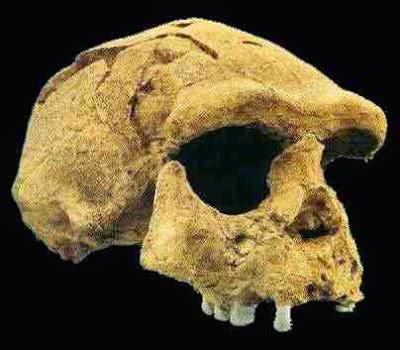
In the 1970s and 1980s a collection of Hominin bones and teeth were unearthed in the Longtan Cave at Hexian in Anhui Province in eastern China. The bones of these remains have been extensively studied, and assigned to the species Homo erectus, though palaeoanthropologists have differed in their opinions as to whether these remains were most similar to those from Zhoukoudian in China or Java in Indonesia. The depositional layer which produced the teeth has been dated to about 412 000 years ago, and contains traces of fires and fire damaged animal bones, animal bones with cut marks and tools made from bones, antlers and teeth, but no stone implements. The fauna and pollen assemblage at this layer imply a subtropical climate.

In a paper published in the journal PLoS One on 31 December 2014, Song Xing of the Key Laboratory of Vertebrate Evolution and Human Origins at the Institute of Vertebrate Paleontology and Paleoanthropology of the Chinese Academy of Sciences, María Martinón-Torres and José María Bermúdez de Castro of the National Research Center on Human Evolution, Yingqi Zhang, also of the Key Laboratory of Vertebrate Evolution and Human Origins, Xiaoxiao Fan of the Hexian Museum of Anhui Province, Longting Zheng of the Anhui Museum, Wanbo Huang of the Chongqing Three Gorges Institute of Paleoanthropology at the China Three Gorges Museum and Wu Liu, again of the Key Laboratory of Vertebrate Evolution and Human Origins, describe the results of a study of the teeth of the Longtan Cave Hominins, in which they were compared to a range of other teeth from ancient and modern populations of Australopithecus and Homo from Africa, Europe and China.

The first tooth described is a right upper third premolar (formerly described as a right upper fourth premolar). The tooth is in generally good condition, although it has some cracks in its enamel on the crown surfaces. There is a large fragment alveolar bone attached to the root. The cusps of the tooth have been flattened by wear, making the cusp pattern unclear. The crown is oval and slightly asymmetrical, the cusps are joined by a crest that transverses the central groove. The tooth has one lingual root and two buccal roots, all of which are quite robust; the mesiobuccal, distobuccal, and lingual roots are 19.26, 17.88, and 18.96 mm long. The pulp horns are blunt and low, with a total pulp cavity volume of 82.67 mm3.

Right upper third premolar (PA832) (o: occlusal, B or b: buccal, M or m: mesial, L or l: lingual, d: distal). 3D reconstructions of the dentine surface (I–III) and the pulp cavity (IV) obtained from micro-CT scanning. The arrow points to the transverse crest. Solid lines indicate the bifurcation of the essential crest. Dotted lines indicate the mesial (I) and distal accessory ridges (II) and the well-demarcated central ridge onthe buccal surface (III). Sagittal sectional plane of PA832 (V). Cross-section of PA832 (VI) at the levelindicated by the red line. (I, II, III, IV, V, and VI) are not scaled. Xing et al. (2014).

The second tooth described is a left upper third premolar, with a complete crown but a broken root. The cusps of this tooth have been flattened exposing the dentine, and there are wear facets on the mesial and distal surfaces of the crown. The exposed dentine of the buccal cusp shows a pronounced mesial vertical furrow and a weaker distal furrow running towards the apex of the cusp. This tooth does not have a crest transversing the central groove.

Left upper third premolar (HXUP3) (o: occlusal, B or b: buccal, m: mesial, l: lingual, D or d: distal). The occlusal (I) and buccal (II) views of the dentine surface reconstructed from micro-CT scanning. Solid lines indicate the bifurcation of the essential crest. Dotted lines indicate mesial and distal accessory ridges. The arrow points to the vertical groove on the buccal surface. (I and II) are not scaled. Xing et al. (2014).

Transverse grooves crossing the central grooves of upper third premolars are common in Australopithecus and early African Homo, but become increasingly rare in later members of the genus Homo. However it is relatively more common in Early Pleistocene teeth from East Asia and Middle Pleistocene teeth from Europe. The strong medial groove seen in the dentine of the buccal cusp of the left premolar is typical of Early East Asian Hominins, and seen in some Middle Pleistocene specimens as well, including those from Zhoukoudian. This groove is completely absent from European Middle Pleistocene specimens, Neanderthals and all modern Humans. Such grooves are also seen in Homo ergaster specimens from the Late Pliocene and Early Pleistocene of East Africa, though it is less well developed in these. The asymmetrical oval outline of the crowns of these teeth is also seen in Australopithecus and early African Homo including Homo ergaster, as well as in the Early Pleistocene remains from the Sangiran Dome in Java, and the middle Pleistocene remains from Zhoukoudian and Chaoxian in China; this differs from the more symmetrical crowns seen in modern Homo sapiens, which is also seen in a Middle Pleistocene upper third premolar from in South China.

The triple root of the right tooth is more unusual; this is otherwise only known from Australopithecus and early Homo in Africa and in Early Pleistocene specimens from Java. The robust roots of the tooth are also shared with the Java specimens, with narrow, tapering roots typical of African and European Homo specimens.

From left to right, 3D reconstruction of the upper right premolar from Hexian from micro-CT scanning, Zhoukoudian PA67, Zhoukoudian 19, and Sangiran S7–35 (MB: mesiobuccal, B: buccal). Xing et al. (2014).

The upper right premolar is also exceptionally large, being wider than all specimens of Homo ergaster, Early Pleistocene Hominins from Europe or the specimens from Chaoxian or Panxian Dadong, and towards the upper end of the size range encountered in Early and Middle Pleistocene Hominins from East Asia, Middle Pleistocene Hominins from Europe and Neanderthals. It is longer than almost all known Hominin third premolars, except some Australopithecusand early Homo specimens from East Africa.

The third tooth described is an upper left first premolar. This is generally well preserved, although the buccal roots are broken off. The tooth is approximately square in outline. The upper surface is heavily worn, with large, oval-shaped wear facets, which have largely obliterated the upper surface of the tooth, though the presence of the four main cusps can still be detected by the grooves in the exposed dentine. This dentine surface is heavily crenulated, with crests and ridges on all cusps; the hypocone is large. The lingual root is very robust, divergent and flattened lengthways. It is 14.72 mm in length.

Left upper first molar (o: occlusal, B or b: buccal, m: mesial, l: lingual, D or d: distal). Sagittal sectional plane of PA836 (I). The occlusal (II) and lingual (III) views of dentine surface reconstructed from micro-CT scanning. Dotted lines point to the expression of mesial accessory ridges (II) and a Carabelli’s trait (III). (I, II, and III) are not scaled. Xing et al. (2014).

The hypocone of the first premolar has tended to decrease throughout the history of the Hominins, with large hypocones common in Australopithecus, and most Homo specimens from the Early and Middle Pleistocene, including those from East Asia, although the specimens from Zhoukoudian, which are close to the Longtan Cave Hominins both geographically and stratigraphically, have smaller hypocones. The outline of the tooth is similar to that of other East Asian Pleistocene specimens, and different from the more rhomboidal outlines seen in teeth from Pleistocene specimens from Europe and Africa, and from the more square teeth of modern Homo sapiens. The robust divergent root of the tooth is also typical of Early and Middle Pleistocene specimens from East Asia, and differs from those of Early Pleistocene Europeans, which diverge little if at all. However in modern Humans this trait is quite variable, with the Longtan tooth falling within the range of variation.

This tooth is also large, being wider than most known first molars of Middle Pleistocene Hominins from Europe or East Asia, Neanderthals or early modern Humans, though its width is typical for Homo ergaster and Early Pleistocene Hominins from East Asia. Its length is also typical for Early and Middle Pleistocene East Asian Hominins, Middle Pleistocene European Hominins, Neanderthals and early modern Humans, though it is longer than specimens from any known Homo ergaster and Early Pleistocene European Hominins.

The fourth tooth described is a left upper second molar. The roots of this tooth are completely missing and the tooth is broken along its cervical line. The cusps have been worn down and flattened, but not enough to expose the dentine. The outline of the tooth is trapezoidal, with the distal portion being narrower. There are four main cusps and a smaller fifth cusp visible, transversed by a series of grooves, the hypocone is medium-sized. Xing et al. calculate that the average enamel thickness of the tooth is 1.30 mm, but would have been 1.51 mm prior to wear.

Left upper second molar (o: occlusal, B or b: buccal, m: mesial, l: lingual, D or d: distal). The occlusal (I) and lingual (II) views of dentine surface reconstructed from micro-CT scanning. Dotted lines point to the mesial accessory ridges (I) of the occlusal surface and to the expression of a Carabelli’s cusp on the lingual face of the crown (II). (I and II) are not scaled. Xing et al. (2014).

The fifth tooth is a right upper second molar, also missing its roots, and partially broken along its cervical line. Again this tooth had been worn down and flattened, but not enough to expose the dentine. This tooth is also trapezoidal, with four main cusps, though there is no sign of a fifth cusp.

Right upper second molar (o: occlusal, B or b: buccal, M or m: mesial, l: lingual, d: distal. I and II: The occlusal (I) and lingual (II) views of dentine surface reconstructed from micro-CT scanning). Dotted lines point to the mesial accessory ridges of the occlusal surface and to the expression of a Carabelli’s cusp on the lingual surface of the crown. (I and II) are not scaled. Xing et al. (2014).

The hypercones of these teeth are typical for Early and Middle Pleistocene Hominins from East Asia, being smaller than those of Homo ergaster and other early Homo specimens from East Africa, but larger than those of Middle Pleistocene European Hominins, Neanderthals and Modern Humans. The Trapezoidal shape of the teeth is typical for Australopithecus, early Homo and Early and Middle Pleistocene Hominins from East Asia, but unlike the rhomboidal or triangular shape seen in Middle Pleistocene European Hominins, Neanderthals and Modern Humans. 

The teeth also have an average enamel thickness similar to those of East Asian specimens of Homo erectus and Middle Pleistocene Hominins from North Africa, and larger than that of most Middle Pleistocene European Hominins from Europe and Neanderthals, though within the range of modern Humans.

The mesial sectional plane of the Hexian upper left second molar (the red and grey areas indicate the reconstructed enamel and dentine, respectively, and green areas show how the occlusal wear was virtually restored). Xing et al. (2014).

Again these are large teeth, with the width exceeding all previously recorded Middle Pleistocen East Asian Hominins, and all but the largest Early and Middle European Hominins, Neanderthals or modern Humans, though the width does fall within the range of Homo ergaster and Early Pleistocene Hominins from East Asia. The length of the teeth is at the upper limit of, or outside the range of, the values seen in Middle Pleistocene East Asian Hominins, Early or Middle Pleistocene European Hominins, Neanderthals and modern Humans.

The sixth and seventh teeth described are a lower left second and third molar from the same individual, still attached by a fragment of alveolar bone (these were previously reported as the lower left first and second molars).

The second molar has some damage to the crown and root, and is severely worn down, preventing analysis of the morphology of the upper surface. The tooth has two roots, flattened slightly sideways and 15.07 and 16.84 mm long, respectively. The mesial root has two separate root canals, the distal root a single canal that splits in two close to the tip.

The third molar is much better prepared, with only minor damage to the enamel on the upper surface, although it is heavily worn, with a complex surface to the dentine surface that shows five main and one (or possibly two) minor cusps and numerous small ridges and crenulations. There are two roots which bifurcate (split in two) on their third portions and diverge (move apart) at their tips. These roots are 14.52 and 15.56 mm long. The pulp cavity has five horns, one for each of the main cusps, and three root canals, two mesial and one lingual.

Left lower second and third molars (PA834-1 and PA834-2) (o: occlusal, B or b: buccal, M: mesial, l: lingual, d: distal). The occlusal (I) and lingual (II) views of dentine surface reconstructed from micro-CT scanning of the third molar. The occlusal (III) and distobuccal (IV) views of the pulp cavity of the third molar reconstructed from micro-CT scanning. Sagittal sectional planes of the second (V) and third (VII) molars. Crosssection of the second (VI) and third (VIII) molars at the level indicated by the red lines. Dotted lines indicate theCusp 6 and 7 on the occlusal surfaces and the protostylid on the buccal surfaces of the crown. (I, II, III, IV, V,VI, VII, and VIII) are not scaled. Xing et al. (2014).

The eighth tooth described is also a lower left second molar. The root of this tooth is missing, but the crown is well preserved, if heavily worn, exposing patches of dentine. The crown of the tooth is an asymmetric oval in shape, and the tooth has five main cusps and two lesser cusps. The metaconis and hypoconid are in contact hyperconulid is large and displaces buccally, the sixth cusp is damaged, but appears medium sized, the seventh cusp is also medium sized.

Left lower second molar (o: occlusal, B or b: buccal, M or m: mesial, l: lingual, d: distal. I and II: The occlusal (I) and buccal (II) views of the dentine surface reconstructed from micro-CT scanning. Dotted lines indicate the Cusp 6 and 7 on the occlusal surfaces and the protostylid on the buccal surfaces of the crown. I and II are not scaled. Xing et al. (2014).

The ninth tooth described is another lower second left molar. This tooth retains its roots, and is also worn on its upper surface, leaving patches of exposed dentine. This tooth is also oval in outline and slightly asymmetric, the distal portion being slightly narrower than the mesial portion. There are five main cusps arranged in a ‘Y’ shape. There are two roots, both very robust, which bifurcate towards their tips. The mesial and distal roots are 15.96 mm and 16.00 mm long, respectively.

Left lower second molar (o: occlusal, B or b: buccal, M or m: mesial, l: lingual, d: distal). Xing et al. (2014).

The surfaces of the lower second molars from the Longtan Cave have an unusually complex surface, with seven cusps and numerous crenulations and ridges. This more typical of earlier Hominins, with complex arrangements being seen in Australopithecus and Early Pleistocene Hominins from Africa, Europe and Asia, but absent in Middle Pleistocene Hominins from Europe, as well as Neanderthals and Modern Humans. However this has been previously recorded in Middle Pleistocene East Asian Hominins. An oval shape to the upper surface of this tooth is otherwise only recorded in Early Pleistocene Hominins from Africa, and these have molars that are more symmetrical and elongate.  The presence of a seventh cusp has previously been recorded in Hominins from the Middle Pleistocene of Europe, and in Neanderthals. A ‘Y’ shaped arrangement of cusps seen in these teeth is the ancestral state in Hominins, but is highly unusual in Middle Pleistocene populations. The structure of the roots of these teeth is typical of Early Pleistocene Asian Hominins.

These teeth are also large, with a width falling within the range of Homo ergaster and Early Pleistocene Hominins from East Asia, but larger than otherwise seen in Middle Pleistocene East Asian Hominins or Early Pleistocene European Hominins, and towards the upper end of the range seen in Middle Pleistocene European Hominins and Neanderthals. Lengthwise these teeth are larger than any known Middle Pleistocene East Asian Hominin, Neanderthal or modern Human, and falls within the upper part of the range of Homo ergaster and Early Pleistocene Hominins from East Asia.

Buccal views of a sample of lower second molars from the East Asian mid-Middle Pleistoceneperiod (From left to right: Hexian PA834-1, Hexian PA838, Zhoukoudian PA70). Xing et al. (2014).

The lower third molar has a well-developed, buccally displaced hypoconulid, which is typical of Australopithecus and Hominins from the Early and Middle Pleistocen of Africa and Asia, differing from the reduced, centrally placed hypoconulids seen in Pleistocene European Hominins and modern Humans. The sixth cusp is also typical of Australopithecus and Hominins from the Early and Middle Pleistocen of Africa and Asia but not Pleistocene European Hominins and modern Humans. The root arrangement of this tooth also resembles Early Pleistocene East Asian specimens, with divergent roots, whereas those from the Middle Pleistocene Zhoukoudian Locality tend to converge.

Again this is a large tooth, with a width within the ranges of Homo ergaster and Early Pleistocene Hominins from East Asia but larger than any known Middle Pleistocene East Asian Hominins, Early or Middle Pleistocene European Hominins, Neandethals or modern Humans, and a length exceeding everything except Australopithecus and some early Homo specimens.

The final tooth described is a right central upper incisor. This has a small fracture on the root tip, but is otherwise in good condition. The tooth is shovel-shaped, with the front surface relatively flat, while the back is convex at the base. The root is robust, short and flattened.

High quality replica of the right upper central incisor (PA835) (o: occlusal, La or la: labial, M orm: mesial, li: lingual, d: distal). Xing et al. (2014).

The shovel shape seen in the incisor is seen in Australopithecus and some early Homo specimens, though the more pronounced shape seen in this tooth is more typical of Pleistocene Hominins from Eurasia, and in particular Neanderthals. This is another very large tooth, exceeding all but a few Australopithecus and early Homo specimens in size.

These teeth are generally ‘primitive’ compared to other middle Pleistocene East Asian ‘Homo erectus’, more closely resembling Early Pleistocene members of the group, but showing a mixture of features unlike any other Hominins. Xing et al. suggest this may be indicative of an unrealized level of diversity among East Asian Hominins, though they do not propose naming any new taxa on the fragmentary remains available at the current time.

See also…

http://sciencythoughts.blogspot.co.uk/2014/10/human-remains-from-middle-pleistocene.htmlHuman remains from the Middle Pleistocene of Normandy.                                              Early and Middle Pleistocene Human remains are extremely rare in northern Europe, having to date been...
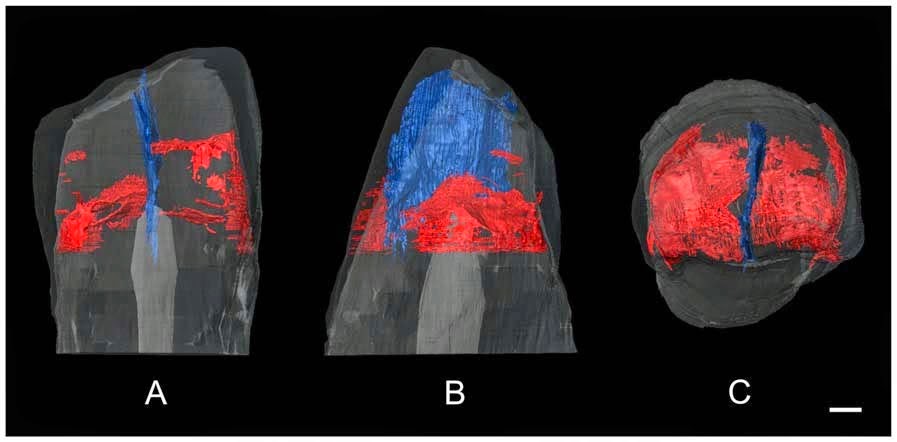
Dentistry is known to have been practiced by the Ancient Egyptians, and several examples of putative...
http://sciencythoughts.blogspot.co.uk/2012/03/trying-to-find-peking-man.htmlTrying to find Peking Man.                                   Peking Man is a collective name given to a group of hominid fossils found at Zhoukoudian, near Beijing, between 1929 and 1937. This comprised remains from at least 15 individuals, assigned to the species Homo erectus, with an estimated age between 300 000 and 780 000 years old. In 1937 the invading Japanese army was drawing close to Zhoukoudian and the excavation...

Follow Sciency Thoughts on Facebook.

Magnitude 1.9 Earthquake in North Yorkshire, England.

The British Geological Survey recorded a Magnitude 1.9 Earthquake at a depth of 2 km near the village of Redmire in North Yorkshire, slightly after 11.00 am GMT on Monday 5 January 2015. There is no danger of any damage or casualties from an event of this size, though it may have been felt locally.

The approximate location of the 5 January 2015 North Yorkshire Earthquake. Google Maps.
Earthquakes become more common as you travel north and west in Great Britain, with the west coast of Scotland being the most quake-prone part of the island and the northwest of England being more prone  to quakes than the rest of most of England and Wales. 

The precise cause of Earthquakes in the UK can be hard to determine; the country is not close to any obvious single cause of such activity such as a plate margin, but is subject to tectonic pressures from several different sources, with most quakes probably being the result of the interplay between these forces.
Britain is being pushed to the east by the expansion of the Atlantic Ocean and to the north by the impact of Africa into Europe from the south. It is also affected by lesser areas of tectonic spreading beneath the North Sea, Rhine Valley and Bay of Biscay. Finally the country is subject to glacial rebound; until about 10 000 years ago much of the north of the country was covered by a thick layer of glacial ice (this is believed to have been thickest on the west coast of Scotland), pushing the rocks of the British lithosphere down into the underlying mantle. This ice is now gone, and the rocks are springing (slowly) back into their original position, causing the occasional Earthquake in the process.

 
(Top) Simplified diagram showing principle of glacial rebound. Wikipedia. (Bottom) Map showing the rate of glacial rebound in various parts of the UK. Note that some parts of England and Wales show negative values, these areas are being pushed down slightly by uplift in Scotland, as the entire landmass is quite rigid and acts a bit like a see-saw. Climate North East.

Witness accounts of Earthquakes can help geologists to understand these events, and the structures that cause them. If you felt this quake, or were in the area but did not (which is also useful information) then you can report it to the British Geological Survey here.

See also...

http://sciencythoughts.blogspot.co.uk/2014/12/magnitude-20-earthquake-in-lake.htmlMagnitude 2.0 Earthquake in the Lake District, England.                                          The British Geological Survey recorded a Magnitude 2.0 Earthquake at a depth of 13 km at the southern end of...
http://sciencythoughts.blogspot.co.uk/2014/09/magnitude-19-earthquake-in-north.htmlMagnitude 1.9 Earthquake in North Yorkshire.                                                     The British Geological Survey recorded a Magnitude 1.9 Earthquake at a depth of 1 km in southern North Yorkshire slightly after 11.30 pm British Summertime...
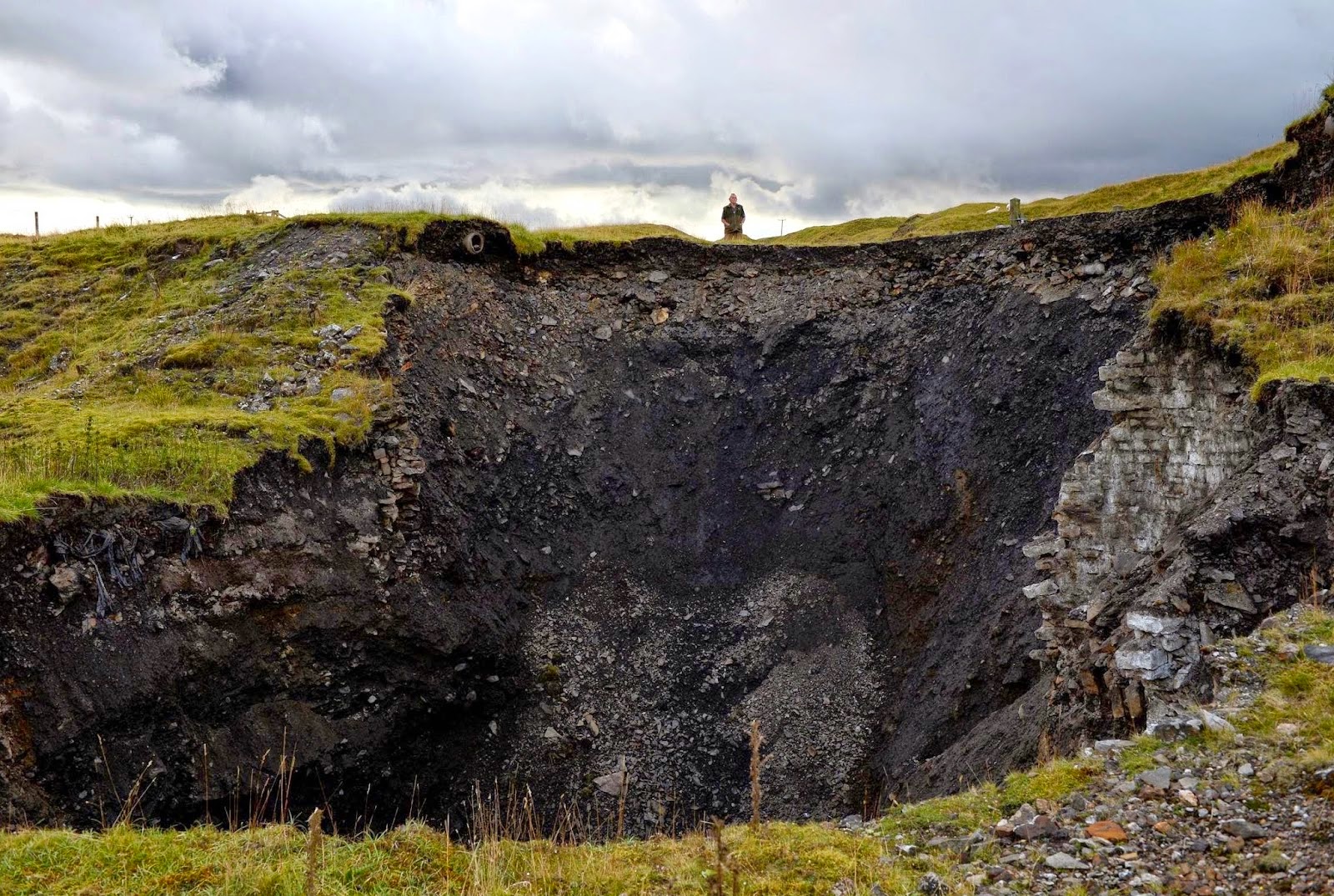
http://sciencythoughts.blogspot.co.uk/2014/08/giant-sinkhole-opens-up-in-county-durham.htmlGiant sinkhole opens up in County Durham. A sinkhole was discovered on Thursday 21 August 2014 at Cowshill in the Weardale District of County Durham, northeast England. At the time the hole was about 5 meters across, but it has been growing ever since, and by Monday 25 August had reached about 35 meters...
Follow Sciency Thoughts on Facebook.

Monday, 5 January 2015

At least one dead following landslide in Bosnia-Herzegovina.


At least one person has died, three are known to have been injured and several more are missing following a landslide at Kakanj in cerntral Bosnia-Herzegovina. The incident happened early in the morning of Monday 5 January 2015, when a section of hillside with seven homes on it slide about 500 m downslope. The confirmed death is said to be of an adult woman and several children are reported to be among the missing and injured.

The approximate location of the 5 January 2015 Kakanj landslide. Google Maps.

The houses destroyed by the landslip are understood to have been built in the aftermath of the civil war following the breakup of the former Yugoslavia in the 1990s, and like many such homes to have been built by the occupiers without any formal permission. Local authorities had apparently previously raised concerns about these particular properties, which were located on the site of a former coal mine, which closed about 50 years ago, leading to concerns about the stability of the ground.

See also…

Five workers have died and 29 more were trapped underground for about 24 hours following an explosion and cave-in at the Raspotocje Coal Mine in Zenica in central Bosnia and Herzegovina on Thursday 4 September 2014. The incident occurred following an...


The United States Geological Survey recorded a Magnitude 3.9 Earthquake at a depth of 20.5 km in...


Seven people were killed in two separate incidents at mines in Albania on Thursday 7 November 2013. Five men, described as three brothers and two cousins died...


Follow Sciency Thoughts on Facebook.

Three new species of Polydesmid Millipedes from Thailand.


Polydesmid Millipedes of the family Paradoxosomatidae are found from South and Southeast Asia to Australia, dominating Millipede faunas in many areas. With over 1000 species in 200 genera the Paradoxosomatidae is probably the most specious group of Polydesmid Millipedes. The genus Tylopus is found in southern China, Myanmar, Laos, Thailand and Vietnam. With 52 described species, 29 of which have been recorded in Thailand, it is one of the largest genera in the Paradoxosomatidae.

In a paper published on the journal ZooKeys on 18 August 2014, Natdanai Likhitrakarn of the Division of Plant Protection at Maejo University, Sergei Golovatch of the Institute for Problems of Ecology and Evolution at the Russian Academy of Sciences and Somsak Panha of the Animal Systematics Research Unit at Chulalongkorn University, describe three new species of Tylopus from Thailand.

The first new species is named Tylopus corrugatus, in reference to a series of ridges on the dorsal part of its body segments. The species is described from 7 male, five female and two juvenile specimens collected in the Doi Inthanon National Park in Chiang Mai Province. The females are on average slightly longer than the males, at 16.5–21.0 mm, compared to 15.5–18.2 mm. They are brown in colour with darker backs and lighter undersides.

Tylopus corrugatus, male specimen in dorsal view. Likhitrakarn et al. (2014).

The second new species is named Tylopus parahilaroides, in reference to its similarity to the previously described species Tylopus hilaroides (‘parahilaroides’ means ‘beside hilaroides’). The species is described from two specimens, one male and one female, the male being 34 mm in length and the female 33 mm. They are reddish brown in colour, with yellowish limbs.

Tylopus parahilaroides, male specimen in dorsal view. Likhitrakarn et al. (2014).

The third new species is named Tylopus trigonum, in reference to the triangular markings on the dorsal surface of its body segments. The species is described from two male and three female specimens, collected from beside two waterfalls in Umphang District in Tak Province. The males are on average larger than the females, at 21.2–27.8 mm, compared to 22.1–24.0 mm. They are light brown in colour, with a dark brown dorsal surface, which has a series of lighter triangles.

Tylopus trigonum, male specimen in dorsal view. Likhitrakarn et al. (2014).

See also…

http://sciencythoughts.blogspot.co.uk/2014/11/two-new-species-of-flat-backed.html Two new species of Flat-backed Millipede from Miocene Mexican amber.                   Millipedes, Diplopoda, are highly successful soil dwelling Arthropods found in soil in all temperate and tropical...
Centipedes (Myripoda) are carnivorous terrestrial Arthropods with elongate, multi-segmented bodies, having one pair of legs per body segment. The number of legs varies highly, from under 20 to over 300, though the number of pairs is always odd. The first pair of limbs is modified to form a pair of venomous forcipules (claws) used to subdue prey. There are around 3000...
The Millipede Hoplatessara luxuriosa was first described under the name Strongylosoma luxuriosum by the Italian entomologist Fillipo Silvestri in 1895, based upon specimens apparently collected at Sorong in New...
 
 
Follow Sciency Thoughts on Facebook.

Asteroid 2005 YQ96 passes the Earth.

Asteroid 2005 YQ96 passed by the Earth at a distance of about 3 967 000 km (10.32 times the average distance between the Earth and the Moon, or 2.7% of the average distance between the Sun and the Earth), slightly after 9.45 pm GMT on Friday 2 January 2014. There was no danger of the asteroid hitting us, though were it to do so it would have presented a serious threat. 2005 YQ96 has an estimated equivalent diameter of 160-490 m (i.e. it is estimated that a spherical object with the same volume would be 160-490 m in diameter), and an object of this size would be predicted to be capable of passing through the Earth's atmosphere relatively intact, impacting the ground with an energy equivalent to about 200-4000 megatons of TNT (roughly 11 800-235 000 times the energy of the Hiroshima bomb). Such an event would result in a crater between 2.5 and 8 km across, cause devastation on a global scale and would have the potential to affect the climate globally for decades or even centuries after the impact event.

 The calculated orbit of 2005 YQ96. JPL Small Body Database Browser.
2005 YQ96 was discovered on 30 December 2005by the University of Arizona's Catalina Sky Survey, which is located in the Catalina Mountains north of Tucson. The designation 2005 YQ96 implies that it was the 2416th asteroid (asteroid Q96) discovered in the second half of December 2005 (period 2005 Y).

While 2005 YQ96 occasionally comes near to the Earth, it does not actually cross our orbital path. It has an elliptical 234 day orbit, at an angle of 22° to the plane of the Solar System, that takes it from 0.46 AU from the Sun (0.46 times the average distance at which the Earth orbits the Sun, roughly the same as the perihelion of Mercury), to 0.99 AU from the Sun, (0.99 times the distance at which the Earth orbits the Sun). As a Near Earth Object that remains strictly inside the orbit of the Earth it is classed as an Atira Family Asteroid. This means that close encounters between 2005 YQ96 and the Earth are very common, with the last having occured in December 2012, and the next predicted for August 2016. The asteroid also has frequent close encounters with the planet Mercury, with the last having occured in December 2013 and the next predicted for November 2015. As an asteroid larger than 150 m in diameter that occasionally comes within 0.05 AU of the Earth, 2005 YQ96 is also classified as a Potentially Hazardous Asteroid.

See also...
 
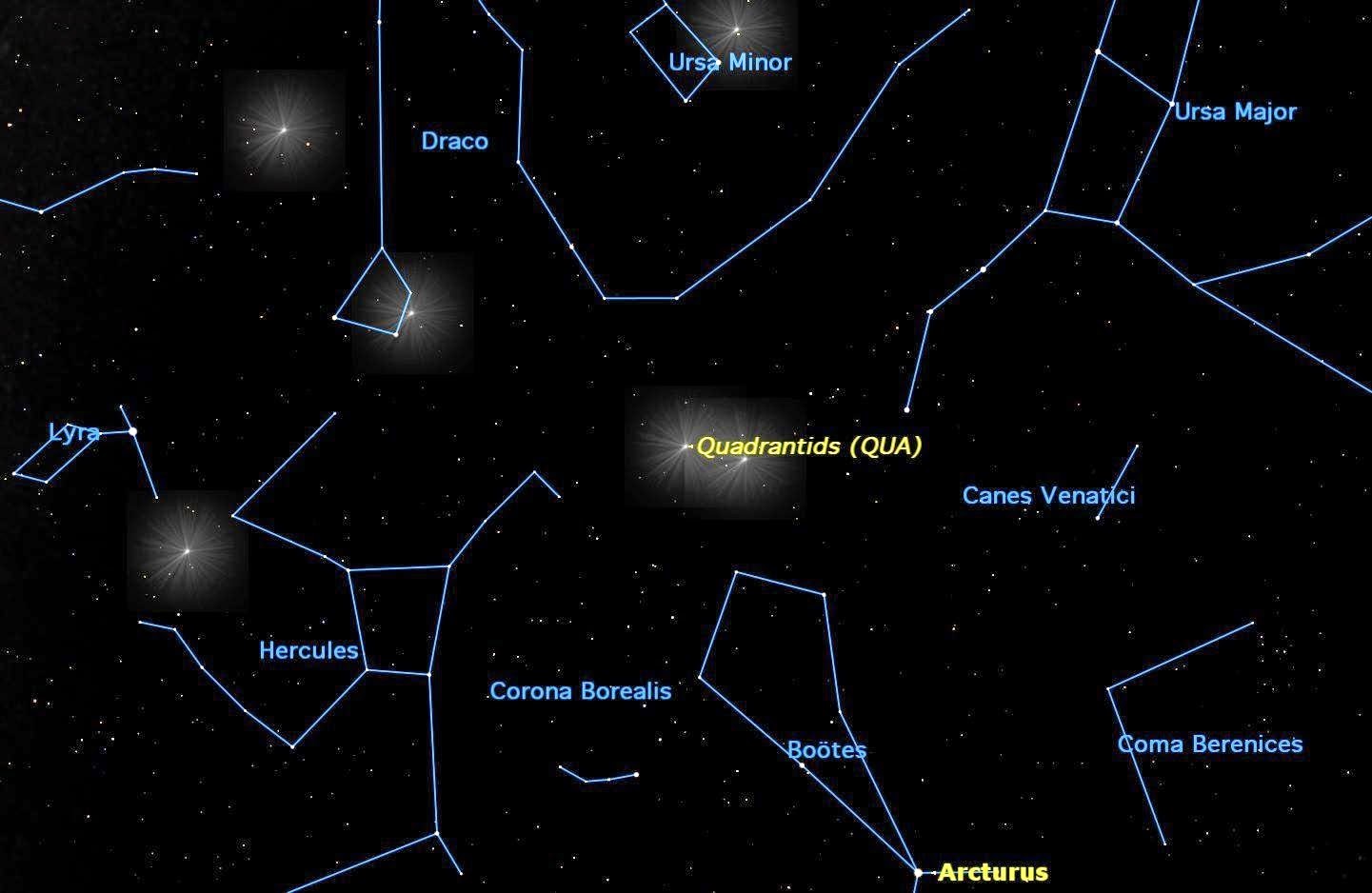
The Quadratid Meteor Shower is one of the brightest meteor showers of the year, often producing over 100 meteors per hour at its peak, which falls on the night of 3-4 January each year, and is predicted to peak at 2.00 am GMT on Sunday 4 January 2015. The meteor...
 
http://sciencythoughts.blogspot.co.uk/2014/12/asteroid-2001-xy10-passes-earth.htmlAsteroid 2001 XY10 passes the Earth.       Asteroid 2001 XY10 passed by the Earth at a distance of about 18 540 000 km (48.22 times the average distance between the Earth and the Moon, or 12% of the average distance between the Sun and the Earth), at...
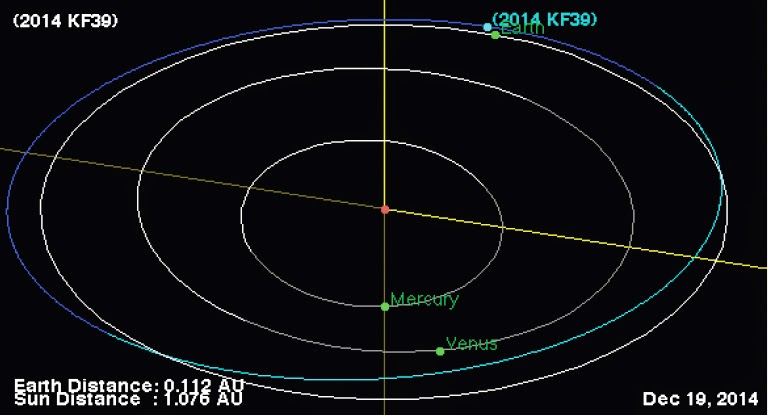
Asteroid 2014 KF39 passed by the Earth at a distance of 16 780 000 km (43.68 times the average distance between the Earth and the Moon, or 11.2 % of the average distance between the Earth and the Sun)...

Follow Sciency Thoughts on Facebook.
 

The sources of the Xixia and Zhangpu Ambers.


Amber is the mineralized remnants of resins secreted by ancient plants. It is valued by palaeontologists due to the frequent presence of preserved insects, pollen and soft-bodied micro-organisms within amber clasts; it is also widely used in the jewellery industry, and in Chinese medicine. The resins which form amber are known to have originated from a number of different plant groups, including Pines, Dipterocarps, Sciadopityas (Japanese Umbrela Pines), Araucarias, Cypresses, Yews, Legumes and other Conifer and Angiosperm (Flowering Plant) groups. Amber is traditionally collected from three sites in China, Fushun in Northeast China, Xixia in Central China, and Zhangpu in Southeast China. The Early Eocene Fushan Amber has been extensively studied, due to its frequent Insect and Plant inclusions, and is considered to have been produced by a form of Cypress, however the other two sources have not to date produced any fossil inclusions, and therefore have been largely overlooked in other studies.

In a paper published in the journal PLoS One on 29 October 2014, Gongle Shi of the State Key Laboratory of Palaeobiology and Stratigraphy at the Nanjing Institute of Geology and Palaeontology of the Chinese Academy of Sciences, SuryenduDutta and Swagata Paul of the Department of Earth Sciences at the IndianInstitute of Technology Bombay, Bo Wang, also of the State Key Laboratory of Palaeobiology and Stratigraphy at the Nanjing Institute of Geology and Palaeontology and of the Steinmann Institute at the University of Bonn, and Frédéric Jacques of the Key Laboratory of Tropical Forest Ecology at the Xishuangbanna TropicalBotanical Garden of the Chinese Academy of Sciences, discuss the chemical composition of the Xixia and Zhangpu Ambers, as determined by gas chromatography-mass spectrometry, and the implications of this for the botanical origins of the amber.

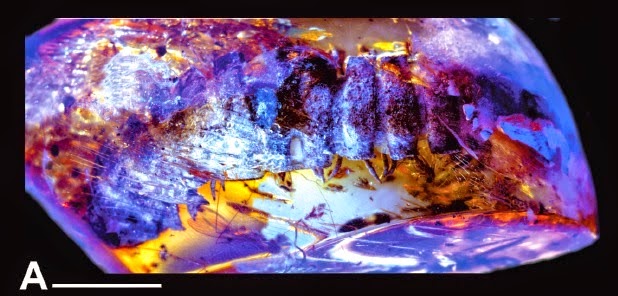
The Xixia Amber originates from the Late Cretaceous Gaogou Formation in Henan Province in Central China. The beds which produce it are best known for their production of well-preserved Dinosaur eggs, and have also produced Bivalve and Ostracod assemblages, but neither plant macrofossils nor pollen. They are interpreted as non-marine sedimentary deposits, with layers of mudstones, siltstones, sandstones and conglomerates. Xixia Amber is extremely abundant, but typically comes in tiny opaque lenses in yellow, brown, brownish yellow or brownish red. To date no fossils have been reported from Xixia Amber.

Late Cretaceous Xixia Amber. Shi et al. (2014).

The Xixia Amber proved to be rich in abietanediterpenoids, which is taken to be diagnostic of a Coniferous rather than Flowering Plant origin, as they are derived from abietic acid, which is produced by almost all Conifers, but not Angiosperms. The amber does not contain labdanedericatives, which are produced by Pines, and does contain tetracyclic diterpenoids, which are not, so Pines are therefore ruled out as the origin of this amber. Neither were cedrane and cuparane, produced by Cypresses, nor totarol, ferruginol orsugiol, produced by Cypresses and Podocarps, found in the samples, making it highly unlikely that the amber was of Cypress origin. The amber did contain tricyclic rimuane, which is produced by Podocarps and Araucarias, and phyllocladane, which is produced by Podocarps, Araucarias and Cypresses, from which Shi et al. conclude that the amber is most likely to have originated from a form of Araucaria.

Araucarias today are mainly restricted to the Southern Hemisphere, being found in Malaysia, Indonesia, Philippines, New Guinea, Australia, New Zealand, New Caledonia, Vanuatu, Fiji, Norfolk Island and southern South America, as well as being introduced in other areas as ornamental plants. However they are known to have been widespread in the Northern Hemisphere during the Mesozoic, and have been previously linked to amber deposits from the Early Cretaceous of Spain and Jurassic of Thailand. Shi et al. also note that while amber is found throughout the Mesozoic, it becomes much more widespread from the Early Cretaceous onwards, a timescale which also coincides with a major radiation of the Araucarias, making it possible that many Mesozoic ambers originate from these trees.

A modern Araucaria, the Paraná Pine, Araucaria angustifolia. Ricardo Frantz/Wikimedia Commons.

Podocarps are today found in tropical and subtropical upland forests in both hemispheres, reaching their northernmost distribution in southern China, Japan, Mexico and the Caribbean Islands. However modern members of the group produce much less resin than Araucarias, making them a less likely source of origin for ancient ambers, and the group is not thought to have been present in China during the Cretaceous.

Shi et al. also note that an extinct group of Conifers, the Cheirolepidiaceae, which appeared in the Late Triassic and persisted till the Late Cretaceous, has been liked to some ambers in southern Europe. This group were a dominant Conifer family globally in the Jurassic and Early Cretaceous, and are also likely to have contributed to amber deposits in other areas. Studies of amber associated with Cheirolepidiaceaen macrofossils from the Early Cretaceous of Spain have shown high levels of phenolic abietane, a chemical absent from the Xixia Amber samples, but given our limited understanding of this group, it cannot be completely ruled out as an origin for the Xixia Amber.

The Zhangpu Amber derives from the Middle Miocene Fotan Group in Fujian Province in Southeast China. The Fotan Group is noted for its Plant macrofossils, including leaves and fruits and lignified wood, some of which contains amber in situ. The fossils are interpreted as having originated in a Diptocarp-dominated tropical rainforest. The area currently has a warm subtropical climate with a seasonal climate, with distinct monsoon and dry seasons, and a flora dominated by subtropical evergreen broadleaved forests, however the Fotan deposits have been dated to14.7–14.9 million years ago, close to the Mid-Miocene Climatic Optimum, using pollen assemblages and Argon isotope dating (expand). Diptocarp forests are today found in lowland areas across much of Southeast Asia.

Middle Miocene Zhangpu Amber. Shi et al. (2014).

The Zhangpu Amber contains amyrin and amyrone-based triterpenoids, indicating an Angiosperm origin, and polymers of bicyclic sesquiterpenoid and triterpenoids hydrocarbons, which are typical of ambers produced by Diptocarps, though they are also produced by trees of the genus Mastixia, a type of Dogwood. Given the dominance of Diptocarp macrofossils in the deposits producing the amber, Shi et al. conclude this group is the more likely origin.

Diptocarps are thought to be of Gondwanan origin, and today are found in South and Southeast Asia, South America, Africa, Madagascar and the Seychelles. The group is thought to have reached Asia with the collision of the India and Eurasian Plates, with the earliest known Asian fossils dating from the Early Eocene of India. There are three subfamilies within the Dipterocarpaceae, only one of which, the Dipterocarpoideae, which is found in South and Southeast Asia and the Seychelles; the Diptocarps of South America, Africa and Madagascar lack resin ducts and do not produce resin. Diptocarps have previously been linked to amber deposits from the Eocene and Miocene of India and the Eocene of Vietnam; the Zhangpu Amber is the most northerly amber linked to this plant group, though given the presence of Diptocarp macrofossils in the same deposits, this is not remarkable.

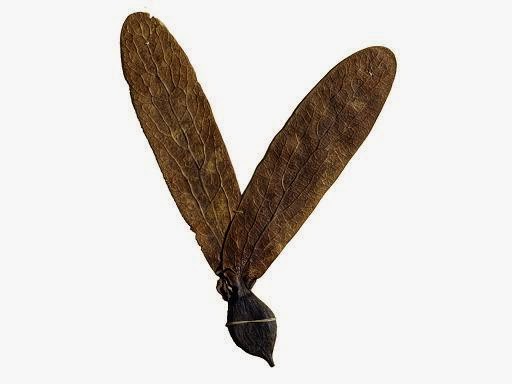
A modern Diptocarp wing fruit. Shi & Li (2010).

See also…

http://sciencythoughts.blogspot.co.uk/2014/12/a-polypore-fungus-beetle-from-early.htmlA Polypore Fungus Beetle from the Early Cretaceous of France.                                              Beetles first appear in the fossil record in the Early Permian. And by the Triassic were already beginning to dominate Insect faunas, with many modern groups in existence by the end of the Cretaceous. However...
http://sciencythoughts.blogspot.co.uk/2014/11/two-new-species-of-flat-backed.html Two new species of Flat-backed Millipede from Miocene Mexican amber.                   Millipedes, Diplopoda, are highly successful soil dwelling Arthropods found in soil in all temperate and tropical...
http://sciencythoughts.blogspot.co.uk/2014/09/two-new-species-of-froghopper-from.html Two new species of Froghopper from Dominican amber.                                              Froghoppers (Cercopoidea) are small members of the True Bug order (Hemiptera), related to Cicadas (Cicadoidea), Leafhoppers and Treehoppers...

Follow Sciency Thoughts on Facebook.

Sunday, 4 January 2015

Magnitude 4.9 Earthquake in Custer County, Idaho.

The United States Geological Survey recorded a Magnitude 4.9 Earthquake at a depth of 8.2 km about 7.9 km to the east of Chalis in Custer County, Idaho, slightly before 10.45 am local time (slightly before 5.45 pm GMT) on Saturday 3 January 2015. There are no reports of any serious damage or injuries associated with this event, but it was felt across much of Idaho and southeastern Montana, and the area has been shaken by several large Earthquakes since the main event.

The approximate location of the 3 January 2014 Custer County Earthquake. Google Maps.

The quake took part in an area known as the Central Idaho Seismic Zone, which is bisected by six active faults, the Madison, Centennial, Beaverhead, Lemhi, Lost River, and Sawtooth. These faults are associated with the Yellowstone Magma Chamber in the northeast of Wyoming, an area that suffers more-or-less constant small tremors due to the movement of magma beneath the surface, but which seldom experiences larger quakes. The constant small movements around Yellowstone can lead to stress building up in rocks further away, leading to Earthquakes as the rocks release the strain by readjusting their positions, which can affect Wyoming as well as neighbouring Idaho and Montana. The same faults also suffer stress due to more distant rock movements, notably on the subduction zone on the American west coast.

Witness accounts of Earthquakes can help geologists to understand these events and the underlying structures that cause them. If you felt this quake (or if you were in the area but did not, which is also useful information) then you can report it to the United States Geological Survey here.


See also...

The United States Geological Survey recorded a Magnitude 4.9 Earthquake at a depth of 5.0 km, roughly 15 km north of Chalis City in Custer County, Idaho...

Two cars travelling in opposite directions were swallowed by a sinkhole that opened up to the north of...


The United States Geological Survey recorded a Magnitude 3.1 Earthquake at a depth of 4.4 km beneath the city of Driggs in  Teton County in eastern Idaho, slightly before 5.05 pm local time on...


Follow Sciency Thoughts on Facebook.